Bicycle Parts
CN → US| HS Code | Tariff Rate | Origin | Destination | Doc |
|---|---|---|---|---|
| 8714998000 | 27.5% | CN | US | Official Doc |
| 8714995000 | 17.5% | CN | US | Official Doc |
| 8302496055 | 90.7% | CN | US | Official Doc |
| 3926909989 | 22.8% | CN | US | Official Doc |
| 8302498050 | 38.5% | CN | US | Official Doc |
Product Images
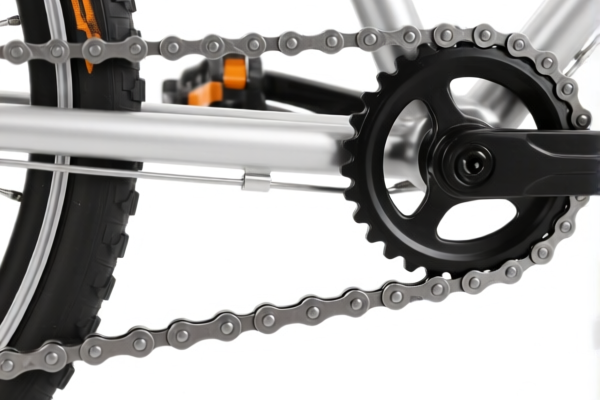
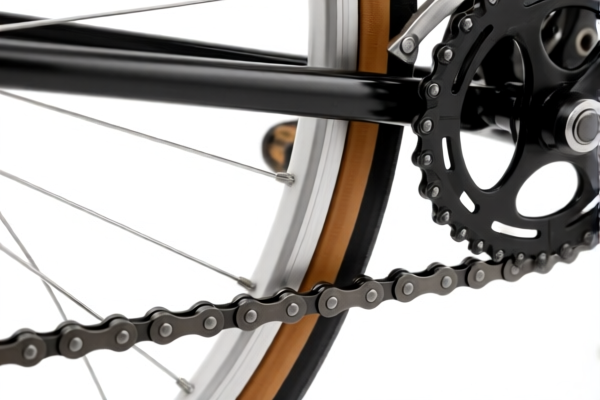
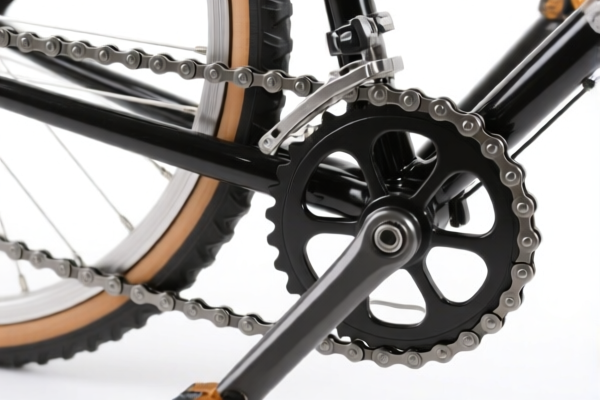
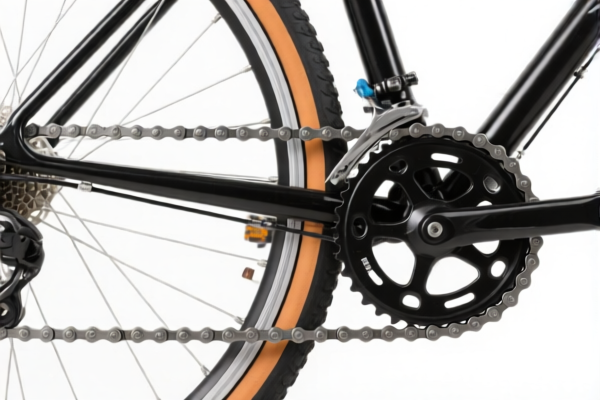
AI Analysis
🚲 Bicycle Parts (Accessories & Components)
🌐 HS Code Reference & Clearance Guide | 2026 Latest Tariff Analysis | Professional Customs Strategy
📌 1. Product Definition & Classification: What exactly are "Bicycle Parts"?
"Bicycle Parts" is a broad category in international trade, encompassing everything from structural frames and wheels to small accessories like pedals, lights, and mounting brackets. In customs classification, the key distinction lies in Material Composition and Specific Function.
- Vehicle Components (General): Parts primarily associated with the vehicle's operation, often lacking specific material differentiation in broad categories.
- Metal Fittings/Accessories: Items made of steel, aluminum, or copper, often used for mounting or structural reinforcement.
- Plastic Components: Non-metallic parts, including casings, grips, or protective covers.
⚠️ Critical Distinction Point:
- If the part is a general vehicle accessory without specific material designation → Group 8714
- If the part is clearly identified as a metal fitting/accessory (e.g., brackets, hinges) → Group 8302
- If the part is made of plastic → Group 3926
📦 2. HS Code Classification Matrix (2026 Latest Tariff Authorities)
| HS Code | Product Description | Application Scenario | Material/Type |
|---|---|---|---|
8714.99.80.00 |
Parts and accessories of vehicles other than those of heading 8711 or 8712 | General bicycle accessories; no specific material conflict; matches "Other" category | 🟢 General/Unknown |
8714.99.50.00 |
Parts and accessories of vehicles (other than 8711/8712) | Matches vehicle parts function; default classification for standard components | 🟢 General/Unknown |
8302.49.60.55 |
Base mountings of metal; fittings and similar fittings of base metal | Metal mounting parts, brackets, or attachments; inferred metal material | 🔴 Metal (Steel/Alu/Cu) |
3926.90.99.89 |
Other articles of plastics and articles of other materials of headings 3901 to 3914 | Plastic bicycle parts; fits the "catch-all" attribute for plastic goods | 🔵 Plastic |
8302.49.80.50 |
Base mountings of metal; fittings and similar fittings of base metal (other) | Non-automotive metal installations/accessories; inferred metal material | 🔴 Metal |
🔍 Key Reminder:
- Metal parts (brackets, pedals, locks) often fall under 8302, which carries significantly higher tariffs due to trade war penalties. - General bicycle parts (unless specified as metal fittings) are safer under 8714, but verify material to avoid reclassification. - Plastic parts are correctly classified under 3926, avoiding the heavy metal tariffs.
💰 3. 2026 Latest Tariff Rate Breakdown (Including Additional Taxes & Policy Surcharges)
✅ Applicable Country: United States (US)
✅ Country of Origin: China (CN)
✅ Effective Date: From November 10, 2025 (including subsequent imports)
🎯 1. 8714.99.80.00 —— General Bicycle Parts (No Material Conflict)
| Item | Detail |
|---|---|
| Base Duty | 10.0% |
| Section 301 Additional Duty | +7.5% |
| Section 301 (122 Clause) Duty | +10.0% |
| Total Duty Rate | 27.5% |
| Tax Calculation | CIF Value × 27.5% |
| De Minimis Eligibility | ❌ Not Eligible (Deny de minimis) |
| Legal Basis Path | Base: 10% → Section 301: 7.5% → 122 Clause: 10% |
📌 Explanation:
- This is the most favorable classification for general bicycle parts that are not explicitly defined as "metal fittings." - Total tax is 27.5%, which is high but significantly lower than metal-based classifications. - Strategy: If the part is a generic accessory (e.g., basket, bell, generic strap), try to classify here to avoid metal-specific surcharges.
🎯 2. 8714.99.50.00 —— Bicycle Parts (Vehicle Parts Function)
| Item | Detail |
|---|---|
| Base Duty | 0.0% |
| Section 301 Additional Duty | +7.5% |
| Section 301 (122 Clause) Duty | +10.0% |
| Total Duty Rate | 17.5% |
| Tax Calculation | CIF Value × 17.5% |
| De Minimis Eligibility | ❌ Not Eligible (Deny de minimis) |
| Legal Basis Path | Base: 0% → Section 301: 7.5% → 122 Clause: 10% |
📌 Note:
- This code has a 0% base duty, making it the lowest tax option for bicycle parts. - It relies on the argument that the item is a "standard vehicle part" without specific material triggers for higher tariffs. - Caution: Customs may challenge this if the item is clearly a "metal fitting" (which belongs in 8302). Use only if the part is truly generic.
🎯 3. 8302.49.60.55 —— Metal Bicycle Accessories/Mounts
| Item | Detail |
|---|---|
| Base Duty | 5.7% |
| Section 301 Additional Duty | +25.0% |
| Section 301 (122 Clause) Duty | +10.0% |
| Steel/Aluminum/Copper Surcharge | +50% |
| Total Duty Rate | 90.7% |
| Tax Calculation | CIF Value × 90.7% |
| De Minimis Eligibility | ❌ Not Eligible (Deny de minimis) |
| Legal Basis Path | Base: 5.7% → 301: 25% → 122 Clause: 10% → Material Surcharge: 50% |
📌 Critical Warning:
- This is the highest tax bracket. Any part identified as a metal base mounting, bracket, or fitting falls here. - The 50% additional surcharge for Steel, Aluminum, and Copper products is devastating to profit margins. - Examples: Metal bike locks, metal handlebar stems, metal fender brackets. - Strategy: Avoid this classification if possible. Redesign to use plastic or composite materials if function allows.
🎯 4. 3926.90.99.89 —— Plastic Bicycle Accessories
| Item | Detail |
|---|---|
| Base Duty | 5.3% |
| Section 301 Additional Duty | +7.5% |
| Section 301 (122 Clause) Duty | +10.0% |
| Total Duty Rate | 22.8% |
| Tax Calculation | CIF Value × 22.8% |
| De Minimis Eligibility | ❌ Not Eligible (Deny de minimis) |
| Legal Basis Path | Base: 5.3% → 301: 7.5% → 122 Clause: 10% |
📌 Note:
- Ideal for plastic parts (grips, cable housings, plastic baskets, covers). - Total tax is 22.8%, which is competitive and lower than the general metal-based 8714.99.80.00. - Strategy: Clearly declare material as "Plastic" to secure this rate. Avoid vague descriptions like "mixed material" if >90% is plastic.
🎯 5. 8302.49.80.50 —— Other Metal Fittings (Non-Automotive)
| Item | Detail |
|---|---|
| Base Duty | 3.5% |
| Section 301 Additional Duty | +25.0% |
| Section 301 (122 Clause) Duty | +10.0% |
| Total Duty Rate | 38.5% |
| Tax Calculation | CIF Value × 38.5% |
| De Minimis Eligibility | ❌ Not Eligible (Deny de minimis) |
| Legal Basis Path | Base: 3.5% → 301: 25% → 122 Clause: 10% |
📌 Note:
- Applies to metal parts that are not base mountings but still fall under "metal fittings" (8302). - Total tax is 38.5%, which is high due to the 25% Section 301 tariff. - Strategy: Only use if the part is explicitly a metal fitting but doesn't meet the "base mounting" definition for 90.7%. Still, prefer plastic alternatives.
🛠️ 4. Customs Clearance Practical Advice (Real-World Pitfall Guide)
✅ 1. Document Checklist (Mandatory)
| Document | Required | Explanation |
|---|---|---|
| ✅ Product Specification Sheet | ✔️ | Must specify Material (Plastic, Steel, Aluminum, Mixed) and Function. |
| ✅ Product Photos | ✔️ | Clear images showing material texture, branding, and assembly. |
| ✅ Bill of Lading / Invoice | ✔️ | Description must match HS Code logic (e.g., "Plastic Bike Grip" vs. "Metal Bracket"). |
| ✅ Material Declaration | ✔️ | Explicitly state % composition if mixed. Crucial for 8302 vs. 3926 vs. 8714. |
| ✅ Certifications | ✔️ | If applicable: ISO, CE, RoHS (for plastic/metal compliance). |
✅ 2. Declaration Strategy (Key Mantras)
🔥 "Material is King! Declare Clearly, Tax Drops Fast!"
| Scenario | Correct Declaration | Wrong Practice |
|---|---|---|
| Plastic Parts | 3926.90.99.89 – "Plastic Bicycle Accessory" |
Calling it "Bike Part" → Risk of 8714 (27.5%) or 8302 (90.7%) |
| Metal Brackets | 8302.49.60.55 – "Metal Base Mounting" |
Calling it "Bike Accessory" → Risk of 8714 (27.5%) |
| Generic Parts | 8714.99.50.00 – "Bicycle Part" |
Vague description → Customs may assign highest rate |
| Mixed Materials | Specify main material | "Bike Part" → Customs decides (usually higher rate) |
✅ 3. Special Case Handling
| Situation | Handling Advice |
|---|---|
| OEM Custom Parts | Provide design drawings to prove function. If it's a "mounting," it's likely 8302. |
| Plastic with Metal Screws | Declare as Plastic (3926) if the plastic component is the primary value/function. Avoid declaring as "Metal Fitting." |
| Bike Lights | Often fall under 8714 or 9405. Check if it's a vehicle part or general lighting. |
| Tires/Pneumatics | Different HS Code (4011/4013). Do not group with "parts" if they are standalone tires. |
🌍 5. Global Market Comparison (2026 Latest)
| Country/Region | Recommended HS Code | Duty Rate (China Origin) | Certification Requirement | Notes |
|---|---|---|---|---|
| 🇺🇸 USA | 3926.90.99.89 (Plastic) / 8714.99.50.00 |
22.8% (Plastic) / 17.5% (General) | N/A | Avoid 8302 (90.7% tax). |
| 🇨🇳 China | 8714.99.00.00 |
5% - 10% | CCC (if applicable) | Lower base duty, no 301 tariffs. |
| 🇪🇺 EU | 8714.99.00.00 |
4.5% (varies) | CE Marking | No additional US-style trade war tariffs. |
| 🇬🇧 UK | 8714.99.00.00 |
0% - 12% | UKCA Marking | Post-Brexit rules vary; check current tariff. |
| 🇦🇺 Australia | 8714.99.00.00 |
5% | N/A | No major surcharges. |
📌 Conclusion:
- The US is the most challenging market for bicycle parts due to Section 301 and 122 Clause tariffs. - Material choice is critical: Shifting from Metal to Plastic can reduce taxes from 90.7% to 22.8%. - General Classification (8714) is a middle ground but still carries 17.5%-27.5% tax.
📌 6. Common Mistakes & Pitfall Guide (Blood & Tears Lessons)
❌ Mistake 1: Calling a Metal Bracket a "Bicycle Part" to get 17.5% tax.
👉 Consequence: Customs reclassifies to 8302.49.60.55 → 90.7% Tax + Penalties.
❌ Mistake 2: Mixing Plastic and Metal without specifying ratios.
👉 Consequence: Customs applies the higher duty rate (Metal) → 90.7% or 38.5%.
❌ Mistake 3: Ignoring the 122 Clause.
👉 Consequence: Even with 0% base duty, the 10% 122 Clause still applies. Total tax is never 0% for China-origin goods in most cases.
❌ Mistake 4: Using vague terms like "Accessories."
👉 Consequence: Customs officers have discretion. They may choose the highest possible HS Code.
✅ Correct Practice:
"Plastic Bicycle Handlebar Grip, Model XYZ, 100% PP Material, No Metal Components"
OR
"Aluminum Bicycle Rack, Model ABC, Primary Function: Cargo Support, Metal Fitting"
🎯 7. Conclusion: Professional Declaration Saves Money!
🎯 Remember the Mantra:
🔹 "Plastic is Cheap (22.8%), Metal is Expensive (90.7%), General is Middle (17.5%-27.5%)."
🔹 "Declare Material Clearly! Ambiguity Leads to the Highest Tax!"
🔹 "Check the 122 Clause! It’s Always There for China-Origin Goods."
📌 Pro Tip:
If your bicycle parts are originally manufactured in Vietnam, Mexico, or Malaysia, you may avoid US Section 301 and 122 Clause tariffs entirely, potentially paying 0% duty.
Recommend Advanced Ruling (ISF + Pre-Classification) for high-value shipments.
📣 Immediate Action:
📞 Contact a professional customs broker + Provide Material Spec Sheets + Request HS Code Pre-Ruling
🚀 Let your bicycle parts clear smoothly, reduce costs, and boost profits!
✨ Professional Clearance Starts with Accurate Classification!
💼 Every cent of tax is a cent of profit! Calculate Precisely!
Customer Reviews
About HS Code Classification
The Harmonized System (HS) is an internationally standardized nomenclature developed by the World Customs Organization (WCO) to classify traded products. Over 200 countries use the HS system as the basis for customs tariffs, trade statistics, and import/export regulations.
Each HS code follows a hierarchical structure:
- Chapter (2 digits) — Broad category of goods (e.g., Chapter 84: Machinery and Mechanical Appliances)
- Heading (4 digits) — More specific grouping within the chapter
- Subheading (6 digits) — Internationally standardized breakdown, used by all WCO member countries
- National subdivisions (8-10 digits) — Country-specific extensions for further classification, such as US HTSUS 10-digit codes
Correct HS code classification is essential for smooth customs clearance, accurate duty payment, and compliance with trade regulations. Misclassification can lead to customs delays, overpayment of duties, or penalties.
When importing from CN to US, the applicable tariff rates may include:
- Most-Favored-Nation (MFN) rate — The standard duty rate applied to WTO members
- General rate — Applied to countries without trade agreements
- Trade remedy duties — Additional tariffs such as Section 301 (anti-dumping), Section 232 (national security), or countervailing duties
The information provided on this page is for reference purposes only. For official classification, please consult with your local customs authority or a licensed customs broker.