Bicycle Rear Light
CN → US| HS Code | Tariff Rate | Origin | Destination | Doc |
|---|---|---|---|---|
| 8512104000 | 20.2% | CN | US | Official Doc |
| 8512102000 | 17.5% | CN | US | Official Doc |
| 8539100010 | 37.0% | CN | US | Official Doc |
| 8539520091 | 12.0% | CN | US | Official Doc |
| 8513104000 | 13.5% | CN | US | Official Doc |
Product Images
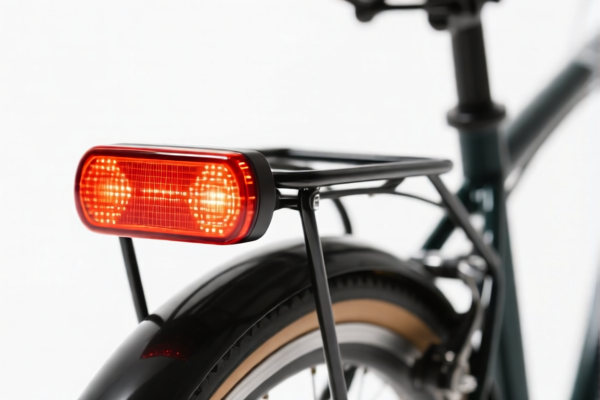
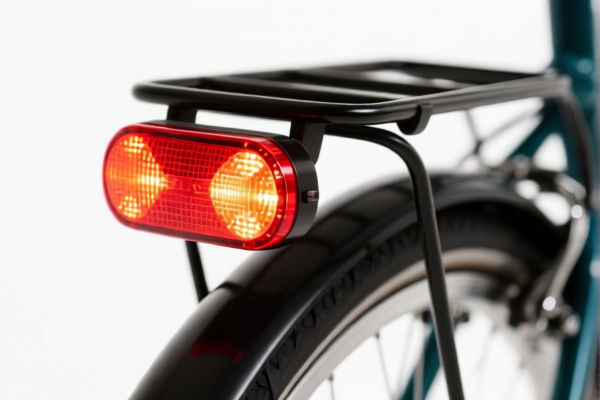
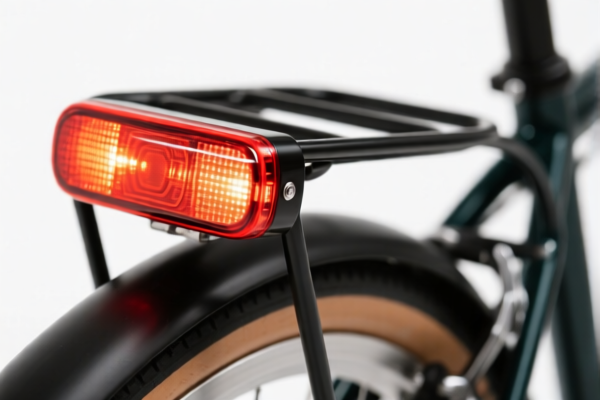

AI Analysis
🚲 Bicycle Rear Lights (Visual Signal Equipment for Bicycles)
🌐 HS Code Reference & Customs Clearance Guide | 2026 Latest Tariff Analysis | Professional Entry Strategy
📌 I. Product Definition & Classification: Understanding Bicycle Lighting
Bicycle rear lights are essential safety components, categorized internationally under Chapter 85 (Electrical machinery and equipment). However, precise classification depends heavily on function (visual signal vs. illumination) and power source (battery vs. wired/sealed unit).
Under US Customs regulations, bicycle lights are split between: * 8512: Lighting/signaling equipment specifically for cycles. * 8539: Sealed beam lamps or general LED modules. * 8513: Portable electric lamps (battery-operated).
⚠️ Critical Distinction:
- If it is a dedicated bicycle signal light (flashing/steady for visibility) → 8512 series.
- If it is a general LED bulb or portable battery lamp not specifically designed only for bicycles → 8539 or 8513 series.
- Misclassification leads to significant tariff disparities due to "Section 301" and "122" penalties.
📦 II. HS Code Classification Matrix (2026 Latest Tariff Data)
Based on the provided data, here are the exact HS Codes and their corresponding tax structures for Bicycle Rear Lights:
| HS Code | Product Summary | Key Characteristics | Total Tax Rate |
|---|---|---|---|
8512.10.40.00 |
Visual signal equipment for bicycles | Dedicated cycle lights, flashing/steady beams, bike-specific. | 20.2% |
8512.10.20.00 |
Visual signal/illumination equipment for bicycles | Broader category for bike lighting, often integrated systems. | 17.5% |
8539.10.00.10 |
Vehicle sealed lamp units < 15.24 cm | Small sealed beam units, often used as generic replacements or specific automotive-grade bike lights. | 37.0% |
8539.52.00.91 |
LED Lamps (LED Light Emitting Diodes) | Generic LED bulbs/modules, even if used in bikes. | 12.0% |
8513.10.40.00 |
Portable electric lamps (Battery-supplied) | Flashlights or bike lights powered by removable batteries, not part of the vehicle's electrical system. | 13.5% |
🔍 Key Insight:
The most common "dedicated" bicycle rear lights fall under 8512, but the tax varies significantly based on whether they are classified strictly as "visual signal equipment" (20.2%) or general "illumination equipment" (17.5%). Generic LEDs (8539.52) offer the lowest base tariff (12.0%), but risk reclassification if deemed "bike-specific."
💰 III. 2026 Tariff Rate Breakdown (Detailed Tax Structure)
✅ Applicable Country: United States (US)
✅ Origin: China (CN)
✅ Context: Includes Base Tariff, Section 301/Trade War Surcharges, and "122 Clause" (likely referencing specific administrative surcharges or recent bilateral adjustments).
🎯 1. 8512.10.40.00 – Dedicated Bicycle Visual Signal Equipment
| Item | Detail |
|---|---|
| Base Tariff | 2.7% |
| Section 301 Surcharge | 7.5% |
| "122 Clause" Surcharge | 10% |
| Total Effective Rate | 20.2% |
| Calculation | (CIF Value) × 20.2% |
📌 Explanation:
This is the standard classification for purpose-built bicycle tail lights. The 7.5% surcharge reflects broader trade tensions, while the 10% "122 Clause" adds a specific administrative penalty layer. This is the highest risk category for dedicated cycle gear if not carefully documented.
🎯 2. 8512.10.20.00 – Bicycle Illumination/Signal Equipment
| Item | Detail |
|---|---|
| Base Tariff | 0.0% |
| Section 301 Surcharge | 7.5% |
| "122 Clause" Surcharge | 10% |
| Total Effective Rate | 17.5% |
| Calculation | (CIF Value) × 17.5% |
📌 Explanation:
Often used for integrated lighting systems or lights that serve dual purposes. The 0% base rate makes this slightly cheaper than8512.10.40, but the surcharges remain identical. Strategy: If your product can be described as "illumination equipment" rather than just "signal equipment," this code saves 2.7% per unit.
🎯 3. 8539.10.00.10 – Small Vehicle Sealed Lamp Units (<15.24 cm)
| Item | Detail |
|---|---|
| Base Tariff | 2.0% |
| Section 301 Surcharge | 25.0% |
| "122 Clause" Surcharge | 10% |
| Total Effective Rate | 37.0% |
| Calculation | (CIF Value) × 37.0% |
📌 Explanation:
AVOID IF POSSIBLE. This code attracts a massive 25% Section 301 surcharge. It applies if the light is classified as a "sealed beam" unit (common in older automotive lights) rather than modern LED modules. Only use if physically identical to automotive sealed beams.
🎯 4. 8539.52.00.91 – LED Lamps (Generic LED Diodes)
| Item | Detail |
|---|---|
| Base Tariff | 2.0% |
| Section 301 Surcharge | 0.0% |
| "122 Clause" Surcharge | 10% |
| Total Effective Rate | 12.0% |
| Calculation | (CIF Value) × 12.0% |
📌 Explanation:
LOWEST TARIFF OPTION. If the rear light is sold as an LED module/bulb (not a finished "bicycle accessory"), it falls here. The 0% Section 301 surcharge is the key benefit. Risk: Customs may argue it is "specifically designed for bicycles" and force reclassification to 8512.
🎯 5. 8513.10.40.00 – Portable Battery-Powered Lamps
| Item | Detail |
|---|---|
| Base Tariff | 3.5% |
| Section 301 Surcharge | 0.0% |
| "122 Clause" Surcharge | 10% |
| Total Effective Rate | 13.5% |
| Calculation | (CIF Value) × 13.5% |
📌 Explanation:
Ideal for flashlights or lights with removable batteries (AAA/AA/18650). Since it’s not part of the bicycle's electrical system, it escapes the heavy Section 301 surcharge (0%). Benefit: Very competitive rate (13.5%) if the product design allows it.
🛠️ IV. Customs Clearance Practical Advice
✅ 1. Document Preparation Checklist
| Document | Requirement | Purpose |
|---|---|---|
| Product Description | Clearly state: "LED Tail Light, Waterproof, Flashing/Steady" | Prevents vague classification |
| Function Statement | Specify: "For Bicycle Safety Signaling" vs. "Portable Lamp" | Determines 8512 vs 8513/8539 |
| Power Source Details | Specify: "Rechargeable Built-in" vs. "Removable Battery" | Critical for 8513 classification |
| Dimensions | Provide exact length/width in cm | Essential for 8539.10 (<15.24cm rule) |
| Commercial Invoice | List HS Code explicitly | Speeds up customs release |
| Packaging Photos | Show retail packaging and product | Verifies "finished good" status |
✅ 2. Classification Strategy & Cost-Saving Tips
| Scenario | Recommended HS Code | Why? | Tariff |
|---|---|---|---|
| Standard Bike Tail Light (Integrated) | 8512.10.20.00 |
Lower base rate (0%) than 40. | 17.5% |
| Flashlight-style Bike Light (Removable Batt.) | 8513.10.40.00 |
No Section 301 surcharge. | 13.5% |
| Raw LED Module/Bulb | 8539.52.00.91 |
Lowest total tax. | 12.0% |
| Sealed Beam Unit (Old Tech) | 8539.10.00.10 |
Avoid! High penalty. | 37.0% |
🔥 Pro Tip:
If your light uses removable batteries, explicitly market and describe it as a "Portable Electric Lamp" rather than a "Bicycle Accessory." This allows use of8513.10.40.00(13.5%) instead of8512(17.5%-20.2%).⚠️ Warning:
Do NOT classify modern LED lights as8539.10(Sealed Beam) unless they are physically sealed glass/metal units. Customs will reject this for LED tech, causing delays.
✅ 3. Common Pitfalls to Avoid
❌ Pitfall 1: Describing all bike lights as "Bicycle Parts"
👉 Result: May trigger scrutiny for 8512 classification with higher surcharges.
✅ Fix: Be specific: "Visual Signal Equipment" or "Portable Lamp."
❌ Pitfall 2: Ignoring the "122 Clause"
👉 Result: Underestimating landed cost. All codes above include a 10% surcharge.
✅ Fix: Factor this 10% into your pricing model immediately.
❌ Pitfall 3: Misusing 8539.10 for LEDs
👉 Result: 37% tax rate due to 25% Section 301 surcharge.
✅ Fix: Use 8539.52 for LEDs (0% surcharge) or 8513 for portable lamps (0% surcharge).
🌍 V. Global Market Comparison (2026)
| Market | Recommended HS Code | Est. Tariff (China Origin) | Notes |
|---|---|---|---|
| 🇺🇸 USA | 8512.10.20.00 or 8513.10.40.00 |
13.5% – 17.5% | High scrutiny on Section 301 exemptions. |
| 🇨🇳 China | 8512.10.20.00 |
~10-13% (Import Duty + VAT) | Lower trade barriers. |
| 🇪🇺 EU | 8513.10.00 or 8539.52 |
0-2.7% + VAT | No Section 301 equivalent; focus on CE/RoHS. |
| 🇬🇧 UK | 8512.20.90 |
2.5% + VAT | Post-Brexit rules apply. |
📌 Conclusion for US Imports:
The US tariff structure heavily penalizes "Section 301" items. Avoid8512.10.40if possible. Opt for8513.10.40.00(13.5%) or8539.52.00.91(12.0%) by adjusting product design (removable batteries) or component description (LED module).
📌 VI. Final Recommendations
- Design for Tariff: If possible, design rear lights with removable batteries to qualify for
8513.10.40.00(13.5%). - Precise Descriptions: Use "Portable Electric Lamp" for battery-operated units. Use "LED Lamp" for bare modules.
- Avoid Sealed Beams: Do not use
8539.10for modern LED lights; the 37% tax is prohibitive. - Pre-Clearance: Apply for an Advance Ruling from CBP if your product is unique, to confirm if it fits under 8513 or 8539 to avoid post-import audits.
🎯 Golden Rule:
"Battery Removable = 13.5% | LED Module = 12% | Dedicated Bike Light = 17.5-20.2% | Sealed Beam = 37% (Avoid!)"
📞 Action Item:
Verify your product's power source and marketing description. If it uses removable batteries, rebrand as "Portable Lamp" to save ~4-7% in duties.
Customs compliance is cost optimization!
Customer Reviews
About HS Code Classification
The Harmonized System (HS) is an internationally standardized nomenclature developed by the World Customs Organization (WCO) to classify traded products. Over 200 countries use the HS system as the basis for customs tariffs, trade statistics, and import/export regulations.
Each HS code follows a hierarchical structure:
- Chapter (2 digits) — Broad category of goods (e.g., Chapter 84: Machinery and Mechanical Appliances)
- Heading (4 digits) — More specific grouping within the chapter
- Subheading (6 digits) — Internationally standardized breakdown, used by all WCO member countries
- National subdivisions (8-10 digits) — Country-specific extensions for further classification, such as US HTSUS 10-digit codes
Correct HS code classification is essential for smooth customs clearance, accurate duty payment, and compliance with trade regulations. Misclassification can lead to customs delays, overpayment of duties, or penalties.
When importing from CN to US, the applicable tariff rates may include:
- Most-Favored-Nation (MFN) rate — The standard duty rate applied to WTO members
- General rate — Applied to countries without trade agreements
- Trade remedy duties — Additional tariffs such as Section 301 (anti-dumping), Section 232 (national security), or countervailing duties
The information provided on this page is for reference purposes only. For official classification, please consult with your local customs authority or a licensed customs broker.