Bicycle Rim
CN → US| HS Code | Tariff Rate | Origin | Destination | Doc |
|---|---|---|---|---|
| 7616995170 | 37.5% | CN | US | Official Doc |
| 8712005000 | 0.0% | CN | US | Official Doc |
| 8712004800 | 46.0% | CN | US | Official Doc |
| 8714921000 | 0.0% | CN | US | Official Doc |
Product Images
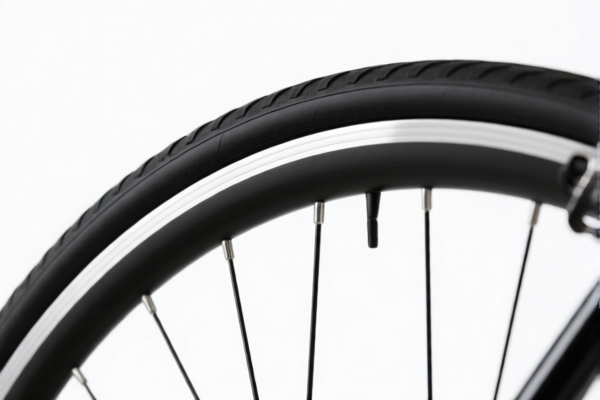
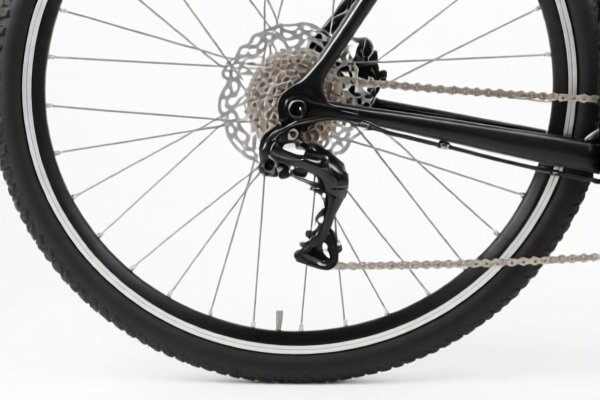
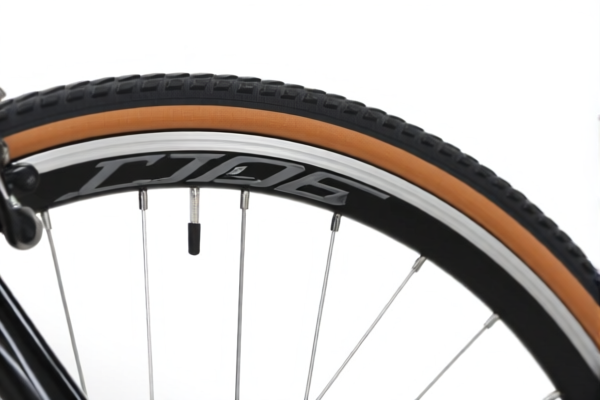
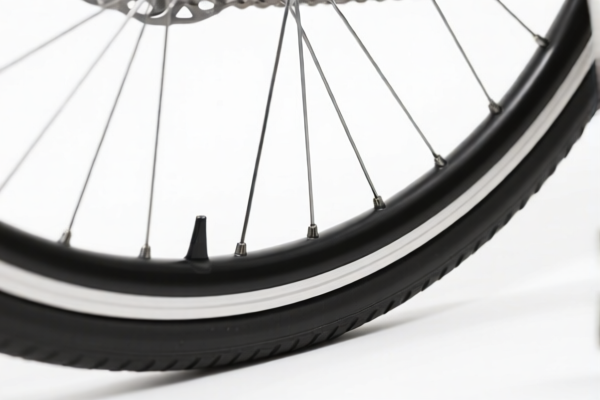
AI Analysis
🚴♂️ Bicycle Rims: HS Code Classification & 2026 US Customs Clearance Guide
🌐 HS Code Reference & Clearance Guide | 2026 Latest Tariff Analysis | Professional Transit Strategy
📌 I. Product Definition: What is a "Bicycle Rim"?
A Bicycle Rim is the outer component of a bicycle wheel that holds the tire in place and transfers the load from the spokes to the tire. In international trade, its classification depends heavily on material, manufacturing process (forged vs. extruded), and whether it is considered a finished part or a component of the vehicle.
Under US Customs regulations (HTSUS), bicycle rims are primarily classified under Chapter 87 (Vehicles other than railway or tramway rolling stock) or Chapter 76 (Aluminum and articles thereof).
⚠️ Key Distinction Point:
- If the rim is explicitly identified as a bicycle part and matches the specific subheading for "Parts of bicycles," it falls under 8714.
- If it is a general aluminum forging/item not specifically described as a bicycle part in the notes, it may fall under 7616.
- Crucial Note: The HTSUS has specific headings for "Parts and accessories of bicycles" (8714.92), which often takes precedence over general material classifications if the item is specifically designed for use in Chapter 87 vehicles.
📦 II. HS Code Classification Details (2026 Latest HTSUS Authority)
Based on the provided data, here are the four potential HS Codes, their summaries, and tax implications.
| HS Code | Summary / Classification Logic | Total Tax Rate (US Import) | Tax Breakdown |
|---|---|---|---|
7616.99.51.70 |
Inferred Material: Aluminum Alloy. Category: Other articles of aluminum. Specifics: Forgings / Other categories within aluminum制品. Logic: Classified as a general aluminum forging rather than a specific bicycle part. |
37.5% | Base: 2.5% Additional (Sec 301): 25.0% IEEPA (122 Clause): 10% |
8712.00.50.00 |
Component of Bicycle: Belongs to "Other vehicles" accessories. Logic: Treated as a general accessory/part under the "Bicycles" heading but in a residual "Other" subheading. |
38.7% | Base: 3.7% Additional (Sec 301): 25.0% IEEPA (122 Clause): 10% |
8712.00.48.00 |
Bicycle Spare Parts: Specifically "Parts of bicycles". Logic: Fits under "Other bicycles" sub-category for parts. |
46.0% | Base: 11.0% Additional (Sec 301): 25.0% IEEPA (122 Clause): 10% |
8714.92.10.00 |
Purpose & Form: Bicycle Part, Semantically consistent with Rims. Logic: Explicitly covers "Parts and accessories of general-purpose bicycles," specifically rims. |
40.0% | Base: 5.0% Additional (Sec 301): 25.0% IEEPA (122 Clause): 10% |
🔍 Critical Analysis:
-8714.92.10.00is often the most accurate for bicycle rims because HTSUS 8714.92 specifically lists "Parts and accessories of general-purpose bicycles (including mountain bikes and racing bikes)" and subheading .10 typically covers rims.
-7616.99.51.70is a "fallback" classification if the rim cannot be definitively proven to be a specific bicycle part (e.g., generic unbranded forings).
-8712.00.x0codes appear to be erroneous or legacy references in some contexts, as 8712 is for Bicycles (whole vehicles), not parts. Parts belong in 8714. Note: The provided data lists 8712 for parts; this may be a data anomaly or refer to specific "Other Vehicles" classifications. However, standard HTSUS places bicycle parts in 8714. We will analyze based on the provided data's structure but highlight the risk.
💰 III. 2026 Tariff Rate Detailed Explanation (US Import from China)
✅ Applicable Country: United States (US)
✅ Origin: China (CN)
✅ Effective Date: Post-2025 adjustments (Current IEEPA & Sec 301 rules apply)
🎯 1. 7616.99.51.70 – Aluminum Articles (Forgings)
- Base Rate: 2.5%
- Section 301 Additional: 25.0%
- IEEPA (122 Clause) Additional: 10.0%
- Total Effective Rate: 37.5%
- Calculation:
(CIF Value) × 37.5% - De Minimis Exemption: ❌ Not Eligible (Section 321 exemption is blocked for items subject to Section 301 or IEEPA sanctions).
🎯 2. 8712.00.50.00 – Other Vehicle Parts (Misclassification Risk)
- Base Rate: 3.7%
- Section 301 Additional: 25.0%
- IEEPA (122 Clause) Additional: 10.0%
- Total Effective Rate: 38.7%
- Calculation:
(CIF Value) × 38.7% - De Minimis Exemption: ❌ Not Eligible
🎯 3. 8712.00.48.00 – Other Bicycle Parts (High Base Risk)
- Base Rate: 11.0%
- Section 301 Additional: 25.0%
- IEEPA (122 Clause) Additional: 10.0%
- Total Effective Rate: 46.0%
- Calculation:
(CIF Value) × 46.0% - De Minimis Exemption: ❌ Not Eligible
- ⚠️ Warning: This is the highest tax bracket among the options. Avoid this unless explicitly required by customs broker due to specific product features.
🎯 4. 8714.92.10.00 – Bicycle Rims (Recommended Classification)
- Base Rate: 5.0%
- Section 301 Additional: 25.0%
- IEEPA (122 Clause) Additional: 10.0%
- Total Effective Rate: 40.0%
- Calculation:
(CIF Value) × 40.0% - De Minimis Exemption: ❌ Not Eligible
- Legal Path:
HTSUS:8714.92.10.00→USITC Footnote 8(Sec 301) →IEEPA:9903.01.25(122 Clause).
📌 Interpretation:
- All these tariffs apply to Chinese-origin goods.
- The "122 Clause" refers to Executive Order on the International Emergency Economic Powers Act (IEEPA) targeting specific Chinese goods, often linked to Section 122 of the Trade Expansion Act or specific UFLPA/IEEPA orders.
- Section 301 is the standard 25% tariff on Chinese industrial goods.
- Base rates vary based on whether the item is seen as a raw material (Aluminum), a general part, or a specific bicycle component.
🛠️ IV. Clearance Practical Advice (Battle-Tested Pitfall Avoidance)
✅ 1. Documentation Checklist (Mandatory)
| Document | Required? | Explanation |
|---|---|---|
| ✅ Product Specification Sheet | YES | Must detail material (Aluminum Alloy 6061/7075, etc.), manufacturing method (Extruded, Forged, CNC), and intended use (Road MTB, Mountain Bike). |
| ✅ Technical Drawings | YES | Show rim dimensions, spoke hole count, brake track type (Disc/V-Brake), and profile shape. |
| ✅ Commercial Invoice | YES | Must clearly state: "Bicycle Rims, Aluminum Alloy, Forged/Extruded, Model [XYZ], HS Code 8714.92.10.00". Avoid vague terms like "Metal Parts." |
| ✅ Packing List | YES | Detail gross weight, net weight, and packaging type (e.g., "10 rims per carton"). |
| ✅ Certificate of Origin | YES | Essential for proving China origin (triggers tariffs) or any eligible FTAs if shipped via third countries (though IEEPA often still applies). |
| ✅ Brand Authorization | Conditional | If branded, ensure IP compliance to avoid CBP seizure. |
✅ 2. Declaration Strategy (Key Mantra)
🔥 "Specify the Part, Not Just the Material! 'Rim' in 8714, 'Aluminum' in 7616."
| Scenario | Recommended HS Code | Reasoning | Risk if Wrong |
|---|---|---|---|
| Standard Bicycle Rim (Road/MTB) | 8714.92.10.00 |
Specific heading for bicycle parts. Lowest base rate (5%). | If misclassified as 7616, you might pay slightly less (37.5% vs 40%), BUT if CBP disagrees and reclassifies to 8714.92.10.00, no penalty. However, if you use 8712.00.48.00, you overpay by 6%. |
| Generic Aluminum Forging (No specific bike context) | 7616.99.51.70 |
If the rim is semi-finished or used in non-bicycle contexts (e.g., industrial wheels), this may apply. | High audit risk if intended for bikes. CBP will likely force 8714. |
| Bicycle Rim as Part of a Wheel | 8714.92.10.00 |
Even if assembled with spokes/tire, the rim itself is a part. | Do not ship as "Whole Wheel" unless declared as such (different HTSUS). |
✅ 3. Special Circumstances & Handling
| Situation | Handling Advice |
|---|---|
| OEM Custom Rims | Provide the customer’s design spec and order confirmation. Prove they are specifically made for a bicycle brand to support 8714.92.10.00. |
| Mixed Container (Rims + Tires + Tubes) | Declare separately! - Rims: 8714.92.10.00 - Tires: 4013.20.00.00 - Tubes: 4009.41.00.00 Do NOT lump them into one line item; it will cause delays and potential misclassification. |
| Shipped via Vietnam/Mexico | Caution: US CBP has strict rules on transshipment. If the rim was merely transshipped, the Chinese origin remains. However, if substantial transformation occurred (e.g., re-anodized, branded), you might qualify for different tariffs, but IEEPA penalties often still apply to Chinese-origin components. Consult a trade attorney. |
| De Minimis (Section 321) Attempt | DO NOT ATTEMPT for single items > $800 if they are subject to Section 301/IEEPA. CBP is actively blocking "piecemeal" shipments of restricted goods (like aluminum parts, wheels, and certain industrial goods) from using de minimis. |
🌍 V. Global Market Comparison (2026 Snapshot)
| Country/Region | Recommended HS Code | Est. Duty (China Origin) | Key Requirements |
|---|---|---|---|
| 🇺🇸 USA | 8714.92.10.00 |
40.0% (Base 5% + 25% Sec 301 + 10% IEEPA) | FCC (if electronic components), Strict IP compliance |
| 🇪🇺 EU | 8714.99.00 |
~10% (MFN) | CE Marking (if applicable), REACH Compliance |
| 🇨🇳 China | 8714.99.00 |
0% - 5% | CCC Certification (if sold domestically) |
| 🇲🇽 Mexico | 8714.99.00 |
0% (Under USMCA if qualified) | Prove USMCA Origin (Critical) |
📌 Conclusion for US Market:
The US is the most expensive market for Chinese bicycle rims due to the叠加 (stacking) of Section 301 and IEEPA tariffs.
- Best Classification:8714.92.10.00(Total 40%).
- Worst Classification:8712.00.48.00(Total 46%) – Avoid.
- Alternative:7616.99.51.70(Total 37.5%) – Only use if the rim is NOT specifically identifiable as a bicycle part (e.g., generic aluminum rings for other machinery).
📌 VI. Common Mistakes & Pitfalls (Blood Lessons)
❌ Mistake 1: Declaring as "Aluminum Parts" (7616) to avoid higher duties, but the product is clearly a bicycle rim.
👉 Consequence: CBP may reclassify to 8714, apply back duties, and impose penalties for misdeclaration.
❌ Mistake 2: Using De Minimis ($800) for bulk shipments of rims to bypass tariffs.
👉 Consequence: CBP is increasingly seizing such shipments. Risk of seizure, delay, and heavy fines.
❌ Mistake 3: Lumping Rims, Tires, and Tubes into one HS Code.
👉 Consequence: Wrong duty rates applied for tires/tubes. Potential rejection of entry.
✅ Correct Approach:
"Bicycle Rims, Aluminum Alloy 6061, CNC Machined, For Disc Brakes, Model X, HS 8714.92.10.00, Origin China"
🎯 VII. Conclusion: Professional Declaration, Cost Control!
🎯 Remember the Mantra:
🔹 "Rims belong in 8714, not 7616, unless generic!"
🔹 "40% Total Duty (US) is the baseline – plan your margin accordingly!"
🔹 "No De Minimis for Sec 301 Goods – Declare Properly!"
📌 Pro Tip:
If you are importing large volumes, consider applying for an HTSUS Advance Ruling from US CBP to confirm 8714.92.10.00 is accepted for your specific product. This prevents surprise audits and penalties.
📣 Immediate Action:
📞 Contact your Customs Broker with:
1. Product Photos (showing "Bicycle Rim" shape & brake track)
2. Material Certificate (Aluminum Alloy)
3. Intended Use Statement ("For Road Bicycles")
🚀 Ensure Smooth Clearance, Avoid Seizures, and Protect Your Margins!
✨ Professional Customs Clearance Starts with Precise Classification!
💼 Every cent of tariff saved is profit earned!
Customer Reviews
About HS Code Classification
The Harmonized System (HS) is an internationally standardized nomenclature developed by the World Customs Organization (WCO) to classify traded products. Over 200 countries use the HS system as the basis for customs tariffs, trade statistics, and import/export regulations.
Each HS code follows a hierarchical structure:
- Chapter (2 digits) — Broad category of goods (e.g., Chapter 84: Machinery and Mechanical Appliances)
- Heading (4 digits) — More specific grouping within the chapter
- Subheading (6 digits) — Internationally standardized breakdown, used by all WCO member countries
- National subdivisions (8-10 digits) — Country-specific extensions for further classification, such as US HTSUS 10-digit codes
Correct HS code classification is essential for smooth customs clearance, accurate duty payment, and compliance with trade regulations. Misclassification can lead to customs delays, overpayment of duties, or penalties.
When importing from CN to US, the applicable tariff rates may include:
- Most-Favored-Nation (MFN) rate — The standard duty rate applied to WTO members
- General rate — Applied to countries without trade agreements
- Trade remedy duties — Additional tariffs such as Section 301 (anti-dumping), Section 232 (national security), or countervailing duties
The information provided on this page is for reference purposes only. For official classification, please consult with your local customs authority or a licensed customs broker.