Bidet Faucet Set
CN → US| HS Code | Tariff Rate | Origin | Destination | Doc |
|---|---|---|---|---|
| 8481801030 | 39.0% | CN | US | Official Doc |
| 8481805060 | 38.0% | CN | US | Official Doc |
Product Images
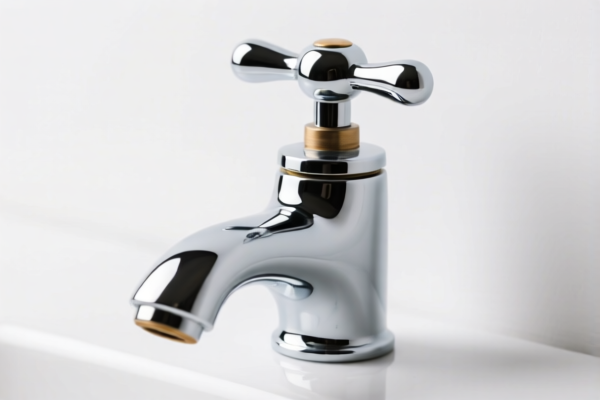
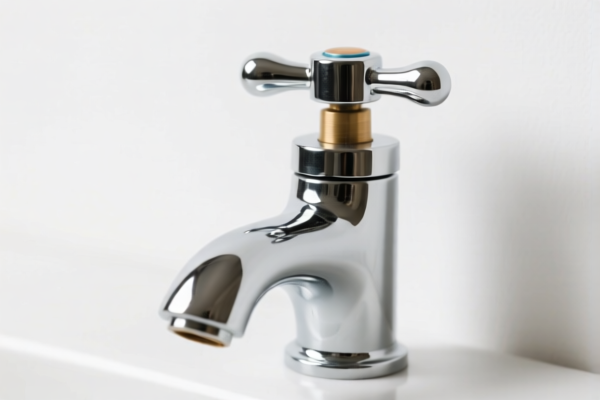
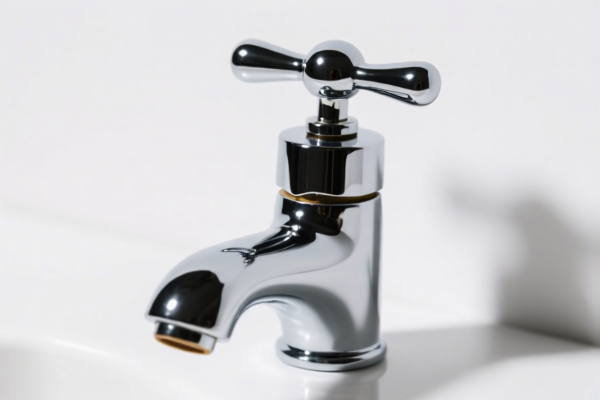
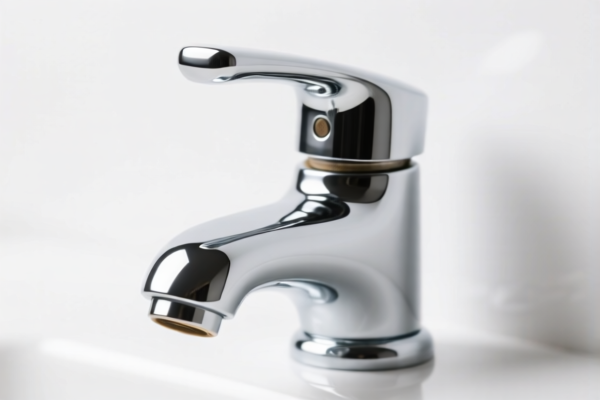
AI Analysis
🚿 Bidet Faucet Set & Bathroom Sanitary Ware
🌐 HS Code Reference & Customs Clearance Guide | 2026 Latest Tariff Analysis | Professional Clearance Strategy
📌 I. Product Definition & Classification: Do You Know What a "Bidet Faucet Set" Is?
A "Bidet Faucet Set" in international trade typically refers to sanitary plumbing appliances used for personal hygiene, specifically connecting to water supply systems. In the Harmonized System (HS), these fall under Chapter 84: Nuclear reactors, boilers, machinery and mechanical appliances; parts thereof. Specifically, they are classified as "Taps, cocks, valves and similar appliances" because they control the flow of water.
Key Distinctions:
- Hand-Operated Valves: Most household bidet faucets are manually operated (lever or knob).
- Material Matters: The HS code varies significantly based on the primary material (Copper vs. Other materials like brass/plastic composites).
- Pressure Rating: For copper items, the pressure rating (< 850 kPa) is a specific classification criterion.
⚠️ Critical Classification Points:
- Copper Body: If the faucet has a significant copper component and a pressure rating under 850 kPa, it likely falls under 8481.80.10.30.
- Other Materials (Brass/Alloy): If it does not meet the specific "Copper" definition or pressure criteria, it falls under 8481.80.50.60 (Bath, shower, sink, and lavatory faucets).
- Not Electronic: If it contains electronic heating or spray mechanisms, it might be reclassified under Chapter 85 (Electrical), but standard mechanical bidet faucets remain in Chapter 84.
📦 II. HS Code Classification Details (Based on Provided Data)
According to the provided data, the product is classified into two primary HS codes based on material and type.
| HS Code | Product Description | Key Criteria |
|---|---|---|
8481.80.10.30 |
Taps, cocks, valves... Of copper; Pressure rating under 850 kPa; Sink and lavatory faucets | ✅ Material: Copper ✅ Pressure: < 850 kPa ✅ Type: Hand-operated |
8481.80.50.60 |
Taps, cocks, valves... Of other materials; Bath, shower, sink, and lavatory faucets | ✅ Material: Other (e.g., Brass, Alloy) ✅ Type: Hand-operated ✅ Application: Bath/Showers |
🔍 Important Note:
- The term "Bidet Faucet" is functionally similar to a "Lavatory Faucet" or "Sink Faucet" in tariff classification if it is hand-operated.
- 8481.80.10.30 is a more specific sub-category for Copper items with low pressure.
- 8481.80.50.60 is the broader category for Other Materials (including brass, which is common in bidets).
💰 III. 2026 Latest Tariff Rate Details
✅ Applicable Country: United States (US)
✅ Origin: China (CN)
✅ Effective Date: Current Tariff Schedule
🎯 1. 8481.80.10.30 — Copper Hand-Operated Appliance (< 850 kPa)
| Item | Content |
|---|---|
| Base Tariff Rate | 4.0% (ad valorem) |
| Additional Tariffs (Section 301/IEEPA) | 0.0% |
| Total Tax Rate | 4.0% |
| Tax Calculation | CIF Value × 4.0% |
| De Minimis Exemption? | ✅ Yes (for shipments under $800, if applicable) |
| Legal Basis | 8481.80.10.30 → Base Rate 4.0% |
📌 Explanation:
- This code has a relatively low base tariff of 4.0%.
- Notably, the provided data indicates 0.0% additional tariffs for this specific sub-category. This suggests it may not be subject to the highest tier of Section 301 tariffs, or the data reflects a specific exemption.
- Low cost advantage: Compared to other electronic or high-tech goods, this tariff is favorable.
🎯 2. 8481.80.50.60 — Other Material Bath/Sink Faucets
| Item | Content |
|---|---|
| Base Tariff Rate | 3.0% (ad valorem) |
| Additional Tariffs (Section 301/IEEPA) | 0.0% |
| Total Tax Rate | 3.0% |
| Tax Calculation | CIF Value × 3.0% |
| De Minimis Exemption? | ✅ Yes (for shipments under $800, if applicable) |
| Legal Basis | 8481.80.50.60 → Base Rate 3.0% |
📌 Explanation:
- This is the most common code for standard brass or alloy bidet faucets.
- The base tariff is even lower at 3.0%.
- Like the copper variant, no additional tariffs are listed in the provided data, making it highly competitive.
🛠️ IV. Customs Clearance Practical Advice (Pitfall Avoidance Guide)
✅ 1. Preparation Checklist (Essential Documents)
| Document | Required | Description |
|---|---|---|
| ✅ Product Specification Sheet | ✔️ | Must specify: Material (Copper vs. Brass), Type (Hand-operated), Pressure Rating (if Copper, must be < 850 kPa). |
| ✅ Product Photos | ✔️ | Clear images of the faucet, valve mechanism, and any markings (e.g., "Made in China"). |
| ✅ Commercial Invoice | ✔️ | Clearly state: "Bidet Faucet Set, Hand Operated, Material: [Copper/Brass]." Avoid vague terms like "Plumbing Part." |
| ✅ Packing List | ✔️ | Detail individual components (faucet body, handles, hoses) to prove it’s a single unit or set. |
| ✅ Material Declaration | ✔️ | Explicitly declare if copper content is significant. Misdeclaring brass as copper can lead to reclassification. |
✅ 2. Declaration Tips (Key Mantras)
🔥 "Material First, Pressure Check, Hand-Operated Clear!"
| Scenario | Correct Declaration | Error Risk |
|---|---|---|
| Copper Faucet, Low Pressure | 8481.80.10.30 |
Misclassifying as "Other Material" → Wrong code, potential audit |
| Brass/Alloy Faucet | 8481.80.50.60 |
Misclassifying as "Copper" → Incorrect base rate |
| Electronic Bidet Seat | ❌ Not in scope of provided data | Must check Chapter 85 (Electrical Appliances) |
| Manual vs. Auto | Specify "Hand Operated" | Automatic valves may have different codes |
✅ 3. Special Cases
| Case | Recommendation |
|---|---|
| Mixed Material Sets | If the set includes copper and brass parts, classify based on the essential character (usually the main body material). |
| Complete Set vs. Parts | If sold as a "Set" (faucet + hose + mount), declare as one unit under the faucet HS code. Do not split unless requested. |
| Low-Value Shipments | Under $800, these items may qualify for de minimis entry, but ensure accurate classification to avoid future audits. |
🌍 V. Global Market Comparison (2026)
| Country/Region | Recommended HS Code | Tariff | Certification | Notes |
|---|---|---|---|---|
| 🇺🇸 USA | 8481.80.50.60 (Most Common) |
3.0% | None | Low tariff advantage |
| 🇪🇺 EU | 8481.80.90 |
~3-4% | CE, Lead-Free Standards | Strict lead/cadmium limits |
| 🇨🇳 China | 8481.80.90 |
~5-6% | CCC (if applicable) | Import duties vary |
| 🇦🇺 Australia | 8481.80.90 |
5% | WaterMark Certified | Mandatory for plumbing |
📌 Conclusion:
- The USA offers a very low tariff (3-4%) for standard bidet faucets based on the provided data.
- Material declaration is critical: Ensure the invoice accurately reflects copper vs. other materials to select the correct HS code.
- No additional tariffs are noted, making this a cost-effective product for US import.
📌 VI. Common Errors & Pitfalls
❌ Error 1: Misidentifying Material
👉 Consequence: Declaring a brass faucet as "Copper" to fit 8481.80.10.30 may lead to penalties if the copper content is insufficient.
✅ Fix: Provide material test reports or manufacturer declarations.
❌ Error 2: Ignoring Pressure Rating (for Copper)
👉 Consequence: If copper faucets have a pressure rating > 850 kPa, they may fall under a different sub-category not covered in this data.
✅ Fix: Verify technical specs for pressure ratings.
❌ Error 3: Vague Description
👉 Consequence: "Plumbing Fitting" is too vague. Customs may reclassify or delay.
✅ Fix: Use specific terms: "Hand-Operated Bidet Faucet, Brass, Model XYZ."
🎯 VII. Conclusion: Clear Classification, Smooth Customs
🎯 Remember the Mantra:
🔹 "Copper + Low Pressure = 8481.80.10.30 (4%)"
🔹 "Other Materials = 8481.80.50.60 (3%)"
🔹 "Hand-Operated is Key!"
📌 Pro Tip:
- For bidet faucets, ensure the "Hand-Operated" feature is clearly stated in the product description.
- If your product is electronic (heated water, auto-spray), consult a customs broker for Chapter 85 classification, as it is not covered in the provided data.
📣 Immediate Action:
📞 Contact a Licensed Customs Broker to verify material composition.
📄 Prepare a Detailed Product Specification highlighting material and operation type.
🚀 Clear Customs Efficiently with 3-4% Tariffs!
✨ Professional Clearance Starts with Accurate Classification!
💼 Your Profit Margin Depends on Precision!
Customer Reviews
About HS Code Classification
The Harmonized System (HS) is an internationally standardized nomenclature developed by the World Customs Organization (WCO) to classify traded products. Over 200 countries use the HS system as the basis for customs tariffs, trade statistics, and import/export regulations.
Each HS code follows a hierarchical structure:
- Chapter (2 digits) — Broad category of goods (e.g., Chapter 84: Machinery and Mechanical Appliances)
- Heading (4 digits) — More specific grouping within the chapter
- Subheading (6 digits) — Internationally standardized breakdown, used by all WCO member countries
- National subdivisions (8-10 digits) — Country-specific extensions for further classification, such as US HTSUS 10-digit codes
Correct HS code classification is essential for smooth customs clearance, accurate duty payment, and compliance with trade regulations. Misclassification can lead to customs delays, overpayment of duties, or penalties.
When importing from CN to US, the applicable tariff rates may include:
- Most-Favored-Nation (MFN) rate — The standard duty rate applied to WTO members
- General rate — Applied to countries without trade agreements
- Trade remedy duties — Additional tariffs such as Section 301 (anti-dumping), Section 232 (national security), or countervailing duties
The information provided on this page is for reference purposes only. For official classification, please consult with your local customs authority or a licensed customs broker.