Bike Stem Fixed Screw
CN → US| HS Code | Tariff Rate | Origin | Destination | Doc |
|---|---|---|---|---|
| 8302496085 | 90.7% | CN | US | Official Doc |
| 7318152065 | 85.0% | CN | US | Official Doc |
| 8302303060 | 87.0% | CN | US | Official Doc |
| 8302303060 | 87.0% | CN | US | Official Doc |
| 8302303060 | 87.0% | CN | US | Official Doc |
Product Images

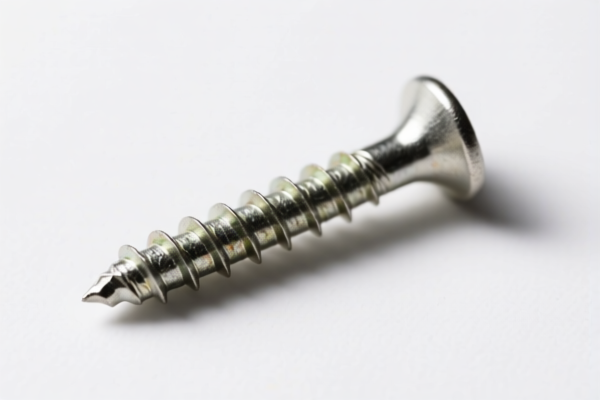
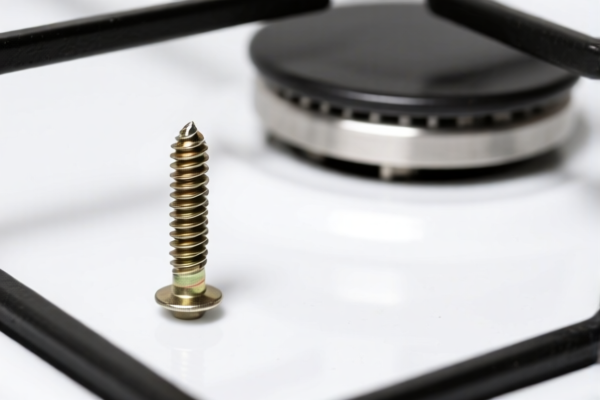
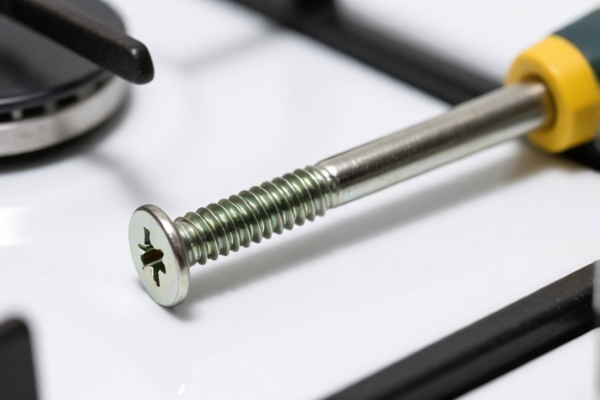
AI Analysis
🔩 Bike Stem Fixed Screw (Handlebar Stem Bolt/Nut)
🌐 HS Code Reference & Customs Clearance Guide | 2026 Latest Tariff Analysis | Professional Clearance Strategy
📌 1. Product Definition & Classification: Do You Really Understand "Bike Stem Screws"?
A bike stem fixed screw is a critical metal fastener that secures the handlebar stem to the bicycle fork steerer tube and holds the handlebars in place. In international trade, its classification depends heavily on its material and structural role:
- Metal Fasteners/Accessories: If considered a general metal fitting for bicycles, it falls under "Other metal accessories and parts."
- Threaded Articles: If classified by its mechanical function as a bolt/screw, it falls under "Other bolts and screws."
- Installation Parts: If viewed as a component attached to the bicycle frame/stem, it may be classified under "Fittings and parts for bicycles."
⚠️ Key Classification Logic:
- If primarily a steel/aluminum accessory → 8302.49.60.85
- If primarily a hex-head bolt (steel/iron) → 7318.15.20.65
- If primarily a bicycle part/accessory → 8302.30.30.60
📦 2. HS Code Classification Details (2026 Latest Tariff Authority Comparison)
| HS Code | Product Description | Application Scenario | Material Inference |
|---|---|---|---|
8302.49.60.85 |
Other base metal mountings, fittings, and similar articles (e.g., brackets, hinges, catches) | General metal fasteners, stainless steel or aluminum stem bolts | ✅ Steel/Aluminum |
7318.15.20.65 |
Other bolts and screws, whether or not with their nuts or washers, but not being articles of heading 7318.20, of iron or steel | Hex-head bolts, threaded steel fasteners | ✅ Iron/Steel |
8302.30.30.60 |
Base metal fittings and mountings, of a kind suitable for furniture, door, stair, window, blind, balustrade, panel or the like; fittings and mountings, of a kind suitable for vehicles | Bicycle stem accessories, metal fittings for bicycles | ✅ Base Metal |
🔍 Important Note:
- All three codes reflect different customs perspectives on the same product. - 8302.49.60.85: Focuses on the material/accessory nature. - 7318.15.20.65: Focuses on the mechanical/threaded nature. - 8302.30.30.60: Focuses on the application (bicycle part).
💰 3. 2026 Latest Tariff Rate Breakdown (Including Surcharges & Policy Add-ons)
✅ Applicable Country: United States (US)
✅ Origin: China (CN)
✅ Effective Time: Current rates apply (including Section 301 & Section 232 implications)
🎯 1. 8302.49.60.85 —— Base Metal Accessories (Steel/Aluminum)
| Item | Content |
|---|---|
| Basic Duty | 5.7% (ad valorem) |
| Section 301 Surcharge | +25.0% (Trade Remedy Duties) |
| Section 232 Surcharge | +50.0% (Steel & Aluminum Products) |
| Total Tax Rate | 80.7% |
| Tax Calculation | CIF Value × 80.7% |
| De Minimis Eligibility | ❌ Not Eligible (Section 232 goods are excluded from $800 de minimis relief) |
| Legal Basis Path | HTSUS:8302.49.60.85 → USITC Footnote 9903.88.01 (25%) → USITC Footnote 9903.01.24 (50% for steel) |
📌 Explanation:
- The 50% Section 232 tariff is critical here because steel/aluminum fasteners are explicitly targeted under the U.S. tariffs on steel and aluminum imports. - Combined with the 25% Section 301 tariff (typical for Chinese goods) and 5.7% base duty, the total burden is extremely high.
🎯 2. 7318.15.20.65 —— Other Steel Bolts & Screws
| Item | Content |
|---|---|
| Basic Duty | 0.0% (ad valorem) |
| Section 301 Surcharge | +25.0% (Trade Remedy Duties) |
| Section 232 Surcharge | +50.0% (Steel & Aluminum Products) |
| Total Tax Rate | 75.0% |
| Tax Calculation | CIF Value × 75.0% |
| De Minimis Eligibility | ❌ Not Eligible |
| Legal Basis Path | HTSUS:7318.15.20.65 → USITC Footnote 9903.88.01 (25%) → USITC Footnote 9903.01.24 (50% for steel) |
📌 Explanation:
- Although the basic duty is 0%, the Section 232 (50%) and Section 301 (25%) surcharges still apply heavily. - This code is often used for "dropped-down" classifications for steel bolts. The total rate is 75%, slightly lower than the accessory classification but still prohibitive.
🎯 3. 8302.30.30.60 —— Base Metal Fittings for Vehicles/Bicycles
| Item | Content |
|---|---|
| Basic Duty | 2.0% (ad valorem) |
| Section 301 Surcharge | +25.0% (Trade Remedy Duties) |
| Section 232 Surcharge | +50.0% (Steel & Aluminum Products) |
| Total Tax Rate | 77.0% |
| Tax Calculation | CIF Value × 77.0% |
| De Minimis Eligibility | ❌ Not Eligible |
| Legal Basis Path | HTSUS:8302.30.30.60 → USITC Footnote 9903.88.01 (25%) → USITC Footnote 9903.01.24 (50% for steel) |
📌 Explanation:
- This code reflects the product as a part of a bicycle. - The base duty is low (2%), but the Section 232 (50%) and Section 301 (25%) surcharges push the total to 77%. - Customs may argue this is a "metal fitting" rather than a "fastener," but the steel surcharge remains unavoidable for steel products from China.
🛠️ 4. Customs Clearance Practical Advice (Real-World Pitfall Avoidance Guide)
✅ 1. Required Documentation Checklist (None Missing)
| Document | Required | Description |
|---|---|---|
| ✅ Product Specification Sheet | ✔️ | Must specify material (e.g., "Stainless Steel 304," "Aluminum 6061"), size, and thread type. |
| ✅ Technical Drawing | ✔️ | Shows head type (hex, Allen, etc.) to support "bolt" vs. "accessory" classification. |
| ✅ Product Photos (Labeled) | ✔️ | Clear images of the screw head, threading, and packaging. |
| ✅ Commercial Invoice | ✔️ | Must clearly state "Bike Stem Fixed Screw" and material composition. |
| ✅ Country of Origin Certificate (CO) | ✔️ | Essential for determining Section 301 applicability (China origin = high tariffs). |
| ✅ Packing List | ✔️ | Details weight and quantity to avoid valuation discrepancies. |
✅ 2. Declaration Tips (Key Mantras)
🔥 "Material Matters, Function Defines, Origin Dictates Cost!"
| Scenario | Correct Declaration | Wrong Practice |
|---|---|---|
| Steel Screws | Declare material as "Steel" to trigger Section 232 correctly | Omitting material → Risk of classification error & penalties |
| Aluminum Screws | Declare material as "Aluminum" | Misdeclaring as plastic/steel → Severe penalties |
| Origin: China | Accept high tariff burden or seek exemption | Hiding origin → Fraud risk |
| Packaging | Declare as "Bulk Screws" if unpackaged | Declaring as "Finished Bicycle Parts" → Higher scrutiny |
✅ 3. Special Cases Handling
| Situation | Handling Advice |
|---|---|
| OEM Custom Screws | Provide client design drawings to prove specific engineering purpose, potentially supporting 8302.30.30.60 (part) classification. |
| Mixed Materials | If alloy contains >50% steel by weight, Steel classification applies → 50% Section 232. |
| Small Quantities (< $800) | ❌ Do not rely on de minimis. Section 232 goods (steel/aluminum) are excluded from the $800 exemption. |
| Aluminum Products | Still subject to 50% Section 232. Consider if the product can be classified under a non-steel/aluminum heading (e.g., plastic hardware), though unlikely for stem bolts. |
🌍 5. Global Market Clearance Comparison (2026 Latest)
| Country/Region | Recommended HS Code | Tariff Rate | Certification Requirements | Notes |
|---|---|---|---|---|
| 🇺🇸 USA | 7318.15.20.65 / 8302.49.60.85 |
75%~80.7% | None | High cost due to Sec 232 & 301. No de minimis. |
| 🇨🇳 China | 7318.15.20.65 |
~5%~10% | CCC (if applicable) | Low tariff. Ideal for domestic market. |
| 🇪🇺 EU | 7318.15.20.65 |
0%~6% | CE (if structural) | No Section 232 equivalent. Standard duty applies. |
| 🇬🇧 UK | 7318.15.20.65 |
0%~6% | UKCA | Post-Brexit, standard tariffs apply. |
| 🇦🇺 Australia | 7318.15.20.65 |
5% | RCM (if electrical, not applicable) | Standard duty, no major surcharges. |
📌 Conclusion:
- USA is the most challenging market for bike stem screws due to Section 232 (50%) and Section 301 (25%) tariffs. - Total duty can exceed 75%, making cost-effective export difficult unless the product is sourced from a country with a free trade agreement (e.g., Mexico, Canada) or is not made of steel/aluminum.
📌 6. Common Errors & Pitfall Avoidance (Blood Lessons)
❌ Mistake 1: Assuming small shipments under $800 are tax-free
👉 Result: Confiscation or massive back-taxes. Section 232 goods are excluded from de minimis.
❌ Mistake 2: Declaring "Stainless Steel" to avoid Section 232
👉 Result: Rejected. Stainless steel is still steel. Section 232 applies to all steel products.
❌ Mistake 3: Misclassifying as "Plastic Hardware" to avoid metal tariffs
👉 Result: Fraud accusation. If the product is visibly metal, customs will seize it and penalize.
✅ Correct Action:
"Bike Stem Bolt, Hex Head, Stainless Steel 304, for Bicycle Use, Made in China"
🎯 7. Conclusion: Professional Declaration Saves Costs!
🎯 Remember:
🔹 "Section 232 is unavoidable for steel/aluminum."
🔹 "De minimis does NOT apply to Sec 232 goods."
🔹 "Total duty ~75-80% for China-origin steel/aluminum screws in the US."
📌 Pro Tip:
If you are exporting to the US, consider:
1. Sourcing from non-targeted countries (e.g., Vietnam, Thailand, Mexico) to avoid Section 301 & 232.
2. Applying for Exclusions: Check if your specific HS code has an active exclusion under Section 232 or 301 (though rare for generic screws).
3. Adjusting Supply Chain: Move assembly/packaging to a third country to alter "Country of Origin" status legally.
📣 Immediate Action:
📞 Consult a licensed customs broker for Section 232 exclusion verification.
🚀 Calculate landed cost accurately including the 75%+ duty burden.
💼 Your profit margin depends on precise tariff planning!
Customer Reviews
About HS Code Classification
The Harmonized System (HS) is an internationally standardized nomenclature developed by the World Customs Organization (WCO) to classify traded products. Over 200 countries use the HS system as the basis for customs tariffs, trade statistics, and import/export regulations.
Each HS code follows a hierarchical structure:
- Chapter (2 digits) — Broad category of goods (e.g., Chapter 84: Machinery and Mechanical Appliances)
- Heading (4 digits) — More specific grouping within the chapter
- Subheading (6 digits) — Internationally standardized breakdown, used by all WCO member countries
- National subdivisions (8-10 digits) — Country-specific extensions for further classification, such as US HTSUS 10-digit codes
Correct HS code classification is essential for smooth customs clearance, accurate duty payment, and compliance with trade regulations. Misclassification can lead to customs delays, overpayment of duties, or penalties.
When importing from CN to US, the applicable tariff rates may include:
- Most-Favored-Nation (MFN) rate — The standard duty rate applied to WTO members
- General rate — Applied to countries without trade agreements
- Trade remedy duties — Additional tariffs such as Section 301 (anti-dumping), Section 232 (national security), or countervailing duties
The information provided on this page is for reference purposes only. For official classification, please consult with your local customs authority or a licensed customs broker.