Binder
CN → US| HS Code | Tariff Rate | Origin | Destination | Doc |
|---|---|---|---|---|
| 4820300040 | 35.0% | CN | US | Official Doc |
| 4820300020 | 35.0% | CN | US | Official Doc |
| 3926908700 | 40.3% | CN | US | Official Doc |
| 4202322000 | 55.0% | CN | US | Official Doc |
| 3926909989 | 22.8% | CN | US | Official Doc |
Product Images


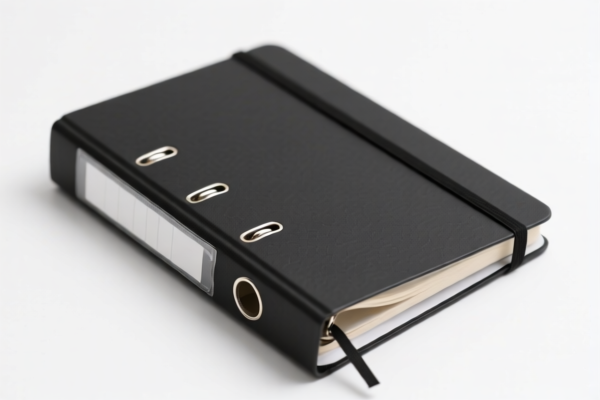
AI Analysis
📁 Binder (Office & Industrial Folders)
🌐 HS Code Reference & Customs Clearance Guide | 2026 Tariff Analysis | Professional Logistics Strategy
📌 I. Product Definition & Classification: Do You Know Your "Binder"?
Binders are essential office and industrial supplies used to organize, store, and transport documents. In international trade, their classification strictly depends on the material composition and structure, leading to vastly different tax outcomes.
Material Classification Breakdown: * Paper/Cardboard Binders: Made primarily of paper, cardboard, or similar fibrous materials. * Plastic Binders: Made of plastic (e.g., polypropylene, PVC), ranging from flat files to rigid containers. * Composite/Other: Items where the outer surface is a specific material (e.g., plastic sheets on a container).
⚠️ Critical Distinction:
- Paper Binders → Often 0% Base Duty + High Add-ons.
- Plastic Binders → Base Duty applies (5.3%) + High Add-ons.
- Plastic-Coated Containers → Highest Base Duty (20%) + High Add-ons.
Incorrect classification can double your tax bill!
📦 II. HS Code Classification Details (2026 Tariff Authority)
Based on the specific material attributes, here are the exact HS Codes and their logic:
| HS Code | Product Description | Material Attribute | Scenario |
|---|---|---|---|
4820.30.00.40 |
Paper/Cardboard Binders | Paper & Cardboard | Standard office folders, paper binders. |
4820.30.00.20 |
Paper/Cardboard Binders | Paper & Cardboard | Folders/Loose-leaf binders in paper category. |
3926.90.87.00 |
Flat Plastic Binders | Plastic (Flat) | Flexible plastic files, plastic sheet binders. |
4202.32.20.00 |
Plastic-Coated Containers | Plastic Outer Surface | Rigid containers where the outside is plastic sheets. |
3926.90.99.89 |
Unspecified Plastic/Paper | Mixed/Other Plastic | Ambiguous material; classified as "Other Plastic." |
🔍 Key Insight:
- Paper binders (4820) avoid the 5.3% base duty but suffer the same "Section 301" and "122" add-ons.
- Plastic binders (3926) always incur the 5.3% base duty plus the add-ons.
- Container-style binders (4202) with plastic exteriors incur the highest base duty (20%).
💰 III. 2026 Tariff Rate Breakdown (Including Add-ons & Policy Fees)
✅ Target Market: United States (US)
✅ Origin: China (CN)
✅ Effective Date: Current (2026) Regime
🎯 1. Paper Binders (4820.30.00.40 / 4820.30.00.20)
The "Zero Base, High Add-on" Scenario
| Item | Content |
|---|---|
| Base Duty | 0.0% (Paper products often duty-free) |
| Section 301 Add-on | +25.0% (USITC China Tariff) |
| Section 122 Add-on | +10.0% (New 122 Clause Tariff) |
| Total Tax Rate | 35.0% |
| Calculation | CIF Value × 35% |
| De Minimis Exemption | ❌ No (Not eligible) |
📌 Explanation:
Even though paper is the "base material" (0% tax), the US imposes two heavy layers of protectionism: the standard 25% Section 301 tariff and the newer 10% "122 Clause" tariff. Total = 35%.
🎯 2. Flat Plastic Binders (3926.90.87.00)
The "Standard Plastic" Scenario
| Item | Content |
|---|---|
| Base Duty | 5.3% (Standard plastic duty) |
| Section 301 Add-on | +25.0% |
| Section 122 Add-on | +10.0% |
| Total Tax Rate | 40.3% |
| Calculation | CIF Value × 40.3% |
| De Minimis Exemption | ❌ No |
📌 Explanation:
Plastic items start with a 5.3% base tax. When you add the 25% and 10% surcharges, the total hits 40.3%. This is 5.3% higher than paper binders due to the material itself.
🎯 3. Plastic-Coated Containers (4202.32.20.00)
The "High Base Duty" Trap
| Item | Content |
|---|---|
| Base Duty | 20.0% (High duty for outer plastic sheet) |
| Section 301 Add-on | +25.0% |
| Section 122 Add-on | +10.0% |
| Total Tax Rate | 55.0% |
| Calculation | CIF Value × 55.0% |
| De Minimis Exemption | ❌ No |
📌 Explanation:
This is the most expensive category. Because the outer surface is a plastic sheet on a container (Leather/Plastic Goods Chapter), the base duty jumps to 20%. Combined with add-ons, the total tax is a staggering 55%. Avoid this code unless necessary!
🎯 4. Unspecified Plastic/Paper (3926.90.99.89)
The "Ambiguous" Lower-Tax Scenario
| Item | Content |
|---|---|
| Base Duty | 5.3% (Plastic Base) |
| Section 301 Add-on | +7.5% (Reduced Section 301) |
| Section 122 Add-on | +10.0% |
| Total Tax Rate | 22.8% |
| Calculation | CIF Value × 22.8% |
| De Minimis Exemption | ❌ No |
📌 Explanation:
This code applies when the material is unclear or mixed. Interestingly, the Section 301 surcharge is reduced to 7.5% (instead of 25%), resulting in a total of 22.8%. However, relying on ambiguity is risky; customs may reclassify to3926.90.87.00(40.3%) upon inspection.
🛠️ IV. Customs Clearance Practical Advice
✅ 1. Preparation Checklist (Must-Haves)
| Document | Requirement | Why It Matters |
|---|---|---|
| ✅ Product Material Certificate | ✔️ Critical | Proves if it's Paper (4820) or Plastic (3926). Prevents reclassification. |
| ✅ 3D Structure Photos | ✔️ | Shows if it's a "Flat File" vs. a "Rigid Container" (4202). |
| ✅ Bill of Materials (BOM) | ✔️ | Breaks down percentages of paper vs. plastic vs. metal rings. |
| ✅ Commercial Invoice | ✔️ | Must explicitly state "Material: Paper" or "Material: PP Plastic". |
| ✅ Packing List | ✔️ | Must match the declared HS Code description (e.g., "Flat" vs. "Box"). |
✅ 2. Declaration Strategy (Pro Tips)
🔥 Rule: "Material Dictates the Code, Structure Dictates the Rate!"
| Scenario | Correct Code | Risk of Wrong Code |
|---|---|---|
| Paper Folders | 4820.30.00.40 |
If declared as Plastic (3926) → Pay extra 5.3% unnecessarily. |
| Standard Plastic Files | 3926.90.87.00 |
If declared as "Other" (99.89) → Risk of 22.8% but may be audited. |
| Rigid Plastic Cases | 4202.32.20.00 |
If declared as 3926 → 55% vs 40.3% → Loss of 15% margin! |
| Mixed Material | 3926.90.99.89 |
Only if material is truly ambiguous; otherwise, declare dominant material. |
💡 Pro Tip: For Paper Binders, emphasize "Paper/Cardboard" in the description to secure the 0% base duty. For Plastic, be honest about the 5.3% base.
✅ 3. Special Cases & Pitfalls
| Situation | Strategy |
|---|---|
| Binders with Metal Rings | The metal rings do not change the classification. Paper covers → 4820; Plastic covers → 3926. |
| "Leather" or "Synthetic Leather" | If it looks like leather but is plastic, it may be 4202. Be careful! |
| Custom Logo Embossing | Does not change the code. However, if the logo covers the whole surface, it might be argued as a "printed" product. |
| Bulk Shipping | If declared as "Office Supplies" generically, customs will ask for specifics. Always be specific. |
🌍 V. Global Market Comparison (US Focus)
| Region | Recommended HS Code | Estimated Total Tax (China) | Notes |
|---|---|---|---|
| 🇺🇸 USA | 4820 or 3926 |
35.0% - 55.0% | High Section 301 & 122 taxes apply. |
| 🇪🇺 EU | 4820 / 3926 |
0% - 3.5% | No Section 301; Lower VAT usually. |
| 🇨🇦 Canada | 4820 / 3926 |
0% - 8% | No Section 301; CPTPP benefits. |
| 🇯🇵 Japan | 4820 / 3926 |
3.0% - 4.0% | Low tariff, no add-ons. |
📌 Conclusion: The US market is the most expensive due to the 122 Clause and Section 301. If you can ship to Canada or EU first (re-export), costs drop significantly, but Rules of Origin must be strictly followed to avoid anti-circumvention penalties.
📌 VI. Common Errors & How to Avoid Them
❌ Error 1: Calling all binders "Office Supplies" (9608 or 9619).
👉 Result: Customs rejects and reclassifies to specific HS codes, delaying shipment by weeks.
❌ Error 2: Declaring Plastic Binders as "Paper" to save tax.
👉 Result: Seizure, 20% penalty, and potential blacklist.
❌ Error 3: Ignoring the "Outer Surface" rule for 4202.
👉 Result: A plastic case declared as 3926 will be reclassified to 4202 (55% tax).
❌ Error 4: Not separating "Paper" and "Plastic" in mixed shipments.
👉 Result: The whole shipment is taxed at the highest applicable rate (usually the plastic rate).
✅ Best Practice:
"Clear Description: 'Paper Folders, 3-Ring, 8.5x11, No Metal Parts' OR 'Plastic Polypropylene Binder, Clear Front, 3-Ring'. No generic terms."
🎯 VII. Final Verdict: Cost Optimization Strategy
🎯 The Golden Rule:
"Material First, Structure Second!"
- If Paper: Aim for
4820.30.00.40/20(35% total). No base tax, but high add-ons. - If Plastic: Aim for
3926.90.87.00(40.3% total). Base tax exists, but standard rate. - If Container: Avoid
4202.32.20.00(55%) if possible. Design to be "Flat" (3926) instead of "Rigid Container". - If Mixed: Be honest. If plastic is >51%, use
3926.
📌 Strategic Move:
Consider dual sourcing. If you need to ship to the US, ensure your paper binders are 100% paper to avoid the "plastic base" tax. If you must use plastic, ensure they are "Flat" (
3926) not "Container" (4202) to save 15% in taxes.
📣 Immediate Action:
📞 Audit your BOM: Check if your binders have plastic covers or are purely paper.
📄 Update Invoice: Ensure the description matches the HS Code exactly.
🚀 Apply for Binding Materials: If volume is high, consider applying for Exclusion Requests for Section 301 (if eligible).
✨ Professional Customs Clearance Starts with Precise Classification!
💼 Every % of Tax Saved is Profit in Your Pocket!
Customer Reviews
About HS Code Classification
The Harmonized System (HS) is an internationally standardized nomenclature developed by the World Customs Organization (WCO) to classify traded products. Over 200 countries use the HS system as the basis for customs tariffs, trade statistics, and import/export regulations.
Each HS code follows a hierarchical structure:
- Chapter (2 digits) — Broad category of goods (e.g., Chapter 84: Machinery and Mechanical Appliances)
- Heading (4 digits) — More specific grouping within the chapter
- Subheading (6 digits) — Internationally standardized breakdown, used by all WCO member countries
- National subdivisions (8-10 digits) — Country-specific extensions for further classification, such as US HTSUS 10-digit codes
Correct HS code classification is essential for smooth customs clearance, accurate duty payment, and compliance with trade regulations. Misclassification can lead to customs delays, overpayment of duties, or penalties.
When importing from CN to US, the applicable tariff rates may include:
- Most-Favored-Nation (MFN) rate — The standard duty rate applied to WTO members
- General rate — Applied to countries without trade agreements
- Trade remedy duties — Additional tariffs such as Section 301 (anti-dumping), Section 232 (national security), or countervailing duties
The information provided on this page is for reference purposes only. For official classification, please consult with your local customs authority or a licensed customs broker.