Binder Clip
CN → US| HS Code | Tariff Rate | Origin | Destination | Doc |
|---|---|---|---|---|
| 3926100000 | 15.3% | CN | US | Official Doc |
| 7326190080 | 87.9% | CN | US | Official Doc |
| 7326200090 | 88.9% | CN | US | Official Doc |
| 3926908500 | 24.0% | CN | US | Official Doc |
Product Images
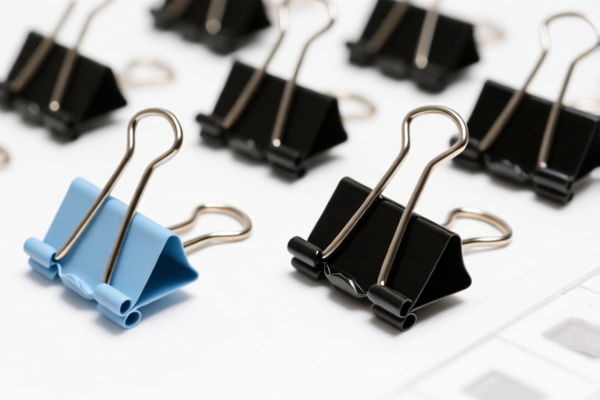
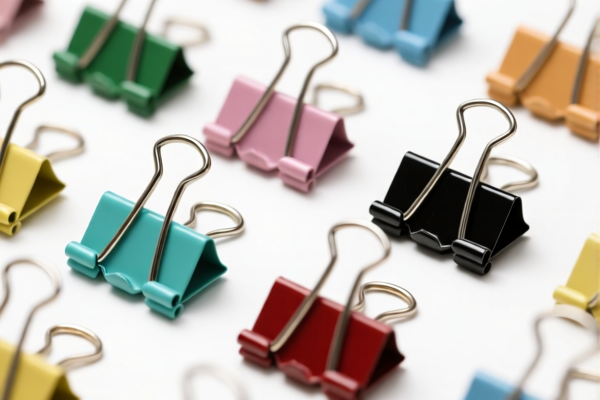
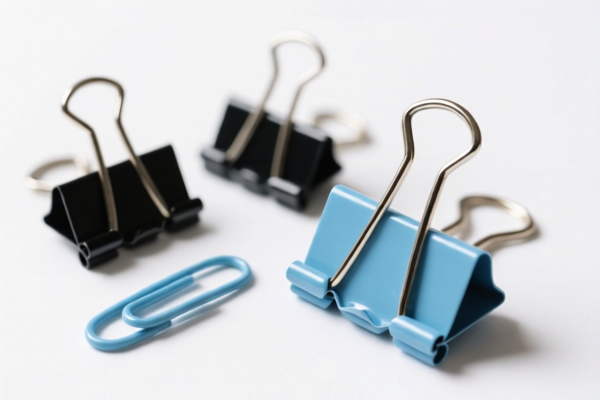
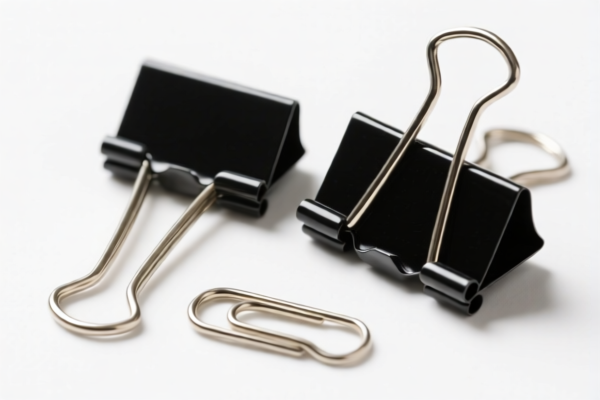
AI Analysis
📎 Binder Clips (Office Supplies)
🌐 HS Code Reference & Customs Clearance Guide | 2026 Latest Tariff Analysis | Professional Clearance Strategy
📌 I. Product Definition & Classification: Do You Really Understand "Binder Clips"?
Binder clips are ubiquitous office and school supplies used for holding stacks of paper together. In international trade, their classification is highly sensitive to material composition and manufacturing process. A common mistake is assuming a single HS code applies to all binder clips. The customs authorities strictly differentiate between plastic-based clips and metal-based clips, leading to vastly different tax liabilities.
⚠️ Key Distinction Point:
- If the clip is primarily plastic (or plastic-coated/mixed materials falling under plastics chapter) → Classified under Chapter 39 (Plastics)
- If the clip is primarily metal (iron, steel, etc.) → Classified under Chapter 73 (Articles of Iron or Steel)
📦 II. HS Code Classification Details (2026 Latest Tariff Authority Comparison)
| HS Code | Product Description | Application Scenario | Material Basis |
|---|---|---|---|
3926.10.00.00 |
Office or school supplies, of plastics | Plastic clips, plastic-coated metal clips with predominant plastic identity | ✅ Plastic |
7326.19.00.80 |
Other articles of iron or steel (non-forged/non-stamped) | Metal binder clips, steel wire clips | ✅ Iron/Steel |
7326.20.00.90 |
Other articles of iron or steel wire | Clips made primarily of iron or steel wire (not excluded items like belts/hangers) | ✅ Iron/Steel |
3926.90.85.00 |
Other articles of plastics and articles of other materials of heading 3926 | Mixed-material clips (plastic + metal) where plastic is significant but doesn't fit 3926.10 | ✅ Plastic/Mixed |
🔍 Important Note:
- Plastic Clips: If the clip is made of plastic or has a significant plastic component that defines its essential character, it falls under 3926.10.00.00.
- Metal Clips: If the clip is made of metal (steel/iron wire), it falls under 7326.19.00.80 or 7326.20.00.90. The distinction between these two depends on the specific manufacturing process (forged/stamped vs. other wire goods).
- Mixed Materials: If the clip is a composite (e.g., plastic handle with metal spring), customs may classify it under 3926.90.85.00 if the plastic aspect is predominant or if it doesn't fit the strict "office supply" definition of 3926.10.
💰 III. 2026 Latest Tariff Rate Details (Including Additional Taxes & Policy Add-ons)
✅ Applicable Country: United States (US)
✅ Origin: China (CN)
✅ Effective Date: From November 10, 2025 onwards (including subsequent imports)
🎯 1. 3926.10.00.00 —— Office or School Supplies, of Plastics
| Item | Details |
|---|---|
| Basic Tariff | 5.3% (ad valorem) |
| Section 301 Additional Tariff | 0.0% |
| IEEPA 122 Tariff | +10% |
| Total Tariff Rate | 15.3% |
| Tax Calculation | CIF Value × 15.3% |
| De Minimis Eligibility | ❌ Not Applicable (Subject to standard duties) |
| Legal Basis Path | IEEPA:122 → USITC:3926.10.00.00 |
📌 Explanation:
- The basic tariff for plastic office supplies is 5.3%.
- Section 301 tariffs do not apply to this specific subheading (0.0%).
- However, the IEEPA 122 tariff adds an additional 10% for Chinese-origin plastic articles.
- Total Effective Rate: 15.3%. This is the most cost-effective classification for plastic binder clips.
🎯 2. 7326.19.00.80 —— Other Articles of Iron or Steel (Non-Forged/Non-Stamped)
| Item | Details |
|---|---|
| Basic Tariff | 2.9% (ad valorem) |
| Section 301 Additional Tariff | 25.0% |
| IEEPA 122 Tariff | +10% |
| Section 232 (Steel/Aluminum/Copper) | +50% |
| Total Tariff Rate | 87.9% |
| Tax Calculation | CIF Value × 87.9% |
| De Minimis Eligibility | ❌ Not Applicable |
| Legal Basis Path | IEEPA:122 → USITC:7326.19.00.80 → FOOTNOTE:Steel/Aluminum/Copper |
📌 Explanation:
- The basic tariff is low at 2.9%.
- However, Section 301 tariffs add 25%.
- IEEPA 122 adds another 10%.
- Crucially, this classification triggers the Section 232 tariff for steel/aluminum/copper products, adding a massive 50%.
- Total Effective Rate: 87.9%. This is extremely high and should be avoided if possible.
🎯 3. 7326.20.00.90 —— Other Articles of Iron or Steel Wire
| Item | Details |
|---|---|
| Basic Tariff | 3.9% (ad valorem) |
| Section 301 Additional Tariff | 25.0% |
| IEEPA 122 Tariff | +10% |
| Section 232 (Steel/Aluminum/Copper) | +50% |
| Total Tariff Rate | 88.9% |
| Tax Calculation | CIF Value × 88.9% |
| De Minimis Eligibility | ❌ Not Applicable |
| Legal Basis Path | IEEPA:122 → USITC:7326.20.00.90 → FOOTNOTE:Steel/Aluminum/Copper |
📌 Explanation:
- Similar to the previous metal classification, the basic tariff is 3.9%.
- Section 301 adds 25%.
- IEEPA 122 adds 10%.
- The Section 232 tariff applies again, adding 50% for steel wire products.
- Total Effective Rate: 88.9%. This is the highest possible rate due to the cumulative effect of multiple trade remedies.
🎯 4. 3926.90.85.00 —— Other Articles of Plastics and Articles of Other Materials
| Item | Details |
|---|---|
| Basic Tariff | 6.5% (ad valorem) |
| Section 301 Additional Tariff | 7.5% |
| IEEPA 122 Tariff | +10% |
| Total Tariff Rate | 24.0% |
| Tax Calculation | CIF Value × 24.0% |
| De Minimis Eligibility | ❌ Not Applicable |
| Legal Basis Path | IEEPA:122 → USITC:3926.90.85.00 |
📌 Explanation:
- This classification is often used for mixed-material clips (plastic + metal) that don't fit the strict "office supply" definition of 3926.10.
- Basic tariff is 6.5%.
- Section 301 adds 7.5%.
- IEEPA 122 adds 10%.
- Total Effective Rate: 24.0%. This is significantly lower than the metal classifications but higher than the pure plastic office supply classification.
🛠️ IV. Customs Clearance Practical Advice (Operational Pitfall Avoidance Guide)
✅ 1. Preparation Checklist (All Documents Required)
| Document | Required | Notes |
|---|---|---|
| ✅ Product Specifications | ✔️ | Clearly state material composition (e.g., "90% Plastic, 10% Steel Spring") |
| ✅ Material Safety Data Sheet (MSDS) | ✔️ | If applicable, especially for coated materials |
| ✅ Product Photos (Clear) | ✔️ | Show the clip from multiple angles, highlighting the material (e.g., plastic coating vs. bare metal) |
| ✅ Commercial Invoice | ✔️ | Must explicitly state "Binder Clip" and material type (Plastic/Metal) |
| ✅ Packing List | ✔️ | Ensure quantity matches invoice |
| ✅ Origin Certificate | ✔️ | To verify Chinese origin for tariff calculations |
✅ 2. Declaration Tips (Critical Keywords)
🔥 "Material Defines Code, Metal Means High Tax, Plastic Means Low Tax!"
| Scenario | Correct Declaration | Incorrect Declaration | Risk |
|---|---|---|---|
| Pure Plastic Binder Clips | "Plastic Binder Clip, Office Supply" → 3926.10.00.00 |
"Binder Clip" (without material) | Misclassification → Higher Tax |
| Metal Binder Clips | "Steel Wire Binder Clip" → 7326.19.00.80 / 7326.20.00.90 |
"Office Supply" (implies plastic) | 87.9%-88.9% Tax Rate |
| Mixed Material Clips | "Plastic-Coated Metal Binder Clip" → 3926.90.85.00 |
"Plastic Binder Clip" | Dispute over essential character |
| Generic "Binder Clip" | Specify material clearly | Vague description | Customs may default to highest duty (Metal) |
✅ 3. Special Cases Handling
| Scenario | Handling Advice |
|---|---|
| OEM Custom Clips | Provide design drawings to prove material composition. If plastic-dominant, aim for 3926.10.00.00. |
| Plastic-Coated Metal Clips | If plastic is the essential character (e.g., fully covered), argue for 3926.10.00.00 or 3926.90.85.00. Avoid metal classification. |
| Bulk Import | Ensure all clips in the shipment are of the same material type. Mixed shipments may trigger separate classifications. |
| Pre-Ruling Application | Strongly Recommended: Apply for an Advance Ruling from CBP if you are unsure whether plastic-coated clips should be classified as plastic or metal. This provides legal certainty. |
🌍 V. Global Market Comparison (2026 Latest)
| Country/Region | Recommended HS Code | Tariff (China Origin) | Certification | Notes |
|---|---|---|---|---|
| 🇺🇸 USA | 3926.10.00.00 |
15.3% | None | Metal clips face 87.9% due to Section 232. |
| 🇨🇳 China | 3926.10.00.00 |
5.3% | None | Lower export tax, but US import tax is the main cost. |
| 🇪🇺 EU | 3926.10.00.00 |
0% (if plastic) | CE (if applicable) | No additional tariffs for plastic office supplies. |
| 🇬🇧 UK | 3926.10.00.00 |
0% | CE | Post-Brexit, similar to EU. |
| 🇯🇵 Japan | 3926.10.00.00 |
0% | PSE (if electrical) | Low tariffs for plastic office goods. |
📌 Conclusion:
- The USA is the most challenging market due to the combination of Section 301, IEEPA, and Section 232 tariffs.
- Metal binder clips are extremely expensive to import into the US (87.9%-88.9%).
- Plastic binder clips are the preferred choice for cost-effective US imports (15.3%).
📌 VI. Common Mistakes & Pitfall Avoidance (Lessons Learned)
❌ Mistake 1: Declaring metal binder clips as "Office Supplies" without specifying material
👉 Consequence: Customs may classify them as metal, leading to 88.9% tax instead of a lower rate.
❌ Mistake 2: Assuming all binder clips fall under the same HS code
👉 Consequence: 15.3% vs. 88.9% difference is massive. Misclassification leads to penalties.
❌ Mistake 3: Ignoring the Section 232 tariff for steel products
👉 Consequence: Unexpected 50% additional tax on top of other duties.
❌ Mistake 4: Vague description "Binder Clip" in the invoice
👉 Consequence: Customs requests additional info, causing delays and potential storage fees.
✅ Correct Approach:
"Plastic Binder Clip, 30mm, Black, Office Supply, Model ABC" →
3926.10.00.00
"Steel Wire Binder Clip, 25mm, Zinc-Plated, Model XYZ" →7326.19.00.80
🎯 VII. Conclusion: Professional Declaration, Save Time and Money!
🎯 Remember the Mantra:
🔹 "Plastic is Profitable, Metal is Tax-Heavy!"
🔹 "Section 232 is the Enemy of Steel Clips!"
🔹 "Clear Material Description Saves Thousands!"
📌 Pro Tip:
If your binder clips are plastic-coated metal, argue for classification under Chapter 39 (Plastics) by demonstrating that the plastic coating is the essential character. This can save you over 70% in taxes compared to classifying them as steel articles.
Strongly recommend applying for an Advance Ruling to confirm your classification strategy with CBP before shipment.
📣 Immediate Action:
📞 Contact your customs broker + Provide material specs + Apply for HS Code Advance Ruling
🚀 Make your binder clips, smooth clearance, efficient export, profit maximization!
✨ Professional clearance starts with precise classification!
💼 Every cent of your cost deserves precise calculation!
Customer Reviews
About HS Code Classification
The Harmonized System (HS) is an internationally standardized nomenclature developed by the World Customs Organization (WCO) to classify traded products. Over 200 countries use the HS system as the basis for customs tariffs, trade statistics, and import/export regulations.
Each HS code follows a hierarchical structure:
- Chapter (2 digits) — Broad category of goods (e.g., Chapter 84: Machinery and Mechanical Appliances)
- Heading (4 digits) — More specific grouping within the chapter
- Subheading (6 digits) — Internationally standardized breakdown, used by all WCO member countries
- National subdivisions (8-10 digits) — Country-specific extensions for further classification, such as US HTSUS 10-digit codes
Correct HS code classification is essential for smooth customs clearance, accurate duty payment, and compliance with trade regulations. Misclassification can lead to customs delays, overpayment of duties, or penalties.
When importing from CN to US, the applicable tariff rates may include:
- Most-Favored-Nation (MFN) rate — The standard duty rate applied to WTO members
- General rate — Applied to countries without trade agreements
- Trade remedy duties — Additional tariffs such as Section 301 (anti-dumping), Section 232 (national security), or countervailing duties
The information provided on this page is for reference purposes only. For official classification, please consult with your local customs authority or a licensed customs broker.