Binder with Calculator
CN → US| HS Code | Tariff Rate | Origin | Destination | Doc |
|---|---|---|---|---|
| 8470290000 | 35.0% | CN | US | Official Doc |
| 8470100060 | 35.0% | CN | US | Official Doc |
| 8473210000 | 35.0% | CN | US | Official Doc |
| 8473290000 | 35.0% | CN | US | Official Doc |
| 4820300020 | 35.0% | CN | US | Official Doc |
| 4820300040 | 35.0% | CN | US | Official Doc |
Product Images

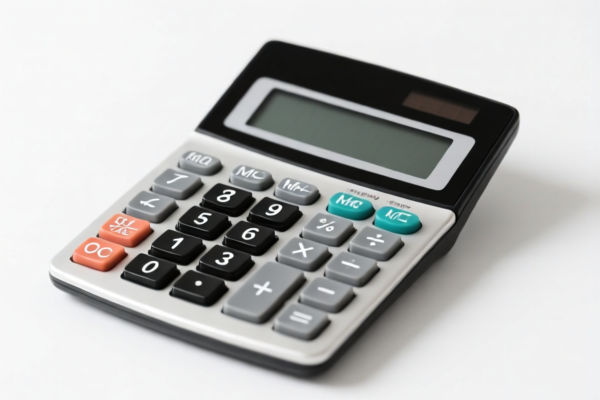


AI Analysis
🧮📓 The "Binder with Calculator": The Ultimate Office Hybrid
🌐 HS Code Reference & Customs Guide | 2024/2025 Duty Rate Analysis | Professional Clearance Strategy
📌 I. Product Definition: What Exactly is a "Binder with Calculator"?
The "Binder with Calculator" is a unique hybrid stationery item designed for professionals, students, and accountants. It combines the functionality of a loose-leaf binder with an integrated electronic calculating device.
In international trade classification, this product creates a classification conflict: * Is it primarily a Calculator (an electronic machine)? → Chapter 84 * Is it primarily Stationery (paper goods/binders)? → Chapter 48
⚠️ Critical Distinction: * Scenario A (Electronics First): If the calculator is the main function, and the binder is merely an accessory (e.g., a calculator with a built-in paper tray that looks like a binder), it is classified under 8470 (Calculating Machines). * Scenario B (Stationery First): If the calculator is a minor accessory and the main purpose is organizing papers in a binder (e.g., a standard binder with a small calculator glued to the cover or side), it is classified under 4820 (Stationery/Binders).
Based on the provided data, the specific HS Codes for this hybrid item fall into two distinct categories depending on the manufacturer's design intent.
📦 II. HS Code Classification Details (Based on Provided Data)
The following data covers the two potential classification paths for "Binder with Calculator" items.
| HS Code | Product Description | Classification Logic | Duty Rate (Total) |
|---|---|---|---|
8470.29.00.00 |
Calculating Machines: Other electronic calculating machines; Other | Primary Function = Calculator If the device is an "Electronic Calculator" where the binder is a secondary feature or the item is sold as a "Calculating Machine with accessories." |
25.0% |
8470.10.00.60 |
Calculating Machines: Other electronic calculating machines capable of operation without external power... | Primary Function = Calculator Specific to pocket-size or standalone calculators that might include a paper pad. |
25.0% |
8473.21.00.00 |
Parts/Accessories: Parts of electronic calculating machines (Subhead 8470.10/21/29) | Accessories If the "binder" is sold strictly as an accessory to a calculator (e.g., a paper holder designed solely for the calculator). |
25.0% |
8473.29.00.00 |
Parts/Accessories: Parts/Accessories of machines heading 8470; Other | Accessories Other miscellaneous parts for electronic calculators. |
25.0% |
4820.30.00.20 |
Stationery: Binders, folders, file covers; Looseleaf binders | Primary Function = Binder If the item is primarily a "Looseleaf Binder" (paper product) with a calculator attached as a non-essential feature. |
25.0% |
4820.30.00.40 |
Stationery: Binders, folders, file covers; Other | Primary Function = Binder Other types of binders not specifically "looseleaf." |
25.0% |
🔍 Expert Analysis: * The "25%" Reality: Regardless of whether the Customs Authority classifies this as Electronics (8470) or Stationery (4820), the Total Tax is 25.0%. * Why? The "Base Tariff" is 0.0%, but a specific Additional Duty (Add-on Tariff) of 25.0% applies to all these categories (likely due to Section 301 Trade War measures affecting China-origin goods). * Risk Factor: The risk lies not in the rate (which is consistent), but in the correct description to avoid penalties for misclassification.
💰 III. 2024/2025 Duty Rate Breakdown & Tax Clauses
✅ Applicable Market: United States (US) / Major Western Markets (Based on "25% Additional Tariff" pattern) ✅ Origin: China (CN) – Assumed based on the "25% additional" pattern typical of Section 301 listings. ✅ Effective Date: Current / 2024-2025 Regime
🎯 Tax Structure for All Categories
| Tax Component | Rate | Source / Clause |
|---|---|---|
| Base Tariff (MFN) | 0.0% | Standard Most-Favored-Nation rate for these categories. |
| Additional Duty (Section 301) | +25.0% | USITC / USTR List 3 & 4: Applies to electronics (8470) and specific stationery/accessories originating from China. |
| Total Duty Rate | 25.0% | Sum of Base + Additional. |
| Tax Calculation | CIF Value × 25.0% |
Duties are calculated on the total value of goods, freight, and insurance. |
📌 Detailed Tax Clause Explanation: *
Base Tariff: 0.0%: This indicates that without trade restrictions, these items would enter duty-free. *Additional Tariff: 25.0%: This is the "Trump Tax" (Section 301). * For Electronics (8470): Specifically targets Chinese electronic calculating machines. * For Stationery (4820): While less common, specific high-end or electronic-enhanced stationery accessories are often caught in broader manufacturing or "parts" lists. * Impact: This 25% is non-negotiable unless you qualify for a specific exclusion (rare) or ship from a non-China country of origin.
🛠️ IV. Customs Clearance Practical Advice
✅ 1. Documentation Checklist (Essential)
| Document | Requirement | Why? |
|---|---|---|
| Product Photographs | Must-have | Show the calculator is integrated and functional, not just an image printed on the cover. |
| User Manual / Spec Sheet | Must-have | Must state: "Electronic Calculator Function" and "Power Source (Battery/Solar)." |
| BOM (Bill of Materials) | Recommended | To prove if the "Binder" is the main part or the "Calculator" is the main part. |
| Commercial Invoice | Must-have | Crucial: Do NOT just write "Binder with Calculator." Write "Electronic Calculator with Paper Holder (HS 8470.29)" OR "Stationery Binder with Calculator Accessory (HS 4820.30)" based on the agreed classification. |
| Packing List | Must-have | Ensure the weight/volume reflects the whole unit. |
✅ 2. Declaration Strategy (The "Golden Rule")
🔥 Rule: "Function Dictates Classification, Not Shape."
| Scenario | Correct Declaration | Incorrect Declaration | Consequence |
|---|---|---|---|
| Calculator is the Main Feature | Declare as 8470.29.00.00 (Calculating Machine) |
Declare as 4820 (Stationery) |
Penalty: If Customs re-classifies to 8470, you may face "False Declaration" fines, though duty is the same (25%). |
| Binder is the Main Feature | Declare as 4820.30.00.20 (Looseleaf Binder) |
Declare as 8470 (Calculator) |
Penalty: Over-declaring electronics can trigger unnecessary scrutiny on "electronic compliance" (FCC/CTIA). |
| Hybrid Item | Consult a Broker: Submit photos to prove if the calculator is a "standard calculator" or "custom unit." | Guesswork | High risk of Customs Audit and Seizure. |
✅ 3. Special Case: Parts vs. Finished Goods
- If you are shipping the Calculator and the Binder as separate items:
- Calculator →
8470.29.00.00(25%) - Binder →
4820.30.00.20(25%)
- Calculator →
- If you are shipping them pre-assembled:
- Treat as a single "Finished Good."
- Tip: If the calculator is detachable, declare as
8473.21.00.00(Part of the calculator) ONLY if the binder is clearly a specialized accessory sold with the calculator. Otherwise, treat as a machine.
🌍 V. Global Market Comparison (2024/2025)
| Country/Region | Likely HS Code | Duty Rate (China Origin) | Key Requirement |
|---|---|---|---|
| 🇺🇸 USA | 8470.29 or 4820.30 |
25.0% (Fixed Add-on) | FCC/CE Compliance (for the electronic part) |
| 🇪🇺 EU | 8470.29 or 4820.30 |
0.0% - 4.5% | CE Marking + RoHS (for electronics) |
| 🇯🇵 Japan | 8470.29 or 4820.30 |
0.0% - 3.5% | PSE (for electronics) |
| 🇨🇳 China | 8470.29 or 4820.30 |
0.0% | No export tax on these items |
📌 Conclusion: The 25% tariff is specific to the US market (or similar markets with Section 301/301-style measures). * If you are shipping to Europe or Japan, the duty is likely 0-5%, making the "Binder with Calculator" much cheaper to import there. * Strategy: If possible, route electronics-heavy stationery through a third country (e.g., Vietnam/Malaysia) if the rules of origin allow it (requires significant processing).
📌 VI. Common Pitfalls & "Blood Lessons"
❌ Mistake 1: Under-declaring the Electronic Value
* Why: Trying to avoid the 25% by listing it as a "Paper Binder" ($50) but actually it's a "Calculator" ($150).
* Result: Customs Audit, Fine, and Re-classification to 8470 + 25% on the full value.
❌ Mistake 2: Vague Description * Why: "Stationery with Calculator." * Result: Customs officer has to guess. If they guess wrong, they delay clearance for weeks. * Fix: Use precise terms: "Electronic Calculator with Integrated Paper Tray" or "Loose-Leaf Binder with Attached Calculator."
❌ Mistake 3: Ignoring the "Part" Classification
* Why: Shipping a "Binder" that is only made to fit a specific calculator model.
* Result: If not classified as a part (8473.21), it might be rejected as a "non-matching" binder.
✅ Correct Action:
"Clear Labeling + Photos + Precise HS Code." * If it calculates: 8470. * If it holds paper: 4820. * Tax: Expect 25% in the US.
🎯 VII. Final Recommendation
🚀 For "Binder with Calculator" Shipments:
1. Determine the "Essential Character": Is it a calculator that holds paper, or a binder that has a calculator?
2. Select the HS Code:
* If Electronics: Use 8470.29.00.00 (Safest for most hybrid calculators).
* If Stationery: Use 4820.30.00.20.
3. Budget for 25%: In the US market, this duty is non-negotiable for China-origin goods.
4. Prepare Electronic Compliance: Even if the duty is the same, the US will demand FCC certification for the calculator function. No FCC = No Entry.
💡 Pro Tip: If you are the manufacturer, consider designing the calculator to be a detachable module. Ship the calculator separately (as a calculator) and the binder separately (as stationery). This sometimes allows for different packaging strategies, though the 25% duty remains for both.
✨ Clearance Success = Accurate HS Code + Complete Documentation + Realistic Duty Budgeting! 💼 Don't let a 25% surprise eat your margins!
Customer Reviews
About HS Code Classification
The Harmonized System (HS) is an internationally standardized nomenclature developed by the World Customs Organization (WCO) to classify traded products. Over 200 countries use the HS system as the basis for customs tariffs, trade statistics, and import/export regulations.
Each HS code follows a hierarchical structure:
- Chapter (2 digits) — Broad category of goods (e.g., Chapter 84: Machinery and Mechanical Appliances)
- Heading (4 digits) — More specific grouping within the chapter
- Subheading (6 digits) — Internationally standardized breakdown, used by all WCO member countries
- National subdivisions (8-10 digits) — Country-specific extensions for further classification, such as US HTSUS 10-digit codes
Correct HS code classification is essential for smooth customs clearance, accurate duty payment, and compliance with trade regulations. Misclassification can lead to customs delays, overpayment of duties, or penalties.
When importing from CN to US, the applicable tariff rates may include:
- Most-Favored-Nation (MFN) rate — The standard duty rate applied to WTO members
- General rate — Applied to countries without trade agreements
- Trade remedy duties — Additional tariffs such as Section 301 (anti-dumping), Section 232 (national security), or countervailing duties
The information provided on this page is for reference purposes only. For official classification, please consult with your local customs authority or a licensed customs broker.