Binder with Elastic Band
CN → US| HS Code | Tariff Rate | Origin | Destination | Doc |
|---|---|---|---|---|
| 4820300020 | 35.0% | CN | US | Official Doc |
| 3926909989 | 22.8% | CN | US | Official Doc |
| 3926908700 | 40.3% | CN | US | Official Doc |
| 4820300020 | 35.0% | CN | US | Official Doc |
| 3926908700 | 40.3% | CN | US | Official Doc |
Product Images
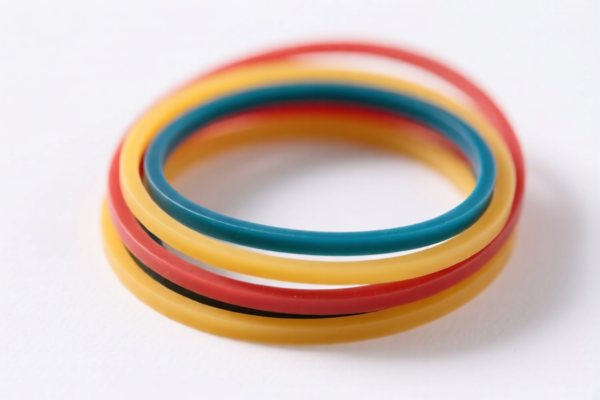
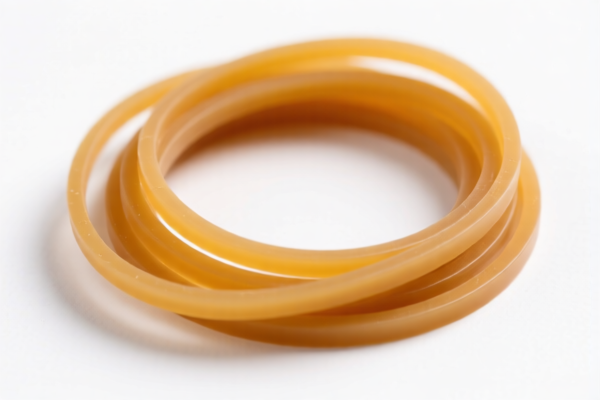
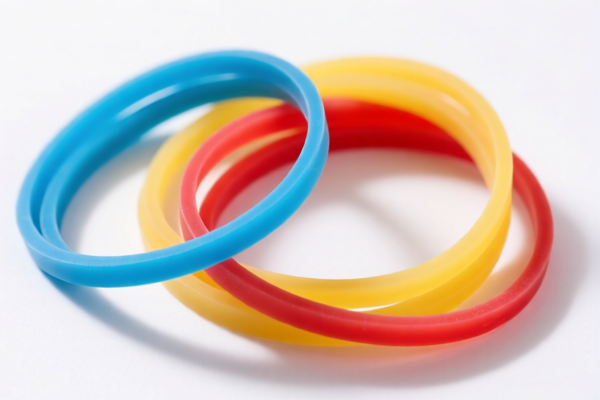
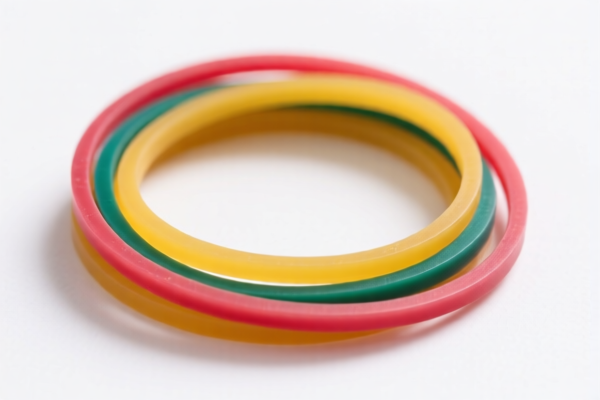
AI Analysis
📂 Binder with Elastic Band (Elastic-Band Binder)
🌐 HS Code Reference & Customs Clearance Guide | 2026 Latest Tariff Analysis | Professional Entry Strategies
📌 1. Product Definition & Classification: Do You Really Understand "Elastic-Band Binders"?
The Binder with Elastic Band is a common office supply used for organizing documents, notes, and files. In international trade, it is typically classified based on its primary material composition and functional design.
There are two main classification paths depending on the material:
- Paper/Cardboard Based Binders: If the binder body, rings, and elastic band mechanism are primarily made of paper, cardboard, or other paper-based materials.
- Note: The elastic band itself is often considered an accessory and does not change the fundamental character of the product if the main body is paper.
- Plastic Based Binders: If the binder body, rings, and elastic band mechanism are primarily made of plastic.
- Note: Plastic binders are treated as general plastic articles.
⚠️ Key Distinction:
- If the binder is primarily paper/cardboard → Classify under 4820.30.00.20 (Looseleaf binders).
- If the binder is primarily plastic → Classify under 3926.90.87.00 or 3926.90.99.89 (Plastic articles).
- Why does it matter? The tariff rates vary significantly (35% vs. 40.3% vs. 22.8%), affecting total landed cost.
📦 2. HS Code Classification Details (2026 Latest Tariff Authority Comparison)
| HS Code | Product Description | Material Basis | Functional Category | Key Reason for Classification |
|---|---|---|---|---|
4820.30.00.20 |
Looseleaf Binders (Paper/Cardboard) | Paper/Cardboard | Stationery/Binding | Matches "Looseleaf binders"; elastic band is an accessory. Tax: 35.0% |
3926.90.99.89 |
Other Plastic Articles (General) | Plastic | General Plastic Goods | Plastic office accessory; "Other" category fallback. Tax: 22.8% |
3926.90.87.00 |
Plastic Binders/Filing Cases | Plastic | Plastic Office Accessories | Specific for plastic binders/filing cases. Tax: 40.3% |
🔍 Important Note:
- 4820.30.00.20 is often preferred if the binder is paper-based, as it is the most specific description for "looseleaf binders."
- 3926.90.87.00 is the most common classification for plastic binders with elastic bands, as it specifically covers plastic file folders/binders.
- 3926.90.99.89 is a residual category for plastic goods that do not fit other specific headings; use only if no specific plastic binder code applies (less common for standard binders).
💰 3. 2026 Latest Tariff Rate Breakdown (Including Additional Duties & Policy Surcharges)
✅ Applicable Country: United States (US)
✅ Origin: China (CN)
✅ Effective Date: From November 10, 2025 (including subsequent imports)
🎯 1. 4820.30.00.20 —— Looseleaf Binders (Paper/Cardboard)
| Item | Details |
|---|---|
| Base Tariff Rate | 0.0% (ad valorem) |
| Section 301 Additional Tariff | +25.0% |
| IEEPA Additional Tariff (Section 122) | +10.0% |
| Total Tariff Rate | 35.0% |
| Tax Calculation | CIF Value × 35% |
| De Minimis Exemption | ❌ Not Eligible (deny_de_minimis) |
| Legal Basis Path | IEEPA:9903.01.25 → USITC:4820.30.00.20 → FOOTNOTE:301 |
📌 Explanation:
- Base Tariff 0%: Paper binders have low base tariffs.
- Section 301 (25%): Applies to most Chinese-origin stationery.
- IEEPA 10%: Additional surcharge on Chinese goods under Section 122.
- Total 35%: This is the rate for paper-based binders.
🎯 2. 3926.90.87.00 —— Plastic Binders/Filing Cases
| Item | Details |
|---|---|
| Base Tariff Rate | 5.3% (ad valorem) |
| Section 301 Additional Tariff | +25.0% |
| IEEPA Additional Tariff (Section 122) | +10.0% |
| Total Tariff Rate | 40.3% |
| Tax Calculation | CIF Value × 40.3% |
| De Minimis Exemption | ❌ Not Eligible (deny_de_minimis) |
| Legal Basis Path | IEEPA:9903.01.25 → USITC:3926.90.87.00 → FOOTNOTE:301 |
📌 Explanation:
- Base Tariff 5.3%: Plastic articles have a higher base tariff than paper.
- Section 301 (25%): Applies to plastic office supplies.
- IEEPA 10%: Additional surcharge.
- Total 40.3%: This is the rate for plastic-based binders.
🎯 3. 3926.90.99.89 —— Other Plastic Articles (General)
| Item | Details |
|---|---|
| Base Tariff Rate | 5.3% (ad valorem) |
| Section 301 Additional Tariff | +7.5% |
| IEEPA Additional Tariff (Section 122) | +10.0% |
| Total Tariff Rate | 22.8% |
| Tax Calculation | CIF Value × 22.8% |
| De Minimis Exemption | ❌ Not Eligible (deny_de_minimis) |
| Legal Basis Path | IEEPA:9903.01.25 → USITC:3926.90.99.89 → FOOTNOTE:122 |
📌 Explanation:
- Base Tariff 5.3%: Same as above.
- Section 301 (7.5%): Lower additional tariff for this specific residual category.
- IEEPA 10%: Additional surcharge.
- Total 22.8%: Lowest rate among plastic options, but classification is riskier as it’s a "catch-all" category.
🛠️ 4. Customs Clearance Practical Advice (Actionable Tips)
✅ 1. Preparation Checklist (Mandatory)
| Document | Required | Purpose |
|---|---|---|
| ✅ Product Specifications | ✔️ | Must detail material (paper vs. plastic), dimensions, and elastic band presence. |
| ✅ Product Photos | ✔️ | Clear images of the binder, highlighting the elastic band and main body material. |
| ✅ Commercial Invoice | ✔️ | Must specify "Binder with Elastic Band" and include HS Code. |
| ✅ Packing List | ✔️ | Itemized list, no mixing with unrelated goods. |
| ✅ Material Declaration | ✔️ | Explicitly state if made of paper/cardboard or plastic. |
✅ 2. Classification Strategy (Key Rules)
🔥 "Material Determines Code, Elastic is Just Accessory!"
| Scenario | Correct HS Code | Incorrect Code | Risk |
|---|---|---|---|
| Paper Binder with Elastic Band | 4820.30.00.20 (35%) |
3926.90.87.00 (40.3%) |
Overpayment of ~5.3% |
| Plastic Binder with Elastic Band | 3926.90.87.00 (40.3%) |
4820.30.00.20 (35%) |
Underpayment → Penalties! |
| Plastic Binder (Residual) | 3926.90.99.89 (22.8%) |
3926.90.87.00 (40.3%) |
Possible under-classification risk |
📌 Critical Warning:
- Do not classify a plastic binder under4820.30.00.20(paper code). This is a common error that leads to seizure or penalties.
- The elastic band does not change the material classification. If the binder body is plastic, the entire product is plastic.
✅ 3. Special Cases & Handling
| Situation | Handling Advice |
|---|---|
| Mixed Material Binders | If both paper and plastic are significant, consult a customs broker. Usually, the primary material (by value or function) determines the code. |
| Plastic Binders with Metal Rings | Still classified under 3926 (plastic articles). The metal rings are incidental. |
| OEM Custom Binders | Provide design drawings to prove material composition. |
| De Minimis (Section 321) | ❌ Not Applicable. All these HS codes are excluded from the $800 de minimis exemption due to Section 301/IEEPA surcharges. |
🌍 5. Global Market Comparison (2026)
| Country/Region | Recommended HS Code | Tariff (China Origin) | Certification | Notes |
|---|---|---|---|---|
| 🇺🇸 USA | 4820.30.00.20 or 3926.90.87.00 |
35% (Paper) / 40.3% (Plastic) | None | High tariffs due to Section 301 & IEEPA |
| 🇨🇳 China | 4820.30.00.20 or 3926.90.87.00 |
5% - 8% | CCC (if applicable) | Lower base tariffs |
| 🇪🇺 EU | 4820.30.00.20 or 3926.90.87.00 |
0% - 2% | CE (if applicable) | No Section 301 equivalent |
| 🇬🇧 UK | 4820.30.00.20 or 3926.90.87.00 |
0% - 2% | UKCA | Post-Brexit tariffs apply |
📌 Conclusion:
- USA is the most expensive market for binders from China due to layered tariffs.
- Accuracy in material declaration is critical to avoid underpayment penalties or overpayment losses.
📌 6. Common Mistakes & Pitfalls (Lessons Learned)
❌ Mistake 1: Classifying plastic binders under paper codes (4820.30.00.20)
👉 Result: Underpayment → Customs audit, back taxes, and fines.
❌ Mistake 2: Claiming De Minimis exemption for binders
👉 Result: Seizure or rejection because these HS codes are excluded from Section 321.
❌ Mistake 3: Ignoring the elastic band material
👉 Result: If the band is metal and the binder is plastic, it’s still plastic. Don’t overcomplicate.
✅ Correct Practice:
"Elastic-Band Binder, Paper/Cardboard Material, Model XYZ, For Office Use" →
4820.30.00.20
"Elastic-Band Binder, Plastic Material, Model XYZ, For Office Use" →3926.90.87.00
🎯 7. Conclusion: Accurate Classification Saves Money!
🎯 Key Takeaway:
🔹 "Material First, Elastic Second!"
🔹 "Plastic = 3926, Paper = 4820. Don’t Mix!"
🔹 "No De Minimis for China-Origin Binders!"
📌 Pro Tip:
If you are shipping to the USA, consider pre-ruling with CBP if you have large volumes or mixed material products. This ensures certainty and avoids costly delays.
📣 Immediate Action:
📞 Consult a Licensed Customs Broker for final classification.
📝 Ensure your invoice clearly states the primary material (Paper or Plastic).
🚀 Avoid penalties by classifying correctly from Day 1!
✨ Professional Customs Clearance Starts with Precise Classification!
💼 Every Percentage Point Counts in Landed Cost!
Customer Reviews
About HS Code Classification
The Harmonized System (HS) is an internationally standardized nomenclature developed by the World Customs Organization (WCO) to classify traded products. Over 200 countries use the HS system as the basis for customs tariffs, trade statistics, and import/export regulations.
Each HS code follows a hierarchical structure:
- Chapter (2 digits) — Broad category of goods (e.g., Chapter 84: Machinery and Mechanical Appliances)
- Heading (4 digits) — More specific grouping within the chapter
- Subheading (6 digits) — Internationally standardized breakdown, used by all WCO member countries
- National subdivisions (8-10 digits) — Country-specific extensions for further classification, such as US HTSUS 10-digit codes
Correct HS code classification is essential for smooth customs clearance, accurate duty payment, and compliance with trade regulations. Misclassification can lead to customs delays, overpayment of duties, or penalties.
When importing from CN to US, the applicable tariff rates may include:
- Most-Favored-Nation (MFN) rate — The standard duty rate applied to WTO members
- General rate — Applied to countries without trade agreements
- Trade remedy duties — Additional tariffs such as Section 301 (anti-dumping), Section 232 (national security), or countervailing duties
The information provided on this page is for reference purposes only. For official classification, please consult with your local customs authority or a licensed customs broker.