Binder with USB
CN → US| HS Code | Tariff Rate | Origin | Destination | Doc |
|---|---|---|---|---|
| 3926909989 | 22.8% | CN | US | Official Doc |
| 3926908700 | 40.3% | CN | US | Official Doc |
| 4820300020 | 35.0% | CN | US | Official Doc |
Product Images

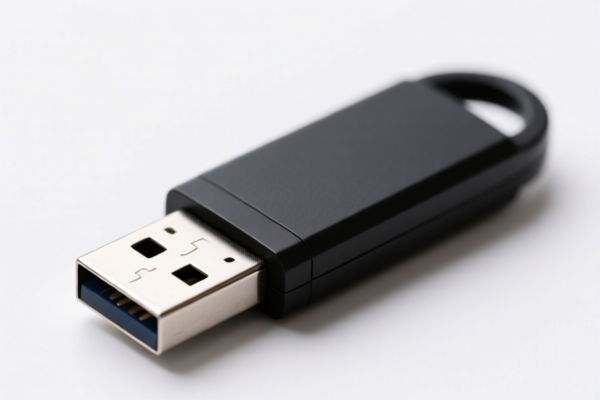
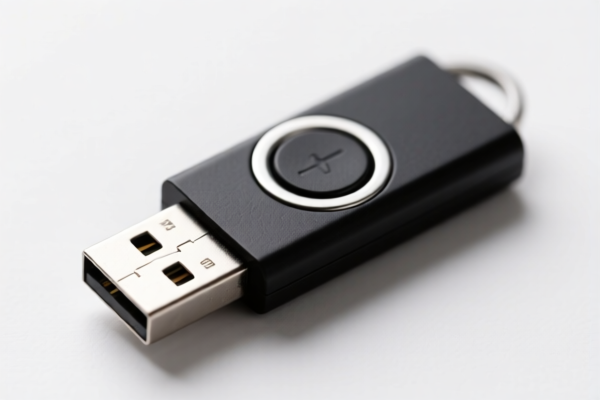

AI Analysis
📂 Binder with USB: The "High-Tax Trap" in US Customs Clearance
🌐 HS Code Reference & Customs Clearance Guide | 2026 Latest Tariff Analysis | Professional Level Entry Strategy
📌 One, Product Definition: What exactly is a "Binder with USB"?
A "Binder with USB" is a hybrid product that combines office stationery functionality with electronic connectivity. In international trade, its classification is not determined by its primary function (holding papers) but by its material composition, physical form, and electronic components.
Due to the presence of USB connectors (even if passive) or specific plastic constructions, this item falls into high-tariff categories under current US trade policies (Section 301 & IEEPA).
⚠️ Key Distinction Point:
- If the binder is Plastic and does not strictly look like a traditional metal/binder clip file → It may be classified as "Other Plastic Articles" (HS 3926.90.99.89).
- If the binder is Plastic but explicitly described/formatted as a Flat File Folder/Sheet Holder → It is classified as "Other Plastic Articles: Other" (HS 3926.90.87.00).
- If the binder is Paper/Cardboard (with or without USB plastic parts attached) → It is classified as "Paper/Cardboard Articles" (HS 4820.30.00.20).
📦 Two, HS Code Classification Details (2026 Latest Tariff Authority Comparison)
| HS Code | Product Description | Applicable Scenario | Total Tax Rate (CN→US) |
|---|---|---|---|
3926.90.99.89 |
Plastic Stationery / Other Plastic Articles | Plastic binders that are general-purpose, not specifically "flat file folders," or complex plastic molded stationery. | 22.8% |
3926.90.87.00 |
Plastic Flat File Folders / Sheet Holders | Plastic binders explicitly designed as flat document holders, sheet protectors, or "flat-shaped" filing aids. | 40.3% |
4820.30.00.20 |
Paper/Cardboard Loose-leaf Binders | Binders made primarily of paper or cardboard (even if they have small plastic USB ports or clips). | 35.0% |
🔍 Important Note:
- Plastic vs. Paper: If the main body is plastic, do not use the Paper HS Code (4820.30.00.20).
- Shape Matters: Customs officers often scrutinize the physical form. If your plastic binder is rigid and flat, it risks being classified as3926.90.87.00(Higher Tax). If it is a loose-leaf or ring-bound style,3926.90.99.89might apply (Lower Tax).
- USB Component: The USB port is usually considered a minor accessory. It does not typically move the classification to Chapter 85 (Electrical Machinery) if the primary character is that of a stationery item.
💰 Three, 2026 Latest Tariff Rate Breakdown (Including Surcharges)
✅ Applicable Country: United States (US)
✅ Origin: China (CN)
✅ Effective Time: Ongoing (Post-2025 Trade Policy)
🎯 1. 3926.90.99.89 —— Plastic Stationery / Other Plastic Articles
| Item | Content |
|---|---|
| Base Duty Rate | 5.3% (Ad Valorem) |
| Section 301 Surcharge | +7.5% |
| IEEPA Section 122 Surcharge | +10% |
| Total Tax Rate | 22.8% |
| Tax Calculation | CIF Value × 22.8% |
| De Minimis Exemption | ❌ Not Eligible (denied_de_minimis) |
| Legal Basis Path | USITC:3926.90.99.89 → SECTION_301:7.5% → IEEPA:122 |
📌 Explanation:
- This is the lowest tax bracket for plastic binders.
- It applies to plastic stationery that doesn't fit the specific "flat file folder" definition.
- Strategy: If your product is a traditional ring binder or loose-leaf style made of plastic, argue for this code to save 17.5% compared to the flat-file code.
🎯 2. 3926.90.87.00 —— Plastic Flat File Folders / Sheet Holders
| Item | Content |
|---|---|
| Base Duty Rate | 5.3% (Ad Valorem) |
| Section 301 Surcharge | +25.0% |
| IEEPA Section 122 Surcharge | +10% |
| Total Tax Rate | 40.3% |
| Tax Calculation | CIF Value × 40.3% |
| De Minimis Exemption | ❌ Not Eligible (denied_de_minimis) |
| Legal Basis Path | USITC:3926.90.87.00 → SECTION_301:25.0% → IEEPA:122 |
📌 Warning:
- This is the Highest Tax Bracket.
- Applies if the binder is clearly a flat document folder or sheet holder.
- Risk: If you declare this as "Stationery" but Customs sees a flat plastic sheet, they will reclassify it here, leading to back taxes + penalties.
🎯 3. 4820.30.00.20 —— Paper/Cardboard Loose-leaf Binders
| Item | Content |
|---|---|
| Base Duty Rate | 0.0% |
| Section 301 Surcharge | +25.0% |
| IEEPA Section 122 Surcharge | +10% |
| Total Tax Rate | 35.0% |
| Tax Calculation | CIF Value × 35.0% |
| De Minimis Exemption | ❌ Not Eligible (denied_de_minimis) |
| Legal Basis Path | USITC:4820.30.00.20 → SECTION_301:25.0% → IEEPA:122 |
📌 Analysis:
- Even with a 0% base rate, the 35% total tax is higher than the lower plastic bracket (22.8%).
- Only use this if the product is predominantly paper/cardboard and you cannot justify a plastic classification.
- Caution: If it has a plastic USB connector or plastic rings, Customs may still push it toward Chapter 39.
🛠️ Four, Customs Clearance Practical Advice (Avoid Pitfalls)
✅ 1. Documentation Checklist (Mandatory)
| Document | Required | Explanation |
|---|---|---|
| ✅ Product Description | ✔️ | Must clearly state material (Plastic/Paper) and form (Ring/Flat). |
| ✅ Material Composition | ✔️ | e.g., "100% Polypropylene Cover with Metal Rings" vs. "Recycled Paper Cover." |
| ✅ Product Photos | ✔️ | Show the USB port, the binding mechanism, and the overall shape. |
| ✅ Commercial Invoice | ✔️ | Describe as "Plastic Loose-leaf Binder with USB Port" or "Paper File Folder." |
| ✅ Origin Certificate | ✔️ | Proof of Chinese origin (triggers Section 301 & IEEPA). |
✅ 2. Declaration Strategy (Key Mnemonics)
🔥 "Material First, Shape Second, USB is Minor!"
| Scenario | Correct HS Code | Wrong Code | Consequence |
|---|---|---|---|
| Plastic Ring Binder | 3926.90.99.89 (22.8%) |
3926.90.87.00 |
Overpay 17.5% |
| Plastic Flat Folder | 3926.90.87.00 (40.3%) |
3926.90.99.89 |
Under-declared → Audit/Fine |
| Paper Binder with USB | 4820.30.00.20 (35.0%) |
8517.62.00.00 (Electronics) |
Wrong Chapter → Delay/Rejection |
✅ 3. Special Considerations for "Binder with USB"
-
Is it Electronic?
- If the USB port is active (provides power/data) and the binder has a battery/circuit board, it might be classified under Chapter 85 (Electrical Machinery). However, most "USB Binders" are just passive connectors for flash drives. In this case, the Stationery classification (Ch 39/48) is still appropriate because the electronic component is minimal and accessory to the stationery function.
- Tip: Include a statement: "USB Port is for passive connectivity only; no internal battery or circuitry."
-
Material Dominance:
- If the binder is mostly plastic but has a paper insert, it is Plastic (Ch 39).
- If the binder is mostly paper but has a plastic USB clip, it is Paper (Ch 48).
-
Avoid "Electronics" Misclassification:
- Do NOT declare as "USB Cable" or "USB Hub" unless the primary function is data transfer. If it's for holding papers, it's stationery.
🌍 Five, Global Market Comparison (2026)
| Country | Recommended HS Code | Tax Rate (CN→Local) | Notes |
|---|---|---|---|
| 🇺🇸 USA | 3926.90.99.89 (Plastic) |
22.8% | High Section 301 + IEEPA surcharges. |
| 🇺🇸 USA | 3926.90.87.00 (Flat) |
40.3% | Highest risk. Avoid if possible. |
| 🇪🇺 EU | 4820.10.00 / 3926.90 |
0-6.5% | Lower base tariffs, no US-style surcharges. |
| 🇨🇳 China | 3926.90.99 / 4820.30 |
5-10% | Domestic consumption, lower risk. |
| 🇬🇧 UK | 3926.90 / 4820.30 |
0-6.5% | Post-Brexit rules apply. |
📌 Conclusion:
- US Market is the most expensive due to dual surcharges (301 + IEEPA).
- Plastic Ring Binders are the most tax-efficient entry point (22.8%).
- Flat Plastic Files are the most dangerous (40.3%).
📌 Six, Common Errors & Pitfalls (Lessons Learned)
❌ Error 1: Declaring a Plastic Ring Binder as "Plastic Folder" (3926.90.87.00)
👉 Result: You pay 40.3% instead of 22.8%.
👉 Fix: Clearly describe as "Loose-leaf Binder" or "Ring Binder."
❌ Error 2: Declaring a Plastic Binder as "USB Drive" or "Electronic Device"
👉 Result: Customs rejects it as misclassified, demands re-classification, delays shipment.
👉 Fix: Emphasize "Stationery" and "Passive USB Port."
❌ Error 3: Ignoring the "122 IEEPA Surcharge"
👉 Result: Budgeting only for 301 tariffs leads to cash flow issues.
👉 Fix: Always calculate Base + 301 + 122.
✅ Correct Declaration Example:
"Plastic Loose-leaf Binder with Passive USB Port, for Office Use, Model XYZ"
HS Code:3926.90.99.89
Material: Polypropylene
🎯 Seven, Conclusion: Professional Classification Saves Money!
🎯 Remember the Golden Rule:
🔹 "Ring Binder = 22.8% (Cheapest Plastic)"
🔹 "Flat Folder = 40.3% (Most Expensive)"
🔹 "Paper Binder = 35.0% (Middle Ground)"
📌 Pro Tip:
If you are exporting to the US, optimize your product design. A plastic binder with metal rings or a traditional shape is safer than a "flat plastic sheet" design, which triggers the highest tariff.
📣 Immediate Action:
📞 Confirm your product's physical form with your supplier.
📄 Prepare photos showing the binding mechanism.
🚀 Choose3926.90.99.89if possible to minimize tax burden!
✨ Smart Customs, Lower Costs!
💼 Every percentage point saved is pure profit!
Customer Reviews
About HS Code Classification
The Harmonized System (HS) is an internationally standardized nomenclature developed by the World Customs Organization (WCO) to classify traded products. Over 200 countries use the HS system as the basis for customs tariffs, trade statistics, and import/export regulations.
Each HS code follows a hierarchical structure:
- Chapter (2 digits) — Broad category of goods (e.g., Chapter 84: Machinery and Mechanical Appliances)
- Heading (4 digits) — More specific grouping within the chapter
- Subheading (6 digits) — Internationally standardized breakdown, used by all WCO member countries
- National subdivisions (8-10 digits) — Country-specific extensions for further classification, such as US HTSUS 10-digit codes
Correct HS code classification is essential for smooth customs clearance, accurate duty payment, and compliance with trade regulations. Misclassification can lead to customs delays, overpayment of duties, or penalties.
When importing from CN to US, the applicable tariff rates may include:
- Most-Favored-Nation (MFN) rate — The standard duty rate applied to WTO members
- General rate — Applied to countries without trade agreements
- Trade remedy duties — Additional tariffs such as Section 301 (anti-dumping), Section 232 (national security), or countervailing duties
The information provided on this page is for reference purposes only. For official classification, please consult with your local customs authority or a licensed customs broker.