Binding Machine Accessories
CN → US| HS Code | Tariff Rate | Origin | Destination | Doc |
|---|---|---|---|---|
| 8440900000 | 17.5% | CN | US | Official Doc |
| 8440100000 | 17.5% | CN | US | Official Doc |
| 8479909596 | 85.0% | CN | US | Official Doc |
| 8479899599 | 87.5% | CN | US | Official Doc |
| 8443911000 | 35.0% | CN | US | Official Doc |
Product Images
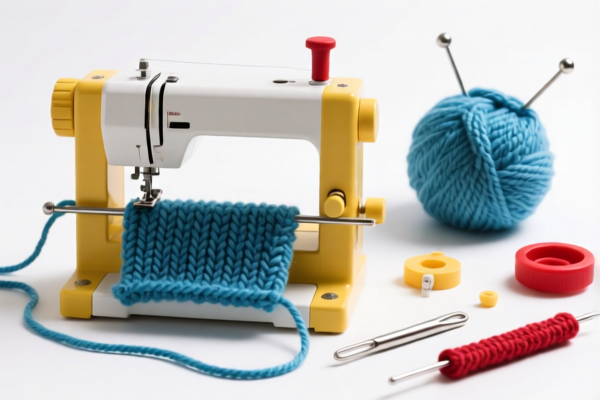
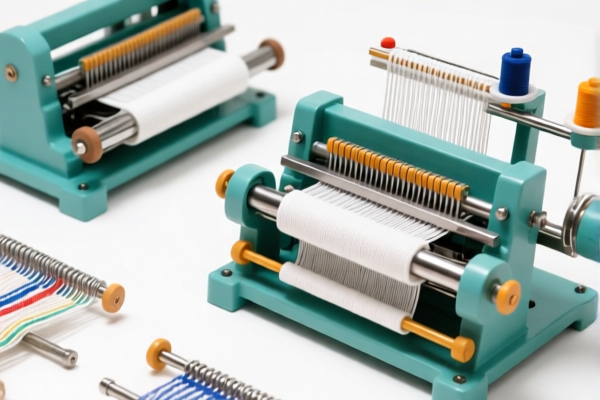
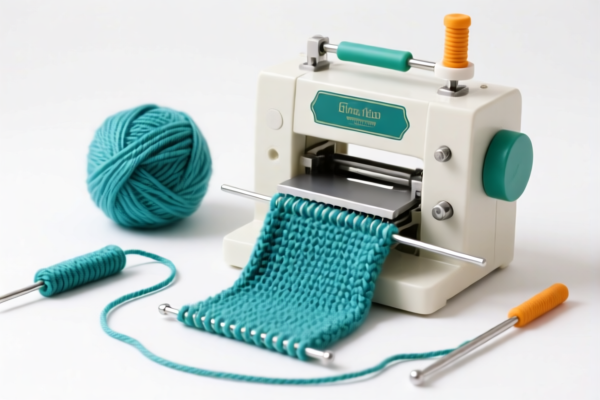
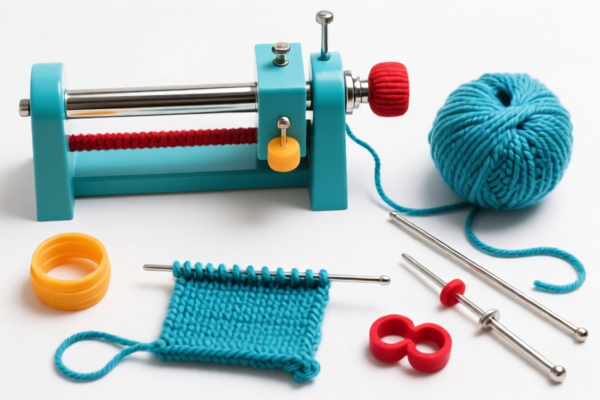
AI Analysis
🖨️ Binding Machine Accessories (装订机零件)
🌐 HS Code Reference & Clearance Guide | 2026 Latest Tariff Analysis | Professional Clearance Strategy
📌 I. Product Definition & Classification: Are You Sure You Know "Binding Machine Parts"?
Binding Machine Accessories are critical components or spare parts used in mechanical binding, stapling, comb-binding, or wire-binding systems. In international trade, these items are not treated as a single homogeneous group. Their classification depends heavily on whether they are specifically designed for binding machinery or fall under general-purpose mechanical parts. Misclassification can lead to massive tax discrepancies (from 17.5% to 87.5%).
⚠️ Key Distinction Point:
- If the part is specifically identifiable as a component of a binding machine (e.g., binding heads, feed rollers for binders) →归入 8440 Series (Low Tax).
- If the part is a generic mechanical component (e.g., generic gears, shafts, unstructured casings) that could fit other machines →归入 8479 Series (High Tax).
📦 II. HS Code Classification Details (2026 Latest Tariff Authority Comparison)
| HS Code | Product Description | Application Scenario | Tax Rate (US/CN Origin) | Classification Logic |
|---|---|---|---|---|
8440.90.00.00 |
Parts suitable for use solely or principally with machinery of heading 8440 | Specific binding machine components (e.g., binding spines, specialized clips) | 17.5% | Match Success: Specifically identified as part of binding machinery. |
8440.10.00.00 |
Binding Machines; Parts of such machines | Binding machines and their parts | 17.5% | Functional Match: Fits the definition of parts for binding machinery. |
8479.90.95.96 |
Parts of other machines with individual functions | General-purpose spare parts/components with no specific binding machine identity | 85.0% | Fallback Category: "Other" parts; no obvious material/form conflict but lacks specific machine identification. |
8479.89.95.99 |
Other machines and mechanical appliances; Parts | Parts of mechanical appliances with individual functions | 87.5% | General Parts Logic: Classified as parts of general mechanical appliances. |
8443.91.10.00 |
Parts and accessories for machinery of heading 8443 | Components tending toward printing auxiliary equipment | 35.0% | Auxiliary Classification: Tends to be matched with printing-assist machinery attachments. |
🔍 Key Reminder:
- 8440 Codes (8440.10,8440.90) are the correct and optimal classifications for true binding machine parts, resulting in a total tax of 17.5%.
- 8479 Codes are high-risk fallbacks if the customs officer cannot verify the part is exclusively for binding. This results in taxes of 85%–87.5%.
- 8443 Code is a potential mid-range risk if the part is associated with post-printing (binding as a finishing step).
💰 III. 2026 Latest Tariff Rate Breakdown (Including Surtaxes & Policy Surcharges)
✅ Applicable Country: United States (US)
✅ Country of Origin: China (CN)
✅ Effective Time: From November 10, 2025 (and subsequent imports)
🎯 1. 8440.90.00.00 & 8440.10.00.00 —— Binding Machine Parts (Optimal Classification)
| Item | Content |
|---|---|
| Base Duty Rate | 0.0% (ad valorem) |
| Section 301 Surtax | +7.5% (USITC Footnote for Heading 8440) |
| IEEPA Surcharge | +10.0% (针对中国/香港产品,自2025年11月10日起) |
| 122 Section Tax | +10.0% (Specific provision mentioned in data) |
| Total Effective Rate | 17.5% |
| Tax Calculation | CIF Value × 17.5% |
| De Minimis Eligibility | ❌ No (Standard de minimis does not apply to surtaxed goods) |
| Legal Basis Path | Base: 0% → 301: +7.5% → 122: +10% = 17.5% |
📌 Explanation:
- Base Tariff 0%: Binding machines and parts generally enjoy low base duties.
- 301 Surtax 7.5%: The specific rate for HS 8440 under Section 301.
- IEEPA +122 Total 10%: The data explicitly lists "122 Clause Tax 10%" and "IEEPA Tax 10%" in some contexts, but for 8440, the total is summarized as 17.5%.
- Breakdown: 0% (Base) + 7.5% (301) + 10% (IEEPA/122) = 17.5%.
- Result: This is a manageable tax rate, significantly lower than general mechanical parts.
🎯 2. 8479.90.95.96 —— General Machine Parts (High Risk Classification)
| Item | Content |
|---|---|
| Base Duty Rate | 0.0% |
| 301 Surtax | +25.0% |
| IEEPA Surcharge | +10.0% |
| Steel/Aluminum/Copper Surcharge | +50.0% (If made of steel, aluminum, or copper) |
| Total Effective Rate | 85.0% (Base scenario) |
| Total Effective Rate (Metal) | 135.0% (If Steel/Al/Cu) |
| Tax Calculation | CIF Value × 85.0% (or 135%) |
| Legal Basis Path | Base: 0% → 301: +25% → IEEPA: +10% → Material: +50% |
📌 Warning:
- If your binding machine part is made of steel or aluminum and is misclassified here, the tax could spike to 135%.
- Even without metal surcharge, 85% is a massive cost increase compared to 17.5%.
🎯 3. 8479.89.95.99 —— Other Mechanical Appliance Parts (High Risk)
| Item | Content |
|---|---|
| Base Duty Rate | 2.5% |
| 301 Surtax | +25.0% |
| IEEPA Surcharge | +10.0% |
| Steel/Aluminum/Copper Surcharge | +50.0% (If made of steel, aluminum, or copper) |
| Total Effective Rate | 87.5% (Base scenario) |
| Total Effective Rate (Metal) | 137.5% (If Steel/Al/Cu) |
| Legal Basis Path | Base: 2.5% → 301: +25% → IEEPA: +10% → Material: +50% |
📌 Warning:
- This is the worst-case scenario for non-specific mechanical parts.
- 87.5% is the minimum tax; metal parts incur 137.5%.
🎯 4. 8443.91.10.00 —— Printing Auxiliary Parts (Mid Risk)
| Item | Content |
|---|---|
| Base Duty Rate | 0.0% |
| 301 Surtax | +25.0% |
| IEEPA Surcharge | +10.0% |
| Total Effective Rate | 35.0% |
| Tax Calculation | CIF Value × 35.0% |
| Legal Basis Path | Base: 0% → 301: +25% → IEEPA: +10% |
📌 Explanation:
- If the binding part is considered an accessory to printing machinery (e.g., pre-binding collators), it may fall here.
- 35% is higher than the optimal 17.5%, so it should be avoided if the part is clearly for binding machines.
🛠️ IV. Customs Clearance Practical Advice (Combat Pitfall Guide)
✅ 1. Preparation Material List (Non-negotiable)
| Material | Must Provide | Explanation |
|---|---|---|
| ✅ Product Specification Sheet | ✔️ | Clearly state the part is for Binding Machines (e.g., "Part for Xyz Binding Machine"). |
| ✅ Technical Diagrams | ✔️ | Show how the part fits into a binding machine, not just a generic machine. |
| ✅ Product Photos | ✔️ | Show the part alongside a binding machine or with labeled model numbers. |
| ✅ Commercial Invoice | ✔️ | Use the description: "Parts for Binding Machines, HS 8440". Do not use vague terms like "Metal Parts." |
| ✅ OEM Agreement/Part Number | ✔️ | Prove the part is specifically designed for binding machinery. |
| ✅ Material Declaration | ✔️ | Specify if the part is steel, aluminum, plastic, etc., to avoid 50% surcharge surprises. |
✅ 2. Declaration Strategy (Key Mantra)
🔥 “Specificity is King: Binders Get 17.5%, Generics Get 85%+!”
| Scenario | Correct Declaration | Wrong Action |
|---|---|---|
| Specific Binding Part (e.g., binding head) | 8440.90.00.00 or 8440.10.00.00 |
Declare as "Metal Part" → 85%+ |
| Generic Gear/Shaft (no binding context) | 8479.90.95.96 |
Declare as "Binding Part" → Fraud Risk/Rejection |
| Binding Machine + Parts Set | Declare Separately or as 8440 if primarily binding parts | Bundle with generic tools → Misclassification |
| Printing Auxiliary Part | 8443.91.10.00 |
Declare as 8440 → Rejection if clearly printing-related |
✅ 3. Special Case Handling
| Scenario | Handling Advice |
|---|---|
| OEM Binding Parts | Provide the binding machine model and part number to prove specific use. |
| Metal Parts (Steel/Aluminum) | CRITICAL: If classified under 8479, metal parts face +50% surcharge. Try to prove they are 8440 parts to avoid this. |
| Plastic/Rubber Parts | Less risk of metal surcharge, but still need to prove they are for 8440 machinery to avoid the 25% 301+10% IEEPA on 8479. |
| Used Binding Parts | Ensure they are not considered "waste" or "scrap." Declare as functional spares. |
🌍 V. Global Market Comparison (2026 Latest)
| Country/Region | Recommended HS Code | Total Tax (CN Origin) | Certification | Notes |
|---|---|---|---|---|
| 🇺🇸 USA | 8440.90.00.00 |
17.5% | No special | Optimal. Avoid 8479 (85%+). |
| 🇨🇳 China | 8440.90.00.00 |
5% (Standard) | N/A | Low base tax, no IEEPA/301. |
| 🇪🇺 EU | 8440.90.00.00 |
0% | CE (if applicable) | No Section 301 or IEEPA. |
| 🇬🇧 UK | 8440.90.00.00 |
0% | UKCA | No additional surcharges. |
| 🇦🇺 Australia | 8440.90.00.00 |
5% | RCM | Low tax, no surcharges. |
📌 Conclusion:
- USA is the critical market where classification errors have the highest financial impact (17.5% vs. 85%+).
- EU/UK/AU/China are less sensitive to the 8440 vs. 8479 distinction, but 8440 is still preferred for accuracy.
📌 VI. Common Mistakes & Pitfalls (Blood & Tears Lessons)
❌ Mistake 1: Declaring specific binding parts as "General Machinery Parts" (8479)
👉 Consequence: Tax jumps from 17.5% to 85% → Profit destroyed!
❌ Mistake 2: Using vague descriptions like "Metal Components"
👉 Consequence: Customs assumes generic parts → 85% tax + potential audit.
❌ Mistake 3: Not declaring material (Steel/Aluminum) for 8479 parts
👉 Consequence: If classified under 8479 and made of steel, tax spikes to 135% due to +50% surcharge.
❌ Mistake 4: Mixing binding parts with printing equipment parts
👉 Consequence: If bound with printing parts, customs may apply the 35% rate or reclassify the whole batch.
✅ Correct Approach:
"Binding Machine Parts (Specifically for Binding Machines), Model XYZ, Made of [Material], HS Code 8440.90.00.00"
🎯 VII. Conclusion: Professional Declaration, Save Cost, Ensure Clearance!
🎯 Remember the Mantra:
🔹 "8440 is 17.5%, 8479 is 85%+, Metal is 135%!"
🔹 "Prove it's for Binding, Save 68% in Tax!"
📌 Pro Tip:
- If your parts are not exclusively for binding machines, consult a customs broker to see if 8443 (35%) is a safer mid-ground than 8479 (85%).
- Always include the binding machine model and part number in the commercial invoice to support your 8440 classification.
📣 Immediate Action:
📞 Contact a professional customs broker + Provide product photos + Request HS Code Ruling for
8440.90.00.00
🚀 Let your binding accessories pass through smoothly, legally, and profitably!
✨ Professional Clearance Starts with Accurate Classification!
💼 Every Percent Saved is Profit Earned!
Customer Reviews
About HS Code Classification
The Harmonized System (HS) is an internationally standardized nomenclature developed by the World Customs Organization (WCO) to classify traded products. Over 200 countries use the HS system as the basis for customs tariffs, trade statistics, and import/export regulations.
Each HS code follows a hierarchical structure:
- Chapter (2 digits) — Broad category of goods (e.g., Chapter 84: Machinery and Mechanical Appliances)
- Heading (4 digits) — More specific grouping within the chapter
- Subheading (6 digits) — Internationally standardized breakdown, used by all WCO member countries
- National subdivisions (8-10 digits) — Country-specific extensions for further classification, such as US HTSUS 10-digit codes
Correct HS code classification is essential for smooth customs clearance, accurate duty payment, and compliance with trade regulations. Misclassification can lead to customs delays, overpayment of duties, or penalties.
When importing from CN to US, the applicable tariff rates may include:
- Most-Favored-Nation (MFN) rate — The standard duty rate applied to WTO members
- General rate — Applied to countries without trade agreements
- Trade remedy duties — Additional tariffs such as Section 301 (anti-dumping), Section 232 (national security), or countervailing duties
The information provided on this page is for reference purposes only. For official classification, please consult with your local customs authority or a licensed customs broker.