Biodegradable Paper Plates
CN → US| HS Code | Tariff Rate | Origin | Destination | Doc |
|---|---|---|---|---|
| 4823610020 | 35.0% | CN | US | Official Doc |
| 4823690040 | 35.0% | CN | US | Official Doc |
Product Images
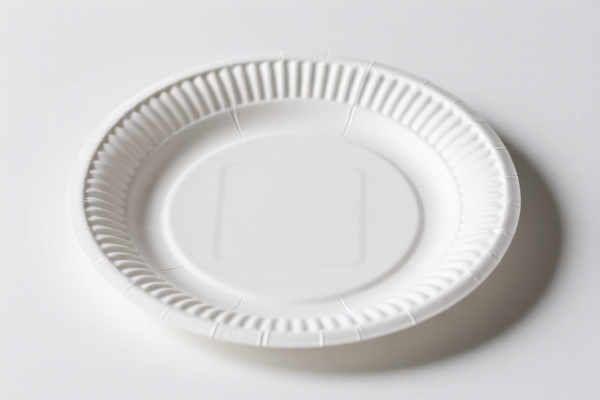
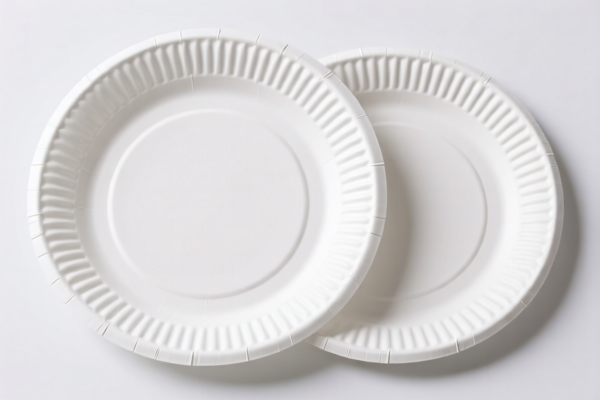
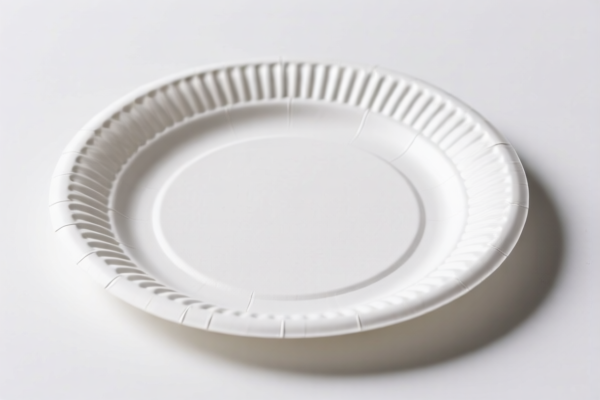
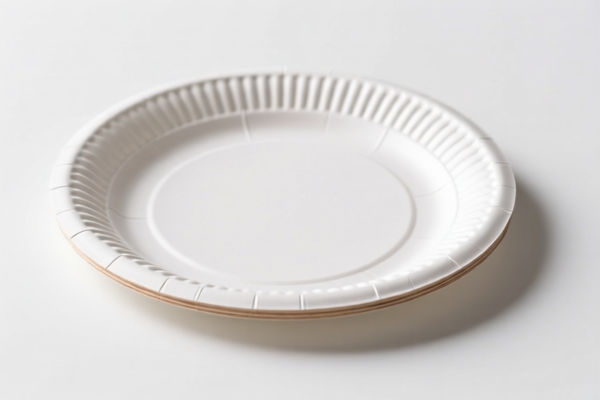
AI Analysis
🌿 Biodegradable Paper Plates (Eco-Friendly Tableware)
🌐 HS Code Reference & Customs Clearance Guide | 2026 Latest Tariff Analysis | Professional Clearance Strategy
📌 I. Product Definition & Classification: Do You Really Understand "Biodegradable Paper Plates"?
Biodegradable paper plates represent the growing segment of sustainable, eco-friendly tableware used in food service, catering, and household consumption. Unlike traditional paper plates made from virgin wood pulp, these are often derived from bamboo pulp, bagasse (sugarcane fiber), or other cellulose-based biodegradable materials. They are designed to be compostable or degradable under specific environmental conditions.
In international trade, they fall under Chapter 48 (Paper and Paperboard), specifically under Heading 4823, which covers articles of paper pulp, paper, paperboard, cellulose wadding, or webs of cellulose fibers. The key distinction lies in the material composition and form (e.g., bamboo-specific vs. general paperboard).
⚠️ Key Distinction Point:
- If the plates are made from bamboo pulp or explicitly described as "bamboo cups/containers," they fall under 4823.61.00.20.
- If they are made from general paperboard, recycled paper, or other cellulose fibers (non-bamboo), they fall under 4823.69.00.40.
- Note: Even if labeled "biodegradable," the HS Code is determined by the material origin (bamboo vs. other paper), not just the eco-label.
📦 II. HS Code Classification Details (2026 Latest Tariff Authority Comparison)
| HS Code | Product Description | Applicable Scenario | Material Composition |
|---|---|---|---|
4823.61.00.20 |
Trays, dishes, plates, cups... Of bamboo: Cups and round nested food containers | Bamboo-based biodegradable plates, round food containers | ✅ Bamboo Pulp |
4823.69.00.40 |
Trays, dishes, plates, cups... Other: Other | General paperboard, recycled paper, bagasse, or non-bamboo cellulose plates | ✅ Non-Bamboo Paper/Cellulose |
🔍 Critical Reminder:
- "Biodegradable" is not an HS Code criterion. Customs classifiers look at the raw material (bamboo vs. other paper).
- If your product is made from bamboo, use 4823.61.00.20.
- If your product is made from sugarcane bagasse, recycled paper, or wood pulp (and not bamboo), use 4823.69.00.40.
- Misclassification can lead to significant tariff differences and customs delays.
💰 III. 2026 Latest Tariff Rate Details (Including Additional Taxes)
✅ Applicable Country: United States (US)
✅ Country of Origin: China (CN)
✅ Effective Date: 2025/2026 (Subject to current USITC and IEEPA regulations)
🎯 1. 4823.61.00.20 —— Bamboo-Based Biodegradable Plates
| Item | Content |
|---|---|
| Base Tariff | 0.0% (General MFN rate) |
| Section 301 Additional Tariff | 0.0% |
| Total Tariff Rate | 0.0% |
| Tax Calculation | CIF Value × 0.0% = $0 |
| De Minimis Eligibility | ✅ Yes (if value ≤ $800, though subject to changing policies) |
| Legal Basis | USITC:4823.61.00.20 → No additional Section 301 footnote applied for this specific bamboo subheading in some interpretations, but verify current footnotes. |
📌 Explanation:
- This specific subheading for bamboo cups and round nested food containers currently enjoys a 0% total tariff (Base 0% + Additional 0%).
- Advantage: This is a significant cost-saving opportunity for bamboo-based eco-products compared to other paper products.
- Caution: Ensure the product is strictly bamboo-based. If it contains significant non-bamboo additives, customs may reclassify it.
🎯 2. 4823.69.00.40 —— Other Paper/Cardboard Plates (Non-Bamboo)
| Item | Content |
|---|---|
| Base Tariff | 0.0% |
| Section 301 Additional Tariff | +25.0% |
| Total Tariff Rate | 25.0% |
| Tax Calculation | CIF Value × 25.0% |
| De Minimis Eligibility | ❌ No (Section 301 goods are generally exempt from de minimis relief) |
| Legal Basis | USITC:4823.69.00.40 → FOOTNOTE:301 → +25% |
📌 Explanation:
- General paper plates (made from wood pulp, recycled paper, bagasse, etc.) fall under "Other."
- These are subject to the 25% Section 301 additional tariff.
- Total Tax: 25%. This is a high cost for generic paper tableware imports from China.
- Example: A $1,000 shipment of generic paper plates incurs $250 in additional duties alone.
🛠️ IV. Customs Clearance Practical Advice (Real-World Pitfall Guide)
✅ 1. Required Documentation Checklist (Mandatory)
| Document | Must Provide? | Explanation |
|---|---|---|
| ✅ Product Specifications | ✔️ | Must explicitly state material composition (e.g., "100% Bamboo Pulp" or "Recycled Paperboard"). |
| ✅ Material Safety Data Sheet (MSDS) | ✔️ | If coated with biodegradable PLA or PBAT liners, include composition details. |
| ✅ Biodegradability Certification | ✔️ | ASTM D6400, EN 13432, or OK Compost certificates to prove "biodegradable" claims (for marketing and compliance). |
| ✅ Commercial Invoice | ✔️ | Clearly describe as "Bamboo Paper Plates" or "Paperboard Food Containers" — never just "Plates." |
| ✅ Packing List | ✔️ | Include net/gross weight and number of pieces. |
| ✅ Certificate of Origin | ✔️ | Required to prove Chinese origin for tariff calculation. |
✅ 2. Declaration Tips (Key Mantra)
🔥 "Material Dictates Code, Bamboo Saves Tax, General Paper Pays 25%!"
| Scenario | Correct Declaration | Wrong Practice |
|---|---|---|
| Plates made from Bamboo | HS: 4823.61.00.20Description: "Bamboo Paper Plates" |
Misdeclare as "Paper Plates" → 25% Tax |
| Plates made from Bagasse/Recycled Paper | HS: 4823.69.00.40Description: "Bagasse Food Containers" |
Claim "Bamboo" falsely → Fraud Penalty |
| Mixed Material (e.g., Bamboo + PLA Liner) | Consult Customs Broker | May be reclassified to "Other" (25%) if liner dominates |
| Sample Shipment (< $800) | Check current de minimis rules for Section 301 items | Assume all small shipments are tax-free → Risk |
✅ 3. Special Case Handling
| Situation | Handling Advice |
|---|---|
| Bamboo vs. Paper Board Confusion | Provide lab test reports showing fiber origin (bamboo vs. wood). Customs may require this. |
| Biodegradable Coatings | If plates are coated with PLA (Polylactic Acid) or PBAT, still classify under 4823, but ensure the coating doesn’t change the essential character to "Plastic" (which would move to Chapter 39). |
| OEM Custom Sizes | "Cut to size" is explicitly covered under 4823. No issue. |
| Round Nested Containers | Specifically mentioned in 4823.61.00.20 for bamboo. Use this for round, stackable bamboo plates. |
🌍 V. Global Market Comparison (2026 Latest)
| Country/Region | Recommended HS Code | Tariff (China Origin) | Certification Requirement | Notes |
|---|---|---|---|---|
| 🇺🇸 USA | 4823.61.00.20 (Bamboo) |
0.0% | FDA (if food contact) | Best Option for Bamboo |
| 🇺🇸 USA | 4823.69.00.40 (Other) |
25.0% | FDA | High Cost for Generic Paper |
| 🇪🇺 EU | 4823.69.00.00 |
~5-12% | CE, REACH, Biodegradability Cert | No Section 301, but higher base tariff |
| 🇨🇳 China | 4823.61.00.00 / 4823.69.00.00 |
5-10% | GB Standards | Export-focused production |
| 🇦🇺 Australia | 4823.69.00.00 |
5% | Australia New Zealand Food Standards | Eco-labeling encouraged |
📌 Conclusion:
- USA: Bamboo-based plates (4823.61.00.20) are a strategic advantage with 0% tariffs. Generic paper plates (4823.69.00.40) face a 25% penalty.
- EU/AU: Tariffs are moderate, but biodegradability certifications are strictly enforced for marketing claims.
- Strategy: If possible, shift production to bamboo-based products to leverage the 0% US tariff.
📌 VI. Common Mistakes & Pitfalls (Lessons Learned)
❌ Mistake 1: Declaring all "biodegradable plates" as 4823.61.00.20 (Bamboo)
👉 Consequence: If customs tests and finds wood pulp or recycled paper, they will reclassify to 4823.69.00.40 + 25% back-tariff + penalties.
👉 Solution: Only claim bamboo if it is 100% bamboo or bamboo-dominant.
❌ Mistake 2: Ignoring the Section 301 impact on 4823.69.00.40
👉 Consequence: Underestimating landed cost by 25%.
👉 Solution: Include 25% in your pricing model for non-bamboo paper products.
❌ Mistake 3: Using "Plastic" or "PLA" in the description without clarification
👉 Consequence: If the product is perceived as plastic, it may fall under Chapter 39 (Plastics), which has different tariffs and restrictions.
👉 Solution: Use "Biodegradable Paper Plate with PLA Liner" and ensure the paper substrate is dominant.
✅ Correct Practice:
"Biodegradable Bamboo Paper Plates, Round, 9-inch, 100% Compostable, ASTM D6400 Certified, Model: BAM-9R"
🎯 VII. Conclusion: Smart Classification, Lower Costs!
🎯 Remember the Mantra:
🔹 "Bamboo = 0% Tax in US. General Paper = 25% Tax. Know your fiber!"
🔹 "Biodegradable is a claim, Bamboo is a fact. Customs cares about facts."
📌 Pro Tip:
If you are exporting generic paper plates to the US, consider:
1. Shifting to Bamboo: To enjoy 0% tariffs.
2. Supply Chain Diversification: Sourcing from Vietnam or Thailand to avoid Section 301 (if applicable).
3. Pre-Ruling: Apply for a Binding Ruling Letter from US CBP to confirm the HS Code for your specific product.
📣 Immediate Action:
📞 Contact your customs broker to verify if your current supplier’s material composition qualifies for 4823.61.00.20.
🚀 Optimize your product line towards bamboo-based eco-products to maximize profit margins in the US market.
✨ Professional Clearance, Start with Accurate Classification!
💼 Every Percent Saved in Tariffs is Pure Profit!
Customer Reviews
About HS Code Classification
The Harmonized System (HS) is an internationally standardized nomenclature developed by the World Customs Organization (WCO) to classify traded products. Over 200 countries use the HS system as the basis for customs tariffs, trade statistics, and import/export regulations.
Each HS code follows a hierarchical structure:
- Chapter (2 digits) — Broad category of goods (e.g., Chapter 84: Machinery and Mechanical Appliances)
- Heading (4 digits) — More specific grouping within the chapter
- Subheading (6 digits) — Internationally standardized breakdown, used by all WCO member countries
- National subdivisions (8-10 digits) — Country-specific extensions for further classification, such as US HTSUS 10-digit codes
Correct HS code classification is essential for smooth customs clearance, accurate duty payment, and compliance with trade regulations. Misclassification can lead to customs delays, overpayment of duties, or penalties.
When importing from CN to US, the applicable tariff rates may include:
- Most-Favored-Nation (MFN) rate — The standard duty rate applied to WTO members
- General rate — Applied to countries without trade agreements
- Trade remedy duties — Additional tariffs such as Section 301 (anti-dumping), Section 232 (national security), or countervailing duties
The information provided on this page is for reference purposes only. For official classification, please consult with your local customs authority or a licensed customs broker.