Biodegradable Shoe Covers
CN → US| HS Code | Tariff Rate | Origin | Destination | Doc |
|---|---|---|---|---|
| 3926201020 | 10.0% | CN | US | Official Doc |
| 3926204010 | 16.5% | CN | US | Official Doc |
| 6401993000 | 42.5% | CN | US | Official Doc |
| 6401999000 | 47.5% | CN | US | Official Doc |
| 6406104500 | 23.5% | CN | US | Official Doc |
| 6406901580 | 32.4% | CN | US | Official Doc |
| 6307909891 | 24.5% | CN | US | Official Doc |
| 6307908985 | 17.0% | CN | US | Official Doc |
Product Images
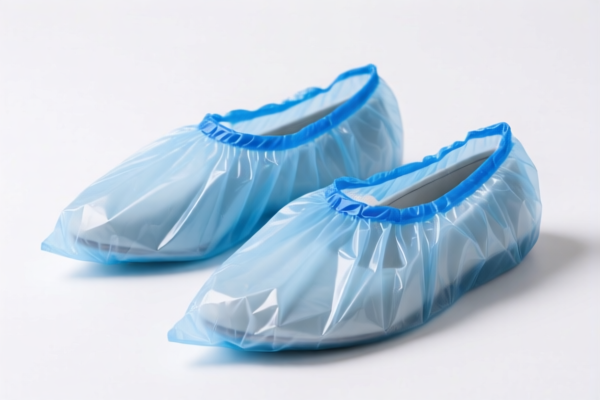
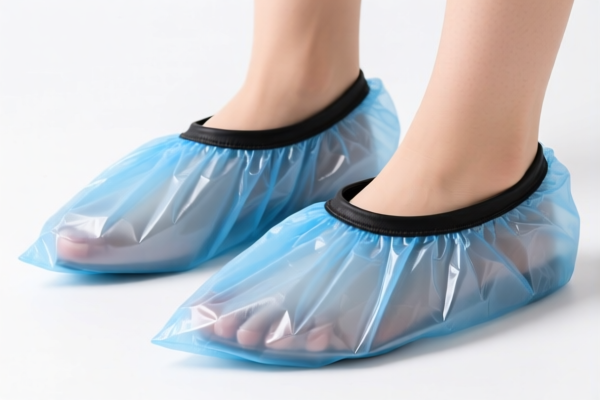
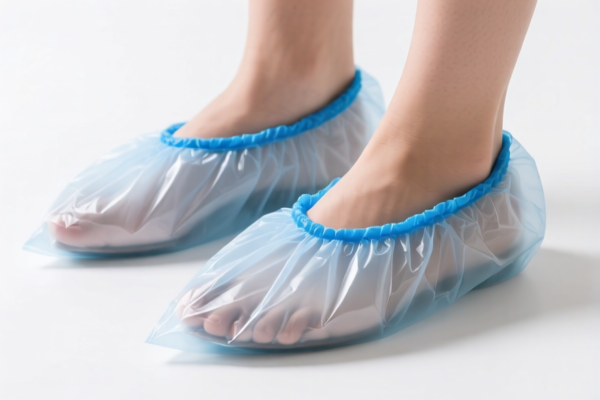
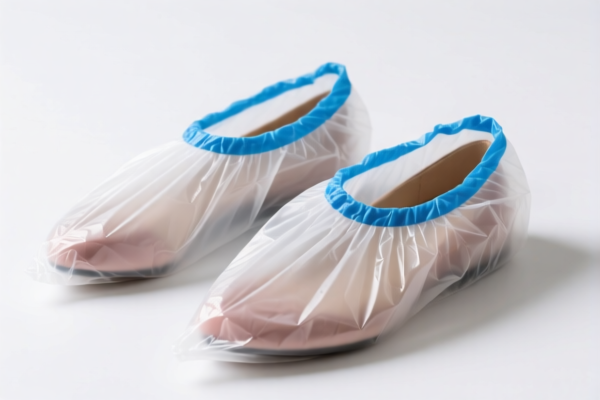
AI Analysis
👟 Biodegradable Shoe Covers (Disposable Protective Footwear)
🌐 HS Code Reference & Customs Clearance Guide | 2026 Latest Tariff Analysis | Professional Entry Strategy
📌 Part I: Product Definition & Classification: Do You Really Understand "Shoe Covers"?
Biodegradable shoe covers are single-use protective garments designed to be worn over existing footwear to prevent the transfer of contaminants, dirt, or moisture. In international trade, they are classified based on material composition and structural construction, not just their "shoe-like" appearance.
The critical distinction lies in whether the product is: 1. Textile-based or Rubber/Plastic-based footwear components (Chapter 64 or 63): Items that form a substantial part of the foot covering or are classified as "articles of apparel/clothing accessories." 2. Disposable Plastic Articles (Chapter 39): Items that are purely disposable, often seamless, and made primarily of plastics.
⚠️ Key Distinction Point:
- If the shoe cover is made of non-woven fabric/textile and fits over the shoe like a sock or gaiter → Often falls under Chapter 64 (Footwear parts) or Chapter 63 (Other made-up articles).
- If the shoe cover is made of thin plastic/rubber, is seamless, and disposable → Often falls under Chapter 39 (Plastics articles).
- Crucial Note: The term "Biodegradable" affects the chemical composition but rarely changes the HS Code structure unless it changes the primary material classification (e.g., from pure plastic to a specific textile blend).
📦 Part II: HS Code Classification Details (2026 Latest Tariff Authority Comparison)
Based on the provided data, the potential HS Codes for shoe covers depend on the specific material and construction. Here is the breakdown:
| HS Code | Product Description | Material/Type | Tax Rate |
|---|---|---|---|
| 6307.90.98.91 | Other made up articles, including dress patterns: Other | General "Other" Category | 14.5% (7% Base + 7.5% Additional) |
| 6307.90.89.85 | Other made up articles: Cotton-based items (e.g., pillow shells, quilts) | Cotton (≥85%) | 0.0% |
| 6401.99.30.00 | Waterproof footwear (rubber/plastic), designed to be worn over other footwear for protection against water/oil/chemicals/cold | Designed for closure-less, over-shoe wear | 0.0% |
| 6401.99.90.00 | Waterproof footwear (rubber/plastic), Other | General Waterproof Rubber/Plastic Footwear | 0.0% |
| 6406.10.45.00 | Parts of footwear: Formed uppers, >90% rubber/plastic, not suitable to be finished into footwear | Shoe Uppers/Parts (Not final footwear) | 0.0% |
| 6406.90.15.80 | Parts of footwear: Other materials, Textile materials, Other | Textile Footwear Parts | 0.0% |
| 3926.20.10.20 | Articles of apparel: Gloves, mittens, mitts: Seamless, Disposable | Seamless Plastic Disposable | 0.0% |
| 3926.20.40.10 | Articles of apparel: Gloves, mittens, mitts: Other, Disposable | Other Plastic Disposable | 6.5% (6.5% Base + 0% Additional) |
🔍 Focus Analysis:
While the data provided includes general "shoe parts" (64xx) and "made-up articles" (63xx), the most specific matches for "Shoe Covers" (especially if they are thin, disposable, and plastic-based) are often found in Chapter 64 (Footwear) or Chapter 39 (Plastics).
- 6401.99.30.00 is a strong candidate for "Shoe Covers" if they are waterproof rubber/plastic and worn over other shoes.
- 3926.20.10.20 is relevant if the shoe covers are classified similarly to "gloves/mittens" (i.e., hand/foot coverings) that are seamless and disposable.
💰 Part III: 2026 Latest Tariff Rate Details (Including Additional Taxes)
✅ Applicable Country: United States (US)
✅ Origin: China (CN) (Assumed based on typical tariff data context)
✅ Effective Date: Current Rates
🎯 1. 6401.99.30.00 — Waterproof Footwear (Over-shoe Protection)
| Item | Content |
|---|---|
| Base Tariff | 0.0% (ad valorem) |
| Additional Tax (Section 301/IEEPA) | 0.0% |
| Total Tax Rate | 0.0% |
| Tax Calculation | CIF Value × 0% |
| De Minimis Exemption | ❌ Not Applicable (Footwear usually has specific restrictions, but rate is 0%) |
| Legal Basis | USITC HTS 6401.99.30.00 |
📌 Explanation:
- This code specifically covers footwear "designed to be worn over, or in lieu of, other footwear as a protection against water, oil, grease, chemicals or cold or inclement weather" and "designed for use without closures."
- Zero Duty makes this the most cost-effective classification if the product meets these strict criteria (waterproof, over-shoe, no closures).
🎯 2. 3926.20.10.20 — Seamless Disposable Plastic Articles
| Item | Content |
|---|---|
| Base Tariff | 0.0% |
| Additional Tax | 0.0% |
| Total Tax Rate | 0.0% |
| Tax Calculation | CIF Value × 0% |
| De Minimis Exemption | ❌ Not Applicable |
| Legal Basis | USITC HTS 3926.20.10.20 |
📌 Explanation:
- This code is for seamless gloves/mittens/accessories. If your shoe covers are molded as seamless plastic/disposable items, they may be classified here.
- Zero Duty applies.
🎯 3. 3926.20.40.10 — Other Disposable Plastic Articles
| Item | Content |
|---|---|
| Base Tariff | 6.5% |
| Additional Tax | 0.0% |
| Total Tax Rate | 6.5% |
| Tax Calculation | CIF Value × 6.5% |
| De Minimis Exemption | ❌ Not Applicable |
| Legal Basis | USITC HTS 3926.20.40.10 |
📌 Explanation:
- If the shoe covers are not seamless or do not meet the strict "glove/mitten" definition but are still disposable plastic articles, this higher rate may apply.
🎯 4. 6307.90.98.91 — Other Made-Up Articles (Generic)
| Item | Content |
|---|---|
| Base Tariff | 7.0% |
| Additional Tax (Section 301/IEEPA) | 7.5% |
| Total Tax Rate | 14.5% |
| Tax Calculation | CIF Value × 14.5% |
| De Minimis Exemption | ❌ Not Applicable |
| Legal Basis | USITC HTS 6307.90.98.91 |
📌 Explanation:
- This is the "catch-all" for other made-up articles. If the product does not fit neatly into Footwear (64) or Specific Plastic Articles (39), it may fall here.
- High Duty (14.5%) due to the 7.5% additional tax. Avoid this classification if a 0% option exists.
🛠️ Part IV: Customs Clearance Practical Advice (Battle-Tested Pitfall Guide)
✅ 1. Preparation Checklist (Must-Have Documents)
| Document | Required | Notes |
|---|---|---|
| ✅ Product Specs | ✔️ | Material composition (e.g., "PE Plastic," "Non-woven Fabric"), Dimensions, Weight. |
| ✅ Photos (Worn vs. Unworn) | ✔️ | Show the product being worn over an existing shoe to prove it is an "over-shoe" cover. |
| ✅ Material Certificate | ✔️ | Proof of "Biodegradable" nature (if claimed) to avoid false advertising, though HS code is based on physical form. |
| ✅ Commercial Invoice | ✔️ | Clearly state "Disposable Shoe Covers" and material type. Avoid vague terms like "Shoes." |
| ✅ Packing List | ✔️ | Show unit count and net weight. |
✅ 2. Declaration Tips (Key Mnemonic)
🔥 "Show Over-Shoe, Not a Shoe; Seamless Plastic is Key; Avoid Generic 'Other'!"
| Scenario | Correct HS Code | Incorrect Code | Reason |
|---|---|---|---|
| Rubber/Plastic Over-Shoe Cover | 6401.99.30.00 |
6401.99.90.00 or 6403 |
6401.99.30.00 is specifically for "over-shoe" protection with 0% duty. |
| Seamless Plastic Cover | 3926.20.10.20 |
3926.20.40.10 |
"Seamless" qualifies for 0% duty under glove/mitten accessories. |
| Non-Woven Fabric Cover | 6307.90.98.91 (Likely) |
6406.90.15.80 |
If not a "part of footwear" but a "made-up article," Chapter 63 applies. Be prepared for 14.5%. |
✅ 3. Special Cases
| Case | Handling Advice |
|---|---|
| Biodegradable Claim | Ensure you have certification (e.g., ASTM D6400). While it doesn't change HS Code, it prevents customs "false labeling" delays. |
| Mix of Materials | If the cover has a textile part and a rubber sole, classify based on essential character. Usually, if it's primarily plastic/rubber, Chapter 39 or 64 applies. |
| Bulk vs. Retail | For bulk industrial use, 6401.99.30.00 is ideal. For consumer retail, ensure packaging supports the "disposable" claim. |
🌍 Part V: Global Market Comparison (2026 Latest)
| Country/Region | Recommended HS Code | Tariff | Certification | Notes |
|---|---|---|---|---|
| 🇺🇸 USA | 6401.99.30.00 |
0% | N/A | Best for rubber/plastic over-shoe covers. |
| 🇺🇸 USA | 3926.20.10.20 |
0% | N/A | Best for seamless plastic covers. |
| 🇪🇺 EU | 6401.99.30 | Varies | CE (if PPE) | EU may classify as PPE if used for chemical protection. |
| 🇨🇳 China | 6401.99.30 | Varies | N/A | Domestic market may have different sub-codes. |
📌 Conclusion:
- The USA offers the most favorable 0% duty rates for shoe covers if classified correctly under6401.99.30.00(Over-shoe) or3926.20.10.20(Seamless).
- Avoid the "Generic Other" category (6307.90.98.91) which carries a 14.5% total tax.
📌 Part VI: Common Errors & Pitfalls (Lessons Learned)
❌ Error 1: Classifying "Shoe Covers" as "Footwear" (6403 or 6404)
👉 Consequence: Higher duties (often 10-20%) and stricter regulations. Shoe covers are accessories/parts, not footwear.
❌ Error 2: Misclassifying Plastic Shoe Covers as "Textile" (6307)
👉 Consequence: If they are plastic, they should be in Chapter 39 or 64. Misclassification leads to 14.5% duty instead of 0%.
❌ Error 3: Ignoring the "Seamless" Factor
👉 Consequence: If they are seamless, they may qualify for 3926.20.10.20 (0%). If they are sewn, they may fall under 3926.20.40.10 (6.5%).
❌ Error 4: Not Proving "Over-Shoe" Design
👉 Consequence: If customs believes they are standalone shoes, they may apply general footwear rates. Photos showing them over other shoes are critical.
✅ Correct Practice:
"Disposable Rubber Shoe Covers, Waterproof, Designed to be Worn Over Existing Footwear, No Closures, Bulk Pack"
HS Code:6401.99.30.00
Duty: 0%
🎯 Part VII: Conclusion: Professional Declaration, Cost Savings, Efficiency!
🎯 Remember the Mantra:
🔹 "Over-Shoe is 0%, Seamless is 0%, Generic is 14.5%!"
🔹 "Photos prove the 'Over' design. Specs prove the 'Seamless' form."
📌 Pro Tip:
If your biodegradable shoe covers are made of new materials (e.g., PLA plastic), ensure the material sheet explicitly states "Plastic" for HS classification purposes, as "Biodegradable" is a property, not a material class.
📣 Immediate Action:
📞 Contact your customs broker with product photos and material specs.
🚀 Apply for an Advance Ruling if the classification is borderline to lock in the 0% duty rate.
✨ Professional Clearance Starts with Precise Classification!
💼 Every Percent Saved is Pure Profit!
Customer Reviews
About HS Code Classification
The Harmonized System (HS) is an internationally standardized nomenclature developed by the World Customs Organization (WCO) to classify traded products. Over 200 countries use the HS system as the basis for customs tariffs, trade statistics, and import/export regulations.
Each HS code follows a hierarchical structure:
- Chapter (2 digits) — Broad category of goods (e.g., Chapter 84: Machinery and Mechanical Appliances)
- Heading (4 digits) — More specific grouping within the chapter
- Subheading (6 digits) — Internationally standardized breakdown, used by all WCO member countries
- National subdivisions (8-10 digits) — Country-specific extensions for further classification, such as US HTSUS 10-digit codes
Correct HS code classification is essential for smooth customs clearance, accurate duty payment, and compliance with trade regulations. Misclassification can lead to customs delays, overpayment of duties, or penalties.
When importing from CN to US, the applicable tariff rates may include:
- Most-Favored-Nation (MFN) rate — The standard duty rate applied to WTO members
- General rate — Applied to countries without trade agreements
- Trade remedy duties — Additional tariffs such as Section 301 (anti-dumping), Section 232 (national security), or countervailing duties
The information provided on this page is for reference purposes only. For official classification, please consult with your local customs authority or a licensed customs broker.