Biodiesel Cooler
CN → US| HS Code | Tariff Rate | Origin | Destination | Doc |
|---|---|---|---|---|
| 8419899585 | 39.2% | CN | US | Official Doc |
| 8419505000 | 85.0% | CN | US | Official Doc |
| 7311000090 | 85.0% | CN | US | Official Doc |
| 8421290015 | 35.0% | CN | US | Official Doc |
| 8419505000 | 85.0% | CN | US | Official Doc |
Product Images
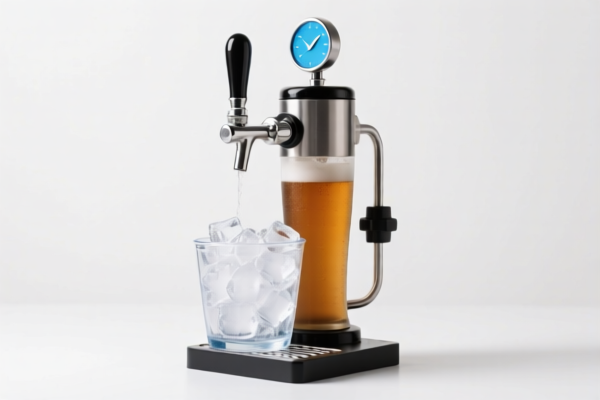
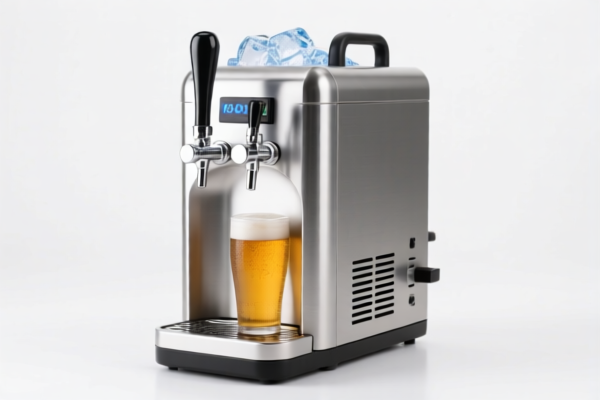
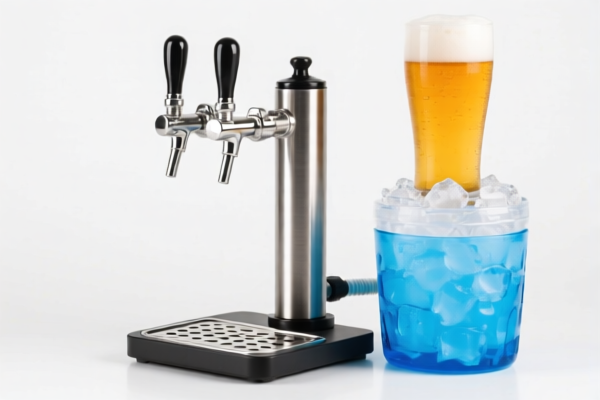
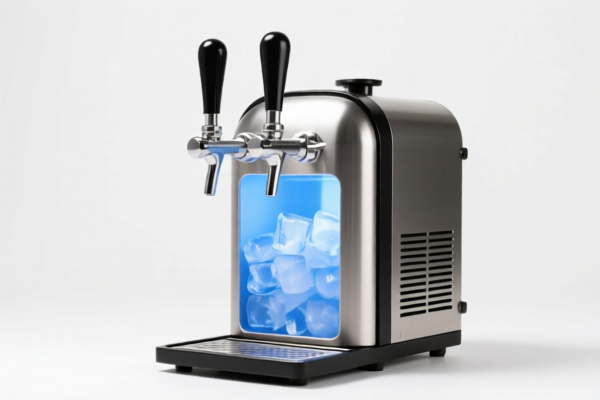
AI Analysis
🌿 Biodiesel Cooler (Storage & Transport Equipment for Organic Liquids)
🌐 HS Code Reference & Customs Clearance Guide | 2026 Latest Tariff Analysis | Professional Compliance Strategy
📌 I. Product Definition & Classification: Do You Really Understand "Biodiesel Cooling/Storage Equipment"?
Biodiesel coolers are critical components in the biofuel supply chain, designed to regulate temperature during the storage and transportation of biodiesel, an organic liquid fuel. In international trade, classification depends heavily on whether the equipment is viewed as:
1. Storage/Transport Containers:
If the equipment is primarily a tank or vessel designed for holding/compressing liquids (often made of steel/iron), it may fall under metal container codes.
2. Mechanical Processing Units:
If the equipment is a heat exchanger, filter, or purifier used specifically to treat/cool the biodiesel as part of a mechanical process, it falls under mechanical apparatus codes.
⚠️ Key Distinction Point:
- If it is a tank/vessel for holding liquid → Potentially 7311.00.00.90
- If it is a heat exchanger/cooler unit treating the material → Potentially 8419.50.50.00
- If it is general mechanical storage/transport equipment → Potentially 8419.89.95.85
- If it includes filtration/purification functions for storage → Potentially 8421.29.00.15
📦 II. HS Code Classification Details (2026 Latest Tariff Authority对照)
| HS Code | Product Description | Application Scenario | Primary Function |
|---|---|---|---|
8419.89.95.85 |
Mechanical, appliance or apparatus for physical or chemical treatment of substances (Other) | General storage/transport equipment for organic liquids like biodiesel; "Catch-all" logic for mechanical handling | ✅ Mechanical Handling/Storage |
8419.50.50.00 |
Heat exchange units | Equipment used to treat biodiesel via thermal exchange (cooling/heating) during processing | ✅ Heat Exchange/Treatment |
7311.00.00.90 |
Other containers for compressed or liquefied gases (Iron/Steel) | Inferred as iron/steel vessels for holding liquefied/compressed liquids; material-focused classification | ✅ Metal Container (Tank) |
8421.29.00.15 |
Mechanical filters or purifiers for liquids | Equipment for storing/transporting biodiesel with filtration/purification attributes | ✅ Filtration/Purification |
🔍 Key Reminder:
- Classification hinges on the primary function and material. Is it a tank? A cooler? Or a filter? - "Biodiesel" is an organic liquid; thus, codes under Chapter 84 (Machinery) are often preferred if it involves active processing (cooling/filtering). If it’s just a passive steel tank, Chapter 73 may apply. - Misclassification can lead to massive tariff differences (e.g., 39.2% vs. 85%).
💰 III. 2026 Latest Tariff Rate Breakdown (Including Surcharges & Policy Add-ons)
✅ Applicable Country: United States (US)
✅ Origin: China (CN)
✅ Effective Date: 2025+ (Post-2025 tariff structures)
🎯 1. 8419.89.95.85 —— General Mechanical Apparatus for Treatment of Substances
| Item | Content |
|---|---|
| Base Tariff | 4.2% (ad valorem) |
| Section 301 Surcharge | +25% (China-origin goods) |
| Section 122 Tariff | +10% (Specific provision for certain machinery/equipment) |
| Total Rate | 39.2% |
| Tax Calculation | CIF Value × 39.2% |
| De Minimis Eligibility | ❌ Not Applicable (High duty rate exceeds threshold) |
| Legal Basis Path | USITC:8419.89.95.85 → Sec301:25% → Sec122:10% |
📌 Explanation:
- This code is favored as a "catch-all" for biodiesel storage/transport equipment if it doesn't fit specific heat exchange or filtration categories. - Total 39.2% is high but lower than the 85% bracket.
🎯 2. 8419.50.50.00 —— Heat Exchange Units
| Item | Content |
|---|---|
| Base Tariff | 0.0% |
| Section 301 Surcharge | +25% |
| Section 122 Tariff | +10% |
| Steel/Aluminum/Copper Surcharge | +50% (Specific surcharge for steel/aluminum/copper products) |
| Total Rate | 85.0% |
| Tax Calculation | CIF Value × 85.0% |
| De Minimis Eligibility | ❌ Not Applicable |
| Legal Basis Path | USITC:8419.50.50.00 → Sec301:25% → Sec122:10% → Steel/Al/Cu:50% |
📌 Critical Warning:
- If the cooler is identified as a heat exchanger (Ch 84.19) and contains significant steel/aluminum/copper components, the additional 50% metal surcharge applies. - Total 85% is extremely high. Avoid this classification if possible unless the product is strictly a heat exchanger with high metal content.
🎯 3. 7311.00.00.90 —— Iron/Steel Containers for Gases/Liquids
| Item | Content |
|---|---|
| Base Tariff | 0.0% |
| Section 301 Surcharge | +25% |
| Section 122 Tariff | +10% |
| Steel/Aluminum/Copper Surcharge | +50% (Specific surcharge for steel products) |
| Total Rate | 85.0% |
| Tax Calculation | CIF Value × 85.0% |
| De Minimis Eligibility | ❌ Not Applicable |
| Legal Basis Path | USITC:7311.00.00.90 → Sec301:25% → Sec122:10% → Steel:50% |
📌 Critical Warning:
- If customs infers the equipment is an iron/steel container (tank) for liquids, the 50% metal surcharge applies. - Total 85%. This is the same high-bracket risk as heat exchangers. Only use if the product is unequivocally a steel tank.
🎯 4. 8421.29.00.15 —— Mechanical Filters/Purifiers for Liquids
| Item | Content |
|---|---|
| Base Tariff | 0.0% |
| Section 301 Surcharge | +25% |
| Section 122 Tariff | +10% |
| Total Rate | 35.0% |
| Tax Calculation | CIF Value × 35.0% |
| De Minimis Eligibility | ❌ Not Applicable |
| Legal Basis Path | USITC:8421.29.00.15 → Sec301:25% → Sec122:10% |
📌 Best Option?
- If the cooler includes filtration or purification functions (common in biodiesel handling to remove impurities), this code offers the lowest total rate: 35.0%. - No additional 50% metal surcharge applies here, unlike 8419 or 7311.
🛠️ IV. Customs Clearance Practical Advice (Pitfall Avoidance Guide)
✅ 1. Required Documentation Checklist
| Document | Mandatory? | Notes |
|---|---|---|
| ✅ Product Specification Sheet | ✔️ | Must detail function: Is it cooling, filtering, or storing? |
| ✅ Technical Diagrams | ✔️ | Show internal structure: Heat exchanger coils? Filters? Tank walls? |
| ✅ Commercial Invoice | ✔️ | Clearly state "Biodiesel Cooler/Storage Equipment" – avoid vague terms like "Tank" if it’s active machinery. |
| ✅ Material Declaration | ✔️ | Specify materials used. If high steel/aluminum content, prepare for 50% surcharge analysis. |
| ✅ Country of Origin Certificate | ✔️ | Required for Section 301 and 122 calculations. |
✅ 2. Classification Strategy (Key Mantras)
🔥 “Function Over Material, Filter Wins, Tank Hurts!”
| Scenario | Recommended HS Code | Why? |
|---|---|---|
| Active Cooling + Filtration | 8421.29.00.15 |
Lowest Rate (35%). Avoids metal surcharge. Best if purification is part of the process. |
| General Storage/Transport Machinery | 8419.89.95.85 |
Moderate Rate (39.2%). Safe "catch-all" if no specific heat exchanger/filtration function. |
| Pure Heat Exchanger (High Metal) | 8419.50.50.00 |
Highest Rate (85%). Avoid unless it’s strictly a heat exchanger and you accept the 50% metal surcharge. |
| Pure Steel Tank (No Active Process) | 7311.00.00.90 |
Highest Rate (85%). Avoid. High risk of 50% metal surcharge. |
⚠️ Critical Tip:
- If your "cooler" is just a steel tank with no moving parts or filtration, customs may reclassify it as7311or8419, leading to 85% duty.
- Try to structure the product description to highlight filtration/purification (8421.29.00.15) or general mechanical handling (8419.89.95.85) to stay under 40%.
🌍 V. Global Market Clearance Comparison (2026 Latest)
| Country/Region | Recommended HS Code | Estimated Duty | Notes |
|---|---|---|---|
| 🇺🇸 USA | 8421.29.00.15 |
35% | Best option if filtration is involved. Avoid 7311/8419.50 due to 85% rate. |
| 🇨🇳 China | 8421.29.00.15 |
~5-10% | Lower base duty, but verify specific biodiesel equipment policies. |
| 🇪🇺 EU | 8419.50.00 |
~0-2% | EU often has lower base duties for machinery. Check EORI and REACH compliance. |
| 🇬🇧 UK | 8421.29 |
~0-5% | Post-Brexit tariffs may vary. Verify UK Global Tariff. |
📌 Conclusion:
- The US market is the most critical. The 35-85% tariff range is a major cost driver.
- China-origin biodiesel coolers face steep tariffs.
- Strategy: If possible, emphasize filtration/purification functions in product design and documentation to qualify for8421.29.00.15(35%). If not, use8419.89.95.85(39.2%). Avoid purely steel tank (7311) or pure heat exchanger (8419.50) classifications due to the 85% risk.
📌 VI. Common Errors & Pitfalls (Lessons Learned)
❌ Error 1: Calling it a "Steel Tank" in the invoice when it has cooling/filtration elements
👉 Consequence: Customs may classify as 7311 → 85% Duty
👉 Fix: Use terms like "Bi-fuel Cooling & Filtration System"
❌ Error 2: Ignoring the "Steel/Aluminum" surcharge
👉 Consequence: Unexpected 50% additional tax on 8419.50 or 7311
👉 Fix: If using 8419.89.95.85 or 8421.29.00.15, the surcharge does not apply.
❌ Error 3: Not providing technical diagrams
👉 Consequence: Customs cannot determine if it’s a "heat exchanger" vs. "filter" → Delay or wrong classification
👉 Fix: Provide clear diagrams showing internal components.
✅ Correct Declaration Example:
"Biodiesel Processing Unit: Mechanical Filtration and Cooling System for Organic Liquids, Model XYZ, 500L Capacity, Non-Steel Internal Components (if applicable), for Transport and Storage"
🎯 VII. Conclusion: Precise Classification Saves Big!
🎯 Remember the Mantra:
🔹 "Filter Wins (35%), General Handles (39%), Tanks/Heaters Kill (85%)!"
🔹 "HS Code is Life or Death for Biodiesel Equipment!"
📌 Pro Tip:
- If your biodiesel cooler is essential for purification, prioritize 8421.29.00.15.
- If it’s pure storage, 8419.89.95.85 is safer than 7311.00.00.90.
- Always consult a customs broker for pre-classification rulings to avoid the 85% pitfall.
📣 Immediate Action:
📞 Contact a Licensed Customs Broker
📄 Submit Product Specs for Advance Ruling
🚀 Optimize Your Supply Chain for 35% Duty, Not 85%
✨ Professional Clearance Starts with Accurate Classification!
💼 Every Percent Saved is Pure Profit!
Customer Reviews
About HS Code Classification
The Harmonized System (HS) is an internationally standardized nomenclature developed by the World Customs Organization (WCO) to classify traded products. Over 200 countries use the HS system as the basis for customs tariffs, trade statistics, and import/export regulations.
Each HS code follows a hierarchical structure:
- Chapter (2 digits) — Broad category of goods (e.g., Chapter 84: Machinery and Mechanical Appliances)
- Heading (4 digits) — More specific grouping within the chapter
- Subheading (6 digits) — Internationally standardized breakdown, used by all WCO member countries
- National subdivisions (8-10 digits) — Country-specific extensions for further classification, such as US HTSUS 10-digit codes
Correct HS code classification is essential for smooth customs clearance, accurate duty payment, and compliance with trade regulations. Misclassification can lead to customs delays, overpayment of duties, or penalties.
When importing from CN to US, the applicable tariff rates may include:
- Most-Favored-Nation (MFN) rate — The standard duty rate applied to WTO members
- General rate — Applied to countries without trade agreements
- Trade remedy duties — Additional tariffs such as Section 301 (anti-dumping), Section 232 (national security), or countervailing duties
The information provided on this page is for reference purposes only. For official classification, please consult with your local customs authority or a licensed customs broker.