Biodiesel Flow Controller
CN → US| HS Code | Tariff Rate | Origin | Destination | Doc |
|---|---|---|---|---|
| 8481200030 | 37.0% | CN | US | Official Doc |
| 8481809050 | 37.0% | CN | US | Official Doc |
| 8481200030 | 37.0% | CN | US | Official Doc |
| 8481809050 | 37.0% | CN | US | Official Doc |
| 8481200030 | 37.0% | CN | US | Official Doc |
Product Images
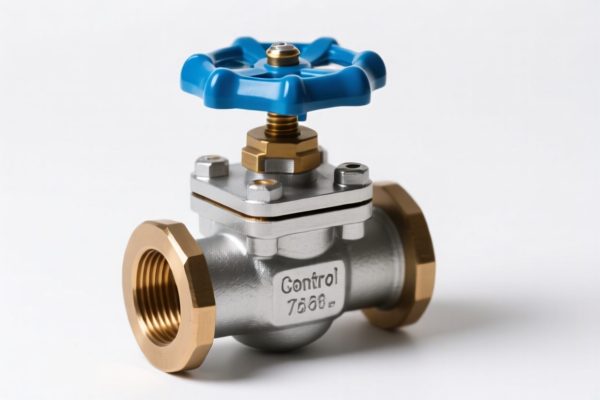
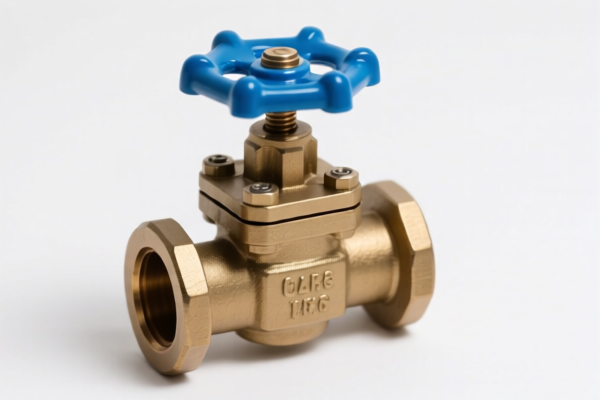
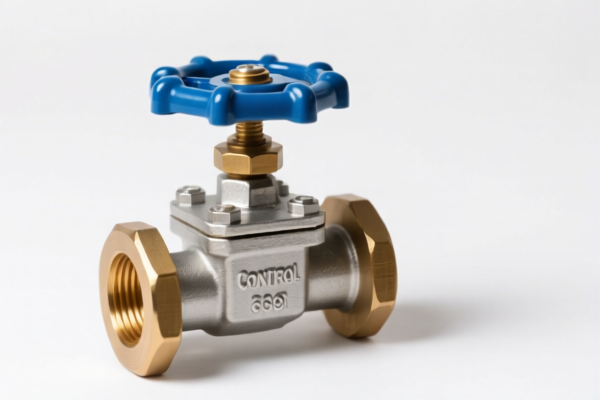
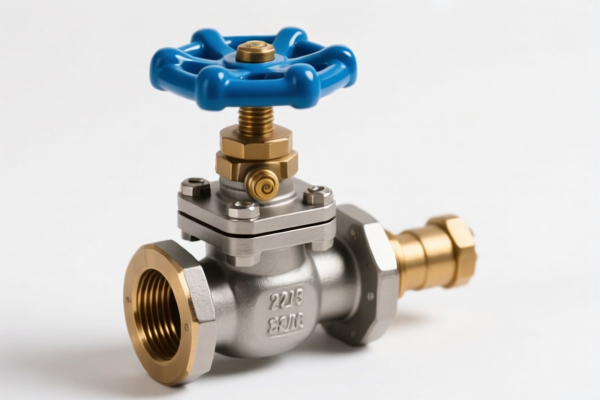
AI Analysis
⛽ Biodiesel Flow Controller (Valves)
🌐 HS Code Reference & Customs Clearance Guide | 2026 Latest Tariff Analysis | Professional Strategy for Biofuel Equipment
📌 I. Product Definition & Classification: What Exactly is a "Biodiesel Flow Controller"?
A Biodiesel Flow Controller is not merely a pipe connector; it is a critical mechanical component designed to regulate, direct, or control the flow of liquid biodiesel within industrial processing plants, fuel distribution networks, or refinery pipelines. In international trade, these devices fall squarely under the chapter for "Valves, Taps, Cockspars and Similar Apparatus."
Because biodiesel is a liquid fuel often operated under pressure, these controllers are classified based on their function and mechanism:
1. Hydraulic/Pneumatic Control Valves: Devices specifically designed for fluid power control (regulating pressure/flow via hydraulic or pneumatic signals).
2. Industrial Pipeline Valves: General-purpose valves (gate, globe, ball, butterfly) used in pipeline systems, typically made of metal or corrosion-resistant materials to withstand biofuels.
⚠️ Key Distinction Point:
- If the device is explicitly a hydraulic or pneumatic control valve → Classified under 8481.20 (Valves for hydraulic/pneumatic power).
- If the device is a general-purpose pipeline valve (e.g., standard industrial valve) → Classified under 8481.80 (Other valves for pipes, boilers, tanks, etc.).
- Crucial Note: Despite the name "Biodiesel," these are NOT classified under chemical product chapters. They are mechanical hardware.
📦 II. HS Code Classification Details (2026 Latest Tariff Authority)
Based on the specific mechanical characteristics and usage scenarios, the following HS codes apply:
| HS Code | Product Description | Applicable Scenario | Key Characteristic |
|---|---|---|---|
8481.20.00.30 |
Valves for hydraulic or pneumatic power control | Biodiesel Control Valves with specific hydraulic/pneumatic actuation mechanisms. Often used in automated flow control systems. | ✅ Hydraulic/Pneumatic Function |
8481.80.90.50 |
Other valves for pipes, boilers, tanks, vats, or similar | Standard Biodiesel Pipeline Valves. General industrial valves (metal/corrosion-resistant) used in biodiesel distribution lines. | ✅ General Pipeline Use |
8481.20.00.30 |
Valves for hydraulic/pneumatic power (Fallback Principle) | Biodiesel valves where the specific subtype isn't listed elsewhere, but they fit the broad category of hydraulic/pneumatic control. | ✅ Fallback to Hydraulic Class |
8481.80.90.50 |
Other valves (General Fallback) | Biodiesel valves identified by shape/form as valves, used in biodiesel pipelines, with no conflicting material restrictions. | ✅ General Form/Use |
🔍 Critical Reminder:
- Do NOT classify these as chemical containers or fuel tanks. They are movement-controlling devices.
- The material (metal, stainless steel, plastic-lined) does not change the HS code chapter, but it confirms suitability for biodiesel (corrosion resistance).
- Whether named "Flow Controller," "Control Valve," or "Isolation Valve," if it regulates liquid flow in a pipe, it belongs in Chapter 84, Heading 8481.
💰 III. 2026 Latest Tariff Rate Breakdown (Detailed Tax Clauses)
✅ Applicable Market: United States (US)
✅ Origin: China (CN)
✅ Effective Date: Current tariffs apply (including Section 301 and Section 232/122 measures)
All four HS codes listed in the data (8481.20.00.30 and 8481.80.90.50) share the identical tariff structure for Chinese-origin goods.
🎯 1. Unified Tariff Structure for Biodiesel Flow Controllers
| Tax Component | Rate | Source / Legal Basis |
|---|---|---|
| Base Duty (MFN) | 2.0% | Most Favored Nation (MFN) rate under HTSUS Chapter 84 |
| Section 301 Duty | 25.0% | Additional duties imposed on Chinese goods under Trade Act of 1974, Section 301 |
| Section 122 / IEEPA Duty | 10.0% | Additional duties under specific executive orders or Section 122 authorities (often cited as "122 Clause" in trade data) |
| Total Effective Tax Rate | 37.0% | Sum of all applicable duties |
| Tax Calculation Base | CIF Value | Cost, Insurance, and Freight value of the shipment |
| De Minimis Exemption | ❌ NOT Eligible | Section 301 duties generally do not apply to the de minimis exemption for shipments under $800. These are subject to full duty assessment. |
📌 Detailed Explanation:
- Base Duty (2%): This is the standard international trade rate for valves.
- Section 301 (25%): This is the primary "trade war" tariff. It applies to all HS codes in Heading 8481 unless specifically excluded (which they are not for standard valves).
- Section 122 / Additional Clause (10%): This represents an additional layer of protectionist tariff. The data explicitly lists this as part of the 37% total.
- Total 37%: This is a high-cost barrier. For a $10,000 shipment of biodiesel valves, the duty alone is $3,700. This significantly impacts profit margins.
- No De Minimis: Unlike consumer goods, industrial valves are often scrutinized, and Section 301 duties are frequently enforced even on low-value shipments if declared correctly.
🛠️ IV. Customs Clearance Operational Advice (Practical Pitfall Guide)
✅ 1. Required Documentation Checklist (Non-Negotiable)
| Document | Must Provide? | Purpose |
|---|---|---|
| ✅ Product Technical Datasheet | ✔️ | Must specify: Type (Hydraulic/Pneumatic vs. General), Pressure Rating, Flow Rate, Material (e.g., SS316, Carbon Steel). |
| ✅ Engineering Drawings / Photos | ✔️ | Visual proof of valve structure (e.g., actuator presence for 8481.20 vs. handwheel for 8481.80). |
| ✅ Commercial Invoice | ✔️ | Must clearly state: "Biodiesel Flow Control Valve" or "Industrial Pipeline Valve for Biofuel Application." Avoid vague terms like "Part." |
| ✅ Certificate of Origin (CO) | ✔️ | To prove origin. If from China, 37% applies. If from Vietnam/Malaysia, preference rules may reduce tariffs. |
| ✅ Material Test Report | ✔️ | Proves corrosion resistance for biodiesel compatibility (helps justify "Industrial" use). |
| ✅ Packing List | ✔️ | Detailing valves, gaskets, bolts. Do not split valve components into different HS codes if shipped as a set. |
✅ 2. Declaration Strategy (Key Mnemonics)
🔥 “Function First, Material Second. ‘Biodiesel’ is Context, Not Classification!”
| Scenario | Correct Declaration | Incorrect Declaration | Consequence |
|---|---|---|---|
| Valve with pneumatic actuator | 8481.20.00.30 “Hydraulic/Pneumatic Control Valve” |
“Pipe Fitting” or “Biodiesel Part” | Misclassification → Penalty + Back Taxes |
| Standard manual/gate valve | 8481.80.90.50 “Valve for Pipes, Vats, or Similar” |
“Fuel Tank Accessory” | Misclassification → Delayed Clearance |
| Mixed shipment (Actuator + Valve Body) | Ship as One Unit Classify by primary function |
Split into “Actuator” and “Body” | Double Duty + Complexity Risk |
✅ 3. Special Cases & Mitigation
| Situation | Handling Advice |
|---|---|
| OEM/Custom Valves | Provide the customer’s design spec. If it’s a unique hydraulic controller, lean toward 8481.20. |
| High-Pressure Biodiesel Systems | Ensure pressure ratings are documented. High-pressure valves are often categorized under 8481.20 if they are control valves. |
| Corrosion-Resistant Linings | Mention material (e.g., PTFE-lined) in description. This justifies the "Industrial/Biofuel" use case and prevents confusion with food-grade valves. |
| Origin Diversification | If possible, source valves from Vietnam, Thailand, or Mexico. Check if these countries have FTA (Free Trade Agreements) with the US that may exempt the 25% Section 301 duty. Result: Potential tax savings of up to 25%! |
🌍 V. Global Market Clearance Comparison (2026)
| Country/Region | Recommended HS Code | Base Duty | Section 301/Additional | Total Duty (China Origin) | Notes |
|---|---|---|---|---|---|
| 🇺🇸 USA | 8481.20 / 8481.80 |
2.0% | +35% (25% + 10%) | 37.0% | High Barrier. Pre-advance ruling recommended. |
| 🇨🇳 China | 8481.20 / 8481.80 |
~2-7% | None | Low | Exporting from China to China? N/A. But for domestic sales, tax is lower. |
| 🇪🇺 EU | 8481.20 / 8481.80 |
~1.7% | None | ~1.7% | Low Tax. No Section 301. CE Marking required. |
| 🇯🇵 Japan | 8481.20 / 8481.80 |
~0-2% | None | ~2% | Low Tax. JIS standards may apply. |
| 🇦🇺 Australia | 8481.20 / 8481.80 |
~5% | None | ~5% | Moderate. AANZFTA may reduce to 0%. |
📌 Conclusion:
- USA is the most challenging market for biodiesel valves due to the 37% effective duty.
- EU, Japan, and Australia are much more favorable, with duties under 5%.
- Strategy: If exporting to the US, consider transshipment or origin substitution (if legally permissible) to mitigate the 25% Section 301 tariff.
📌 VI. Common Errors & Pitfall Guide (Lessons Learned)
❌ Error 1: Declaring as “Biodiesel Fuel” or “Chemical Container”
👉 Consequence: HS Code 2700-3800 range. Wrong chapter. Customs will reclassify and penalize. Valves are machinery, not chemicals.
❌ Error 2: Splitting Hydraulic Actuator and Valve Body
👉 Consequence: The actuator might be classified under electronics or machinery, while the body is a valve. If not shipped together as a functional unit, you may pay double base duties and trigger complex compliance checks.
❌ Error 3: Ignoring the “122 Clause” (10%) in Tariff Calculation
👉 Consequence: Budgeting only for 27% (2% + 25%) leads to unforeseen cash flow issues at customs. The total is 37%.
❌ Error 4: Using Generic Names Like “Fitting” or “Connector”
👉 Consequence: Customs officers may assign a higher-duty code if the intent to control flow isn’t clear. Always use “Valve” or “Control Valve” in the description.
✅ Correct Approach:
“Industrial Hydraulic Control Valve for Biodiesel Pipelines, SS316 Material, 150 PSI, Model XZ-200, For Flow Regulation”
🎯 VII. Conclusion: Professional Declaration, Risk Mitigation, Cost Control
🎯 Remember the Mantras:
🔹 “Valve is Machine, Not Chemical. Chapter 84 is Key.”
🔹 “37% Total Duty for US. 2% Base + 35% Additional.”
🔹 “Specify Hydraulic vs. Pipeline to Pick the Right Sub-Code.”
📌 Pro Tip:
For US-bound shipments, consider applying for a Section 301 Exclusion if your specific valve model is not available from US suppliers. While difficult, it can save the 25% duty. Alternatively, explore Third-Country Origin options if your supply chain allows.
📣 Immediate Action:
📞 Consult a Licensed Customs Broker for a Pre-Ruling on your specific valve model.
📄 Prepare Detailed Technical Specs to justify 8481.20 vs. 8481.80.
🚀 Optimize Your Supply Chain to mitigate the 37% tariff burden.
✨ Professional Customs Clearance Starts with Precise Classification!
💼 Your Bottom Line Depends on Every Percent!
Customer Reviews
About HS Code Classification
The Harmonized System (HS) is an internationally standardized nomenclature developed by the World Customs Organization (WCO) to classify traded products. Over 200 countries use the HS system as the basis for customs tariffs, trade statistics, and import/export regulations.
Each HS code follows a hierarchical structure:
- Chapter (2 digits) — Broad category of goods (e.g., Chapter 84: Machinery and Mechanical Appliances)
- Heading (4 digits) — More specific grouping within the chapter
- Subheading (6 digits) — Internationally standardized breakdown, used by all WCO member countries
- National subdivisions (8-10 digits) — Country-specific extensions for further classification, such as US HTSUS 10-digit codes
Correct HS code classification is essential for smooth customs clearance, accurate duty payment, and compliance with trade regulations. Misclassification can lead to customs delays, overpayment of duties, or penalties.
When importing from CN to US, the applicable tariff rates may include:
- Most-Favored-Nation (MFN) rate — The standard duty rate applied to WTO members
- General rate — Applied to countries without trade agreements
- Trade remedy duties — Additional tariffs such as Section 301 (anti-dumping), Section 232 (national security), or countervailing duties
The information provided on this page is for reference purposes only. For official classification, please consult with your local customs authority or a licensed customs broker.