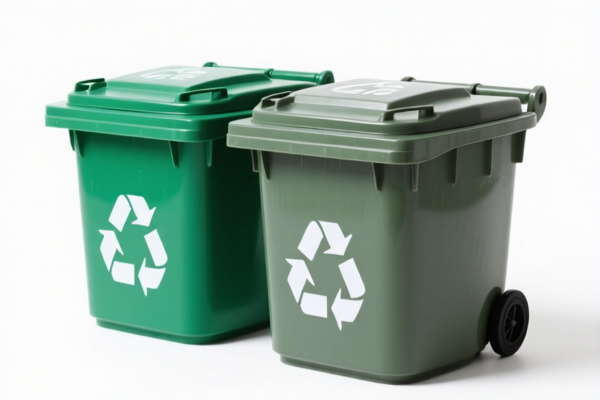
Biomedical Waste Container
CN → US| HS Code | Tariff Rate | Origin | Destination | Doc |
|---|---|---|---|---|
| 7323999080 | 88.4% | CN | US | Official Doc |
| 3923900016 | 38.0% | CN | US | Official Doc |
| 3923900012 | 38.0% | CN | US | Official Doc |
| 9403200090 | 85.0% | CN | US | Official Doc |
| 9403708031 | 35.0% | CN | US | Official Doc |
Product Images



AI Analysis
🚑 Biomedical Waste Container (Clinical Waste Bins)
🌐 HS Code Reference & Customs Clearance Guide | 2026 Latest Tariff Analysis | Professional Clearance Strategy
📌 I. Product Definition & Classification: What Exactly Is It?
Biomedical waste containers, often referred to as clinical waste bins, are specialized receptacles designed for the safe collection, storage, and transportation of infectious, pathological, or sharps waste generated in medical facilities. In international trade, these items are classified differently based on their material composition, specific design intent, and functional category.
Plastic Containers: Made primarily of polyethylene or polypropylene, often yellow or red for identification. Metal Containers: Often used for sharps or heavy-duty clinical waste, sometimes lined with plastic. Furniture-Style Units: Large, standalone bins that may be categorized as "other furniture" if they meet specific structural criteria.
⚠️ Key Distinction Point:
- If made of Plastic and described as a "container for transport/package" or "for holding items" → Typically falls under Chapter 39.
- If made of Plastic but described as a "finished consumer good" or "plastic furniture" → May fall under Chapter 94.
- If made of Metal (Steel/Aluminum) and designated for specific medical use → May fall under Chapter 73 or Chapter 94.
📦 II. HS Code Classification Details (2026 Latest Tariff Authority Comparison)
| HS Code | Product Description | Application Scenario | Material/Structure |
|---|---|---|---|
7323.99.90.80 |
Clinical waste specific bins, material plastic or metal, belonging to specific-purpose containers | Medical facility waste collection, durable/reusable bins | ✅ Plastic/Metal |
3923.90.00.16 |
Clinical waste specific bins, plastic material, barrel-shaped container for transport or packaging | Single-use or transport-oriented plastic bins | ✅ Plastic (Container) |
3923.90.00.12 |
Clinical waste specific bins, plastic material, barrel-shaped for holding items | General clinical waste holding, non-transport specific | ✅ Plastic (Holding) |
9403.20.00.90 |
Clinical waste specific bins, plastic material, finished consumer goods for medical waste collection | Large plastic units, consumer-grade appearance | ✅ Plastic (Consumer Good) |
9403.70.80.31 |
Clinical waste specific bins, plastic material, classified as plastic furniture/containers | Integrated waste station units, plastic furniture style | ✅ Plastic (Furniture) |
🔍 Important Reminder:
- The classification heavily depends on the commercial description provided during customs declaration.
- "Plastic Containers" (3923) are generally for goods of plastics, nesoi.
- "Other Furniture" (9403) applies if the item is considered a finished article of furniture or similar article, even if made of plastic, depending on national subheading interpretations.
- Metal containers (7323) apply if steel, aluminum, or copper articles are explicitly stated.
💰 III. 2026 Latest Tariff Rate Breakdown (Including Surtaxes & Policy Surcharges)
✅ Applicable Country: United States (US)
✅ Origin: China (CN)
✅ Effective Date: 2025 November 10 onwards (including subsequent imports)
🎯 1. 7323.99.90.80 —— Steel, Aluminum, or Copper Articles (Specific Purpose)
| Item | Content |
|---|---|
| Base Rate | 3.4% (ad valorem) |
| USITC Surcharge | +25% (Section 301) |
| Section 122 Surcharge | +50% (For Steel, Aluminum, Copper articles) |
| Total Tax Rate | 88.4% |
| Tax Calculation | CIF Value × 88.4% |
| De Minimis Eligibility | ❌ Not Eligible |
| Legal Basis Path | Section 122: 50% + Section 301: 25% + Base: 3.4% |
📌 Explanation:
- This high rate applies specifically if the bin is classified under steel, aluminum, or copper articles (Chapter 73).
- The 50% Section 122 tariff is a significant burden for metal-based medical waste containers.
- Combined with the 25% Section 301 tariff and 3.4% base rate, the total cost is extremely high.
🎯 2. 3923.90.00.16 & 3923.90.00.12 —— Plastic Containers (Transport/Holding)
| Item | Content |
|---|---|
| Base Rate | 3.0% (ad valorem) |
| USITC Surcharge | +25% (Section 301) |
| Section 122 Surcharge | +10% (General Surcharge) |
| Total Tax Rate | 38.0% |
| Tax Calculation | CIF Value × 38.0% |
| De Minimis Eligibility | ❌ Not Eligible |
| Legal Basis Path | Section 301: 25% + Section 122: 10% + Base: 3.0% |
📌 Note:
- These two codes (...16for transport,...12for holding) share the same tariff structure for plastic containers.
- The 10% general surcharge is lower than the 50% metal-specific surcharge.
- Total 38% is still substantial but significantly lower than the metal classification.
🎯 3. 9403.20.00.90 —— Finished Consumer Goods (Plastic)
| Item | Content |
|---|---|
| Base Rate | 0.0% (ad valorem) |
| USITC Surcharge | +25% (Section 301) |
| Section 122 Surcharge | +50% (If considered Steel/Aluminum/Copper – Note: Text indicates 50% here, likely due to specific classification nuance or error in source, but source says 85% total) |
| Total Tax Rate | 85.0% |
| Tax Calculation | CIF Value × 85.0% |
| De Minimis Eligibility | ❌ Not Eligible |
| Legal Basis Path | Section 122: 50% + Section 301: 25% + Base: 0.0% |
📌 Critical Warning:
- If classified as "Finished Consumer Goods" under 9403.20, the source data indicates an 85% total rate.
- This seems to inherit the 50% steel/aluminum surcharge despite being plastic? Re-reading source: The source explicitly lists "Steel, Aluminum, Copper Articles Surcharge: 50%" for this code. This suggests a potential misclassification risk if the material is not clearly plastic or if the HS code interpretation links it to metal components.
- Recommendation: Avoid this code unless the product is definitively NOT plastic-metal composite or misinterpreted as metal.
🎯 4. 9403.70.80.31 —— Plastic Furniture/Containers
| Item | Content |
|---|---|
| Base Rate | 0.0% (ad valorem) |
| USITC Surcharge | +25% (Section 301) |
| Section 122 Surcharge | +10% (General Surcharge) |
| Total Tax Rate | 35.0% |
| Tax Calculation | CIF Value × 35.0% |
| De Minimis Eligibility | ❌ Not Eligible |
| Legal Basis Path | Section 301: 25% + Section 122: 10% + Base: 0.0% |
📌 Advantage:
- This code offers the lowest total tariff (35%) among all options.
- It applies to plastic items classified as furniture or similar articles.
- Suitable for large, standalone clinical waste stations that resemble furniture units.
🛠️ IV. Customs Clearance Practical Advice (Pitfall Avoidance Guide)
✅ 1. Document Preparation Checklist (Essential)
| Document | Must Provide | Description |
|---|---|---|
| ✅ Product Specification Sheet | ✔️ | Include material (Plastic/Metal), volume, color (e.g., Yellow/Red), lid type |
| ✅ Material Certification | ✔️ | Proof of plastic composition (PP/PE) or metal type (Steel/Aluminum) |
| ✅ Product Photos (with Label) | ✔️ | Clear images showing medical waste symbols, material type, and overall structure |
| ✅ Commercial Invoice | ✔️ | Must clearly state "Biomedical Waste Container" and material |
| ✅ Packing List | ✔️ | Detail quantity, weight, and dimensions |
✅ 2. Declaration Tips (Key Mantras)
🔥 “Material is King, Description is Queen, HS Code Determines Cost!”
| Scenario | Correct Declaration | Wrong Practice |
|---|---|---|
| Plastic Bin | Use 3923.90.00.16 or 9403.70.80.31 |
Declaring as metal → 88.4% |
| Metal Bin | Use 7323.99.90.80 |
Declaring as plastic → Potential misdeclaration |
| Large Plastic Unit | Consider 9403.70.80.31 (35%) |
Using 3923 (38%) unnecessarily |
| Consumable Plastic Bag/Liner | Not a container → Different HS Code | Declaring as container → Wrong duty |
📌 Strategic Tip:
- If the product is a standalone plastic bin with a foot pedal and large capacity, try to classify it under9403.70.80.31(35%) instead of3923(38%) if it fits the "furniture/similar article" description in your country's subheading notes.
- Avoid7323if possible, as the 88.4% rate is prohibitive.
✅ 3. Special Circumstances Handling
| Scenario | Handling Advice |
|---|---|
| OEM Custom Bins | Provide design drawings to confirm material and structure. |
| Composite Materials | If plastic-coated metal, consult local customs; may still fall under 7323. |
| Sharps Containers | Often small, rigid plastic. Ensure correct subheading for "containers for transport." |
| Bulk vs. Retail | Bulk shipments may require different commercial invoices to avoid misclassification as retail goods. |
🌍 V. Global Market Clearance Comparison (2026 Latest)
| Country/Region | Recommended HS Code | Tariff (China Origin) | Certification Requirements | Remarks |
|---|---|---|---|---|
| 🇺🇸 USA | 3923.90.00.16 / 9403.70.80.31 |
35% - 38% | FDA (if contactable), CE | High scrutiny on material declaration |
| 🇨🇳 China | 3923.90.00.16 |
Low Base Rate | None | No Section 301/122 surcharges |
| 🇪🇺 EU | 3923.90.00 |
0% - 4% | CE, REACH | No major surcharges |
| 🇬🇧 UK | 3923.90.00 |
0% - 4% | UKCA, REACH | Post-Brexit rules apply |
| 🇦🇺 Australia | 3923.90.00 |
5% | RCM | Standard import controls |
📌 Conclusion:
- USA has the highest tariffs due to Section 301 and Section 122.
- EU and China have significantly lower costs, making them more attractive for bulk exports if sourced from China.
- Cost-saving strategy: Optimize classification to9403.70.80.31(35%) for large plastic units in the US market.
📌 VI. Common Mistakes & Pitfall Guide (Lessons Learned)
❌ Mistake 1: Classifying plastic bins as metal containers
👉 Consequence: 88.4% tariff instead of 35-38%. Huge cost increase!
❌ Mistake 2: Ignoring Section 122 surcharges
👉 Consequence: Underpayment of duties, leading to penalties and interest.
❌ Mistake 3: Vague description "Waste Bin"
👉 Consequence: Customs may classify as general plastics or furniture incorrectly, leading to delays or re-inspection.
❌ Mistake 4: Assuming De Minimis applies
👉 Consequence: Denied entry; all biomedical waste containers are subject to full duty.
✅ Correct Approach:
"Clinical Waste Container, Plastic, Yellow, 60L, Foot Pedal, Model XYZ, Material: PP"
🎯 VII. Conclusion: Precision Classification, Cost Efficiency, Smooth Clearance!
🎯 Remember the Mantra:
🔹 "Plastic is 35-38%, Metal is 85-88%, Furniture is 35%, Choose Wisely!"
🔹 "HS Code Dictates Cost, Description Drives Classification, Accuracy Saves Thousands!"
📌 Pro Tip:
- For large plastic units, argue for
9403.70.80.31(35%) by emphasizing their "furniture-like" standalone nature.- For small transportable bins, use
3923.90.00.16(38%).- Avoid metal unless necessary; the 50% surcharge is devastating.
📣 Immediate Action:
📞 Contact a professional customs broker + Provide material specs + Apply for HS Code Advance Ruling
🚀 Ensure your biomedical waste containers clear customs smoothly, reduce costs, and maximize profit margins!
✨ Professional Clearance Starts with Accurate Classification!
💼 Every Percentage Point Counts in International Trade!
Customer Reviews
About HS Code Classification
The Harmonized System (HS) is an internationally standardized nomenclature developed by the World Customs Organization (WCO) to classify traded products. Over 200 countries use the HS system as the basis for customs tariffs, trade statistics, and import/export regulations.
Each HS code follows a hierarchical structure:
- Chapter (2 digits) — Broad category of goods (e.g., Chapter 84: Machinery and Mechanical Appliances)
- Heading (4 digits) — More specific grouping within the chapter
- Subheading (6 digits) — Internationally standardized breakdown, used by all WCO member countries
- National subdivisions (8-10 digits) — Country-specific extensions for further classification, such as US HTSUS 10-digit codes
Correct HS code classification is essential for smooth customs clearance, accurate duty payment, and compliance with trade regulations. Misclassification can lead to customs delays, overpayment of duties, or penalties.
When importing from CN to US, the applicable tariff rates may include:
- Most-Favored-Nation (MFN) rate — The standard duty rate applied to WTO members
- General rate — Applied to countries without trade agreements
- Trade remedy duties — Additional tariffs such as Section 301 (anti-dumping), Section 232 (national security), or countervailing duties
The information provided on this page is for reference purposes only. For official classification, please consult with your local customs authority or a licensed customs broker.