Birch Furniture Material Raw Wood
CN → US| HS Code | Tariff Rate | Origin | Destination | Doc |
|---|---|---|---|---|
| 4403960130 | 35.0% | CN | US | Official Doc |
| 4403950130 | 35.0% | CN | US | Official Doc |
| 4407960019 | 35.0% | CN | US | Official Doc |
| 9403608093 | 35.0% | CN | US | Official Doc |
| 9403910080 | 35.0% | CN | US | Official Doc |
Product Images
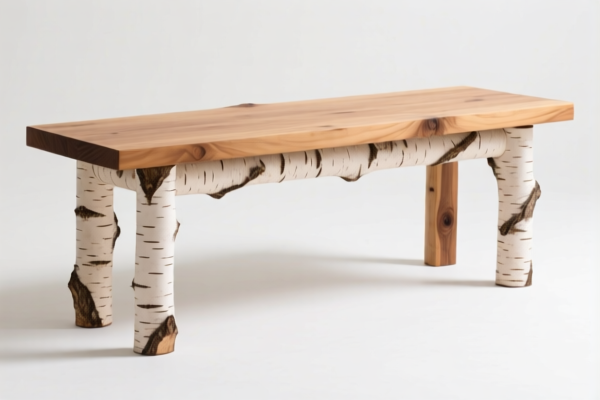
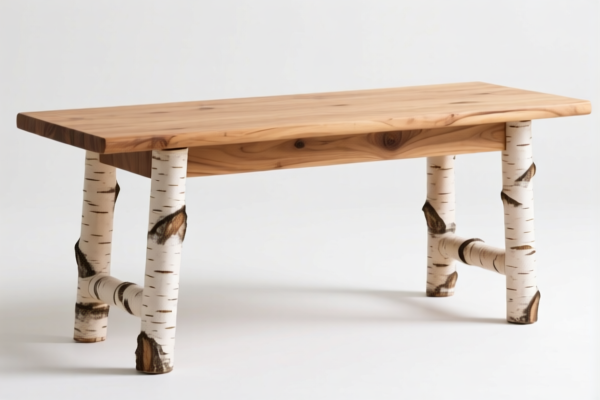
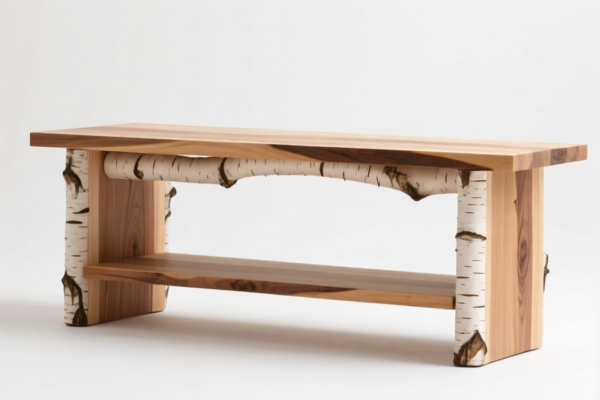
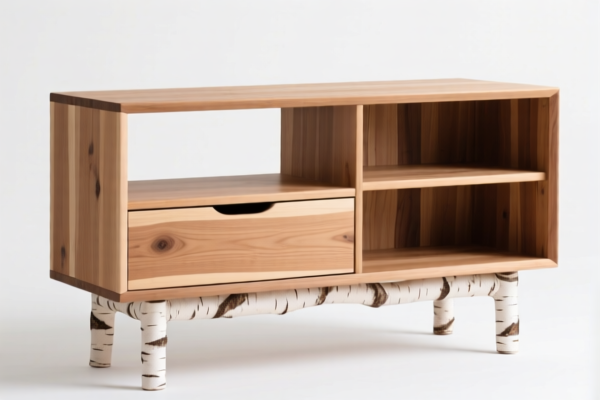
AI Analysis
🌲 Birch Furniture Material: Raw Wood & Processing Stages
🌐 HS Code Reference & Customs Clearance Guide | 2026 Latest Tariff Analysis | Professional Compliance Strategy
📌 I. Product Definition: What Exactly is "Birch Furniture Material"?
"Raw Wood" for birch furniture is not a single commodity. In international trade, its classification depends entirely on its state of processing. Is it a rough log? Is it planed? Is it sliced for veneer? Or is it already a finished component?
Misclassification leads to severe penalties. Here is the breakdown based on the physical state of the birch wood:
1. Primary/Raw State (Logs/Unprocessed)
- Description: Birch logs that have been debarked but not sawn, or wood in its natural, unprocessed form.
- Key Feature: No sawn surfaces, no planed surfaces, no veneer sheets.
2. Semi-Processed/Rough State (Sawn/Planed Wood)
- Description: Birch wood that has been sawn, chipped, or roughly planed into beams, planks, or blocks.
- Key Feature: Thickness typically >6mm, ready for further machining but not yet a finished part.
3. Veneer/Thin Slices
- Description: Thin sheets of birch wood cut for veneer applications.
- Key Feature: Thickness <6mm, used for surface layering.
4. Furniture Components/Parts
- Description: Parts of birch furniture that have been shaped, drilled, or assembled (e.g., legs, panels, frames) but are not yet final assembled furniture.
- Key Feature: Recognizable as parts of furniture (e.g., chair legs, table tops).
⚠️ Critical Distinction:
- If the wood is rough logs or unprocessed → It falls under 4403.
- If the wood is sawn/planed (basic processing) → It falls under 4407.
- If the wood is already a furniture part → It falls under 9403.
- Do not classify unfinished parts as "raw wood" or vice versa. The level of processing dictates the tariff.
📦 II. HS Code Classification Matrix (2026 Authoritative Cross-Reference)
| HS Code | Product Description | Processing State | Physical Form |
|---|---|---|---|
4403.96.01.30 |
Birch Furniture Material | Unprocessed / Primary Form | Logs, debarked wood, rough timber ready for primary processing. |
4403.95.01.30 |
Birch Furniture Material | Rough Sawn/Planed | Rough timber, semi-processed wood blocks/planks, not yet fine-sawn. |
4407.96.00.19 |
Birch Furniture Material | Sawn/Chipped (>6mm) | Birch wood sawn or chipped lengthwise, planed, or edge-joined, thickness > 6mm. |
9403.60.80.93 |
Birch Furniture Material | Furniture Parts/Assemblies | Unassembled or partially assembled wooden furniture (e.g., tables, chairs) made of birch. |
9403.91.00.80 |
Birch Furniture Material | Furniture Components | Parts of wooden furniture (e.g., legs, frames, shelves) specifically for birch furniture. |
🔍 Key Alert:
- 4403 is for raw/semi-raw wood.
- 4407 is for processed wood (sawn/planed).
- 9403 is for finished/partially finished furniture and its parts.
- Do not ship a finished birch chair under4403.96.01.30. It will be rejected or reclassified with penalties.
💰 III. 2026 Tariff Rate Breakdown (US Imports from China)
✅ Applicable Country: United States (US)
✅ Country of Origin: China (CN)
✅ Effective Date: 2025-11-10 onwards (Includes subsequent imports)
🎯 1. 4403.96.01.30 & 4403.95.01.30 (Raw/Rough Birch Wood)
| Item | Details |
|---|---|
| Base Tariff | 0% (Ad Valorem) |
| Section 301 Tariff | +25% (USITC Footnote 9903.88.01) |
| IEEPA Tariff | +10% (Against China/HK products, effective 2025-11-10) |
| Total Tax Rate | 35.0% |
| Calculation Basis | CIF Value × 35% |
| De Minimis Exemption | ❌ Denied |
| Legal Authority Path | IEEPA:9903.01.25 → IEEPA:9903.01.24 → USITC:4403.96.01.30 / 4403.95.01.30 → FOOTNOTE:9903.88.01 |
📌 Explanation:
- 25%: Section 301 tariff on Chinese-origin wood products.
- 10%: IEEPA tariff on Chinese-origin goods.
- Total: 35%. This is a high tariff category. Any misclassification as a non-Chinese origin product will lead to severe fraud penalties.
🎯 2. 4407.96.00.19 (Processed/Sawn Birch Wood)
| Item | Details |
|---|---|
| Base Tariff | 0% |
| Section 301 Tariff | +25% |
| IEEPA Tariff | +10% |
| Total Tax Rate | 35.0% |
| Calculation Basis | CIF Value × 35% |
| De Minimis Exemption | ❌ Denied |
| Legal Authority Path | IEEPA:9903.01.25 → IEEPA:9903.01.24 → USITC:4407.96.00.19 → FOOTNOTE:9903.88.01 |
📌 Note:
- Even though the wood is processed, it remains subject to the same combined tariff rate of 35%.
- Ensure the description explicitly states "Birch, Sawn/Planed" to avoid confusion with4403(raw) or4408(veneer).
🎯 3. 9403.60.80.93 & 9403.91.00.80 (Furniture Parts/Components)
| Item | Details |
|---|---|
| Base Tariff | 0% |
| Section 301 Tariff | +25% |
| IEEPA Tariff | +10% |
| Total Tax Rate | 35.0% |
| Calculation Basis | CIF Value × 35% |
| De Minimis Exemption | ❌ Denied |
| Legal Authority Path | IEEPA:9903.01.25 → IEEPA:9903.01.24 → USITC:9403.60.80.93 / 9403.91.00.80 → FOOTNOTE:9903.88.01 |
📌 Critical Point:
- Even if the product is a "furniture part" (e.g., a birch table leg), it is still subject to the 35% total tariff.
- Do not attempt to classify furniture parts as "raw wood" to avoid the 301 tariff. The US CBP strictly enforces the "essential character" test. If it is a part of furniture, it belongs in Chapter 94.
🛠️ IV. Customs Clearance Practical Advice (Real-World Pitfall Avoidance)
✅ 1. Required Documentation Checklist (Non-Negotiable)
| Document | Mandatory? | Notes |
|---|---|---|
| ✅ Commercial Invoice | ✔️ | Must clearly state "Birch Wood/Furniture Material" and HS Code. |
| ✅ Packing List | ✔️ | Detail the weight, dimensions, and packaging type. |
| ✅ Certificate of Origin (CO) | ✔️ | Crucial for proving Chinese origin. Misdeclaring origin as Vietnam/Malaysia is fraud. |
| ✅ Phytosanitary Certificate | ✔️ | Mandatory for all wood products entering the US. Must be issued by the Chinese Customs. |
| ✅ Fumigation Certificate | ✔️ | If wood is not treated, fumigation is required. Must be done before shipment. |
| ✅ Product Photos | ✔️ | Show the wood state (raw, sawn, or part) to prove classification. |
| ✅ Declaration of Non-Contraband | ✔️ | Confirm no endangered species (CITES) if applicable (birch is generally safe, but check). |
✅ 2. Declaration Tips (Golden Rules)
🔥 "State the Form, Declare the Origin, Attach the Phytosanitary!"
| Scenario | Correct Declaration | Wrong Practice |
|---|---|---|
| Raw Logs | 4403.96.01.30 "Birch Logs, Unprocessed" |
Misdeclaring as "Lumber" → Higher duty or rejection |
| Sawn Planks | 4407.96.00.19 "Birch Wood, Sawn, >6mm" |
Misdeclaring as "Furniture Parts" → Incorrect HTS |
| Table Legs | 9403.91.00.80 "Parts of Wooden Furniture" |
Misdeclaring as "Raw Wood" → Fraud penalty |
| Mixed Shipment | Separate HS Codes for Raw vs. Processed | Mixing all under one code → Delays and audits |
✅ 3. Special Handling Cases
| Case | Recommendation |
|---|---|
| OEM Custom Parts | Provide detailed drawings to prove they are "parts" (Chapter 94), not "wood" (Chapter 44). |
| Green/Unprocessed Wood | Phytosanitary Certificate is mandatory. Without it, the shipment will be destroyed or returned. |
| Re-exported Wood | Ensure the CO shows the true origin (China). Transshipment does not change the origin for tariff purposes. |
| Veneer vs. Sawn | Veneer (<6mm) may have different codes (e.g., 4408). Do not mix with sawn wood. |
🌍 V. Global Market Comparison (2026 Update)
| Country/Region | Recommended HS Code | Tariff Rate | Certification Required | Notes |
|---|---|---|---|---|
| 🇺🇸 USA | 4403.96.01.30 / 4407.96.00.19 / 9403.xxxx |
35% (0% Base + 25% 301 + 10% IEEPA) | Phytosanitary + Fumigation | High Tariff. Strict origin checks. |
| 🇨🇳 China | 4403.96.01.30 / 4407.96.00.19 |
5-10% | CCC (if furniture) | Lower tariffs for domestic processing. |
| 🇪🇺 EU | 4403.96 / 4407.96 |
0% (Most Favored Nation) | Phytosanitary + Fumigation | No 301/IEEPA tariffs. But strict EUTR regulations on legality. |
| 🇬🇧 UK | 4403.96 / 4407.96 |
0% | Phytosanitary | Post-Brexit rules may apply. |
| 🇨🇦 Canada | 4403.96 / 4407.96 |
0% | Phytosanitary | CUSMA benefits may apply if processed in Canada. |
📌 Conclusion:
- The US market is the most expensive for Chinese birch wood due to the 35% combined tariff.
- EU/UK markets have 0% base tariff but enforce strict legality checks (EUTR/CITES).
- Phytosanitary Certificates are universal requirements for wood. Never ship without them.
📌 VI. Common Mistakes & Pitfalls (Lessons Learned)
❌ Mistake 1: Declaring "Furniture Parts" as "Raw Wood" to avoid higher duties.
👉 Consequence: CBP will reclassify, charge back taxes, and impose penalties. Fraud alert.
❌ Mistake 2: Shipping wood without a Phytosanitary Certificate.
👉 Consequence: Shipment held, fumigated at owner's expense, or destroyed. Delays of weeks.
❌ Mistake 3: Mixing raw logs and processed planks in one shipment under one HS Code.
👉 Consequence: Audit, delay, and potential rejection of the entire shipment.
❌ Mistake 4: Using "Birch Wood" as a generic description.
👉 Consequence: CBP cannot determine the correct code. Request for information (RFI) issued, delaying clearance.
✅ Correct Practice:
"Birch Wood, Sawn, Planed, 10mm Thickness, for Furniture Manufacturing, Origin: China, Phytosanitary Certified"
🎯 VII. Conclusion: Precision Classification, Cost Control, Compliance!
🎯 Remember the Golden Rules:
🔹 "Raw Wood = 4403/4407, Furniture Parts = 9403. Never Mix!"
🔹 "35% Total Tariff in US is Non-Negotiable for China Origin. Plan Your Costs!"
🔹 "Phytosanitary Certificate is Mandatory. No Certificate, No Entry!"
📌 Pro Tip:
If you are exporting to the US, consider value engineering or supply chain diversification (e.g., sourcing birch from non-China origins) to mitigate the 35% tariff impact. For other markets, focus on phytosanitary compliance and legality documentation.
📣 Immediate Action:
📞 Consult with a licensed customs broker for pre-classification ruling.
📄 Ensure Phytosanitary Certificate is issued by the exporting country's agricultural authority.
🚀 Clear, compliant, and efficient customs clearance starts with accurate HS Code declaration!
✨ Professional Clearance Starts with Accurate Classification!
💼 Every percentage point of tariff matters. Get it right the first time!
Customer Reviews
About HS Code Classification
The Harmonized System (HS) is an internationally standardized nomenclature developed by the World Customs Organization (WCO) to classify traded products. Over 200 countries use the HS system as the basis for customs tariffs, trade statistics, and import/export regulations.
Each HS code follows a hierarchical structure:
- Chapter (2 digits) — Broad category of goods (e.g., Chapter 84: Machinery and Mechanical Appliances)
- Heading (4 digits) — More specific grouping within the chapter
- Subheading (6 digits) — Internationally standardized breakdown, used by all WCO member countries
- National subdivisions (8-10 digits) — Country-specific extensions for further classification, such as US HTSUS 10-digit codes
Correct HS code classification is essential for smooth customs clearance, accurate duty payment, and compliance with trade regulations. Misclassification can lead to customs delays, overpayment of duties, or penalties.
When importing from CN to US, the applicable tariff rates may include:
- Most-Favored-Nation (MFN) rate — The standard duty rate applied to WTO members
- General rate — Applied to countries without trade agreements
- Trade remedy duties — Additional tariffs such as Section 301 (anti-dumping), Section 232 (national security), or countervailing duties
The information provided on this page is for reference purposes only. For official classification, please consult with your local customs authority or a licensed customs broker.