Birch Rough Timber
CN → US| HS Code | Tariff Rate | Origin | Destination | Doc |
|---|---|---|---|---|
| 4403960123 | 35.0% | CN | US | Official Doc |
| 4403960130 | 35.0% | CN | US | Official Doc |
| 4403950127 | 35.0% | CN | US | Official Doc |
| 4403990160 | 35.0% | CN | US | Official Doc |
| 4407930020 | 35.0% | CN | US | Official Doc |
Product Images
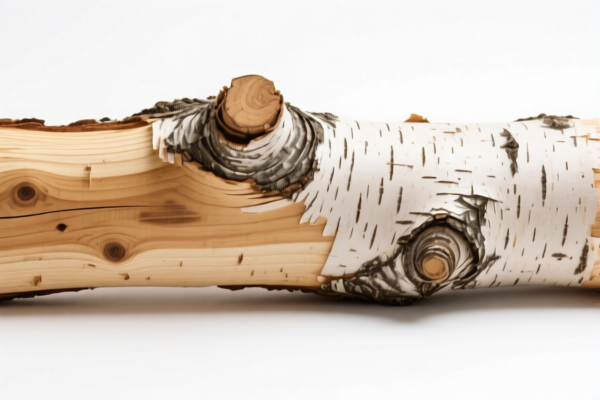
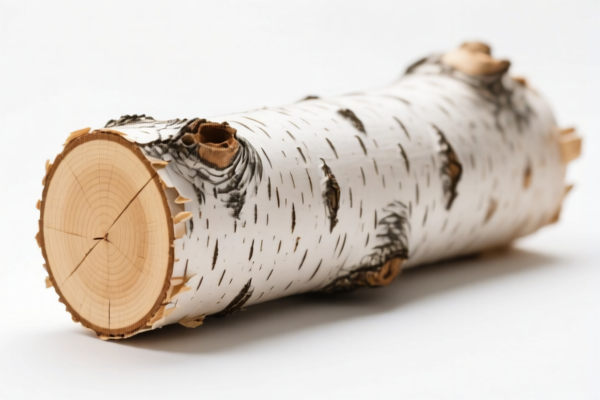
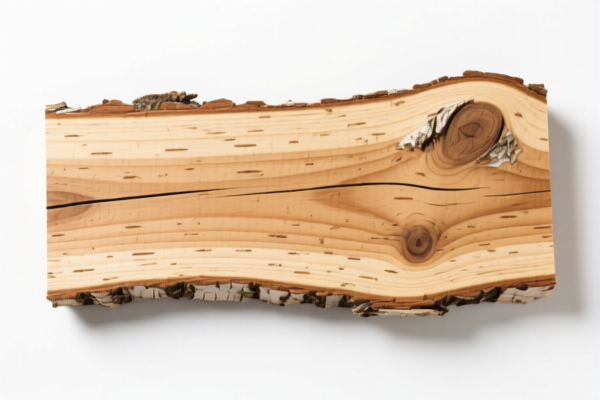
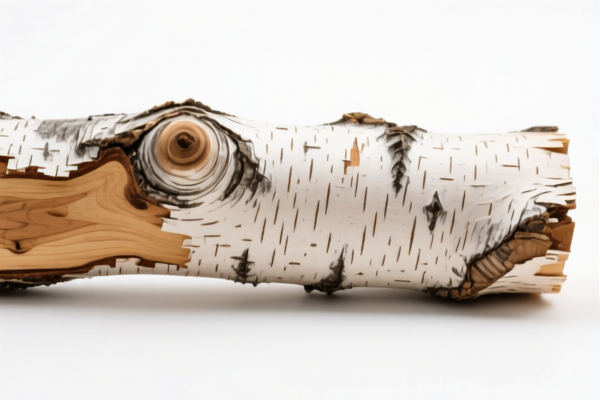
AI Analysis
🌲 Birch Rough Timber (桦木粗木/原木)
🌐 HS Code Reference & Customs Clearance Guide | 2026 Latest Tariff Analysis | Professional Strategy for Wood Imports
📌 1. Product Definition & Classification: What Exactly is "Birch Rough Timber"?
Birch Rough Timber refers to wood that has been felled, debarked (or partially debarked), and roughly sawn or split, but has not been planed, sanded, or further manufactured into lumber, veneer, or panels. In international trade, this category falls under Chapter 44 (Wood and Wood Products).
⚠️ Key Distinction:
- "Rough Timber" (Ch. 4403): Unworked or simply sawn wood. Raw, natural form.
- "Sawn Wood" (Ch. 4407): Planed, sanded, or finger-jointed. Processed for construction/furniture.
- Material: Must be Birch (Betula spp.). If it is Maple, Pine, Oak, etc., the HS Code changes completely.
📦 2. HS Code Classification Details (Based on Provided Data)
The following HS Codes are directly derived from the provided <DATA> for "Birch Rough Timber." Note that while the user input is "Birch," the data also includes a "Maple" entry (likely a data noise or comparative example). For "Birch Rough Timber," we focus on the Birch-specific codes.
| HS Code | Product Description | Application Scenario | Material Match |
|---|---|---|---|
4403.96.01.23 |
Birch Rough Timber | Unprocessed birch logs/bolts; raw wood export | ✅ Birch |
4403.96.01.30 |
Birch Rough Timber | Same as above; specific sub-category for rough birch | ✅ Birch |
4403.95.01.27 |
Birch Log/Raw Timber | Birch logs in their natural state (subset of rough timber) | ✅ Birch |
🔍 Important Note on Data Noise:
The data provided also contains entries for4403.99.01.60and4407.93.00.20under the summary "Maple Log/Rough Timber" (枫木原木/枫木).
❌ DO NOT USE THESE FOR BIRCH.
-4403.99.01.60: Maps to Maple (枫木), not Birch.
-4407.93.00.20: Maps to Maple Sawn Wood (枫木), not Birch.
Using these for Birch will lead to classification errors and customs penalties.
💰 3. 2026 Latest Tariff Rate Breakdown (Including Add-on Taxes)
✅ Applicable Country: United States (US)
✅ Origin: China (CN) (Implied by the tax details: 25% + 10%)
✅ Effective Date: 2025/2026 (Current Policy)
🎯 For Birch Rough Timber (Codes: 4403.96.01.23, 4403.96.01.30, 4403.95.01.27)
| Item | Content |
|---|---|
| Base Tariff Rate | 0.0% (Ad Valorem) |
| Section 301 Add-on Tariff | +25.0% (USITC Footnote 9903.88.01) |
| Section 122 Tariff (IEEPA) | +10.0% (Specific to Chinese hardwood logs/rough timber) |
| Total Tariff Rate | 35.0% |
| Tax Calculation | CIF Value × 35% |
| De Minimis Exemption | ❌ Not Eligible |
| Legal Basis Path | IEEPA:9903.01.25 → USITC:4403.96.01.23 → FOOTNOTE:9903.88.01 |
📌 Explanation:
- "0% Base Rate": The standard MFN rate for wood logs is often low or zero to encourage raw material processing.
- "25% Add-on": Part of the Section 301 trade war tariffs targeting Chinese goods.
- "10% Section 122": A specific punitive tariff applied to certain Chinese wood products.
- Total 35%: This is a high tariff. Importers must factor this into the Landed Cost.
🛠️ 4. Customs Clearance Practical Advice (Avoiding Pitfalls)
✅ 1. Required Documentation Checklist
| Document | Mandatory? | Notes |
|---|---|---|
| ✅ Commercial Invoice | ✔️ | Must clearly state "Birch Rough Timber", not just "Wood." |
| ✅ Packing List | ✔️ | Detail number of logs, dimensions, weight. |
| ✅ Phytosanitary Certificate | ✔️ | Critical for wood! Issued by the exporting country's plant protection agency. Must show no pests/diseases. |
| ✅ Wood Species Declaration | ✔️ | Must confirm species is Birch (Betula spp.). Mislabeling as Pine or Maple can cause delays. |
| ✅ Bill of Lading (B/L) | ✔️ | Ensure weight and description match the invoice. |
| ✅ Fumigation Certificate | ✔️ | If the wood is not heat-treated (HT) or methyl bromide fumigated. |
✅ 2. Classification Strategy & Warnings
| Scenario | Correct Action | Common Mistake |
|---|---|---|
| Birch Logs | Use 4403.95.01.27 or 4403.96.01.23 |
Classifying as "Lumber" (Ch. 4407) → Wrong tax treatment |
| Mixed Wood (Birch + Maple) | Split the shipment! | Combining them in one HS Code → Customs Seizure |
| De-barked vs. Un-barked | Both fit under "Rough Timber" if not planed | Claiming it's "processed" if it's raw → Fraud |
| Maple Wood | Use 4403.99.01.60 (if applicable) |
Using Birch codes for Maple → Misclassification |
✅ 3. Special Considerations for Wood Imports
-
Phytosanitary Strictness:
The US CBP and USDA APHIS are extremely strict on wood from China. Any sign of insect holes, bark with soil, or missing phytosanitary certificates will result in quarantine, fumigation at your expense, or rejection. -
Species Verification:
Customs may require microscopic analysis to verify the wood is truly Birch. If you declare "Birch" but it turns out to be a similar-looking softwood, you may face penalties. -
Value Declaration:
Since the tariff is 35%, accurate CIF valuation is crucial. Under-invoicing to reduce tax is a common red flag for audits.
🌍 5. Global Market Comparison (2026)
| Country/Region | Recommended HS Code | Tariff (China Origin) | Key Requirements |
|---|---|---|---|
| 🇺🇸 USA | 4403.96.01.23 / 4403.95.01.27 |
35% (0% + 25% + 10%) | Phytosanitary Certificate, HT Label |
| 🇨🇳 China | 4403.96.00 |
~5-15% | Forest Certification (FSC) preferred |
| 🇪🇺 EU | 4403.96 |
0% (EBA) | Timber Regulation (EUTR) Compliance |
| 🇯🇵 Japan | 4403.96 |
0-2.5% | Phytosanitary Certificate |
📌 Conclusion:
- The US market is the most expensive due to the 35% total tariff.
- Phytosanitary compliance is the biggest operational hurdle, not just the tax.
📌 6. Common Errors & Pitfalls (Lessons Learned)
❌ Error 1: Declaring "Birch" when the shipment contains Maple or Mixed Species.
👉 Consequence: Customs seizure, fines, and potential fraud charges.
👉 Fix: Use separate HS codes (4403.99... for Maple, 4403.96... for Birch).
❌ Error 2: Missing Phytosanitary Certificate.
👉 Consequence: Cargo held at port, mandatory fumigation ($$$), or return shipment.
👉 Fix: Ensure the exporter provides a valid, government-issued phytosanitary certificate before shipping.
❌ Error 3: Using 4407 codes (Sawn Wood) for Rough Timber.
👉 Consequence: Misclassification. Rough timber is raw; 4407 is processed.
👉 Fix: Verify if the wood is planed/sanded. If not, use 4403.
✅ Correct Declaration Example:
"Birch Rough Timber, Unprocessed, De-barked, For Industrial Use, Species: Betula spp., Phytosanitary Cert No: XXX-XXXX"
🎯 7. Final Recommendations
🎯 Remember the "Wood Tariff Rule":
🔹 "Birch Rough = 35% Total (US)"
🔹 "Maple Rough = 35% Total (US)"
🔹 "Always separate species!"
🔹 "Phytosanitary is non-negotiable!"
📌 Pro Tip:
If you are importing large volumes, consider applying for an Advance Ruling from US CBP to confirm the HS Code and tariff liability before shipping. This mitigates the risk of post-clearance audits.
📣 Immediate Action:
📞 Contact a licensed customs broker.
📄 Request a Phytosanitary Certificate from your supplier.
🚀 Ensure "Birch" is clearly stated on all commercial documents!
✨ Professional Clearance Starts with Accurate Classification!
💼 Your Landed Cost Includes Tariffs, Phytosanitary, and Compliance!
Customer Reviews
About HS Code Classification
The Harmonized System (HS) is an internationally standardized nomenclature developed by the World Customs Organization (WCO) to classify traded products. Over 200 countries use the HS system as the basis for customs tariffs, trade statistics, and import/export regulations.
Each HS code follows a hierarchical structure:
- Chapter (2 digits) — Broad category of goods (e.g., Chapter 84: Machinery and Mechanical Appliances)
- Heading (4 digits) — More specific grouping within the chapter
- Subheading (6 digits) — Internationally standardized breakdown, used by all WCO member countries
- National subdivisions (8-10 digits) — Country-specific extensions for further classification, such as US HTSUS 10-digit codes
Correct HS code classification is essential for smooth customs clearance, accurate duty payment, and compliance with trade regulations. Misclassification can lead to customs delays, overpayment of duties, or penalties.
When importing from CN to US, the applicable tariff rates may include:
- Most-Favored-Nation (MFN) rate — The standard duty rate applied to WTO members
- General rate — Applied to countries without trade agreements
- Trade remedy duties — Additional tariffs such as Section 301 (anti-dumping), Section 232 (national security), or countervailing duties
The information provided on this page is for reference purposes only. For official classification, please consult with your local customs authority or a licensed customs broker.