Birch Telegraph Pole
CN → US| HS Code | Tariff Rate | Origin | Destination | Doc |
|---|---|---|---|---|
| 4407960011 | 35.0% | CN | US | Official Doc |
| 4407960013 | 35.0% | CN | US | Official Doc |
Product Images
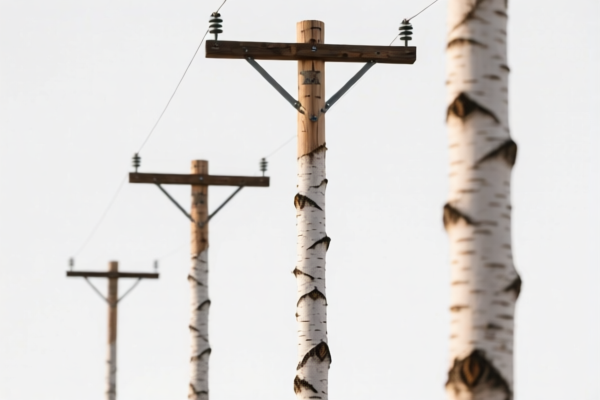
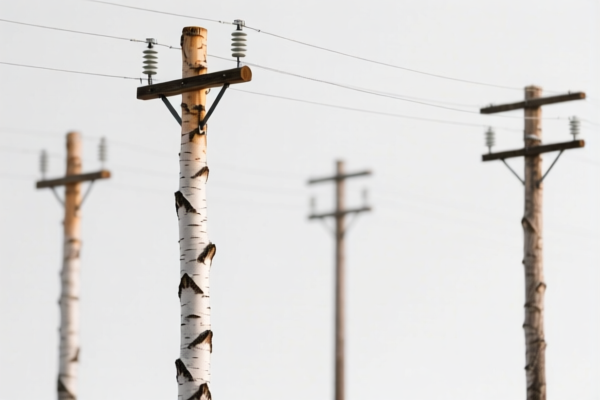
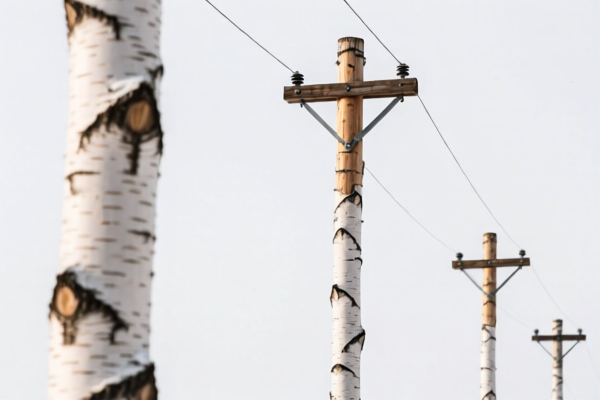
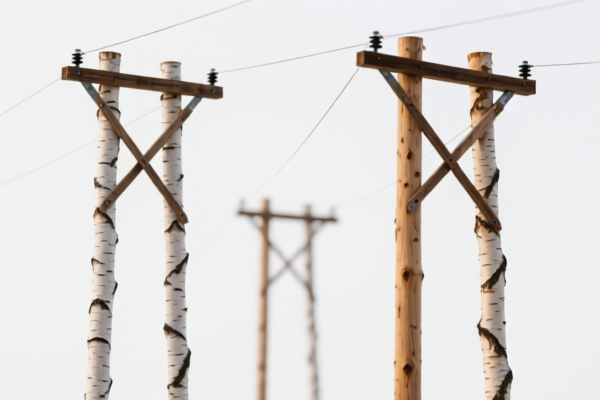
AI Analysis
🌲 Birch Telegraph Poles (Wood Poles)
🌐 HS Code Reference & Customs Clearance Guide | 2026 Updated Tariff Analysis | Professional Compliance Strategy
📌 I. Product Definition & Classification: What Exactly is a "Birch Telegraph Pole"?
Birch telegraph poles are long, cylindrical wooden structures primarily used for supporting overhead power lines, telecommunications cables, and signage. In international trade, they are classified as sawn wood because they are processed (sliced, peeled, or sawn lengthwise) but retain their natural shape, typically exceeding 6mm in thickness.
The critical distinction lies in the species of birch and its geographic origin, as US customs duties vary significantly based on these factors. The two primary categories for birch wood poles are:
1. North American Birch
Native species grown in North America (e.g., Betula alleghaniensis, Betula papyrifera).
2. European/Baltic/Russian/Chinese Birch
Native species from Europe or Asia (e.g., Betula pendula, Betula pubescens).
⚠️ Key Distinction:
- If the pole is made from North American birch → HS Code 4407.96.00.11
- If the pole is made from European/Asian birch → HS Code 4407.96.00.13
- Both categories are treated identically regarding tariff rates in the provided dataset, but accurate species declaration is mandatory for customs compliance.
📦 II. HS Code Classification Details (2026 Latest Tariff Data)
| HS Code | Product Description | Species Details | Geographic Origin |
|---|---|---|---|
4407.96.00.11 |
Wood sawn or chipped lengthwise, sliced or peeled (>6mm thickness): Other: Of birch (Betula spp.) | North American Birch (Betula alleghaniensis, Betula papyrifera, Betula lenta, Betula nigra) | 🇨🇦/🇺🇸 North America |
4407.96.00.13 |
Wood sawn or chipped lengthwise, sliced or peeled (>6mm thickness): Other: Of birch (Betula spp.) | European Birch (Betula pendula, Betula pubescens), also known as Baltic, Russian, or Chinese birch | 🇪🇺/🇷🇺/🇨🇳 Europe/Asia |
🔍 Important Note:
- Both codes fall under Chapter 44: "Wood and articles of wood; wood charcoal."
- These codes apply to semi-processed wood (sawn, peeled, or sliced) with a thickness exceeding 6 mm.
- If the wood is further processed into finished poles with specific treatments (e.g., pressure-treated for decay resistance), it may still fall under this chapter unless it becomes a "manufactured article" (Chapter 44 or 46), but typically, rough or sawn poles remain here.
💰 III. 2026 Tariff Rate Analysis (Including Duties & Surcharges)
✅ Applicable Country: United States (US)
✅ Origin: China (CN) or Other Non-Favored Nations (unless specified otherwise)
✅ Effective Date: Current rates apply for 2025-2026 imports
🎯 1. HS Code 4407.96.00.11 — North American Birch Poles
| Item | Detail |
|---|---|
| Base Tariff | 0.0% |
| Section 301 Surcharge | +25.0% |
| Total Tariff | 25.0% |
| Tax Calculation | CIF Value × 25.0% |
| Legal Basis | Section 301 of the Trade Act of 1974 (as amended) |
📌 Explanation:
- The base tariff for birch wood is 0%, reflecting its status as a raw/semi-raw material.
- However, due to Section 301 tariffs imposed on Chinese goods (and potentially other non-WTO favored origins), an additional 25% is applied.
- Total Cost Impact: 25% of the CIF (Cost, Insurance, Freight) value must be paid to US Customs.
🎯 2. HS Code 4407.96.00.13 — European/Asian Birch Poles
| Item | Detail |
|---|---|
| Base Tariff | 0.0% |
| Section 301 Surcharge | +25.0% |
| Total Tariff | 25.0% |
| Tax Calculation | CIF Value × 25.0% |
| Legal Basis | Section 301 of the Trade Act of 1974 (as amended) |
📌 Explanation:
- Identical tariff structure to North American birch in this dataset.
- The 25% surcharge applies regardless of whether the birch is European or North American, if the country of origin is subject to Section 301 tariffs (e.g., China).
- If the origin is Canada or Mexico (under USMCA), the tariff may be 0% (both base and surcharge). Verify origin documentation!📌 Critical Reminder:
- The 25% tax is non-negotiable for most imports from China.
- No de minimis exemption applies to Section 301 goods.
- Ensure the species and origin are clearly stated on commercial invoices to avoid misclassification penalties.
🛠️ IV. Customs Clearance Practical Advice (Real-World Pitfall Guide)
✅ 1. Required Documentation Checklist
| Document | Mandatory? | Notes |
|---|---|---|
| ✅ Commercial Invoice | ✔️ | Must specify "Birch Telegraph Poles," species (e.g., Betula papyrifera), and country of origin. |
| ✅ Packing List | ✔️ | Include dimensions, weight, and number of poles per bundle. |
| ✅ Phytosanitary Certificate | ✔️ | Crucial! Wood products require certification to prove freedom from pests/diseases (ISPM 15 standard). |
| ✅ Bill of Lading/Air Waybill | ✔️ | Standard shipping document. |
| ✅ Country of Origin Certificate | ✔️ | To claim any potential FTA benefits (e.g., USMCA if from Canada). |
✅ 2. Declaration Best Practices
🔥 Golden Rule: "Species + Origin + Treatment = Clear Classification"
| Scenario | Correct Declaration | Mistake to Avoid |
|---|---|---|
| Chinese-Origin Birch Poles | 4407.96.00.13 (if Asian species) or 4407.96.00.11 (if NA species grown in China? Unlikely) |
Misdeclaring as "Hardwood Lumber" → Higher base tariff. |
| Canadian-Origin Birch Poles | 4407.96.00.11 with USMCA Claim |
Failing to claim USMCA → Paying 25% unnecessarily. |
| Treated vs. Untreated | Specify if "Creosote-treated" or "Pressure-treated" | Not specifying treatment may trigger additional EPA/FDA checks. |
| Bundle vs. Loose | Declare as "Poles in Bundles" | Declaring as "Loose Wood" → May affect duty valuation if not packaged. |
✅ 3. Special Cases & Tips
| Case | Advice |
|---|---|
| Phytosanitary Compliance | Ensure all wood is heat-treated (HT) or fumigated with an IPPC mark. Without it, goods will be rejected or destroyed. |
| Value Declaration | Declare CIF value accurately. Undervaluation leads to fines and delays. |
| USMCA Benefits | If poles are from Canada or Mexico, file a USMCA Certificate to eliminate the 25% tariff. |
| Species Misidentification | If customs doubts the species, they may reclassify to a higher-duty "Other Wood" category. Provide botanical verification if challenged. |
🌍 V. Global Market Comparison (2026 Update)
| Country/Region | Recommended HS Code | Tariff (China Origin) | Tariff (USMCA Origin) | Notes |
|---|---|---|---|---|
| 🇺🇸 USA | 4407.96.00.11 or .13 |
25% (Section 301) | 0% (USMCA) | High duty for non-USMCA; phytosanitary strict. |
| 🇨🇳 China | 4407.96.00.11 or .13 |
0% (Export) | N/A | Export duties may apply depending on policy. |
| 🇪🇺 EU | 4407.96.00 |
0% (Most Favored Nation) | 0% | No major surcharges; focus on sustainability certs. |
| 🇬🇧 UK | 4407.96.00 |
0% (FTA with NZ/Aus) | 0% | Post-Brexit tariffs generally low for wood. |
📌 Conclusion:
- The USA is the most expensive market for Chinese-origin birch poles due to the 25% Section 301 tariff.
- USMCA (Canada/Mexico) is the most cost-effective source for US imports.
- Phytosanitary compliance is the biggest hurdle globally; ensure IPPC marking is present.
📌 VI. Common Mistakes & Pitfalls (Learn from Others' Errors)
❌ Mistake 1: Forgetting to specify the birch species
👉 Consequence: Customs may classify as "Other Wood" (Chapter 44, heading 4407, other) → Higher base tariff or administrative delays.
❌ Mistake 2: Ignoring Phytosanitary Certificates
👉 Consequence: Shipment rejected at port, destruction costs, and fines. Wood is strictly regulated for pests.
❌ Mistake 3: Misdeclaring Country of Origin
👉 Consequence: If declared as "US" but shipped from China, penalties for false origin. If Canadian, failing to claim USMCA → Paying 25% unnecessarily.
❌ Mistake 4: Not specifying Treatment Status
👉 Consequence: If poles are chemically treated, additional EPA regulations may apply. Lack of disclosure triggers environmental inspections.
✅ Best Practice:
"Birch Telegraph Poles, Betula papyrifera, Heat-Treated (HT IPPC Marked), Untreated, Bundle of 100, CIF Value $X, Origin: Canada (USMCA Eligible)"
🎯 VII. Conclusion: Clear Classification, Clear Customs!
🎯 Remember the Rule:
🔹 "Species Matters, Origin Costs Money, Phytosanitary is Key!"
🔹 "North American Birch: .11 | European/Asian Birch: .13 | Both 25% if from China!"
📌 Pro Tip:
If your birch poles are sourced from Canada or Mexico, always file for USMCA preferential treatment to eliminate the 25% tariff.
For Chinese origins, factor the 25% duty into your pricing model from the start.
📣 Immediate Action Required:
📞 Verify your supplier's Phytosanitary Certificate and IPPC Mark.
📄 Confirm Country of Origin and file for USMCA if applicable.
🚀 Ensure accurate HS Code declaration to avoid customs holds.
✨ Professional Customs Clearance Starts with Accurate Classification!
💼 Your Profit Margin Depends on Correct Duty Rates!
Customer Reviews
About HS Code Classification
The Harmonized System (HS) is an internationally standardized nomenclature developed by the World Customs Organization (WCO) to classify traded products. Over 200 countries use the HS system as the basis for customs tariffs, trade statistics, and import/export regulations.
Each HS code follows a hierarchical structure:
- Chapter (2 digits) — Broad category of goods (e.g., Chapter 84: Machinery and Mechanical Appliances)
- Heading (4 digits) — More specific grouping within the chapter
- Subheading (6 digits) — Internationally standardized breakdown, used by all WCO member countries
- National subdivisions (8-10 digits) — Country-specific extensions for further classification, such as US HTSUS 10-digit codes
Correct HS code classification is essential for smooth customs clearance, accurate duty payment, and compliance with trade regulations. Misclassification can lead to customs delays, overpayment of duties, or penalties.
When importing from CN to US, the applicable tariff rates may include:
- Most-Favored-Nation (MFN) rate — The standard duty rate applied to WTO members
- General rate — Applied to countries without trade agreements
- Trade remedy duties — Additional tariffs such as Section 301 (anti-dumping), Section 232 (national security), or countervailing duties
The information provided on this page is for reference purposes only. For official classification, please consult with your local customs authority or a licensed customs broker.