Birch Utility Pole
CN → US| HS Code | Tariff Rate | Origin | Destination | Doc |
|---|---|---|---|---|
| 4407960013 | 35.0% | CN | US | Official Doc |
| 4403950127 | 35.0% | CN | US | Official Doc |
| 4403960127 | 35.0% | CN | US | Official Doc |
| 4421997020 | 35.0% | CN | US | Official Doc |
| 4418300100 | 38.2% | CN | US | Official Doc |
Product Images
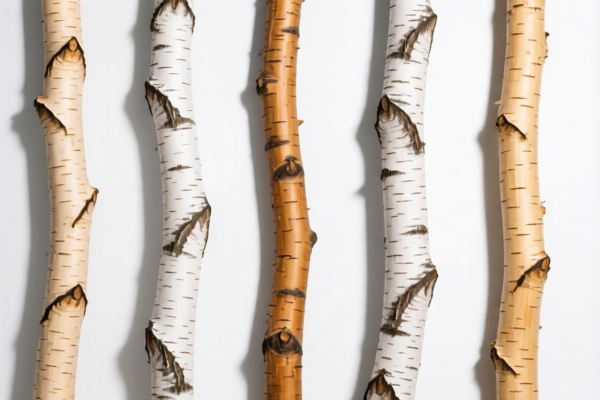
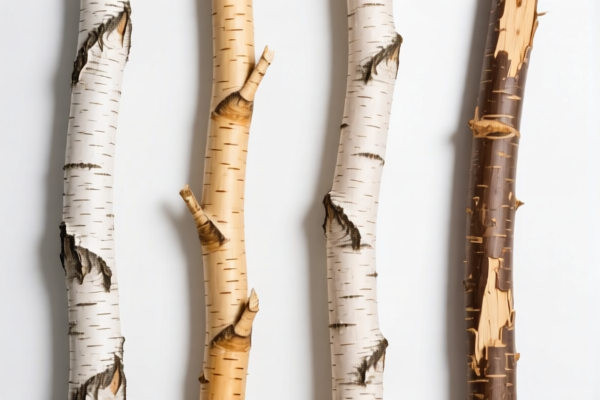
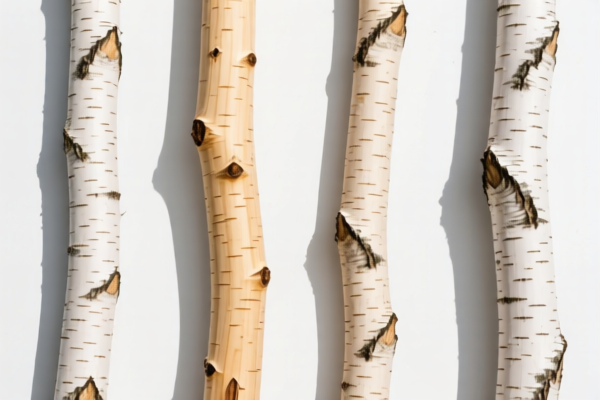
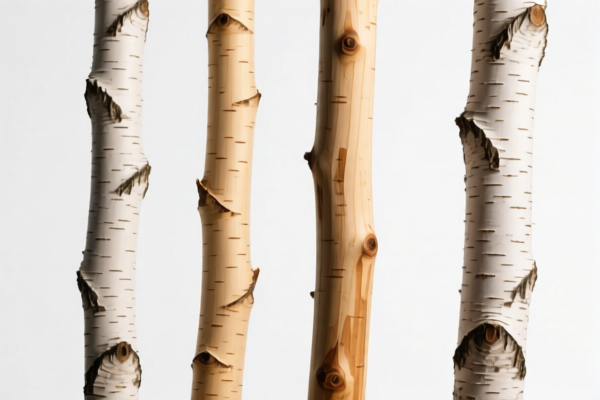
AI Analysis
🌲 Birch Utility Pole: HS Code Classification & 2026 Customs Clearance Guide
🌐 HS Code Reference & Clearance Guide | 2026 Latest Tariff Analysis | Professional Customs Strategy
📌 I. Product Definition & Classification: What is a "Birch Utility Pole"?
A Birch Utility Pole refers to wooden poles made from birch wood, primarily used for supporting electrical lines, telecommunications cables, or agricultural structures. In international trade, the classification depends heavily on the processing state (how it's shaped), specific usage (agriculture vs. telecom/utility), and material details.
Key Distinctions: * Wood Processing Level: Is it merely sawn/roughed (Chapter 4403) or further worked into specific shapes like poles/piles (Chapter 4407 or 4418)? * Specific Use: "Agricultural" poles often fall under different subheadings than "Telecommunications" or "Electricity" poles. * Material: Strictly "Birch" (Betula) vs. generic "Wood" or other species (like Pine).
⚠️ Critical Classification Point:
- If the birch pole is longitudinally sawn but retains its natural round shape or is roughly dressed, it may fall under 4407.96.00.13.
- If it is specifically prepared as poles, piles, or stakes for agricultural use, it may fall under 4403.95.01.27 or 4403.96.01.27.
- Do NOT confuse with Pine poles (e.g.,4418.30.01.00or4403.21.01.12), which have different tax treatments.
📦 II. HS Code Classification Details (2026 Latest Tariff Authority)
| HS Code | Product Description | Application Scenario | Processing State |
|---|---|---|---|
4407.96.00.13 |
Birch poles, material is birch, shape is longitudinally processed wood (utility poles) | General utility poles, electricity support | ✅ Longitudinally sawn/dressed |
4403.95.01.27 |
Agricultural birch poles, material is birch, shape is pole, pile, or stake | Farm structures, rural power lines, fences | ✅ Prepared as poles/piles |
4403.96.01.27 |
Agricultural birch poles, material is birch, shape is pole, use is agricultural | Similar to above, specific agricultural intent | ✅ Prepared as poles |
4421.99.70.20 |
Pine telecommunications poles (Note: Material is Pine, not Birch) | Incorrect for Birch – Included for comparison only | ❌ Not Birch |
4418.30.01.00 |
Pine telecommunications poles (Note: Material is Pine, not Birch) | Incorrect for Birch – Included for comparison only | ❌ Not Birch |
4403.21.01.12 |
Pine telecommunications poles (Note: Material is Pine, not Birch) | Incorrect for Birch – Included for comparison only | ❌ Not Birch |
🔍 Important Note:
- The provided data includes Pine poles (4418.30.01.00,4403.21.01.12,4421.99.70.20). These are NOT Birch. Do not use these HS Codes for Birch poles.
- For Birch poles, only4407.96.00.13,4403.95.01.27, and4403.96.01.27are relevant.
- The choice between4407and4403depends on the degree of processing.4407is for sawn wood >6mm, while4403is for wood in its natural state or simply prepared (e.g., poles, stakes).
💰 III. 2026 Latest Tariff Rate Details (Including Surcharges & Policy Add-ons)
✅ Applicable Country: United States (US)
✅ Origin: China (CN)
✅ Effective Date: November 10, 2025 (for subsequent imports)
🎯 1. 4407.96.00.13 – Birch Poles (Longitudinally Processed)
| Item | Detail |
|---|---|
| Base Tariff | 0% (ad valorem) |
| USITC Surcharge | +25% (Under USITC Footnote 122, Section 301) |
| 122-Clause Tariff | +10% (Under IEEPA, targeting specific Chinese wood products) |
| Total Tariff | 35.0% |
| Tax Calculation | CIF Value × 35% |
| De Minimis Exemption | ❌ Not Eligible (deny_de_minimis) |
| Legal Basis Path | Base: 0% → 301: +25% → 122-Clause: +10% |
📌 Explanation:
- The 25% USITC surcharge is part of the Section 301 tariffs on Chinese goods.
- The 10% 122-Clause tariff is a specific additional duty on certain Chinese wood products under the International Emergency Economic Powers Act (IEEPA).
- Total 35% is a high tariff rate. Cost planning must include this significant burden.
🎯 2. 4403.95.01.27 & 4403.96.01.27 – Agricultural Birch Poles
| Item | Detail |
|---|---|
| Base Tariff | 0% (ad valorem) |
| USITC Surcharge | +25% (Under USITC Footnote 122, Section 301) |
| 122-Clause Tariff | +10% (Under IEEPA, targeting specific Chinese wood products) |
| Total Tariff | 35.0% |
| Tax Calculation | CIF Value × 35% |
| De Minimis Exemption | ❌ Not Eligible (deny_de_minimis) |
| Legal Basis Path | Base: 0% → 301: +25% → 122-Clause: +10% |
📌 Note:
- Both agricultural birch pole codes carry the same 35% total tariff.
- The distinction between4403.95and4403.96is subtle (likely based on specific wood species or preparation details within the "other" birch category). Ensure your product matches the exact description in customs catalogs.
- Do not assume agricultural poles have lower taxes; they are equally subject to the 122-Clause and 301 tariffs.
🛠️ IV. Customs Clearance Practical Advice (Field Avoidance Guide)
✅ 1. Required Documentation Checklist (All Mandatory)
| Document | Must Provide | Description |
|---|---|---|
| ✅ Product Specification Sheet | ✔️ | Material: Birch; Dimensions: Length, Diameter; Treatment: Pressure-treated? Treated with chemicals? |
| ✅ Commercial Invoice | ✔️ | Clearly state "Birch Utility Pole" or "Agricultural Birch Pole." Avoid vague terms like "Wooden Stick." |
| ✅ Packing List | ✔️ | Detail weight, quantity, and packaging type. Ensure it matches the invoice. |
| ✅ Certificate of Origin (CO) | ✔️ | Required to prove Chinese origin (which triggers the tariffs). |
| ✅ Treatment Certificate | ✔️ | If poles are chemically treated (e.g., for preservation), provide proof of treatment. Required for phytosanitary clearance. |
| ✅ Phytosanitary Certificate | ✔️ | Mandatory for wood products entering the US to prevent pest introduction. |
| ✅ Photos of Products | ✔️ | Show the wood grain, end-cut, and any markings to confirm it is Birch and not Pine. |
✅ 2. Declaration Tips (Key Mnemonics)
🔥 "Material First, Use Second, Shape Third. Tariff 35%, No Exemption!"
| Scenario | Correct Declaration | Incorrect Practice |
|---|---|---|
| Birch Pole for Electricity | 4407.96.00.13 or 4403.95.01.27 |
Using 4418 (Pine) or 4421 (Other) |
| Birch Pole for Farm Use | 4403.95.01.27 or 4403.96.01.27 |
Using generic "Wood Pole" code |
| Pine Pole (Misidentified as Birch) | 4403.21.01.12 (35%) or 4418.30.01.00 (38.2%) |
Using Birch code → Customs audit & penalty |
| Small Birch Sticks (<6mm) | Might be 4403 |
Large poles (>6mm) → 4407 |
⚠️ Warning:
- Do not confuse Birch with Pine. Pine poles (4418.30.01.00) have a 38.2% tariff (3.2% base + 25% + 10%), while Birch poles have a 35.0% tariff (0% base + 25% + 10%).
- Ensure your supplier confirms the wood species. If it's a mix, declare the dominant species and be prepared for customs verification.
✅ 3. Special Cases
| Scenario | Handling Advice |
|---|---|
| Treated vs. Untreated | Treated poles require additional phytosanitary documents. Untreated poles may be subject to stricter pest inspection. |
| Mixed Shipments | If a container has both Birch and Pine, declare separately. Misdeclaration can lead to delays and fines. |
| Pre-cut vs. Log Poles | Pre-cut poles are more likely to be classified under 4407 or 4403. Logs in raw form might have different codes. |
| OEM Custom Poles | Provide custom drawings or specs to justify the specific HS Code. |
🌍 V. Global Market Clearance Comparison (2026 Latest)
| Country/Region | Recommended HS Code | Tariff Rate | Certification Requirements | Notes |
|---|---|---|---|---|
| 🇺🇸 USA | 4407.96.00.13 / 4403.95.01.27 |
35% (China Origin) | Phytosanitary Cert, CO | High tariff due to 301 & 122-Clause |
| 🇨🇳 China | 4407.96.00.13 / 4403.95.01.27 |
~5-10% | N/A | Lower tariffs, but focus on domestic supply |
| 🇪🇺 EU | 4407.91.00 / 4403.94.00 |
Varies (Often 0-5%) | FSC/PEFC Certification | Strict sustainability rules for wood |
| 🇦🇺 Australia | 4407.96.00 / 4403.95.00 |
Varies | Phytosanitary Cert | Strict biosecurity |
| 🇯🇵 Japan | 4407.96.00 / 4403.95.00 |
Varies | Phytosanitary Cert | Quality inspection required |
📌 Conclusion:
- USA is the most expensive market for Birch Utility Poles from China due to the 35% total tariff.
- EU and other markets may have lower tariffs but stricter environmental certifications (FSC/PEFC).
- Consider supply chain diversification if targeting the US market.
📌 VI. Common Mistakes & Pitfalls (Lessons Learned)
❌ Mistake 1: Declaring Birch poles as "Pine poles" to use a different HS Code
👉 Consequence: Customs audit reveals misdeclaration → Fines + Back Taxes
❌ Mistake 2: Ignoring the "122-Clause" tariff
👉 Consequence: Unexpected 10% surcharge at customs → Cash Flow Disruption
❌ Mistake 3: Not providing Phytosanitary Certificate
👉 Consequence: Goods held at port → Storage Fees + Delayed Delivery
❌ Mistake 4: Confusing "Utility Pole" with "Wooden Stick"
👉 Consequence: Incorrect HS Code → Customs Rejection
✅ Correct Approach:
"Birch Utility Pole, Longitudinally Sawn, Treated, for Electrical Support, Model XYZ, Phytosanitary Certificate Attached"
🎯 VII. Conclusion: Professional Declaration, Cost Control, Efficiency!
🎯 Key Takeaway:
🔹 "Birch poles from China face a 35% tariff in the US. Plan accordingly!"
🔹 "Ensure accurate wood species declaration to avoid penalties."
📌 Tip:
If you are importing into the US, consider applying for a Harmonized Tariff Schedule (HTS) Pre-Ruling from US Customs and Border Protection (CBP) to confirm the exact HS Code and tariff liability before shipment.
📣 Immediate Action:
📞 Contact a professional customs broker + Provide product specs + Apply for HTS Pre-Ruling
🚀 Ensure smooth customs clearance, efficient export, and cost-effective operations!
✨ Professional Customs Clearance Starts with Accurate Classification!
💼 Every dollar of cost deserves precise calculation!
Customer Reviews
About HS Code Classification
The Harmonized System (HS) is an internationally standardized nomenclature developed by the World Customs Organization (WCO) to classify traded products. Over 200 countries use the HS system as the basis for customs tariffs, trade statistics, and import/export regulations.
Each HS code follows a hierarchical structure:
- Chapter (2 digits) — Broad category of goods (e.g., Chapter 84: Machinery and Mechanical Appliances)
- Heading (4 digits) — More specific grouping within the chapter
- Subheading (6 digits) — Internationally standardized breakdown, used by all WCO member countries
- National subdivisions (8-10 digits) — Country-specific extensions for further classification, such as US HTSUS 10-digit codes
Correct HS code classification is essential for smooth customs clearance, accurate duty payment, and compliance with trade regulations. Misclassification can lead to customs delays, overpayment of duties, or penalties.
When importing from CN to US, the applicable tariff rates may include:
- Most-Favored-Nation (MFN) rate — The standard duty rate applied to WTO members
- General rate — Applied to countries without trade agreements
- Trade remedy duties — Additional tariffs such as Section 301 (anti-dumping), Section 232 (national security), or countervailing duties
The information provided on this page is for reference purposes only. For official classification, please consult with your local customs authority or a licensed customs broker.