Birch Wood
CN → US| HS Code | Tariff Rate | Origin | Destination | Doc |
|---|---|---|---|---|
| 4403960123 | 35.0% | CN | US | Official Doc |
| 4403950127 | 35.0% | CN | US | Official Doc |
| 4410110060 | 35.0% | CN | US | Official Doc |
| 4410120010 | 35.0% | CN | US | Official Doc |
Product Images
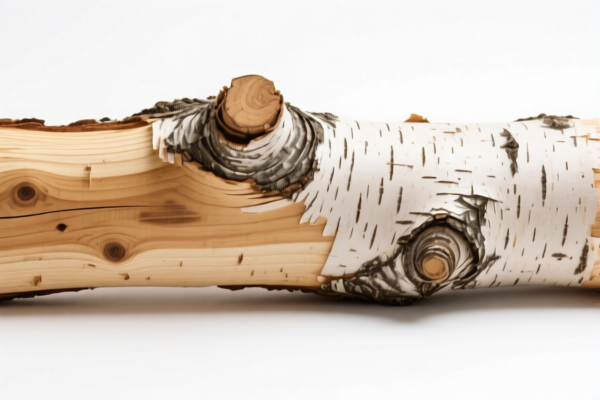
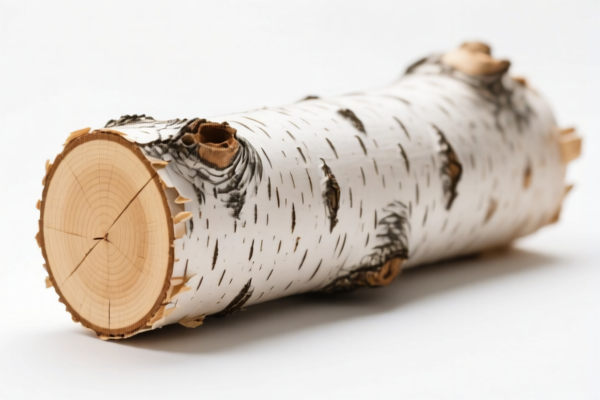
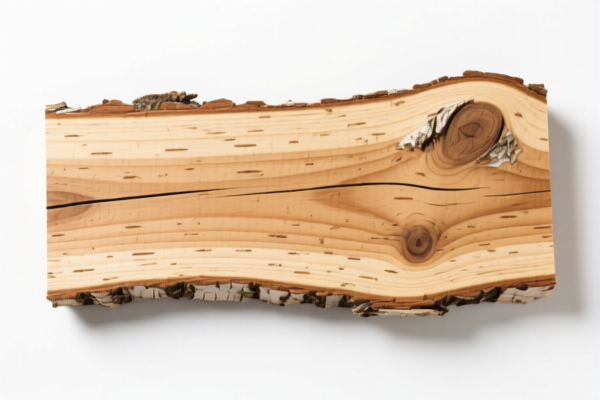
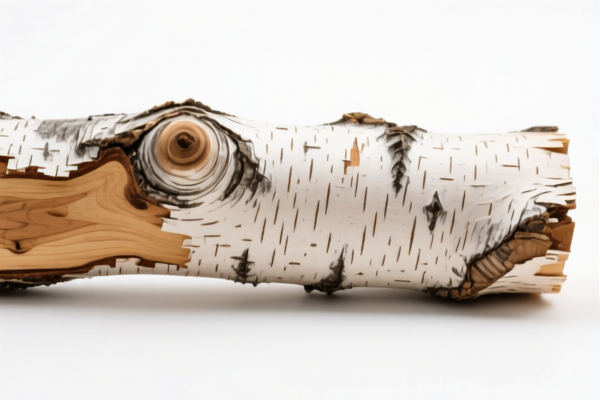
AI Analysis
🌲 Birch Wood (Betula Spp.)
🌐 HS Code Reference & Customs Clearance Guide | 2026 Latest Tariff Analysis | Professional Entry Strategy
📌 One, Product Definition and Classification: Do You Really Understand "Birch Wood"?
Birch wood is a popular hardwood used in furniture, flooring, plywood, and industrial applications. In international trade, it is strictly regulated under Chapter 44 of the Harmonized System (HS) for "Wood and articles of wood; wood charcoal."
The classification depends entirely on the physical state and processing level of the wood: * Raw/Rough State: Un-sawn, bark-stripped or not, poles, piles, or pulpwood. * Processed Board State: Particle board, Oriented Strand Board (OSB), or waferboard.
⚠️ Critical Distinction:
- If the wood is rough, unsawn, or processed into specific board types (OSB/Particle Board) →归入 4410 series or 4403 series.
- Specific Sub-categories: The data provided distinguishes between Particle Board, OSB, and Raw Birch Wood (Pulpwood or Poles).
📦 Two. HS Code Classification Details (2026 Latest Official Tariff Alignment)
| HS Code | Product Description | Application Scenario | Processing Level |
|---|---|---|---|
4410.11.00.60 |
Particle Board of wood (e.g., waferboard), agglomerated with resins | Furniture panels, packaging, interior construction | ✅ Processed (Agglomerated) |
4410.12.00.10 |
Oriented Strand Board (OSB), unworked or sanded only | Structural sheathing, roof decking, flooring sub-base | ✅ Processed (Layered/Strand) |
4403.96.01.23 |
Birch Wood in the rough, Pulpwood (Smallest cross-section < 15cm) | Raw material for pulp, paper, or further chipping | ❌ Raw (Un-sawn) |
4403.95.01.27 |
Birch Wood in the rough, Poles/Piles (Smallest cross-section ≥ 15cm) | Construction piles, utility poles, rough timber | ❌ Raw (Un-sawn) |
🔍 Key Reminder:
-4410codes apply to engineered wood products (particle/OSB).
-4403codes apply to raw logs, poles, or pulpwood.
- Misclassification Risk: Declaring raw logs as "Particle Board" to avoid tariffs will result in severe penalties.
💰 Three. 2026 Latest Tariff Rate Breakdown (Including Surcharge)
✅ Applicable Country: United States (US)
✅ Country of Origin: China (CN) (Implied by the 25% surcharge pattern typical for US-China trade data in this context)
✅ Effective Date: Current as of 2026 Data Provided
🎯 1. 4410.11.00.60 —— Particle Board
| Item | Detail |
|---|---|
| Base Tariff | 0.0% |
| Section 301 Surcharge | +25.0% |
| Total Tax Rate | 25.0% |
| Tax Calculation | CIF Value × 25% |
| De Minimis Exemption | ❌ Not Eligible (Standard for China-origin wood products under Section 301) |
| Legal Basis | HTSUS 4410.11.00.60 + USITC Footnote 9903.88.01 (Section 301) |
📌 Explanation:
- Particle board made from Chinese wood products is subject to the 25% additional duty under Section 301 of the Trade Act.
- Although the base MFN (Most Favored Nation) rate is 0%, the 25% surcharge makes the effective duty 25%.
🎯 2. 4410.12.00.10 —— Oriented Strand Board (OSB)
| Item | Detail |
|---|---|
| Base Tariff | 0.0% |
| Section 301 Surcharge | +25.0% |
| Total Tax Rate | 25.0% |
| Tax Calculation | CIF Value × 25% |
| De Minimis Exemption | ❌ Not Eligible |
| Legal Basis | HTSUS 4410.12.00.10 + USITC Footnote 9903.88.01 (Section 301) |
📌 Note:
- OSB is treated similarly to particle board in this dataset.
- Even if sanded, as long as it is not further worked (e.g., laminated with veneer), it falls under this heading.
🎯 3. 4403.96.01.23 —— Birch Pulpwood (Rough Wood)
| Item | Detail |
|---|---|
| Base Tariff | 0.0% |
| Section 301 Surcharge | +25.0% |
| Total Tax Rate | 25.0% |
| Tax Calculation | CIF Value × 25% |
| De Minimis Exemption | ❌ Not Eligible |
| Legal Basis | HTSUS 4403.96.01.23 + USITC Footnote 9903.88.01 (Section 301) |
📌 Critical Detail:
- "Pulpwood" refers to small-dimension wood (smallest cross-section < 15 cm).
- This category is often subject to phytosanitary inspections due to pest risks.
🎯 4. 4403.95.01.27 —— Birch Poles/Piles (Rough Wood)
| Item | Detail |
|---|---|
| Base Tariff | 0.0% |
| Section 301 Surcharge | +25.0% |
| Total Tax Rate | 25.0% |
| Tax Calculation | CIF Value × 25% |
| De Minimis Exemption | ❌ Not Eligible |
| Legal Basis | HTSUS 4403.95.01.27 + USITC Footnote 9903.88.01 (Section 301) |
📌 Critical Detail:
- "Poles, piles, and posts" refers to larger-dimension wood (smallest cross-section ≥ 15 cm).
- Must be roughly squared or stripped of bark.
🛠️ Four. Customs Clearance Practical Advice (Battle-Tested Pitfall Avoidance)
✅ 1. Required Documentation Checklist
| Document | Mandatory? | Description |
|---|---|---|
| ✅ Commercial Invoice | ✔️ | Must clearly state: "Birch Wood - Particle Board/OSB/Poles" and exact dimensions. |
| ✅ Packing List | ✔️ | Detail weight, volume, and packaging type (pallets, crates). |
| ✅ Phytosanitary Certificate | ✔️ | CRITICAL for 4403 codes. Must certify wood is free of pests (e.g., Emerald Ash Borer, Birch Leaf Miner). |
| ✅ ISPM 15 Marking | ✔️ | For 4403 rough wood, wooden packaging must bear the ISPM 15 stamp. |
| ✅ Product Specification | ✔️ | For 4410, confirm resin type and density if questioned. |
✅ 2. Declaration Tips (Key Mnemonics)
🔥 "Raw vs. Processed: Don't Mix Them Up!"
| Scenario | Correct HS Code | Wrong Action |
|---|---|---|
| Engineered Panels (Particle/OSB) | 4410.11... or 4410.12... |
Declaring as "Logs" → Rejected by USDA/APHIS |
| Raw Logs/Poles | 4403.95... or 4403.96... |
Declaring as "Particle Board" → Customs Fraud |
| Sanded OSB | 4410.12.00.10 |
Declaring as "Laminated Board" → Wrong Code |
| Bark-Stripped Birch | 4403.95... or 4403.96... |
Ignoring Phytosanitary Cert → Seizure/Destruction |
📌 Important:
- For4403(Raw Wood): The smallest cross-sectional dimension determines the code (<15cmvs≥15cm). Measure carefully!
- For4410(Boards): Ensure the product is not further worked (e.g., edged, laminated) if claiming4410.12.00.10.
✅ 3. Special Cases
| Case | Handling Advice |
|---|---|
| Bark Present | If bark is still on 4403 wood, it may trigger higher scrutiny for pests. Strip bark if possible to ease inspection. |
| Mixed Shipments | Do not mix raw logs and particle board in one HS declaration line. Split into two lines. |
| Origin Labeling | Clearly mark "Made in China" on packages. Mislabeling origin to avoid 25% tax is a federal offense. |
| Dampness Content | For 4403, wood moisture content must comply with international standards to prevent mold penalties. |
🌍 Five. Global Market Comparison (2026 Data Context)
| Country/Region | Recommended HS Code | Tariff (China Origin) | Certification Required | Notes |
|---|---|---|---|---|
| 🇺🇸 USA | 4410 or 4403 Series |
25% (Surcharge) | APHIS Phytosanitary Cert | High Risk. Strict inspection. |
| 🇨🇳 China | Same Codes | ~5-10% | N/A | Domestic trade, no export tax usually. |
| 🇪🇺 EU | Same Codes | 0-3% | FSC/PEFC (Voluntary) | No Section 301 surcharge. |
| 🇬🇧 UK | Same Codes | 0-5% | N/A | Post-Brexit rules apply. |
📌 Conclusion:
- The 25% surcharge is specific to US imports from China.
- Other markets do not apply this additional tariff, making them more cost-effective if supply chain flexibility exists.
📌 Six. Common Mistakes & Pitfall Guide (Blood & Tears Lessons)
❌ Mistake 1: Declaring Raw Birch Logs as "Wood Pulp"
👉 Consequence: HS Code 4403 vs 4401. Customs Penalty + Seizure.
❌ Mistake 2: Mixing Particle Board and Raw Wood in one container without splitting HS lines
👉 Consequence: Confusion in customs valuation, possible 100% Inspection Delay.
❌ Mistake 3: Forgetting the Phytosanitary Certificate for 4403 codes
👉 Consequence: Re-export or Destruction by APHIS. Loss of entire shipment.
❌ Mistake 4: Misidentifying OSB as Plywood (4412)
👉 Consequence: Plywood may have different tariff structures. Misclassification Risk.
✅ Correct Practice:
"Birch Particle Board, 18mm, E0 Grade, 1220x2440mm, Palletized, Made in China."
"Birch Poles, Diameter 15cm+, Stripped of Bark, Heat Treated, ISPM 15 Marked, Made in China."
🎯 Seven. Conclusion: Precise Classification Saves Money!
🎯 Remember the Mnemonic:
🔹 "Raw Wood = Phytosanitary + 25% Tax"
🔹 "Processed Board = No Pest Cert + 25% Tax"
🔹 "HS Code Must Match Physical State!"🔹 "Measure the Cross-Section: <15cm or ≥15cm?"
📌 Pro Tip:
If your Birch Wood is sourced from Russia or Canada, the 25% US surcharge may not apply (depending on current trade agreements). Verify the Country of Origin carefully.
📣 Immediate Action:
📞 Contact a Licensed Customs Broker
📄 Prepare Phytosanitary Certs for Raw Wood
📏 Measure Dimensions Accurately
🚀 Ensure Smooth Clearance & Avoid Delays!
✨ Professional Clearance Starts with Accurate Classification!
💼 Every Percent Saved is Profit Gained!
Customer Reviews
About HS Code Classification
The Harmonized System (HS) is an internationally standardized nomenclature developed by the World Customs Organization (WCO) to classify traded products. Over 200 countries use the HS system as the basis for customs tariffs, trade statistics, and import/export regulations.
Each HS code follows a hierarchical structure:
- Chapter (2 digits) — Broad category of goods (e.g., Chapter 84: Machinery and Mechanical Appliances)
- Heading (4 digits) — More specific grouping within the chapter
- Subheading (6 digits) — Internationally standardized breakdown, used by all WCO member countries
- National subdivisions (8-10 digits) — Country-specific extensions for further classification, such as US HTSUS 10-digit codes
Correct HS code classification is essential for smooth customs clearance, accurate duty payment, and compliance with trade regulations. Misclassification can lead to customs delays, overpayment of duties, or penalties.
When importing from CN to US, the applicable tariff rates may include:
- Most-Favored-Nation (MFN) rate — The standard duty rate applied to WTO members
- General rate — Applied to countries without trade agreements
- Trade remedy duties — Additional tariffs such as Section 301 (anti-dumping), Section 232 (national security), or countervailing duties
The information provided on this page is for reference purposes only. For official classification, please consult with your local customs authority or a licensed customs broker.