Birch Wood Cross Section 15cm+
CN → US| HS Code | Tariff Rate | Origin | Destination | Doc |
|---|---|---|---|---|
| 4407960011 | 35.0% | CN | US | Official Doc |
| 9403910080 | 35.0% | CN | US | Official Doc |
| 9403910010 | 35.0% | CN | US | Official Doc |
| 4407960013 | 35.0% | CN | US | Official Doc |
Product Images
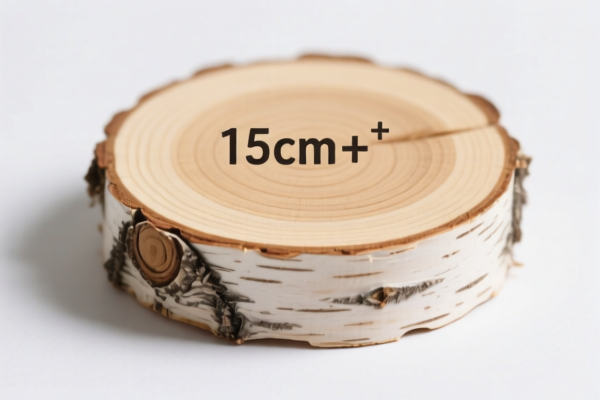
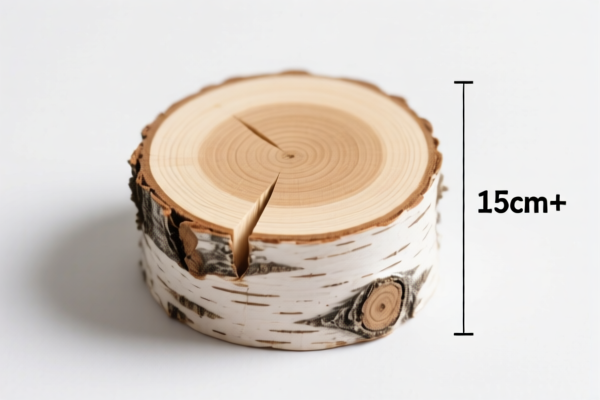
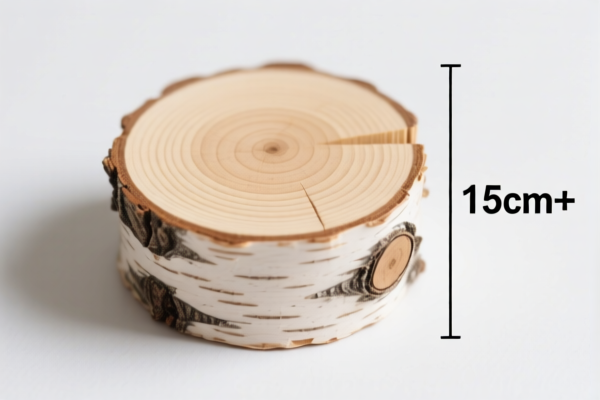
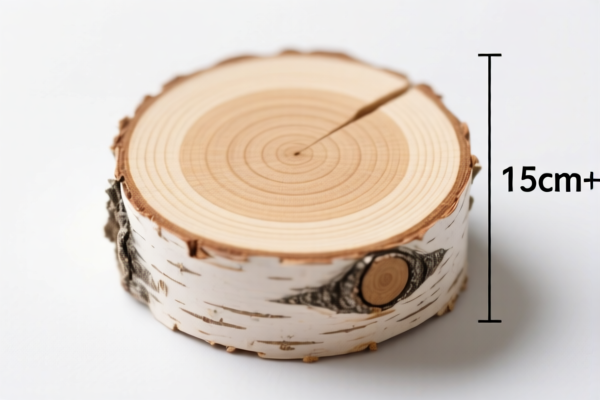
AI Analysis
🪵 Birch Wood Cross Section (15cm+) | Birch Logs & Lumber
🌐 HS Code Reference & Customs Clearance Guide | 2026 Latest Tariff Analysis | Professional Customs Strategy
📌 I. Product Definition & Classification: What Exactly Is "Birch Wood Cross Section"?
In international trade, Birch Wood Cross Sections refer to timber that has been longitudinally sawn or sliced, with a thickness exceeding 6mm. When the dimension is specified as "15cm+" (150mm), it typically implies large-diameter logs or thick slabs, which fall under specific subcategories of hardwood timber.
The core distinction lies in whether the item is considered raw timber for further processing (Chapter 44) or a finished component (Chapter 94).
⚠️ Key Distinction Point:
- If the wood is merely sawn/sliced timber (raw material for furniture, flooring, or veneer) → Classified under HS 4407.
- If the wood is explicitly part of a furniture assembly (e.g., a pre-cut table leg, drawer side) → Classified under HS 9403.
📦 II. HS Code Classification Details (2026 Latest Tariff Authority Comparison)
| HS Code | Product Description | Application Scenario | Tax Rate Structure |
|---|---|---|---|
4407.96.00.11 |
Birch, longitudinally sawn or chipped lengthwise, sliced or peeled, of a thickness exceeding 6 mm | Raw birch lumber, large cross-sections, ready for planing or drying | 35.0% |
9403.91.00.80 |
Parts of wood furniture | Birch cross-sections specifically identified as parts for other wooden furniture | 35.0% |
9403.91.00.10 |
Other parts of wood furniture | Birch cross-sections within the reasonable scope of wooden furniture parts | 35.0% |
4407.96.00.13 |
Birch, sliced, thickness > 6mm | Birch cross-section slices, specifically noting thickness > 6mm (e.g., 15cm slabs) | 35.0% |
🔍 Important Reminder:
- All listed HS Codes carry a Total Tax Rate of 35.0%.
- Despite different functional descriptions (timber vs. furniture part), the effective tariff burden is identical due to current trade policies.
- The primary difference lies in compliance documentation and customs inspection focus.
💰 III. 2026 Latest Tariff Rate Breakdown (Including Surcharges & Policy Add-ons)
✅ Applicable Country: USA (US)
✅ Origin: China (CN)
✅ Effective Date: Current as of 2025/2026 Trade Rules
🎯 1. 4407.96.00.11 & 4407.96.00.13 —— Birch Timber (Sawn/Sliced)
| Item | Content |
|---|---|
| Basic Tariff | 0.0% (Ad Valorem) |
| Section 301 Surcharge | +25.0% (USITC Footnote related to Chinese hardwoods) |
| Section 122 Tariff | +10.0% (Specific administrative surcharge on certain wood products) |
| Total Tax Rate | 35.0% |
| Tax Calculation | CIF Value × 35% |
| De Minimis Exemption | ❌ Not Eligible (High tariff items generally exclude de minimis for commercial imports) |
| Legal Basis Path | HTSUS:4407.96.00 → USITC:301_Rule → Section_122_Applicable |
📌 Explanation:
- "Basic Tariff 0%": Standard MFN rate for many wood products is low or zero.
- "Surcharge 25%": Reflects the Section 301 tariffs on Chinese wood products.
- "Section 122 10%": An additional administrative levy often applied to specific wood categories to protect domestic timber industries.
- Total 35%: This is a significant cost factor. Importers must calculate this into their CIF price.
🎯 2. 9403.91.00.80 & 9403.91.00.10 —— Parts of Wood Furniture
| Item | Content |
|---|---|
| Basic Tariff | 0.0% |
| Section 301 Surcharge | +25.0% |
| Section 122 Tariff | +10.0% |
| Total Tax Rate | 35.0% |
| Tax Calculation | CIF Value × 35% |
| De Minimis Exemption | ❌ Not Eligible |
| Legal Basis Path | HTSUS:9403.91.00 → USITC:301_Rule → Section_122_Applicable |
📌 Note:
- Although these codes fall under Chapter 94 (Furniture), the tax structure remains identical to Chapter 44 timber due to targeted trade measures.
- Risk: Misclassifying raw timber (4407) as furniture parts (9403) to seek different treatment can lead to customs audits, penalties, or retroactive duties.
🛠️ IV. Customs Clearance Practical Advice (Real-World Pitfall Avoidance)
✅ 1. Required Documentation Checklist (Non-Negotiable)
| Document | Mandatory | Description |
|---|---|---|
| ✅ Product Specification Sheet | ✔️ | Must include species (Betula platyphylla, etc.), dimensions, moisture content, sawing method. |
| ✅ Photos of Cross-Section | ✔️ | Clear images showing grain, diameter (≥15cm), and cut surface. |
| ✅ Commercial Invoice | ✔️ | Must clearly state "Birch Wood Cross Section" or "Parts of Wooden Furniture". |
| ✅ Packing List | ✔️ | Detail weights, dimensions, and packaging type. |
| ✅ Phytosanitary Certificate | ✔️ | Critical for Wood: Must be issued by the country of origin to prove pest-free status. |
| ✅ ISPM 15 Marking (if plywood/processed) | ✔️ | Not always required for solid sawn timber, but check specific port requirements. |
✅ 2. Declaration Strategy (Key Mantra)
🔥 "Classify by Function, Document by Detail, Avoid Misclassification!"
| Scenario | Correct Declaration | Wrong Practice |
|---|---|---|
| Raw Birch Logs/Slabs (for further processing) | 4407.96.00.11 or .13 |
Declaring as "Furniture Parts" → Audit Risk |
| Pre-cut Furniture Components | 9403.91.00.80 or .10 |
Declaring as "Raw Timber" → Potential Misunderstanding of Intent |
| Thickness < 6mm (Veneer) | Different HS Code | Declaring 15cm slab as veneer → Clearance Delay |
✅ 3. Special Handling Cases
| Situation | Handling Advice |
|---|---|
| High Moisture Content | Ensure wood is properly dried or treated; otherwise, customs may reject for pest risks. |
| Mixed Species | If birch is mixed with other hardwoods, declare based on the principal species or split the shipment. |
| 15cm+ Diameter | Large cross-sections may require fumigation certificates or additional inspection at US ports. |
| Furniture Parts vs. Raw Wood | If the cross-section is just a rough slab, use 4407. If it's machined to fit a specific furniture piece, use 9403. |
🌍 V. Global Market Comparison (2026 Latest)
| Country/Region | Recommended HS Code | Tariff Rate | Certification Requirements | Notes |
|---|---|---|---|---|
| 🇺🇸 USA | 4407.96.00.11 / 9403.91.00 |
35.0% | Phytosanitary, Lacey Act Compliance | Highest Cost: 35% total due to 25% + 10% surcharges. |
| 🇨🇳 China | 4407.96.00 |
5-10% | None | Standard import rate for raw timber. |
| 🇪🇺 EU | 4407.96.00 |
0-3% (if FSC certified) | FSC/PEFC, EUTR Compliance | Lower Cost: No Section 301/122 equivalents. |
| 🇬🇧 UK | 4407.96.00 |
0-5% | Post-Brexit Rules of Origin | No US-style surcharges. |
📌 Conclusion:
- USA is the most expensive market for Chinese birch wood due to 35% total duties.
- EU/UK offer lower tariffs but strict deforestation regulations (EUTR) and Lacey Act compliance in the US are critical.
- Strategy: For US imports, consider value-added processing in a third country (if eligible) or ensure accurate classification to avoid penalties.
📌 VI. Common Errors & Pitfall Guide (Lessons Learned)
❌ Error 1: Declaring "Birch Wood" without specifying "Cross Section" or thickness.
👉 Consequence: Customs may classify under general wood codes with different surcharges or demand immediate clarification → Delays.
❌ Error 2: Ignoring the Phytosanitary Certificate.
👉 Consequence: Shipment rejected or destroyed at US port due to pest risk.
❌ Error 3: Misclassifying raw timber as "Furniture Parts" to avoid inspection.
👉 Consequence: If inspected, found to be raw timber → Penalties + Back Taxes.
❌ Error 4: Not declaring the Lacey Act Compliance (for US imports).
👉 Consequence: Fines for violating US laws against illegal logging.
✅ Correct Approach:
"Birch Wood Cross Sections, Sawn, Thickness > 6mm, Diameter ~15cm, Origin: China, Phytosanitary Cert No: XXX, Lacey Act Compliant"
🎯 VII. Conclusion: Professional Declaration Saves Money!
🎯 Remember the Mantra:
🔹 "35% Total Tax: 0% Base + 25% 301 + 10% 122"
🔹 "Raw Timber = 4407; Furniture Parts = 9403; Don't Mix Them!"
🔹 "Phytosanitary Cert is Mandatory for Wood Imports to USA!"
📌 Pro Tip:
If your birch wood is destined for furniture manufacturing, consider declaring as Parts of Furniture (9403) if the pieces are pre-cut, but ensure the description matches to avoid "misdeclaration" flags.
For raw slabs/logs, stick to 4407.96.00.11/.13.
📣 Immediate Action:
📞 Contact a licensed customs broker + Provide Photos + Prepare Phytosanitary Cert
🚀 Clearance Smooth, Costs Predictable, Business Efficient!
✨ Professional Customs, Starting with Accurate Classification!
💼 Every Percent Counts in Cross-Border Trade!
Customer Reviews
About HS Code Classification
The Harmonized System (HS) is an internationally standardized nomenclature developed by the World Customs Organization (WCO) to classify traded products. Over 200 countries use the HS system as the basis for customs tariffs, trade statistics, and import/export regulations.
Each HS code follows a hierarchical structure:
- Chapter (2 digits) — Broad category of goods (e.g., Chapter 84: Machinery and Mechanical Appliances)
- Heading (4 digits) — More specific grouping within the chapter
- Subheading (6 digits) — Internationally standardized breakdown, used by all WCO member countries
- National subdivisions (8-10 digits) — Country-specific extensions for further classification, such as US HTSUS 10-digit codes
Correct HS code classification is essential for smooth customs clearance, accurate duty payment, and compliance with trade regulations. Misclassification can lead to customs delays, overpayment of duties, or penalties.
When importing from CN to US, the applicable tariff rates may include:
- Most-Favored-Nation (MFN) rate — The standard duty rate applied to WTO members
- General rate — Applied to countries without trade agreements
- Trade remedy duties — Additional tariffs such as Section 301 (anti-dumping), Section 232 (national security), or countervailing duties
The information provided on this page is for reference purposes only. For official classification, please consult with your local customs authority or a licensed customs broker.