Birch Wood Posts for Power Lines
CN → US| HS Code | Tariff Rate | Origin | Destination | Doc |
|---|---|---|---|---|
| 4407960019 | 35.0% | CN | US | Official Doc |
Product Images
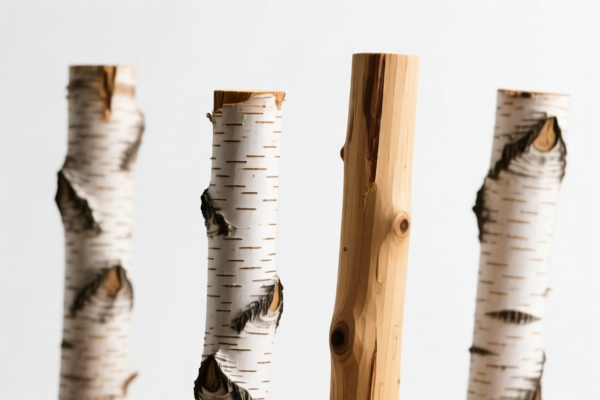
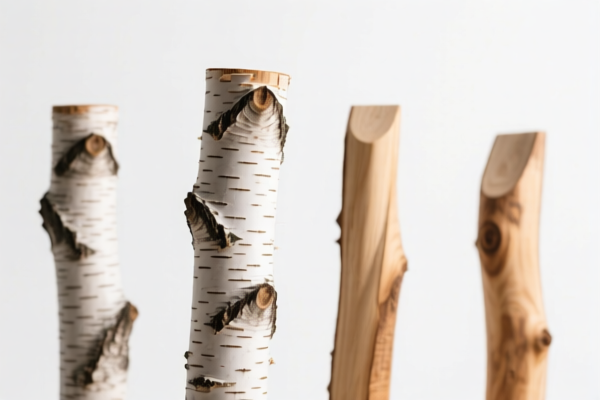
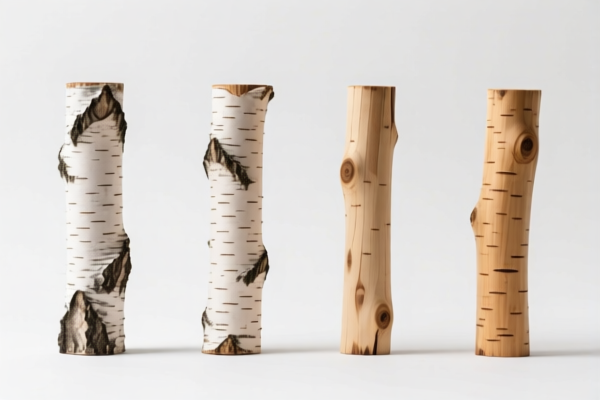
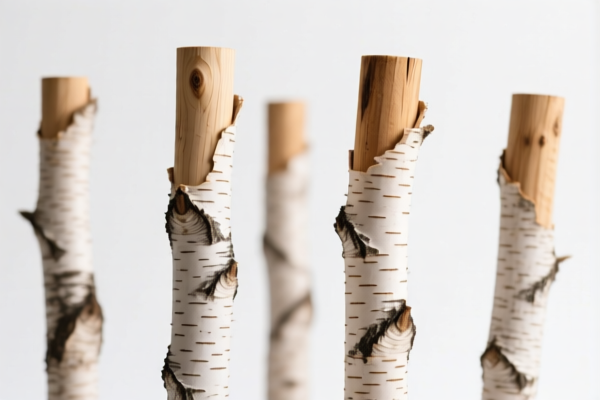
AI Analysis
🌲 Birch Wood Posts for Power Lines (Birch Poles)
🌐 HS Code Reference & Customs Clearance Guide | 2026 Latest Tariff Analysis | Professional Compliance Strategy
📌 1. Product Definition & Classification: Is It Really Just "Wood"?
Birch wood posts used for power lines are not simple raw logs. They are processed timber products, specifically cut to length and shaped for structural use in utility infrastructure. In international trade, they fall under the chapter of Wood and articles of wood.
The critical distinction here is the processing level. * Sawn/Chipped Lengthwise: The wood has been mechanically processed (sawn, chipped, sliced, or peeled) along its length. * Thickness > 6mm: This ensures it is classified as sawn wood, not wood chips or sawdust (which fall under different codes). * Material: Specifically Birch (Betula spp.).
⚠️ Key Classification Point:
- If the wood is merely "debarked" but not sawn/chipped lengthwise into standard dimensional lumber, it might fall under raw timber codes (4403).
- However, Power Line Posts are typically turned, squared, or sawn to specific dimensions, fitting the definition of "Sawn wood of a thickness exceeding 6 mm".
- Therefore, it is classified under 4407.
📦 2. HS Code Breakdown (2026 Latest Tariff Authority)
| HS Code | Product Description | Application Scenario | Processing Level |
|---|---|---|---|
| 4407.96.00.19 | Sawn wood (thickness > 6mm), of Birch (Betula spp.), other | Birch power line poles, posts, or structural beams | ✅ Sawn/Chipped/Sliced |
4407.10.10.00 |
Sawn wood, of Pine (Pinus spp.) | Pine construction lumber | ✅ Sawn |
4407.91.00.00 |
Sawn wood, of Oak (Quercus spp.) | Oak flooring, furniture timber | ✅ Sawn |
4403.10.00.00 |
Wood, untreated, of Oak | Raw logs, rough timber | ❌ Not processed (Raw) |
4407.99.90.00 |
Sawn wood, other tropical wood | Mahogany, Teak, etc. | ✅ Sawn |
🔍 Critical Reminder:
- Do NOT classify under4403(Wood in the rough) if the posts have been sawn or turned. Power line poles are manufactured products, not raw forest output.
- Do NOT classify under4409(Continuously shaped along length) unless they are specifically profiled (e.g., tongue-and-groove). Simple cylindrical or squared posts remain in4407.
- Material Specificity: Must be Birch. If it is mixed wood or mislabeled, customs will seize or reclassify.
💰 3. 2026 Latest Tariff Rate Details (Including Surcharges)
✅ Applicable Country: United States (US)
✅ Origin: China (CN) [Note: Assuming source is China based on typical high-tariff scenarios; adjust if origin differs]
✅ Effective Date: Current 2026 Policy
🎯 1. 4407.96.00.19 —— Sawn Wood of Birch
| Item | Content |
|---|---|
| Base Tariff | 0.0% |
| Additional Tariff (Section 301) | +25.0% |
| Total Tax Rate | 25.0% |
| Tax Calculation | CIF Value × 25% |
| De Minimis Exemption? | ❌ No (Deny De Minimis) |
| Legal Basis Path | USITC:4407.96.00.19 → USITC:Footnote 9903.88.01 (Section 301 List 4) |
📌 Explanation:
- "Base Tariff 0%": Under the Harmonized Tariff Schedule (HTS), most sawn woods of non-tropical species like Birch have a base MFN (Most Favored Nation) rate of 0%.
- "+25% Additional Tariff": This is the key cost driver. Under the Section 301 trade action, specific wood products (including HS 4407.96) from China are subject to an additional 25% ad valorem tariff.
- Total Cost Impact: For a $10,000 shipment of birch posts, you pay $2,500 in additional duties alone.
- No Exemptions: Unlike some consumer electronics, structural timber items often do not qualify for the de minimis exemption (under $800) if they are part of a larger commercial shipment or if the specific exclusion has lapsed. Assume full taxation.
🛠️ 4. Customs Clearance Practical Advice (Real-World Pitfall Guide)
✅ 1. Required Documentation Checklist (Non-Negotiable)
| Document | Must Provide? | Description |
|---|---|---|
| ✅ Commercial Invoice | ✔️ | Must explicitly state: "Sawn Birch Wood Posts, Thickness > 6mm, for Power Line Infrastructure" |
| ✅ Packing List | ✔️ | Detail weight, dimensions, and number of posts. |
| ✅ Phytosanitary Certificate | ✔️ | CRITICAL. Wood is regulated for pests. Must prove treatment (e.g., heat treatment ISPM 15). |
| ✅ HTS Code Declaration | ✔️ | Confirm 4407.96.00.19 and acknowledge 25% Section 301 duty. |
| ✅ Proof of Origin | ✔️ | Certificate of Origin (CO) to confirm Chinese origin (triggers 25% duty). |
| ✅ Product Photos | ✔️ | Show cross-section (to prove Birch) and end-jointing (if any). |
✅ 2. Classification Tips (Key Mantra)
🔥 "Raw Log is 4403, Sawn Post is 4407, Birch is 96, Don't Mix Up the Species!"
| Scenario | Correct Classification | Wrong Classification | Consequence |
|---|---|---|---|
| Birch Posts, Sawn/Turned | 4407.96.00.19 |
4403.10.00.00 (Oak Logs) |
Customs Audit: Misclassification penalty + Back duties |
| Mixed Species (Birch + Pine) | 4407.96.00.19 (if Birch dominates) |
4407.10.10.00 (Pine) |
Partial Penalty: If Pine > 50%, tariff code changes |
| Raw Birch Logs (Unprocessed) | 4403.10.00.00 |
4407.96.00.19 |
Overpayment: You might pay unnecessary duties if classified as processed |
| Birch Plywood Veneers | 4408.39.00.00 |
4407.96.00.19 |
Wrong Code: Veneers are sheet-like, not solid posts |
✅ 3. Special Handling
| Situation | Recommendation |
|---|---|
| Heat Treatment (ISPM 15) | Ensure stamps are visible. Uncertified wood will be rejected/destroyed at US ports. |
| End-Jointed Posts | Still 4407.96.00.19. End-jointing is a common manufacturing step and doesn't change the code. |
| Pressure-Treated Wood | Still 4407. Chemical treatment doesn't change the wood classification, but must be declared for safety. |
| Origin Substitution | If shipped from Vietnam but made from Chinese birch, risks retaliation. Must prove genuine Vietnamese processing to avoid 25% duty. |
🌍 5. Global Market Comparison (2026 Latest)
| Country/Region | Recommended HS Code | Tariff (China Origin) | Certification | Notes |
|---|---|---|---|---|
| 🇺🇸 USA | 4407.96.00.19 |
25% (Section 301) | ISPM 15 + Fumigation | High duty, strict phytosanitary rules |
| 🇨🇳 China | 4407.96.00.19 |
0% (Import Duty) | FSC Certification | Major consumer of birch |
| 🇪🇺 EU | 4407.96.00.19 |
0% | EUTR (Timber Regulation) | Requires due diligence statement |
| 🇦🇺 Australia | 4407.96.00.19 |
5% | Biosecurity Permit | Strict quarantine |
| 🇯🇵 Japan | 4407.96.00.19 |
0-2% | ISPM 15 | Low base tariff |
📌 Conclusion:
- USA is the most expensive market due to the 25% Section 301 tariff.
- EU/Australia have low/zero base tariffs but strict environmental/biosecurity checks.
- Phytosanitary compliance is more critical than tariff rates in this category.
📌 6. Common Errors & Pitfalls (Blood Lessons)
❌ Error 1: Classifying as 4403 (Raw Logs) to avoid Section 301
👉 Consequence: Customs detects saw marks/turning → Penalty + Back Taxes + 25% Surcharge
❌ Error 2: No Phytosanitary Certificate
👉 Consequence: Rejection at Port. Wood may be fumigated at your expense or destroyed.
❌ Error 3: Misidentifying Species (e.g., "Hardwood" instead of "Birch")
👉 Consequence: Audit delay. If found to be Pine (4407.10), tariff is still 25%, but if found to be Tropical Hardwood (4407.99), tariff jumps to 5.4% (base) + 25% = 30.4%. Wait, actually 4407.99 is often higher base. Accuracy saves time.
✅ Correct Approach:
"Birch Sawn Wood Posts, HTS 4407.96.00.19, ISPM 15 Heat Treated, 25% Section 301 Duty Applicable"
🎯 7. Conclusion: Professional Clearance, Cost Control, Efficiency
🎯 Remember the Mantra:
🔹 "Sawn > 6mm, Birch = 4407.96.00.19"
🔹 "25% Duty is Inevitable for China Origin"
🔹 "No Phytosanitary Certificate = No Entry"
📌 Tips:
- If you are sourcing birch from Russia (another major birch exporter), note that US tariffs on Russian wood are often 50-100% or banned. Ensure origin is correctly declared.
- For US domestic consumption, consider sourcing from Canada or Northern Europe to avoid Section 301 tariffs, even if the wood is birch.
📣 Immediate Action:
📞 Contact your customs broker to confirm the ISPM 15 stamp on your shipment.
📦 Prepare the Commercial Invoice with precise HTS4407.96.00.19and budget for 25% duty.
🚀 Ensure smooth customs clearance by being proactive with documentation!
✨ Professional clearance starts with accurate classification!
💼 Your timber cost includes duty—plan accordingly!
Customer Reviews
About HS Code Classification
The Harmonized System (HS) is an internationally standardized nomenclature developed by the World Customs Organization (WCO) to classify traded products. Over 200 countries use the HS system as the basis for customs tariffs, trade statistics, and import/export regulations.
Each HS code follows a hierarchical structure:
- Chapter (2 digits) — Broad category of goods (e.g., Chapter 84: Machinery and Mechanical Appliances)
- Heading (4 digits) — More specific grouping within the chapter
- Subheading (6 digits) — Internationally standardized breakdown, used by all WCO member countries
- National subdivisions (8-10 digits) — Country-specific extensions for further classification, such as US HTSUS 10-digit codes
Correct HS code classification is essential for smooth customs clearance, accurate duty payment, and compliance with trade regulations. Misclassification can lead to customs delays, overpayment of duties, or penalties.
When importing from CN to US, the applicable tariff rates may include:
- Most-Favored-Nation (MFN) rate — The standard duty rate applied to WTO members
- General rate — Applied to countries without trade agreements
- Trade remedy duties — Additional tariffs such as Section 301 (anti-dumping), Section 232 (national security), or countervailing duties
The information provided on this page is for reference purposes only. For official classification, please consult with your local customs authority or a licensed customs broker.