Birch Wood Protective Poles
CN → US| HS Code | Tariff Rate | Origin | Destination | Doc |
|---|---|---|---|---|
| 4403950127 | 35.0% | CN | US | Official Doc |
| 4403960127 | 35.0% | CN | US | Official Doc |
| 4413000000 | 38.7% | CN | US | Official Doc |
| 4418999140 | 38.2% | CN | US | Official Doc |
| 4407960011 | 35.0% | CN | US | Official Doc |
Product Images
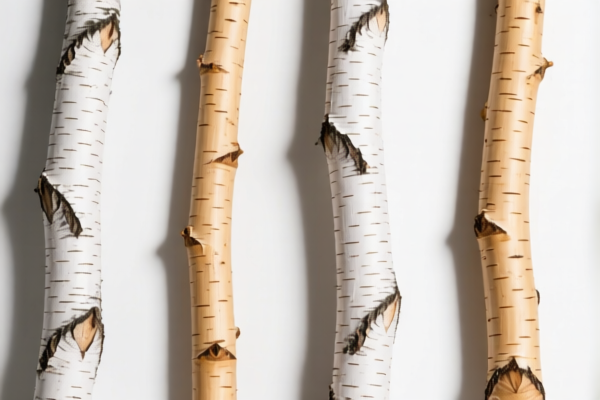

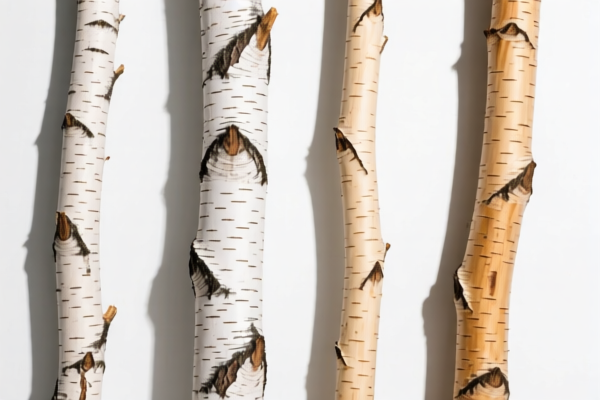
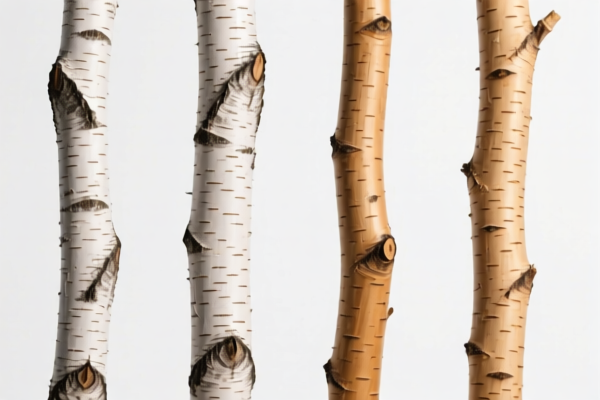
AI Analysis
🌲 Birch Wood Protective Poles (Agricultural & Structural Use)
🌐 HS Code Reference & Customs Clearance Guide | 2026 Latest Tariff Analysis | Professional Clearance Strategy
📌 I. Product Definition & Classification: Do You Truly Understand "Birch Wood Poles"?
Birch wood poles are versatile natural products derived from Betula species. In international trade, their classification depends entirely on processing depth, specific usage, and physical form. They are generally categorized into three main types:
- Agricultural Poles (Raw/Partially Processed): Straight poles, stakes, or rods used primarily in farming, gardening, or vineyards. These are typically unturned logs or simple branches.
- Structural Columns/Supports (Sawn/Planed): Poles that have been processed into bars, rods, or structural shapes. This includes "green" (unseasoned) or dried wood shaped for construction support.
- Prefabricated Structural Components: Ready-to-use building elements, such as pre-cut supports or structural parts, often used in carpentry or construction.
⚠️ Key Classification Points:
- If it is a simple rod/stake for agriculture → Look at 4403 or 4407.
- If it is a structural bar/beam (processed shape) → Look at 4413.
- If it is a prefabricated building component → Look at 4418.
📦 II. HS Code Classification Matrix (2026 Latest Tariff Authority Mapping)
| HS Code | Product Description | Application Scenario | Processing Level |
|---|---|---|---|
4403.95.01.27 |
Agricultural Birch Wood Poles/Rods; Material: Birch; Form: Rod/Pole; Usage: Agriculture | Farm stakes, vineyard supports, simple garden poles | ✅ Raw/Simplely Processed |
4403.96.01.27 |
Agricultural Birch Wood Poles; Material: Birch; Usage: Agriculture | Specific agricultural applications defined under 96 subheadings | ✅ Raw/Simplely Processed |
4413.00.00.00 |
Birch Wood Structural Support Columns; Material: Birch; Form: Structural Column; Category: Bars/Rods/Profiles | Construction beams, heavy-duty supports, structural framing | ✅ Sawn/Planed/Structured |
4418.99.91.40 |
Birch Wood Structural Support Columns; Material: Birch; Form: Support Column; Category: Prefabricated Structural Components | Ready-to-assemble building parts, prefabricated supports | ✅ Prefabricated Component |
4407.96.00.11 |
Birch Wood Structural Support Columns; Material: Birch; Form: Structural Support Column; Category: Semi-finished Wood Product | Planed, sanded, or end-jointed wood not yet assembled into a final building component | ✅ Semi-finished Wood |
🔍 Critical Note:
- "Agricultural Poles" usually fall under 4403 (Wood otherwise treated with preservatives, etc.) or 4407 (Wood sawn/chipped lengthwise).
- "Structural Supports" that are shaped into bars/profiles go to 4413.
- "Prefabricated Components" go to 4418.
- Misclassification (e.g., calling a structural beam an "agricultural pole") can lead to severe tax discrepancies and customs delays.
💰 III. 2026 Latest Tariff Rate Breakdown (Including Additional Duties & Policy Surcharges)
✅ Applicable Country: United States (US)
✅ Origin: China (CN)
✅ Effective Time: 2025-11-10 onwards (including subsequent imports)
🎯 1. 4403.95.01.27 & 4403.96.01.27 —— Agricultural Birch Wood Poles
| Item | Content |
|---|---|
| Base Duty Rate | 0% (ad valorem) |
| USITC Additional Duty | +25% (Under USITC Footnote / Section 301) |
| IEEPA Additional Duty | +10% (China-specific surcharge under IEEPA) |
| Total Effective Tax Rate | 35.0% |
| Tax Calculation | CIF Value × 35% |
| De Minimis Exemption | ❌ Not Eligible (deny_de_minimis) |
| Legal Authority Path | IEEPA:9903.01.25 → IEEPA:9903.01.24 → USITC:4403.95.01.27 → FOOTNOTE:9903.88.01 |
📌 Explanation:
- Although the base duty is 0%, the 301 Section Additional Duty (25%) and IEEPA Surcharge (10%) apply heavily.
- This is a high-cost import category for raw/slightly processed agricultural poles from China.
🎯 2. 4413.00.00.00 —— Birch Wood Structural Support Columns (Bars/Rods)
| Item | Content |
|---|---|
| Base Duty Rate | 3.7% (ad valorem) |
| USITC Additional Duty | +25% (Section 301) |
| IEEPA Additional Duty | +10% (China-specific surcharge) |
| Total Effective Tax Rate | 38.7% |
| Tax Calculation | CIF Value × 38.7% |
| De Minimis Exemption | ❌ Not Eligible |
| Legal Authority Path | IEEPA:9903.01.25 → IEEPA:9903.01.24 → USITC:4413.00.00.00 → FOOTNOTE:9903.88.01 |
📌 Explanation:
- The base duty is higher (3.7%) because it is considered a processed structural material.
- Total tax is 38.7%, making this the most expensive classification among the options due to the higher base rate.
🎯 3. 4418.99.91.40 —— Prefabricated Structural Components
| Item | Content |
|---|---|
| Base Duty Rate | 3.2% (ad valorem) |
| USITC Additional Duty | +25% (Section 301) |
| IEEPA Additional Duty | +10% (China-specific surcharge) |
| Total Effective Tax Rate | 38.2% |
| Tax Calculation | CIF Value × 38.2% |
| De Minimis Exemption | ❌ Not Eligible |
| Legal Authority Path | IEEPA:9903.01.25 → IEEPA:9903.01.24 → USITC:4418.99.91.40 → FOOTNOTE:9903.88.01 |
📌 Explanation:
- Slightly cheaper than4413due to a lower base duty (3.2% vs 3.7%).
- Total tax is 38.2%.
🎯 4. 4407.96.00.11 —— Semi-finished Birch Wood Supports
| Item | Content |
|---|---|
| Base Duty Rate | 0% (ad valorem) |
| USITC Additional Duty | +25% (Section 301) |
| IEEPA Additional Duty | +10% (China-specific surcharge) |
| Total Effective Tax Rate | 35.0% |
| Tax Calculation | CIF Value × 35.0% |
| De Minimis Exemption | ❌ Not Eligible |
| Legal Authority Path | IEEPA:9903.01.25 → IEEPA:9903.01.24 → USITC:4407.96.00.11 → FOOTNOTE:9903.88.01 |
📌 Explanation:
- Like the agricultural poles, the base duty is 0%.
- Total tax is 35.0%, identical to4403categories.
- This code is suitable for planed/sanded wood that is not yet a final structural component but is more processed than raw agricultural stakes.
🛠️ IV. Customs Clearance Practical Advice (Pitfall Avoidance Guide)
✅ 1. Required Documentation Checklist (Mandatory)
| Document | Required? | Description |
|---|---|---|
| ✅ Product Specification Sheet | ✔️ | Must clearly state: Species (Birch), Dimensions, Treatment Status (Untreated/Treated), Usage (Agricultural vs. Structural). |
| ✅ Photos of Product & Markings | ✔️ | Clear images showing the wood grain, cut ends, and any stamps/labels indicating origin or treatment. |
| ✅ Commercial Invoice | ✔️ | Must match the HS Code description precisely. Do not use vague terms like "Wood Stick." |
| ✅ Packing List | ✔️ | Detail the quantity, weight, and packaging type. |
| ✅ Phytosanitary Certificate | ✔️ | CRITICAL. Wood products often require IPPC treatment certificates to prevent pest introduction. |
| ✅ Certificate of Origin (CO) | ✔️ | If claiming any preferential rates (though unlikely for US/China in this category). |
✅ 2. Declaration Strategy (Key Mantras)
🔥 “Be Specific, Be Accurate: ‘Birch’ is not just ‘Wood’!”
| Scenario | Correct Declaration | Wrong Approach |
|---|---|---|
| Agricultural Stakes | "Birch Wood Poles for Agriculture, HS: 4403.95.01.27" | "Wooden Sticks" (Too vague → High scrutiny) |
| Structural Beams | "Birch Wood Structural Support Columns, HS: 4413.00.00.00" | "Building Materials" (Misleading → Audit risk) |
| Prefabricated Parts | "Prefabricated Birch Structural Components, HS: 4418.99.91.40" | "Wood Parts" (Ambiguous → Delay) |
| Untreated Raw Logs | "Untreated Birch Wood, HS: 4403.95.01.27" | "Processed Wood" (Inaccurate → Penalty) |
✅ 3. Special Considerations
| Issue | Handling Advice |
|---|---|
| Pest Control & Phytosanitary | Ensure all wood is properly treated (e.g., heat-treated per ISPM 15) and marked with the IPPC Stamp. Customs may hold cargo without this. |
| Treatment with Preservatives | If the poles are chemically treated, ensure this is declared. Some chemicals trigger additional environmental regulations. |
| Partially vs. Fully Processed | Be clear if the wood is "green" (unseasoned) or dried. This affects the HS code subheading (4403 vs 4413). |
| Mixed Shipments | If a container has both agricultural poles and structural components, declare them separately. Do not lump them under one code. |
🌍 V. Global Market Comparison (2026 Latest)
| Country/Region | Recommended HS Code | Tariff (China Origin) | Certification | Notes |
|---|---|---|---|---|
| 🇺🇸 USA | 4403.95.01.27 / 4413.00.00.00 |
35% - 38.7% | Phytosanitary + IPPC | High tariff burden. 301 Section + IEEPA apply. |
| 🇨🇳 China | 4403.95.01.27 / 4413.00.00.00 |
0% - 5% | N/A | Low duty for exports out of China. |
| 🇪🇺 EU | 4403.95.00 / 4413.00 |
0% - 3.7% | FSC/PEFC (Optional) | Lower duties than US. No IEEPA surcharge. |
| 🇬🇧 UK | 4403.95.00 / 4413.00 |
0% - 3.7% | FSC/PEFC | Post-Brexit rules apply. |
📌 Conclusion:
- The US market is the most expensive due to the combination of 301 tariffs (25%) and IEEPA surcharges (10%).
- EU/UK offer significantly lower duties but may have stricter sustainability certifications (FSC/PEFC).
- Always verify Phytosanitary requirements before shipping to avoid rejection at port.
📌 VI. Common Mistakes & Pitfall Avoidance (Lessons Learned)
❌ Mistake 1: Declaring structural beams as "agricultural poles" to save taxes.
👉 Consequence: Customs audits, potential penalties, and retroactive tax collection at the higher rate (38.7%).
❌ Mistake 2: Ignoring Phytosanitary Certificates.
👉 Consequence: Cargo quarantined, treated at importer’s expense, or returned. Major delays.
❌ Mistake 3: Using generic terms like "Wooden Poles" in commercial invoices.
👉 Consequence: Customs officers cannot determine the correct HS code → Hold for inspection.
❌ Mistake 4: Assuming De Minimis exemption applies.
👉 Consequence: Wood products from China are explicitly excluded from de minimis benefits in the US. Expect full duty payment.
✅ Correct Approach:
"Birch Wood Agricultural Poles, Untreated, IPPC Heat-Treated, HS: 4403.95.01.27, Value: $X, Origin: China"
🎯 VII. Conclusion: Professional Declaration Saves Money!
🎯 Remember the Mantra:
🔹 "Agricultural = 35%, Structural = 38%+, Be Specific or Pay More!"
🔹 "Phytosanitary is Key, No Certificate, No Entry!"
🔹 "De Minimis is Dead for Wood, Prepare for Full Duty!"
📌 Pro Tip:
If your birch wood poles are treated with specific preservatives, ensure the chemical composition is declared. Some treatments may fall under different regulatory codes or require additional safety data sheets (SDS).
Consider applying for an Advance Ruling (Pre-classification) from US Customs if you are shipping large volumes. This provides legal certainty on the HS code and tariff rate.
📣 Immediate Action:
📞 Contact your freight forwarder + Provide IPPC Treatment Proof + Verify HS Code with a Customs Broker
🚀 Ensure smooth clearance, avoid delays, and maximize your profit margins!
✨ Professional Clearance Starts with Accurate Classification!
💼 Every percentage point of duty matters!
Customer Reviews
About HS Code Classification
The Harmonized System (HS) is an internationally standardized nomenclature developed by the World Customs Organization (WCO) to classify traded products. Over 200 countries use the HS system as the basis for customs tariffs, trade statistics, and import/export regulations.
Each HS code follows a hierarchical structure:
- Chapter (2 digits) — Broad category of goods (e.g., Chapter 84: Machinery and Mechanical Appliances)
- Heading (4 digits) — More specific grouping within the chapter
- Subheading (6 digits) — Internationally standardized breakdown, used by all WCO member countries
- National subdivisions (8-10 digits) — Country-specific extensions for further classification, such as US HTSUS 10-digit codes
Correct HS code classification is essential for smooth customs clearance, accurate duty payment, and compliance with trade regulations. Misclassification can lead to customs delays, overpayment of duties, or penalties.
When importing from CN to US, the applicable tariff rates may include:
- Most-Favored-Nation (MFN) rate — The standard duty rate applied to WTO members
- General rate — Applied to countries without trade agreements
- Trade remedy duties — Additional tariffs such as Section 301 (anti-dumping), Section 232 (national security), or countervailing duties
The information provided on this page is for reference purposes only. For official classification, please consult with your local customs authority or a licensed customs broker.