Birch plywood core sheets
CN → US| HS Code | Tariff Rate | Origin | Destination | Doc |
|---|---|---|---|---|
| 4412330640 | 35.0% | CN | US | Official Doc |
| 4412330620 | 35.0% | CN | US | Official Doc |
Product Images
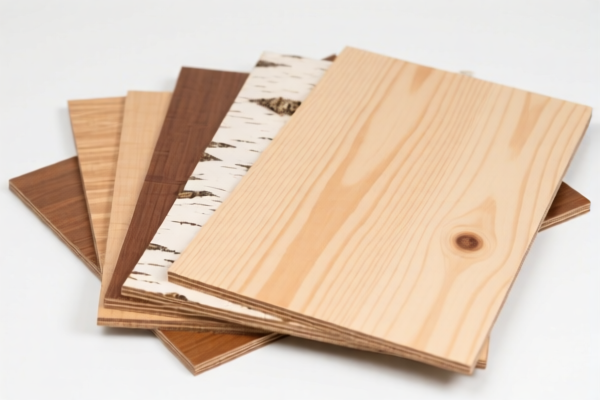
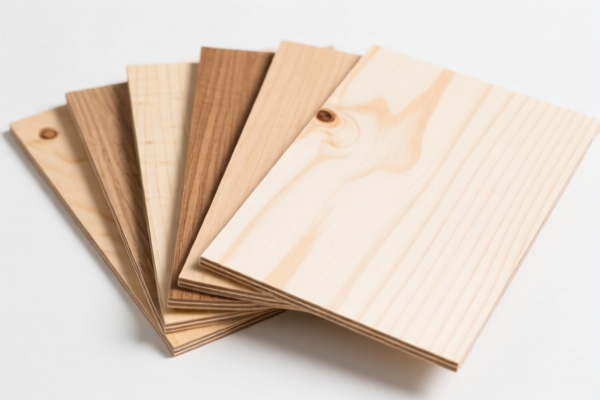
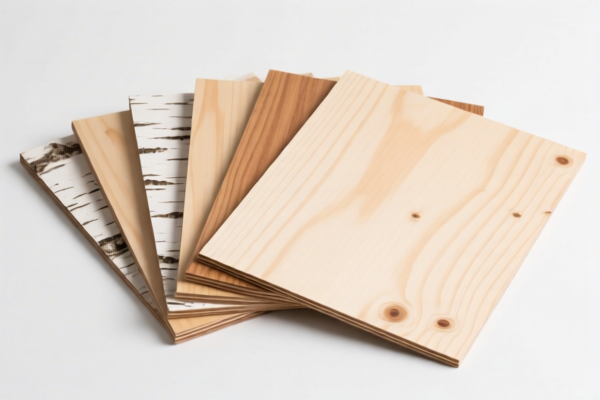
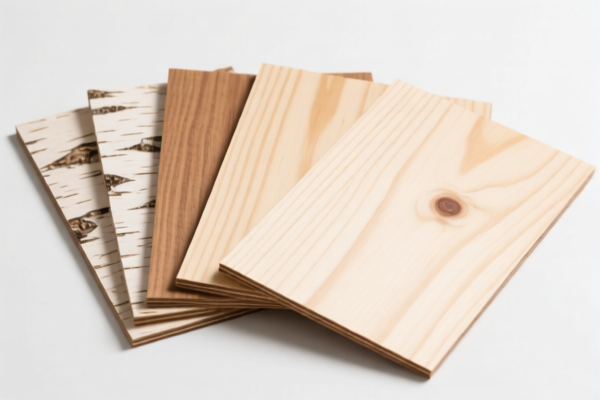
AI Analysis
🪵 Birch Plywood Core Sheets (Non-Coniferous Wood)
🌐 HS Code Reference & Customs Clearance Guide | 2026 Latest Tariff Analysis | Professional Clearance Strategy
📌 I. Product Definition & Classification: Do You Understand "Birch Plywood"?
Birch plywood core sheets are high-quality laminated wood products made exclusively from sheets of birch (Betula spp.), a non-coniferous hardwood. In international trade, these are classified under Chapter 44 of the Harmonized System (HS), specifically as Plywood, Veneered Panels, and Similar Laminated Wood.
The key distinction lies in the construction and surface treatment:
- Core Sheets: These are structural plywood panels consisting solely of wood sheets, with each ply not exceeding 6 mm in thickness.
- Surface Treatment: The classification depends heavily on whether the surface is covered or clear. For HS Codes 4412.33.06.20 and 4412.33.06.40, the wood must be not surface covered or covered with a clear/transparent material that does not obscure the grain.
⚠️ Key Distinction Point:
- If the plywood is surface-covered with opaque paint or laminate, it falls under different sub-headings (e.g.,4412.33.06.90or higher-tier codes) with potentially different tax implications.
- For the codes below, the face ply must be birch (Betula spp.), and the product must not be surface-covered in a way that hides the natural grain.
📦 II. HS Code Classification Details (2026 Latest Tariff Authority)
| HS Code | Product Description | Application Scenario | Key Technical Specifications |
|---|---|---|---|
4412.33.06.20 |
Birch plywood panels not exceeding 3.6 mm in thickness, 1.2 m in width, and 2.2 m in length | Thin veneers, packaging inserts, light-duty furniture parts, decorative backing | ✅ Max thickness: 3.6 mm ✅ Max width: 1.2 m ✅ Max length: 2.2 m ✅ Face ply: Birch |
4412.33.06.40 |
Other birch plywood (not surface covered), with at least one outer ply of non-coniferous wood (birch) | Standard construction plywood, furniture panels, industrial shelving, heavy-duty packaging | ✅ Thickness > 3.6 mm OR dimensions exceed 1.2x2.2 m ✅ Face ply: Birch ✅ Surface: Clear/uncovered |
🔍 Critical Reminder:
- Both codes require the face ply to be Birch (Betula spp.).
- Both codes exclude any surface covering that obscures the wood grain (e.g., opaque paint, solid laminate).
- Both codes apply to plywood where each ply is ≤ 6 mm in thickness.
- If the face ply is not birch (e.g., oak, maple), different HS codes apply.
- If the plywood is surface-covered with opaque material, it does not qualify for these specific codes.
💰 III. 2026 Latest Tariff Rate Breakdown (Including Additional Duties & Policy Surcharges)
✅ Applicable Country: United States (US)
✅ Country of Origin: China (CN)
✅ Effective Date: 2025-11-10 onward (for subsequent imports)
🎯 1. 4412.33.06.20 & 4412.33.06.40 — Birch Plywood Panels (Clear/Uncovered)
| Item | Detail |
|---|---|
| Base Tariff Rate | 0% (ad valorem) |
| USITC Additional Tariff (Section 301) | +25% |
| Total Tax Rate | 25.0% |
| Tax Calculation | CIF Value × 25% |
| De Minimis Eligibility | ❌ Not Eligible (deny_de_minimis) |
| Legal Basis Path | USITC:4412.33.06.20/4412.33.06.40 → FOOTNOTE:301 → Section 301 Tariff |
📌 Explanation:
- Base Tariff: Under normal Most Favored Nation (MFN) treatment, birch plywood has a 0% base rate.
- Section 301 Tariff: A 25% additional tariff is applied to all Chinese-origin plywood products under heading 4412, as listed in the USITC Section 301 tariff list.
- Total Impact: The effective duty rate is 25% of the CIF value.
- No De Minimis Exemption: Unlike small packages, plywood shipments do not qualify for de minimis exemptions, meaning duties are calculated on the full value.
🛠️ IV. Customs Clearance Practical Advice (Real-World Pitfall Avoidance Guide)
✅ 1. Required Documentation Checklist (All Required)
| Document | Must Provide | Explanation |
|---|---|---|
| ✅ Commercial Invoice | ✔️ | Must clearly state "Birch Plywood," specify dimensions, thickness, and face ply species. |
| ✅ Packing List | ✔️ | Detail quantities, dimensions, and total weight. Ensure no mixed species in one container. |
| ✅ Product Specification Sheet | ✔️ | Must confirm: Each ply ≤ 6 mm, face ply is Birch (Betula spp.), surface is clear/uncovered. |
| ✅ Certificate of Origin (CO) | ✔️ | Required to prove Chinese origin; may be needed for Section 301 tariff application. |
| ✅ Phytosanitary Certificate | ✔️ | Often required for wood products to confirm no pests/diseases. |
| ✅ Bill of Lading (B/L) | ✔️ | Must match invoice and packing list details. |
📌 Note: Ensure the product description explicitly mentions "Birch" and "Not Surface Covered" to avoid customs delays or misclassification.
✅ 2. Declaration Tips (Key Mnemonics)
🔥 "Birch Face, Clear Surface, ≤6mm Ply, 25% Tax!"
| Scenario | Correct Declaration | Incorrect Practice |
|---|---|---|
| Birch plywood, 4 mm thick, clear surface | 4412.33.06.40 |
Misdeclare as "Wood Panels" → Higher risk of audit |
| Birch plywood, 3 mm thick, 1.0 x 2.0 m | 4412.33.06.20 |
Declare as 4412.33.06.40 → May be flagged for size non-compliance |
| Pine plywood (coniferous) | Do NOT use these codes | Misdeclare as Birch → Fraud risk, penalties |
| Oak plywood (non-coniferous, but not birch) | Do NOT use these codes | Misdeclare as Birch → 25% tariff still applies, but HS code error |
✅ 3. Special Case Handling
| Situation | Handling Advice |
|---|---|
| Mixed Species in One Shipment | Separate birch from other species. Birch goes to 4412.33.06.xx, others to different codes. |
| Surface Treated with Clear Lacquer | Still qualifies for 4412.33.06.xx if grain is visible. Declare as "Surface Covered with Clear Material." |
| Plywood with Opaque Laminate | Does NOT qualify for these codes. Requires different HS code (e.g., 4412.33.06.90 or higher). |
| Ply with Ply > 6 mm | Does NOT qualify. Must be reclassified under general plywood codes (e.g., 4412.31 or 4412.32). |
🌍 V. Global Market Customs Comparison (2026 Latest)
| Country/Region | Recommended HS Code | Tariff Rate | Certification Requirements | Notes |
|---|---|---|---|---|
| 🇺🇸 USA | 4412.33.06.20 / 4412.33.06.40 |
25% (Section 301) | Phytosanitary Certificate | High tariff; plan cost accordingly |
| 🇨🇳 China | 4412.33.06.20 / 4412.33.06.40 |
~5-13% | N/A | Domestic trade; lower rates |
| 🇪🇺 EU | 4412.33.06.20 / 4412.33.06.40 |
0-6.5% | FSC/PEFC Certification (optional but recommended) | No Section 301; lower tariffs |
| 🇬🇧 UK | 4412.33.06.20 / 4412.33.06.40 |
0-6.5% | UKCA Marking (if applicable) | Post-Brexit rules; check current tariffs |
| 🇯🇵 Japan | 4412.33.06.20 / 4412.33.06.40 |
0-3.2% | Fitosanitary Certificate | Low tariffs; strict phytosanitary rules |
📌 Conclusion:
- USA: Highest duty (25%) due to Section 301; budget accordingly.
- EU/UK/Japan: Significantly lower tariffs; more cost-effective for export.
- China: Domestic market; lowest entry barriers.
📌 VI. Common Mistakes & Pitfall Guide (Blood Lessons)
❌ Mistake 1: Declaring oak or maple plywood as birch
👉 Consequence: Customs audit, fines, and potential 25% tariff penalty if origin is misreported.
✅ Solution: Verify wood species with laboratory testing if uncertain.
❌ Mistake 2: Using opaque paint or laminate but declaring as "clear surface"
👉 Consequence: Misclassification, duty evasion suspicion, seizure risk.
✅ Solution: Use correct HS code for covered plywood (e.g., 4412.33.06.90).
❌ Mistake 3: Ignoring ply thickness > 6 mm
👉 Consequence: Code invalid; goods reclassified to higher-tariff general plywood.
✅ Solution: Ensure each ply is ≤ 6 mm; if not, use different HS code.
❌ Mistake 4: Failing to provide Phytosanitary Certificate
👉 Consequence: Goods held at customs, demurrage charges, possible return/destruction.
✅ Solution: Obtain certificate from exporting country’s agricultural authority.
🎯 VII. Conclusion: Precise Declaration Saves Money!
🎯 Remember the Mnemonic:
🔹 "Birch Face, Clear Surface, ≤6mm Ply, 25% US Tax!"
🔹 "HS Code determines cost; declare accurately, avoid delays!"
📌 Pro Tip:
If you are exporting to the USA, consider supply chain diversification (e.g., produce in Vietnam or Malaysia) to potentially avoid Section 301 tariffs. For EU/UK/Japan, focus on FSC/PEFC certification for market access.
📣 Immediate Action:
📞 Contact a licensed customs broker + Provide product specs + Apply for HS Code Pre-Ruling
🚀 Let your birch plywood clear smoothly, reduce costs, and maximize profit!
✨ Professional Customs Clearance Starts with Accurate Classification!
💼 Every cent of your cost deserves precise calculation!
Customer Reviews
About HS Code Classification
The Harmonized System (HS) is an internationally standardized nomenclature developed by the World Customs Organization (WCO) to classify traded products. Over 200 countries use the HS system as the basis for customs tariffs, trade statistics, and import/export regulations.
Each HS code follows a hierarchical structure:
- Chapter (2 digits) — Broad category of goods (e.g., Chapter 84: Machinery and Mechanical Appliances)
- Heading (4 digits) — More specific grouping within the chapter
- Subheading (6 digits) — Internationally standardized breakdown, used by all WCO member countries
- National subdivisions (8-10 digits) — Country-specific extensions for further classification, such as US HTSUS 10-digit codes
Correct HS code classification is essential for smooth customs clearance, accurate duty payment, and compliance with trade regulations. Misclassification can lead to customs delays, overpayment of duties, or penalties.
When importing from CN to US, the applicable tariff rates may include:
- Most-Favored-Nation (MFN) rate — The standard duty rate applied to WTO members
- General rate — Applied to countries without trade agreements
- Trade remedy duties — Additional tariffs such as Section 301 (anti-dumping), Section 232 (national security), or countervailing duties
The information provided on this page is for reference purposes only. For official classification, please consult with your local customs authority or a licensed customs broker.