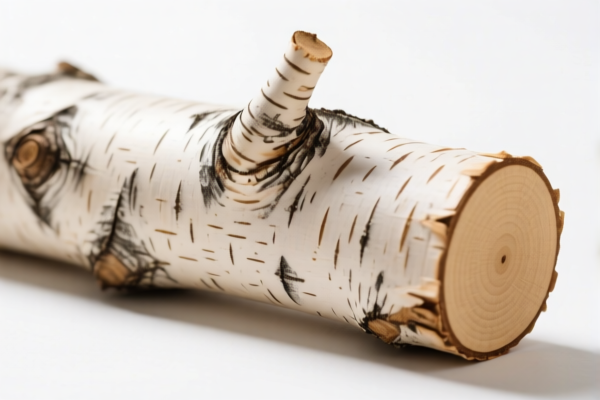
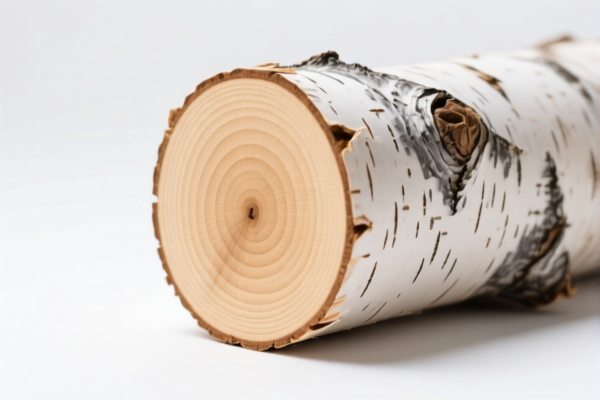
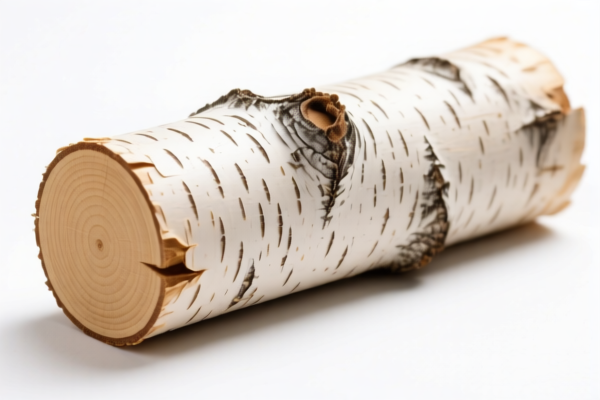
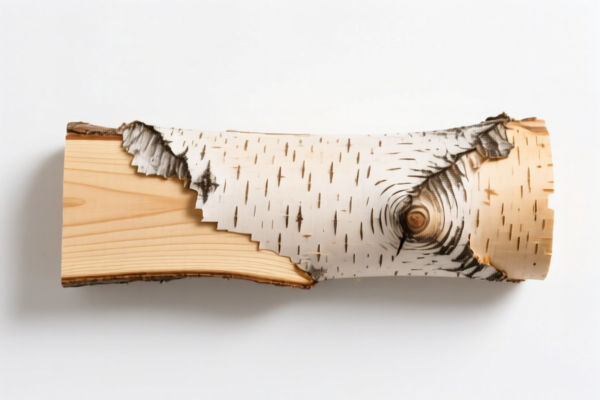
Birch wood with minimum cross section of 15 cm
CN → US| HS Code | Tariff Rate | Origin | Destination | Doc |
|---|---|---|---|---|
| 4403950127 | 35.0% | CN | US | Official Doc |
| 4403950130 | 35.0% | CN | US | Official Doc |
Product Images
AI Analysis
🪵 Birch Logs & Timber Poles (Min. 15 cm Cross-Section)
🌐 HS Code Reference & Customs Clearance Guide | 2026 Latest Tariff Analysis | Professional Strategy for US Imports 📌 1. Product Definition: What Exactly is This?
Birch Wood (Betula spp.) in the Rough refers to timber that has undergone minimal processing. It is not yet sawn into lumber or planed into finished wood. Specifically, for the HS codes provided, these are logs, poles, piles, or posts where the smallest cross-sectional dimension is 15 cm or more.
This category covers two main scenarios under the "Other" classification: 1. Poles, Piles, and Posts: Specifically shaped for construction or structural support. 2. Other Rough Wood: General logs or timber that doesn’t fit the specific "pole/post" description but meets the size and species criteria.
⚠️ Critical Distinction: - If the wood is less than 15 cm in its smallest dimension, it does not fall under these specific codes (it would likely be
4403.95.01.10or similar). - If the wood is squared, sawn, or planed, it is not "in the rough" and would fall under Chapter 44 (e.g.,4407or4409), not Chapter 44.03. - Species Matter: Must be Betula (Birch). Other hardwoods (Oak, Maple) have different HS codes.
📦 2. HS Code Classification Details (2026 Official Tariff对照)
| HS Code | Product Description | Specific Characteristics | Cross-Section |
|---|---|---|---|
4403.95.01.27 |
Poles, Piles, and Posts | Rough birch wood specifically prepared or used as structural poles, piles, or posts. | ≥ 15 cm |
4403.95.01.30 |
Other | Rough birch wood (logs, bolts) that does not qualify as poles/piles/posts. | ≥ 15 cm |
🔍 Key Note: - Both codes apply to Birch (Betula spp.). - Both require the smallest cross-sectional dimension to be 15 cm or more. - The difference lies in the form and intended use: Is it a structural pole/pile? →
.27. Is it a general log/bolt? →.30.
💰 3. 2026 Latest Tariff Rate Breakdown (Detailed Tax Clauses)
✅ Applicable Country: United States (US)
✅ Origin: China (CN) (Assumed based on typical 25% section 301 applicability; verify origin!)
✅ Effective Time: Current Section 301 Tariffs apply
✅ Status: High Tariff Zone
🎯 1. 4403.95.01.27 & 4403.95.01.30 — Birch Wood (Rough, ≥15 cm)
| Item | Content |
|---|---|
| Basic Tariff Rate | 0.0% (Ad Valorem) |
| Section 301 Additional Tariff | +25.0% |
| Total Tax Rate | 25.0% |
| Tax Calculation | CIF Value × 25% |
| De Minimis Exemption? | ❌ NO (Valuation over $800 is subject to full duty; even under $800, Section 301 goods are often excluded from de minimis relief depending on specific enforcement rules at the time of entry, but generally, commercial imports pay full duty.) |
| Legal Basis Path | HTSUS: 4403.95.01.27/30 → USITC Footnote 9903.88.01 (Section 301 List 4A) |
📌 Detailed Explanation of Tax Clause: - Base Rate (0%): The US has a low baseline tariff for rough wood to encourage raw material import for processing. - Section 301 Tariff (+25%): This is the critical cost driver. Under the Trade Act of 1974, Section 301 allows the US to impose tariffs on Chinese goods that violate intellectual property rights or engage in unfair trade practices. Wood products from China, including rough timber like birch, are listed in List 4A of Section 301, subject to a 25% additional duty. - No IEEPA Additional Tax: Unlike electronics or consumer goods, rough timber does not currently carry the additional 10% IEEPA tax on top of Section 301. The total is strictly 25%. - Cumulative Effect: If you import Birch Wood from China, you pay 25% total duty on the CIF value (Cost, Insurance, Freight).
🛠️ 4. Customs Clearance Practical Advice (Avoid Pitfalls)
✅ 1. Required Documentation Checklist (Non-Negotiable)
| Document | Must Provide? | Purpose |
|---|---|---|
| ✅ Commercial Invoice | ✔️ | Must clearly state "Birch Wood (Betula spp.)", "In the Rough", and dimensions. |
| ✅ Packing List | ✔️ | Details weight, number of pieces, and dimensions (confirm ≥15 cm cross-section). |
| ✅ Bill of Lading/Air Waybill | ✔️ | Proof of shipment. |
| ✅ Phytosanitary Certificate | ✔️ | CRITICAL for wood products. Issued by the exporting country's plant protection agency to prove the wood is free from pests and diseases. |
| ✅ ISPM 15 Mark (if applicable) | ✔️ | If the wood is packaged in pallets or crates, they must be heat-treated/fumigated and marked with ISPM 15. Note: Raw wood itself may not need ISPM 15 if debarked and dried below 20% moisture, but packaging does. |
| ✅ Certificate of Origin | ✔️ | To confirm origin is China (triggering the 25% tariff) or another country (potentially lower tariff). |
✅ 2. Declaration Tips (Key Mnemonic)
🔥 "Rough Wood, Not Sawn. Birch Betula, Size Matters. Phyto Cert, Don't Delay!"
| Situation | Correct Declaration | Incorrect Practice |
|---|---|---|
| Birch Logs, ≥15 cm, not squared | 4403.95.01.30 (Other) |
Misdeclaring as "Lumber" (HS 4407) → High risk of penalty for misclassification. |
| Birch Poles for utility lines | 4403.95.01.27 (Poles/Piles) |
Declaring as "Other" → May face scrutiny if intended use is clearly structural. |
| Birch Wood <15 cm | NOT these codes | Declaring small-diameter logs under these codes → Customs will reclassify and penalize. |
| Sawn Birch Boards | NOT these codes | Declaring processed lumber as "Rough Wood" → Fraud/Misclassification. |
✅ 3. Special Handling Cases
| Situation | Handling Advice |
|---|---|
| Mixed Origins | If birch wood is mixed (e.g., some from China, some from Russia), you must segregate shipments. Chinese-origin wood incurs 25% duty; non-Chinese origin may be 0% (check FTA). |
| Debarked vs. Bark | The HS code says "whether or not stripped of bark". So, debarked wood is fine. However, bark can harbor pests, so Phytosanitary Certificate is even more critical if bark is present. |
| Moisture Content | Ensure wood is not fresh/green if specified as "dried". While HS 4403 allows green wood, phytosanitary rules may differ. |
| Anti-Dumping/Countervailing | Check if there are any AD/CVD orders on Chinese wood products. Currently, rough birch is primarily affected by Section 301 (25%). |
🌍 5. Global Market Comparison (2026 Latest)
| Country/Region | Recommended HS Code | Tariff Rate (from China) | Key Certification | Notes |
|---|---|---|---|---|
| 🇺🇸 USA | 4403.95.01.27 / .30 |
25% (Section 301) | Phytosanitary Cert, ISPM 15 (for packaging) | High tariff. Strict biosecurity. |
| 🇨🇳 China (Importing) | 4403.95.01 |
~2-5% (MFN) | Phytosanitary Cert | Tariff varies by trade agreements. |
| 🇪🇺 EU | 4403.95 |
0% (Most Favored Nation) | FLEGT License (if applicable), Phytosanitary | No Section 301 equivalent. |
| 🇬🇧 UK | 4403.95 |
0-5% | Phytosanitary | Post-Brexit rules apply. |
| 🇨🇦 Canada | 4403.95 |
0% (CUSMA/USMCA if from US) | Phytosanitary | NAFTA/CUSMA benefits if applicable. |
📌 Conclusion: - The US market is the most expensive for Chinese-origin birch wood due to the 25% Section 301 tariff. - Biosecurity is the biggest non-tariff barrier. Ensure Phytosanitary Certification is flawless to avoid delays or rejection at US ports.
📌 6. Common Mistakes & Pitfalls (Lessons Learned)
❌ Mistake 1: Declaring "Birch Lumber" instead of "Birch Wood in the Rough" 👉 Consequence: If the wood is actually rough logs, but declared as lumber (HS 4407), customs may reject the entry or assess duties based on the wrong tariff, plus penalties.
❌ Mistake 2: Ignoring the 15 cm Cross-Section Rule
👉 Consequence: If the smallest dimension is 14 cm, it falls under a different HS code (4403.95.01.10 or similar). Misdeclaring can lead to audits and fines.
❌ Mistake 3: Forgetting the Phytosanitary Certificate 👉 Consequence: US Customs and Border Protection (CBP) and USDA-APHIS will block or destroy the shipment if no valid phytosanitary certificate is presented. This is a total loss risk.
❌ Mistake 4: Not Separating Origins 👉 Consequence: Mixing Chinese and non-Chinese birch wood in one container can trigger 25% duty on the entire shipment if the origin cannot be clearly segregated.
✅ Best Practice:
"Certified Birch Logs (Betula Spp.), Rough, Min. 15 cm Cross-Section, Debarked, with Valid Phytosanitary Certificate, Origin: [Country]"
🎯 7. Conclusion: Precision in Classification, Savings in Compliance
🎯 Remember the Key Points:
🔹 "Rough Wood, Not Sawn."
🔹 "Birch, Betula, ≥15 cm."
🔹 "25% Duty for Chinese Origin."
🔹 "Phytosanitary Cert is Mandatory."
📌 Pro Tip:
If you are importing large volumes, consider Advance Ruling from CBP to confirm the HS code classification (
4403.95.01.27vs.30) before shipment. This provides legal certainty and avoids costly re-classification fees.
📣 Immediate Action:
📞 Contact your Freight Forwarder to verify Phytosanitary requirements with USDA-APHIS.
📄 Ensure your Invoice clearly states: "Birch Wood, Rough, ≥15 cm, HS 4403.95.01.27/30".
🚀 Plan for the 25% Duty in your cost structure to maintain profitability.
✨ Professional Clearance Starts with Accurate Classification!
💼 Every Percent of Duty Saved is Pure Profit!
Customer Reviews
About HS Code Classification
The Harmonized System (HS) is an internationally standardized nomenclature developed by the World Customs Organization (WCO) to classify traded products. Over 200 countries use the HS system as the basis for customs tariffs, trade statistics, and import/export regulations.
Each HS code follows a hierarchical structure:
- Chapter (2 digits) — Broad category of goods (e.g., Chapter 84: Machinery and Mechanical Appliances)
- Heading (4 digits) — More specific grouping within the chapter
- Subheading (6 digits) — Internationally standardized breakdown, used by all WCO member countries
- National subdivisions (8-10 digits) — Country-specific extensions for further classification, such as US HTSUS 10-digit codes
Correct HS code classification is essential for smooth customs clearance, accurate duty payment, and compliance with trade regulations. Misclassification can lead to customs delays, overpayment of duties, or penalties.
When importing from CN to US, the applicable tariff rates may include:
- Most-Favored-Nation (MFN) rate — The standard duty rate applied to WTO members
- General rate — Applied to countries without trade agreements
- Trade remedy duties — Additional tariffs such as Section 301 (anti-dumping), Section 232 (national security), or countervailing duties
The information provided on this page is for reference purposes only. For official classification, please consult with your local customs authority or a licensed customs broker.