Bird Catching Net
CN → US| HS Code | Tariff Rate | Origin | Destination | Doc |
|---|---|---|---|---|
| 7314311000 | 85.0% | CN | US | Official Doc |
| 7314390000 | 85.0% | CN | US | Official Doc |
| 5608191020 | 43.5% | CN | US | Official Doc |
Product Images
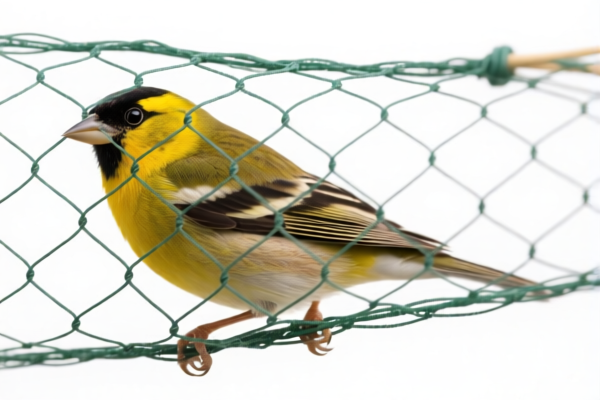
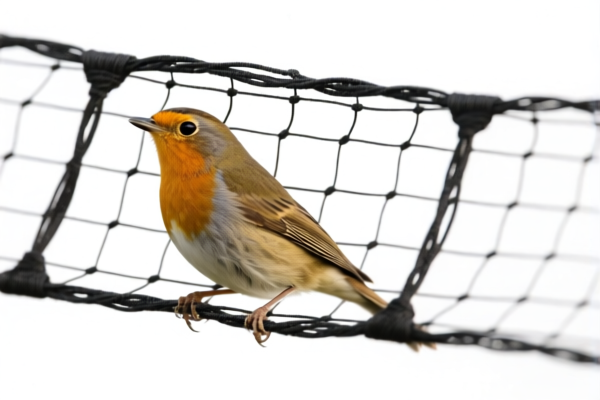


AI Analysis
🐦 Bird Catching Net: HS Code Classification & US Customs Clearance Guide (2026)
🌐 HS Code Reference & Customs Clearance Guide | 2026 Latest Tariff Analysis | Strategic通关 Strategy
📌 I. Product Definition & Classification: Do You Really Understand "Bird Catching Nets"?
A Bird Catching Net is a mesh barrier used in agriculture, aviation, and construction to prevent birds from damaging crops, hitting aircraft engines, or contaminating food processing areas. In international trade, the classification depends heavily on the material composition, as this determines whether it falls under "Metal Products" or "Textiles."
There are three primary HS Code pathways based on material inference: 1. Metal Nets: Iron/Steel wire meshes (most common for large-scale industrial/agricultural use). 2. Plastic/Textile Nets: Polyethylene (PE), Nylon, or synthetic fiber nets (common for lightweight or agricultural use).
⚠️ Key Distinction Point:
- If the net is made of welded metal wire → It is classified as a Metal Mesh/Fence (Chapter 73).
- If the net is made of knitted or crocheted synthetic fibers → It is classified as a Textile Net (Chapter 56).
- Do not guess: The material determines the HS Code, which drastically changes the tax burden.
📦 II. HS Code Classification Details (2026 Latest Tariff Authority Mapping)
| HS Code | Product Description | Applicable Material | Key Feature | Tax Rate (China Origin) |
|---|---|---|---|---|
7314.31.10.00 |
Welded Mesh / Wire Grating | Iron/Steel (Metal) | Welded at intersections; Metal material | 85.0% |
7314.39.00.00 |
Other Welded Mesh/Fences | Iron/Steel (Metal) | "Other" welded grids; Metal material | 85.0% |
5608.19.10.20 |
Nets of Textile Materials | Synthetic Fibers (PE/Nylon) | Made of artificial textile materials | 43.5% |
🔍 Critical Reminder:
- Metal Nets (7314 series) are subject to heavy punitive tariffs (Section 301/122).
- Textile Nets (5608 series) have a lower but still significant tariff burden.
- Misclassification Risk: Declaring a steel net as a plastic net to avoid taxes is considered fraud. Ensure your Bill of Materials (BOM) matches the declared HS Code.
💰 III. 2026 Latest Tariff Rate Breakdown (Including Additional Taxes)
✅ Applicable Country: United States (US)
✅ Origin: China (CN)
✅ Effective Time: Current policies (Section 301, Section 232/122, IEEPA)
🎯 1. 7314.31.10.00 & 7314.39.00.00 —— Metal Bird Nets (Welded Mesh)
This classification applies to nets made of iron, steel, or wire.
| Item | Content |
|---|---|
| Base Duty Rate | 0.0% (Ad Valorem) |
| Section 301 Additional Duty | +25.0% (Standard China tariffs) |
| Section 232/122 Additional Duty | +50.0% (Specific to Steel/Aluminum/Copper articles under certain conditions) |
| Total Tax Rate | 85.0% |
| Tax Calculation | CIF Value × 85% |
| De Minimis Exemption | ❌ Not Eligible (Deny De Minimis) |
| Legal Basis Path | USITC:7314.31.10.00 → FOOTNOTE:301.03.04 → Sec 232/122 |
📌 Explanation:
- "Base Duty 0%": The standard Most Favored Nation (MFN) rate for welded wire fabric is often low or zero.
- "Section 301 +25%": This is the standard punitive tariff on Chinese manufactured goods.
- "Section 232/122 +50%": This is the critical differentiator. Steel products (including wire mesh) are often hit with additional duties under national security provisions (Section 232) or specific trade acts (Section 122/Steel/Aluminum). This pushes the total to 85%.
- Result: Extremely high cost. Importers must factor in nearly double the CIF value in taxes.
🎯 2. 5608.19.10.20 —— Textile/Synthetic Bird Nets
This classification applies to nets made of polyethylene (PE), nylon, or other synthetic fibers.
| Item | Content |
|---|---|
| Base Duty Rate | 8.5% (Ad Valorem) |
| Section 301 Additional Duty | +25.0% (Standard China tariffs) |
| Section 232/122 Additional Duty | N/A (Not a steel/iron product) |
| Total Tax Rate | 43.5% |
| Tax Calculation | CIF Value × 43.5% |
| De Minimis Exemption | ❌ Not Eligible (Deny De Minimis) |
| Legal Basis Path | USITC:5608.19.10.20 → FOOTNOTE:301.03.04 |
📌 Explanation:
- "Base Duty 8.5%": Synthetic nets have a moderate base duty.
- "Section 301 +25%": Applies to almost all Chinese textile products as well.
- Total 43.5%: Significantly lower than metal nets, but still substantial.
- Strategic Insight: If the net can be legitimately made of synthetic materials (which is common for "anti-bird" nets), this HS Code offers a 41.5% tax savings compared to metal. However, you must prove the material is non-metallic.
🛠️ IV. Customs Clearance Practical Advice (Real-World Pitfall Avoidance)
✅ 1. Document Preparation Checklist (Mandatory)
| Document | Required? | Description |
|---|---|---|
| ✅ Product Specification Sheet | ✔️ | Must explicitly state Material Composition (e.g., "100% High-Density Polyethylene" or "Galvanized Steel Wire"). |
| ✅ Material Certificate | ✔️ | Third-party lab test report confirming material type. Crucial for proving 5608 vs 7314. |
| ✅ Product Photos (Clear Label) | ✔️ | Show the mesh structure. If it looks like wire, customs will suspect metal. |
| ✅ Commercial Invoice | ✔️ | Must describe the item accurately: "Anti-Bird Net, Synthetic Fiber" or "Welded Steel Wire Mesh." |
| ✅ Packing List | ✔️ | Detail net dimensions, weight, and quantity. |
| ✅ Customs Ruling (If Available) | ✔️ | If you have an Advance Ruling for your specific product, attach it. |
✅ 2. Declaration Strategy (Key Mnemonics)
🔥 "Material is King, Label is King, Fake it is Crime!"
| Scenario | Correct Declaration | Wrong Action | Consequence |
|---|---|---|---|
| Steel Wire Net | HS 7314.xxxx, Desc: "Welded Steel Wire Mesh for Bird Control" |
Labeling as "Plastic Net" | Seizure + Fine + Fraud Charge |
| PE/Nylon Net | HS 5608.19.10.20, Desc: "Synthetic Textile Anti-Bird Net" |
Labeling as "Steel Fence" | Higher Tax (85% instead of 43.5%) |
| Mixed Material | Disclose dominant material. If >50% metal, likely 7314. |
Ambiguous description | Customs Audit & Delay |
✅ 3. Special Handling Tips
| Situation | Handling Advice |
|---|---|
| OEM Custom Nets | Provide the buyer’s design spec. If the buyer specified "Steel," you cannot declare it as "Plastic." |
| Coated Wire Nets | Even if the wire is coated with PVC, if the core is steel, it is often still classified under Chapter 73 (Metal). Do not try to hide the metal core. |
| Small Samples | Even samples are subject to duty. Do not use "De Minimis" ($800) fraudulently for large shipments. |
| Agri vs. Industrial | The use case (agriculture vs. construction) matters less than the material. A steel net for a farm is still 7314. |
🌍 V. Global Market Comparison (2026 Update)
| Country/Region | Recommended HS Code | Estimated Duty (China Origin) | Notes |
|---|---|---|---|
| 🇺🇸 USA | 7314.31.10.00 (Metal) |
85.0% | Heavily penalized due to Steel/Aluminum tariffs. |
| 🇺🇸 USA | 5608.19.10.20 (Textile) |
43.5% | Lower option if material allows. |
| 🇨🇳 China | 7314.31.10.00 |
~5-10% | No Section 301/232. Lower cost for domestic/regional trade. |
| 🇪🇺 EU | 7314.31.10.00 |
~2.5-5% | No Section 301. Much cheaper in Europe. |
| 🇦🇺 Australia | 7314.31.10.00 |
~5% | Standard MFN rate. |
📌 Conclusion:
- USA is the most expensive market for bird nets due to Section 301 and Section 232/122 tariffs.
- Metal nets are disproportionately taxed in the US.
- Textile nets are a cost-effective alternative if the technical requirements allow.
📌 VI. Common Errors & Pitfalls (Blood & Tears Lessons)
❌ Error 1: Declaring a Galvanized Steel Net as "Plastic Coated Net" to get 43.5% instead of 85%.
👉 Consequence: Customs will inspect the sample, find the steel core, reclassify to 7314, and demand back taxes + penalties.
❌ Error 2: Ignoring the Section 232/122 clause.
👉 Consequence: Even if base duty is 0%, the 50% steel tariff applies. Many importers forget this and are shocked by the 85% total.
❌ Error 3: Vague descriptions like "Net" or "Fence."
👉 Consequence: Customs may apply the highest possible duty rate due to ambiguity, or hold the shipment for classification review.
✅ Correct Practice:
"Anti-Bird Net, Made of 100% High-Density Polyethylene (HDPE), UV Stabilized, Mesh Size 25mm, Roll Packing, For Agricultural Use."
(Ensure "HDPE" is clearly stated if claiming5608.)
🎯 VII. Conclusion: Professional Declaration, Save Costs, Avoid Risks!
🎯 Remember the Mnemonic:
🔹 "Metal is 85, Textile is 43.5."
🔹 "Steel Nets in US = 85% Tax. Plastic Nets = 43.5% Tax."
🔹 "Check your BOM, or pay the price."
📌 Pro Tip:
If you are importing metal bird nets to the US, consider:
1. Supply Chain Diversification: Source from non-China countries (e.g., Vietnam, Thailand) to avoid Section 301.
2. Product Redesign: Can the net be made of high-strength synthetic fibers instead of steel? This alone saves 41.5% in taxes.
3. Advance Ruling: Apply for a Customs Ruling (19 U.S.C. § 1625) to get a binding classification decision before shipping.
📣 Immediate Action:
📞 Consult a licensed customs broker.
📄 Provide Material Test Reports.
🚀 Do not guess. Precision in classification saves tens of thousands of dollars.
✨ Professional Clearance Starts with Accurate Classification!
💼 Your Cost Is Calculated Precisely!
Customer Reviews
About HS Code Classification
The Harmonized System (HS) is an internationally standardized nomenclature developed by the World Customs Organization (WCO) to classify traded products. Over 200 countries use the HS system as the basis for customs tariffs, trade statistics, and import/export regulations.
Each HS code follows a hierarchical structure:
- Chapter (2 digits) — Broad category of goods (e.g., Chapter 84: Machinery and Mechanical Appliances)
- Heading (4 digits) — More specific grouping within the chapter
- Subheading (6 digits) — Internationally standardized breakdown, used by all WCO member countries
- National subdivisions (8-10 digits) — Country-specific extensions for further classification, such as US HTSUS 10-digit codes
Correct HS code classification is essential for smooth customs clearance, accurate duty payment, and compliance with trade regulations. Misclassification can lead to customs delays, overpayment of duties, or penalties.
When importing from CN to US, the applicable tariff rates may include:
- Most-Favored-Nation (MFN) rate — The standard duty rate applied to WTO members
- General rate — Applied to countries without trade agreements
- Trade remedy duties — Additional tariffs such as Section 301 (anti-dumping), Section 232 (national security), or countervailing duties
The information provided on this page is for reference purposes only. For official classification, please consult with your local customs authority or a licensed customs broker.