Bird Net
CN → US| HS Code | Tariff Rate | Origin | Destination | Doc |
|---|---|---|---|---|
| 5608191020 | 43.5% | CN | US | Official Doc |
| 5608192010 | 40.0% | CN | US | Official Doc |
| 7314311000 | 85.0% | CN | US | Official Doc |
| 7314390000 | 85.0% | CN | US | Official Doc |
Product Images
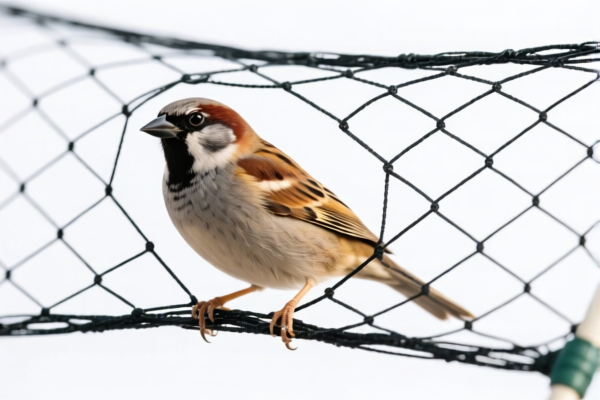

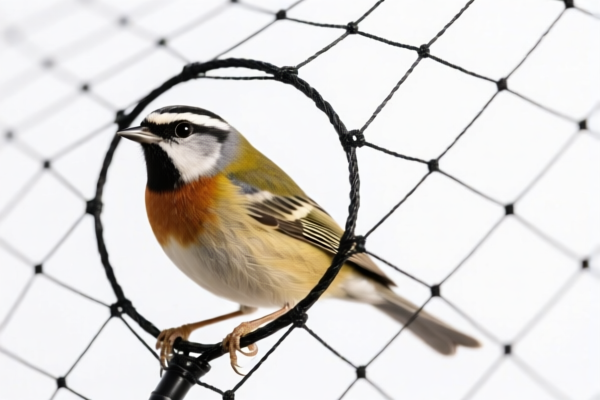

AI Analysis
🛡️ Bird Netting (Anti-Bird Nets)
🌐 HS Code Reference & Customs Clearance Guide | 2026 Latest Tariff Analysis | Professional Strategy for US Imports
📌 I. Product Definition & Classification: Understanding "Bird Netting"
Bird netting is an essential agricultural, industrial, and structural protection tool designed to prevent birds from damaging crops, contaminating food processing areas, or harming building facades. In international trade, classification depends strictly on material composition and form.
1. Synthetic Fiber Nets (Textile-Based):
Made from plastics like Polyethylene (PE) or Nylon. These are flexible, durable, and commonly used in agriculture (vineyards, orchards) and commercial buildings. They fall under Chapter 56.
2. Metal Mesh Nets:
Made from iron, steel, or wire. These are rigid or semi-rigid, often used in industrial enclosures or high-security areas. They fall under Chapter 73.
⚠️ Critical Distinction:
- If the net is made of PE/Nylon/Synthetic Fiber → It is a Textile/Plastic Product (HS 5608).
- If the net is made of Iron/Steel Wire → It is a Metal Product (HS 7314).
Misclassification here leads to massive tariff shocks (up to 85% vs. 40%)!
📦 II. HS Code Classification Details (2026 Latest Tariff Authority Mapping)
Based on the provided data, there are four specific HS Codes for Bird Nets entering the US from China.
| HS Code | Product Description | Material | Total Tax Rate |
|---|---|---|---|
5608.19.20.10 |
Bird Netting, Man-made Textile Material | PE / Nylon / Synthetic Fabric | 40.0% |
7314.31.10.00 |
Bird Netting, Metal (Iron/Wire) | Steel / Iron Wire Mesh | 85.0% |
7314.39.00.00 |
Bird Netting, Iron/Steel Wire, Anti-Bird Use | Steel / Iron Wire | 85.0% |
5608.19.10.20 |
Bird Netting, Polyethylene/Nylon | PE / Nylon Synthetic Fiber | 43.5% |
🔍 Key Insight:
- Metal Nets (7314) are subject to 85% total tax due to specific "Steel, Aluminum, Copper" surcharges.
- Synthetic Nets (5608) are subject to 40%–43.5% total tax, significantly lower than metal nets.
- Do not mix materials: A "steel-framed net with plastic mesh" might still be scrutinized as a composite product, but typically the primary material determines the code.
💰 III. 2026 Latest Tariff Rate Breakdown (Detailed Surcharge Analysis)
✅ Applicable Market: United States (US)
✅ Origin: China (CN)
✅ Effective Time: Current and subsequent imports (2025–2026)
🎯 1. Synthetic Bird Nets (5608.19.20.10 & 5608.19.10.20)
These codes apply to nets made of PE, Nylon, or other artificial textile materials.
| Item | Details |
|---|---|
| Base Tariff | 5.0% – 8.5% (Ad Valorem) |
| Section 301 Surcharge | +25.0% (Added tariffs on Chinese goods) |
| Section 122 Tariff | +10.0% (Specific provision for certain textile/textile products) |
| Steel/Aluminum Surcharge | ❌ Not Applicable (These are plastics/textiles) |
| Total Tax Rate | 40.0% (for 5608.19.20.10) 43.5% (for 5608.19.10.20) |
| Calculation | CIF Value × Total Rate |
| De Minimis Exemption | ❌ NO (Section 301 and 122 duties apply; no $800 exemption) |
| Legal Basis Path | USITC:5608.19 → Section 301: Footnote 9903.88.01 → Section 122: 10% |
📌 Explanation:
- The 25% is the standard Section 301 tariff on most Chinese imports.
- The 10% is a specific "Section 122" tariff often applied to certain textile-related categories.
- Total: 40% for some sub-codes, 43.5% for others depending on exact fiber composition.
🎯 2. Metal Bird Nets (7314.31.10.00 & 7314.39.00.00)
These codes apply to nets made of Iron or Steel.
| Item | Details |
|---|---|
| Base Tariff | 0.0% |
| Section 301 Surcharge | +25.0% |
| Section 122 Tariff | +10.0% |
| Steel/Aluminum/Copper Surcharge | +50.0% (Specific additional duty for steel/aluminum products) |
| Total Tax Rate | 85.0% |
| Calculation | CIF Value × 85% |
| De Minimis Exemption | ❌ NO |
| Legal Basis Path | USITC:7314.31/39 → Section 301 → Section 122 → Steel Surcharge: 50% |
📌 Explanation:
- This is the highest risk category.
- The 50% surcharge is triggered specifically because the product is classified as Steel/Iron.
- Total: 85% (0% base + 25% Sec 301 + 10% Sec 122 + 50% Steel Surcharge).
- This makes metal bird nets extremely expensive to import into the US.
🛠️ IV. Customs Clearance Practical Advice (Avoiding Pitfalls)
✅ 1. Documentation Checklist (Mandatory)
| Document | Required? | Notes |
|---|---|---|
| ✅ Commercial Invoice | ✔️ | Must clearly state "Bird Netting" and MATERIAL (e.g., "PE Net" or "Steel Wire Net"). |
| ✅ Packing List | ✔️ | Must match invoice. |
| ✅ Product Specification Sheet | ✔️ | Critical: Must specify material composition (e.g., "100% Polyethylene" or "Galvanized Steel Wire"). |
| ✅ Material Certificates | ✔️ | For metal nets, prove it's steel. For synthetic, prove it's PE/Nylon. |
| ✅ Country of Origin Certificate | ✔️ | Required for Section 301 and 122 application. |
| ✅ Photos of Product & Packaging | ✔️ | Show net texture, mesh size, and labeling. |
✅ 2. Classification Strategy (Key Tips)
🔥 "Check Material First, Then Apply Tax!"
| Scenario | Correct HS Code | Risk Level |
|---|---|---|
| Plastic/PE Netting | 5608.19.20.10 or 5608.19.10.20 |
⚠️ Moderate (40-43.5%) |
| Steel Wire Netting | 7314.31.10.00 or 7314.39.00.00 |
🚨 HIGH (85%) |
| Mixed Material (e.g., Steel Frame + Plastic Net) | ⚠️ Review Carefully | May be classified as metal if steel is primary structure. |
📌 Recommendation:
- If you are sourcing metal bird nets, consider cost-benefit analysis. An 85% tariff may destroy your margin.
- Consider switching to Synthetic Nets (PE/Nylon) if the application allows. The tax difference is ~40-45% less.
✅ 3. Common Mistakes & Pitfalls
❌ Mistake 1: Classifying Steel Nets as 5608 (Textiles) to avoid steel surcharges.
👉 Consequence: Customs audit will reclassify → Back taxes + Penalties + 85% liability.
❌ Mistake 2: Ignoring Section 122 (10%) in calculations.
👉 Consequence: Underpayment by 10% → Late fees and interest.
❌ Mistake 3: Declaring "Netting" without specifying Material.
👉 Consequence: Customs may detain shipment for clarification → Delays + Demurrage costs.
❌ Mistake 4: Assuming De Minimis ($800) applies.
👉 Consequence: NO exemption for Section 301/122 goods. Even small shipments are taxed.
🌍 V. Global Market Comparison (2026)
| Market | Recommended HS Code | Approx. Tax Rate (China Origin) | Notes |
|---|---|---|---|
| 🇺🇸 USA | 5608 (Synthetic) or 7314 (Metal) |
40%–85% | High due to Sec 301, 122, & Steel Surcharge. |
| 🇪🇺 EU | 5608 or 7314 |
~5–10% | No Section 301/122 equivalents. Lower cost. |
| 🇨🇳 China | 5608 or 7314 |
~5–15% | Import duties are lower; VAT 13% applies. |
| 🇲🇽 Mexico | 5608 or 7314 |
~0–5% | Under USMCA, may be duty-free if originating. |
📌 Conclusion:
- USA is the most expensive market for bird nets due to multiple layered tariffs.
- Synthetic nets (PE/Nylon) are significantly more cost-effective than metal nets for the US market.
📌 VI. Action Plan for Importers
- Confirm Material: Is your net PE/Nylon or Steel?
- Select Correct HS Code:
- Synthetic:
5608.19.20.10or5608.19.10.20→ 40-43.5% - Metal:
7314.31.10.00or7314.39.00.00→ 85% - Calculate Landed Cost: Include CIF + 40-85% Duty + Customs Broker Fees + Port Fees.
- Prepare Documentation: Ensure Material Composition is clearly stated in Invoice and Spec Sheet.
- Consider Alternatives: If metal nets are too expensive, switch to synthetic if functionally acceptable.
🎯 Final Tip:
"Material is King. Steel Nets = 85% Tax. Synthetic Nets = 40% Tax. Choose wisely!"
✨ Professional Customs Clearance Starts with Accurate Classification!
💼 Your Cost Efficiency Depends on the Right HS Code!
Customer Reviews
About HS Code Classification
The Harmonized System (HS) is an internationally standardized nomenclature developed by the World Customs Organization (WCO) to classify traded products. Over 200 countries use the HS system as the basis for customs tariffs, trade statistics, and import/export regulations.
Each HS code follows a hierarchical structure:
- Chapter (2 digits) — Broad category of goods (e.g., Chapter 84: Machinery and Mechanical Appliances)
- Heading (4 digits) — More specific grouping within the chapter
- Subheading (6 digits) — Internationally standardized breakdown, used by all WCO member countries
- National subdivisions (8-10 digits) — Country-specific extensions for further classification, such as US HTSUS 10-digit codes
Correct HS code classification is essential for smooth customs clearance, accurate duty payment, and compliance with trade regulations. Misclassification can lead to customs delays, overpayment of duties, or penalties.
When importing from CN to US, the applicable tariff rates may include:
- Most-Favored-Nation (MFN) rate — The standard duty rate applied to WTO members
- General rate — Applied to countries without trade agreements
- Trade remedy duties — Additional tariffs such as Section 301 (anti-dumping), Section 232 (national security), or countervailing duties
The information provided on this page is for reference purposes only. For official classification, please consult with your local customs authority or a licensed customs broker.