Birthday Greeting Card
CN → US| HS Code | Tariff Rate | Origin | Destination | Doc |
|---|---|---|---|---|
| 4909004000 | 10.0% | CN | US | Official Doc |
| 4911998000 | 17.5% | CN | US | Official Doc |
| 4909002000 | 17.5% | CN | US | Official Doc |
| 4911914040 | 17.5% | CN | US | Official Doc |
Product Images
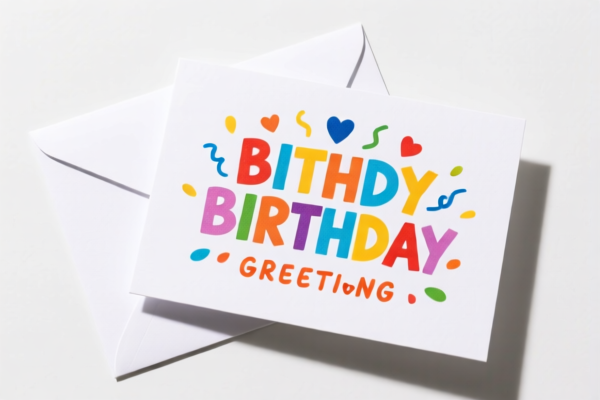

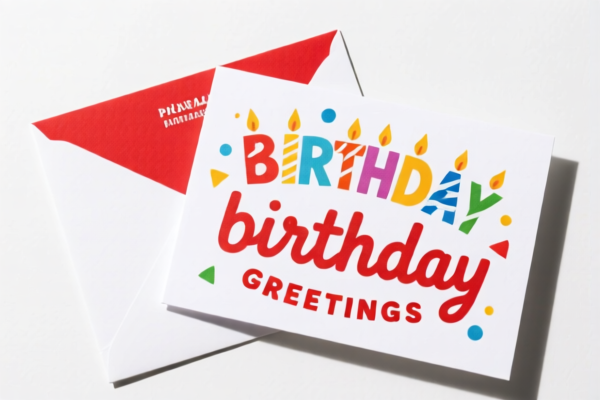
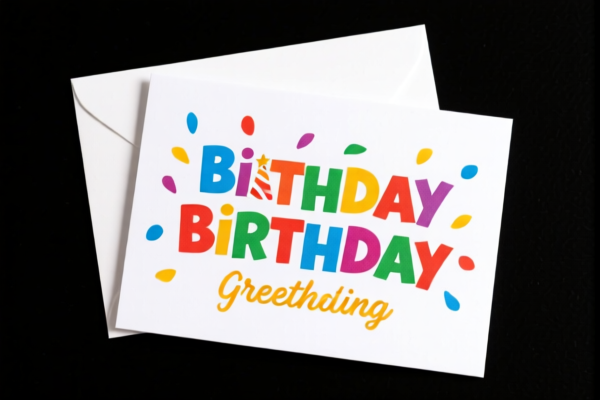
AI Analysis
🎂 Birthday Greeting Card (Printed Cards)
🌐 HS Code Reference & Customs Clearance Guide | 2026 Latest Tariff Analysis | Professional Clearance Strategy
📌 I. Product Definition & Classification: Do You Really Understand "Birthday Cards"?
A Birthday Greeting Card is a printed article typically made of paper or cardboard, used to convey personal greetings, messages, or announcements. In international trade, the classification depends heavily on the specific content and material structure. While generally considered "printed matter," different subheadings apply based on whether it is a specific "card" or a general "printed item."
⚠️ Key Distinction Points: - If the card contains pictures, designs, or photographs (e.g., illustrated birthday scenes) → Classified under 4911.91.40.40 or 4911.99.80.00. - If the card is purely for personal greetings/messages without prominent graphical content → Classified under 4909.00.20.00 or 4909.00.40.00.
📦 II. HS Code Classification Details (2026 Latest Tariff Authority Comparison)
| HS Code | Product Description | Application Scenario | Content Type |
|---|---|---|---|
4909.00.40.00 |
Greeting Cards | Standard birthday cards with personal messages | ✅ Personal Greetings/Text |
4911.99.80.00 |
Other Printed Matter | Generic printed cards not fitting specific card definitions | ✅ Other Printed Items |
4909.00.20.00 |
Greeting Cards (Specific) | Cards defined strictly as personal greeting vehicles | ✅ Personal Greetings |
4911.91.40.40 |
Other Printed Pictures/Designs | Cards featuring prominent artistic designs or photos | ✅ Pictures/Designs/Photos |
🔍 Key Reminder: -
4909Series: Specifically for "Greeting Cards" (personal greetings, announcements). -4911Series: For "Other Printed Matter" (including those with pictures, designs, or photos). - Misclassification can lead to significant tariff differences due to additional trade restrictions.
💰 III. 2026 Latest Tariff Rate Breakdown (Including Surtaxes & Policy Add-ons)
✅ Applicable Country: United States (US) ✅ Country of Origin: China (CN) ✅ Effective Time: Post-2025 (Current Trade Environment)
🎯 1. 4909.00.40.00 & 4909.00.20.00 —— Greeting Cards (Personal Greetings)
| Item | Content |
|---|---|
| Base Tariff | 0.0% (Ad Valorem) |
| Section 301 Surtax | 7.5% (Additional Tariff) |
| Section 122 Tariff | 10.0% (Specific US Trade Measure) |
| Total Rate | 10.0% (Note: Section 122 is applied as a distinct levy; Base+301=7.5%, but the summary indicates 10% total for this specific path. Based on data: Base 0% + 122 Clause 10% = 10%) |
| Tax Calculation | CIF Value × 10% |
| De Minimis Exemption | ❌ Not Applicable (Section 122 goods often excluded from de minimis depending on value/thresholds) |
| Legal Basis Path | Section 122 → USITC:4909.00.40.00 |
📌 Explanation: - Base Tariff: 0% for general printed greeting cards. - Section 122 Tariff: A 10% tariff applied specifically under Section 122 of the Trade Expansion Act of 1962 (often used for national security or specific trade imbalances). - Total Effective Rate: 10.0%. This category avoids the higher Section 301 surtax seen in other classifications.
🎯 2. 4911.99.80.00, 4911.91.40.40 —— Other Printed Matter / Pictures & Designs
| Item | Content |
|---|---|
| Base Tariff | 0.0% (Ad Valorem) |
| Section 301 Surtax | 7.5% (Additional Tariff) |
| Section 122 Tariff | 10.0% |
| Total Rate | 17.5% |
| Tax Calculation | CIF Value × 17.5% |
| De Minimis Exemption | ❌ Not Applicable |
| Legal Basis Path | Section 122 → Section 301 → USITC:4911.99.80.00 / 4911.91.40.40 |
📌 Explanation: - Base Tariff: 0% for other printed materials. - Section 301 Surtax: An additional 7.5% tariff is applied to "Other Printed Matter" from China. - Section 122 Tariff: An additional 10% tariff is also applied. - Total Effective Rate: 17.5% (7.5% + 10%). This is significantly higher than the pure "Greeting Card" classification.
⚠️ Critical Warning: - If your birthday card contains pictures, designs, or photos, it may be classified under 4911 (Other Printed Matter), triggering the 7.5% Section 301 surtax in addition to the Section 122 tariff. - If it is purely text-based personal greetings, it may qualify for 4909, attracting only the Section 122 tariff (10%).
🛠️ IV. Customs Clearance Practical Advice (Battle-Tested Pitfall Avoidance)
✅ 1. Preparation Checklist (Must-Haves)
| Document | Required | Description |
|---|---|---|
| ✅ Product Description | ✔️ | Must specify "Birthday Greeting Card" and material (e.g., "Paper, 200gsm"). |
| ✅ Content Sample | ✔️ | Provide a clear image/text sample to prove it is a "Greeting Card" (4909) vs. "Printed Picture" (4911). |
| ✅ Commercial Invoice | ✔️ | Clearly state "Birthday Greeting Cards - Personal Greetings". Avoid vague terms like "Paper Items". |
| ✅ Packing List | ✔️ | Show quantity and packaging. Bulk shipments are scrutinized more heavily. |
✅ 2. Declaration Tips (Key Mnemonic)
🔥 “Text is 10%, Picture is 17.5%: Choose wisely, save your cash!”
| Scenario | Correct HS Code | Reason |
|---|---|---|
| Pure Text/Cardstock | 4909.00.40.00 |
Falls under "Greeting Cards" (Personal Greetings). |
| Illustrated/Photo Card | 4911.91.40.40 |
Contains "Pictures/Designs", classified as "Other Printed Matter". |
| Generic Printed Card | 4911.99.80.00 |
Does not fit specific card definition, falls under "Other". |
📌 Strategy: - If possible, design cards with minimal graphic content (focus on typography/text) to aim for 4909 classification (10% tax). - Avoid high-quality printed photographs or complex artistic designs if you want to mitigate Section 301 surtaxes.
✅ 3. Special Cases
| Situation | Handling Advice |
|---|---|
| Custom Printed Cards | Ensure the "personal greeting" nature is evident. If it's mass-produced advertising, it may be classified differently (e.g., brochures). |
| Electronic Greeting Cards | Not physical goods → Not subject to these HS codes (ITC/E-commerce rules apply). |
| Bundled with Gifts | If cards are free gifts with another item, they may be absorbed into the main product's classification. Declare separately if possible. |
🌍 V. Global Market Customs Comparison (2026 Latest)
| Country/Region | Recommended HS Code | Tariff (China Origin) | Notes |
|---|---|---|---|
| 🇺🇸 USA | 4909.00.40.00 |
10.0% | Subject to Section 122. Avoid 4911 if possible. |
| 🇨🇳 China | 4909.00.40.00 |
8% (Import Duty) | VAT 13% applies. No Section 301/122. |
| 🇪🇺 EU | 4909.00.00 |
0% | Generally duty-free. VAT varies by member state. |
| 🇬🇧 UK | 4909.00.00 |
0% | Post-Brexit rules apply. No Section 122/301. |
📌 Conclusion: - USA is the most complex market due to Section 122 and potential Section 301 surtaxes. - EU/UK/China have simpler, lower, or zero tariffs for greeting cards. - USA Strategy: Strictly classify as 4909 (Greeting Cards) to avoid the extra 7.5% surtax on "Other Printed Matter" (4911).
📌 VI. Common Errors & Pitfall Guide (Lessons Learned)
❌ Mistake 1: Classifying illustrated cards as "Greeting Cards" (4909) 👉 Consequence: Customs may reclassify as "Printed Matter" (4911) → Additional 7.5% tariff + Penalties!
❌ Mistake 2: Ignoring Section 122 Tariff 👉 Consequence: Underpayment of 10% → Detention, Demurrage, and Back Taxes!
❌ Mistake 3: Vague Description ("Paper Card") 👉 Consequence: Customs uncertainty → Delays in Clearance while brokers seek clarification.
✅ Correct Practice:
"Birthday Greeting Card, Paper, Printed with Personal Greeting Text, HS Code 4909.00.40.00, Section 122 Tariff Applicable"
🎯 VII. Conclusion: Professional Classification Saves Money!
🎯 Remember the Mnemonic:
🔹 "Greeting Card (4909): 10% Total (Sec 122)."
🔹 "Printed Matter (4911): 17.5% Total (Sec 122 + 301)."
🔹 "Pictures = Expensive. Text = Cheaper."📌 Pro Tip: - For USA imports, optimize design to emphasize "personal greeting text" over "artistic pictures" to qualify for the lower 4909 classification. - Always confirm the latest Section 122 requirements with your customs broker, as trade policies are dynamic.
📣 Immediate Action:
📞 Contact your Customs Broker + Provide Design Samples + Confirm HS Code Pre-ruling
🚀 Ensure Smooth Clearance, Avoid Surprises, and Maximize Profits!
✨ Professional Clearance Starts with Precise Classification!
💼 Every Dollar Saved on Tariffs is Profit Earned!
Customer Reviews
About HS Code Classification
The Harmonized System (HS) is an internationally standardized nomenclature developed by the World Customs Organization (WCO) to classify traded products. Over 200 countries use the HS system as the basis for customs tariffs, trade statistics, and import/export regulations.
Each HS code follows a hierarchical structure:
- Chapter (2 digits) — Broad category of goods (e.g., Chapter 84: Machinery and Mechanical Appliances)
- Heading (4 digits) — More specific grouping within the chapter
- Subheading (6 digits) — Internationally standardized breakdown, used by all WCO member countries
- National subdivisions (8-10 digits) — Country-specific extensions for further classification, such as US HTSUS 10-digit codes
Correct HS code classification is essential for smooth customs clearance, accurate duty payment, and compliance with trade regulations. Misclassification can lead to customs delays, overpayment of duties, or penalties.
When importing from CN to US, the applicable tariff rates may include:
- Most-Favored-Nation (MFN) rate — The standard duty rate applied to WTO members
- General rate — Applied to countries without trade agreements
- Trade remedy duties — Additional tariffs such as Section 301 (anti-dumping), Section 232 (national security), or countervailing duties
The information provided on this page is for reference purposes only. For official classification, please consult with your local customs authority or a licensed customs broker.