Birthday Party Tableware Set
CN → US| HS Code | Tariff Rate | Origin | Destination | Doc |
|---|---|---|---|---|
| 3924905650 | 20.9% | CN | US | Official Doc |
| 9605000000 | 18.1% | CN | US | Official Doc |
| 3924102000 | 24.0% | CN | US | Official Doc |
| 6911108010 | 38.3% | CN | US | Official Doc |
| 6912002000 | 38.0% | CN | US | Official Doc |
Product Images
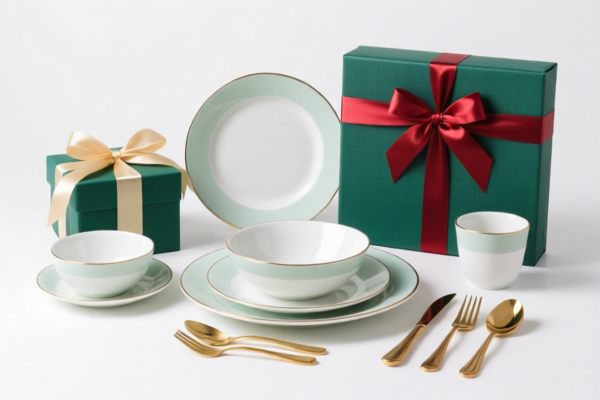
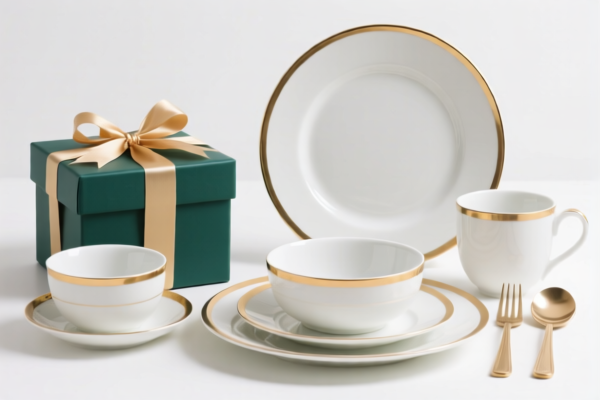
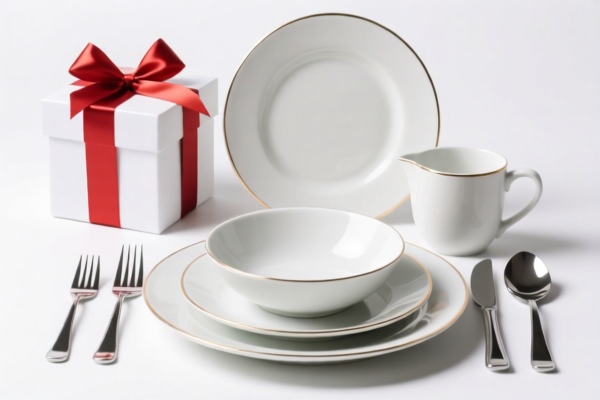

AI Analysis
🎉 Birthday Party Tableware Set (Plastic/Ceramic Mix & Personal Kits)
🌐 HS Code Reference & Clearance Guide | 2026 Latest Tariff Analysis | Professional Customs Strategy
📌 I. Product Definition & Classification: What Exactly is a "Party Set"?
A Birthday Party Tableware Set is not a single, unified commodity in international trade. It is a "mixed set" that can fall into vastly different categories depending on its primary material, use case, and physical form. In customs valuation, the principle of essential character applies: the component that gives the set its identity determines the HS Code.
Key Variants: 1. Plastic Household Items: If the set primarily consists of plastic plates, cups, and decorations, it is classified under plastic household articles. 2. Travel/Personal Kits: If the set is packed as a portable "party kit" (like a personal hygiene or sewing kit but for parties), it may fall under miscellaneous personal goods. 3. Tableware (Plastic/Paper): If defined strictly as "tableware" (dishes/cutlery) for food service, it falls under specific tableware headings. 4. Ceramic/Porcelain Ware: If the set contains ceramic plates or mugs, even if mixed with plastic, the ceramic component often dictates the classification.
⚠️ Critical Distinction:
- If the set is predominantly plastic decorative or household items → 3924.90.56.50
- If the set is a portable kit for celebration (non-food specific) → 9605.00.00.00
- If the set is explicitly tableware (for eating/drinking) made of plastic/paper → 3924.10.20.00
- If the set contains ceramic tableware → 6911.10.80.10 or 6912.00.20.00
📦 II. HS Code Classification Details (2026 Latest Tariff Authority Comparison)
| HS Code | Product Description | Applicability | Material/Use Inference |
|---|---|---|---|
3924.90.56.50 |
Other plastic household articles, including decorations | Home use, decoration, plastic utensils | ✅ Plastic household items/decorations |
9605.00.00.00 |
Travel, personal, or toilet size sewing, cleaning, or shaving kits | Portable party kits, personal celebration sets | ✅ Personal/Travel kit category |
3924.10.20.00 |
Tableware and kitchenware of plastic | Eating/drinking, disposable/home use | ✅ Plastic Tableware |
6911.10.80.10 |
Ceramic tableware, kitchen articles, other articles of a kind used for table or kitchen purposes | Ceramic plates, mugs, food-contact ceramic | ✅ Ceramic Tableware |
6912.00.20.00 |
Other tableware, kitchenware, other articles of a kind used for table or kitchen purposes, of other ceramics | Non-porcelain ceramic or mixed ceramic items | ✅ Other Ceramic Tableware |
🔍 Key Reminder:
- "Tableware" vs. "Household Article": If the item is used for serving/eating food (plates, cups), it often falls under 3924.10 (Plastic) or 6911/6912 (Ceramic). If it is used for decoration or general household utility, it may fall under 3924.90. - "Kit" Classification: If the product is sold as a "Birthday Party Kit" containing mixed items (e.g., napkins, small plastic cutlery, candles), and it is packaged for personal/travel use, 9605.00.00.00 might be argued, but this is risky if the dominant component is tableware. - Ceramic Dominance: If the set includes ceramic plates, 6911 or 6912 usually applies, leading to higher tariffs.
💰 III. 2026 Latest Tariff Rate Breakdown (Including Surcharge & Policy Add-ons)
✅ Applicable Country: United States (US)
✅ Origin: China (CN)
✅ Effective Time: 2025 November 10 onwards (including subsequent imports)
🎯 1. 3924.90.56.50 — Other Plastic Household Articles (Decorations/General)
| Item | Content |
|---|---|
| Base Duty Rate | 3.4% (ad valorem) |
| USITC Surcharge | +7.5% (Section 301 / 122 Clause) |
| IEEPA Surcharge | +10% (China-specific additional tariff) |
| Total Tax Rate | 20.9% |
| Tax Calculation | CIF Value × 20.9% |
| De Minimis Eligibility | ❌ Not Eligible (Deny de minimis) |
| Legal Authority Path | Base: 3.4% → USITC 122: 7.5% → IEEPA: 10% |
📌 Explanation:
- This code is for plastic household items that are not strictly tableware or have mixed uses. - Total 20.9% is moderate compared to ceramic options. - Warning: If declared as "Tableware" instead, the rate jumps to 24%.
🎯 2. 9605.00.00.00 — Travel/Personal Sets (Party Kits)
| Item | Content |
|---|---|
| Base Duty Rate | 8.1% (ad valorem) |
| USITC Surcharge | 0.0% (No Section 301 surcharge for this specific subheading in some contexts, but check latest rulings) |
| IEEPA Surcharge | +10% (China-specific additional tariff) |
| Total Tax Rate | 18.1% |
| Tax Calculation | CIF Value × 18.1% |
| De Minimis Eligibility | ❌ Not Eligible |
| Legal Authority Path | Base: 8.1% → IEEPA: 10% |
📌 Explanation:
- This is the lowest total tariff (18.1%) if the product can be legally classified as a "personal/travel kit" rather than tableware. - Risk: Customs may reclassify this as tableware (3924.10) if the primary use is clearly eating/drinking. - Strategy: Use this if the kit is marketed as a "Party Celebration Kit" with non-essential items, but ensure documentation supports "personal/travel" use.
🎯 3. 3924.10.20.00 — Plastic Tableware (Dishes/Cups)
| Item | Content |
|---|---|
| Base Duty Rate | 6.5% (ad valorem) |
| USITC Surcharge | +7.5% (Section 301 / 122 Clause) |
| IEEPA Surcharge | +10% (China-specific additional tariff) |
| Total Tax Rate | 24.0% |
| Tax Calculation | CIF Value × 24.0% |
| De Minimis Eligibility | ❌ Not Eligible |
| Legal Authority Path | Base: 6.5% → USITC 122: 7.5% → IEEPA: 10% |
📌 Explanation:
- This is the standard classification for plastic plates, cups, and cutlery. - Total 24.0% is the most common rate for genuine plastic party tableware. - Justification: Must prove items are "tableware" (used for serving/consuming food).
🎯 4. 6911.10.80.10 — Ceramic Tableware (Porcelain/Ceramic)
| Item | Content |
|---|---|
| Base Duty Rate | 20.8% (ad valorem) |
| USITC Surcharge | +7.5% (Section 301 / 122 Clause) |
| IEEPA Surcharge | +10% (China-specific additional tariff) |
| Total Tax Rate | 38.3% |
| Tax Calculation | CIF Value × 38.3% |
| De Minimis Eligibility | ❌ Not Eligible |
| Legal Authority Path | Base: 20.8% → USITC 122: 7.5% → IEEPA: 10% |
📌 Explanation:
- High Cost Alert: If your party set contains ceramic plates or mugs, the tariff jumps significantly. - Justification: Items used for table or kitchen purposes made of porcelain or other ceramics.
🎯 5. 6912.00.20.00 — Other Ceramic Tableware (Non-Porcelain)
| Item | Content |
|---|---|
| Base Duty Rate | 28.0% (ad valorem) |
| USITC Surcharge | 0.0% (Note: No surcharge for this specific subheading in some data sets) |
| IEEPA Surcharge | +10% (China-specific additional tariff) |
| Total Tax Rate | 38.0% |
| Tax Calculation | CIF Value × 38.0% |
| De Minimis Eligibility | ❌ Not Eligible |
| Legal Authority Path | Base: 28.0% → IEEPA: 10% |
📌 Explanation:
- Similar to above, but for non-porcelain ceramic or mixed ceramic items. - Base rate is very high (28%), but no Section 301 surcharge in this specific data snapshot. - Risk: Still one of the highest tax brackets for party sets.
🛠️ IV. Customs Clearance Practical Advice (Battle-Tested Pitfall Guide)
✅ 1. Document Checklist (Missing Any = Delay/Reject)
| Document | Required | Description |
|---|---|---|
| ✅ Product Specification Sheet | ✔️ | Must detail material (Plastic/Ceramic), composition %, and usage. |
| ✅ Product Photos (Labeled) | ✔️ | Show all items in the set. Highlight if items are "disposable" or "reusable". |
| ✅ Material Declaration | ✔️ | Explicitly state: "80% Plastic, 20% Paper" or "All Plastic". |
| ✅ Commercial Invoice | ✔️ | Description must match HS Code logic (e.g., "Plastic Tableware Set" not just "Party Gift"). |
| ✅ Packing List | ✔️ | List individual items. If mixed, specify quantity of each. |
| ✅ Usage Statement | ✔️ | "For serving food" (Tableware) vs. "For decoration" (Household Article). |
✅ 2. Declaration Strategy (Key Mantras)
🔥 “Material First, Use Second, Kit is Risky, Ceramic is Expensive!”
| Scenario | Correct Declaration | Wrong Practice | Consequence |
|---|---|---|---|
| All Plastic Plates/Cups | 3924.10.20.00 (Tableware) |
Declaring as 3924.90 (Household) |
Risk of reclassification & penalty. |
| Plastic + Paper Napkins | 3924.10.20.00 (if plastic dominates) |
Splitting shipment | Higher compliance cost. |
| Portable Party Kit (Mix) | 9605.00.00.00 (If justified as personal kit) |
Declaring as 3924.10 |
If rejected, pay 24% + penalty. |
| Ceramic Plates Included | 6911.10.80.10 |
Hiding ceramic items | 38.3% Tax + Fraud Penalty. |
| Decorative Plastic Items | 3924.90.56.50 |
Declaring as Tableware | Pay 24% instead of 20.9%. |
✅ 3. Special Cases Handling
| Situation | Handling Advice |
|---|---|
| Mixed Material Set (Plastic + Paper) | If plastic is >50% by value/volume, classify as Plastic Tableware (3924.10). |
| "Biodegradable" Plastic | Still classified as Plastic (3924.10 or 3924.90) unless it meets specific bioplastic definitions. No tariff benefit currently. |
| Single-Use Party Kit | If packaged as a single unit for a specific event, argue for 9605 if possible, but 3924 is safer for food-contact items. |
| Ceramic + Plastic Mix | If ceramic is present, customs will likely classify the entire set as Ceramic (6911/6912) due to essential character. |
🌍 V. Global Market Comparison (2026 Latest)
| Country/Region | Recommended HS Code | Tariff (China Origin) | Key Certifications | Notes |
|---|---|---|---|---|
| 🇺🇸 USA | 3924.10.20.00 |
24.0% (Plastic Tableware) | FDA Contact Compliance | Highest risk for misclassification. |
| 🇨🇳 China | 3924.10.20.00 |
6.5% (Base) | None | Low import duty, no surcharge. |
| 🇪🇺 EU | 3924.10.20.00 |
6.5% (Base) | LFGB, FDA, CE | No Section 301 or IEEPA. |
| 🇬🇧 UK | 3924.10.20.00 |
6.5% (Base) | UKCA, LFGB | Post-Brexit rules apply. |
| 🇦🇺 Australia | 3924.10.20.00 |
5.0% (Base) | TGA (if food contact) | Low duty, no surcharge. |
📌 Conclusion:
- USA is the most expensive market due to 122 Clause (7.5%) and IEEPA (10%). - EU/UK/Australia are significantly cheaper (only base duty). - Strategy for US: Avoid Ceramic (39xx) if possible. Prefer Plastic Tableware (3924.10) over Household Articles if usage is clearly food-related.
📌 VI. Common Errors & Pitfall Guide (Lessons Learned)
❌ Error 1: Declaring "Party Set" as 9605 (Travel Kit) when it's clearly plastic tableware.
👉 Result: Customs rejects, reclassifies to 3924.10 (24%) → Back taxes + Penalties.
❌ Error 2: Using 3924.90 (Household) for plastic plates.
👉 Result: Underpayment. Correct rate is 3924.10 (24% vs 20.9%). Small difference, but compliance risk.
❌ Error 3: Hiding ceramic items in a mixed set.
👉 Result: 38.3% Tax applied to entire set value. Avoid at all costs.
❌ Error 4: Not specifying "Food Contact" in description.
👉 Result: Delayed clearance for FDA compliance check.
✅ Correct Practice:
"Plastic Birthday Party Tableware Set, including plates, cups, and napkins. Material: PP Plastic. Intended for food service."
🎯 VII. Conclusion: Professional Declaration, Save Cost, Ensure Clearance!
🎯 Remember the Mantra:
🔹 "Plastic Tableware: 24%. Household Plastic: 20.9%. Ceramic: 38%+. Travel Kit: 18.1% (Risky)."
🔹 "HS Code Defines Tax. 5% Difference is Huge. Misclassification is Pain."
📌 Pro Tip:
If your product is 100% plastic and for food service, stick to 3924.10.20.00 (24.0%). It is the most defensible and standard classification.
If you can exclude ceramic and market as a "decoration kit" (non-food), try 3924.90.56.50 (20.9%) for slight savings.
Never use 9605 for obvious tableware unless you have a strong legal argument for "personal kit" status.
📣 Immediate Action:
📞 Consult with a US Customs Broker + Provide Material Breakdown + Get Advance Ruling if shipment value is high.
🚀 Clear Customs Smoothly, Reduce Costs, Boost Margins!
✨ Professional Clearance Starts with Accurate Classification!
💼 Every Percent of Duty Saved is Pure Profit!
Customer Reviews
About HS Code Classification
The Harmonized System (HS) is an internationally standardized nomenclature developed by the World Customs Organization (WCO) to classify traded products. Over 200 countries use the HS system as the basis for customs tariffs, trade statistics, and import/export regulations.
Each HS code follows a hierarchical structure:
- Chapter (2 digits) — Broad category of goods (e.g., Chapter 84: Machinery and Mechanical Appliances)
- Heading (4 digits) — More specific grouping within the chapter
- Subheading (6 digits) — Internationally standardized breakdown, used by all WCO member countries
- National subdivisions (8-10 digits) — Country-specific extensions for further classification, such as US HTSUS 10-digit codes
Correct HS code classification is essential for smooth customs clearance, accurate duty payment, and compliance with trade regulations. Misclassification can lead to customs delays, overpayment of duties, or penalties.
When importing from CN to US, the applicable tariff rates may include:
- Most-Favored-Nation (MFN) rate — The standard duty rate applied to WTO members
- General rate — Applied to countries without trade agreements
- Trade remedy duties — Additional tariffs such as Section 301 (anti-dumping), Section 232 (national security), or countervailing duties
The information provided on this page is for reference purposes only. For official classification, please consult with your local customs authority or a licensed customs broker.