Biscuit Machine
CN → US| HS Code | Tariff Rate | Origin | Destination | Doc |
|---|---|---|---|---|
| 8438100010 | 17.5% | CN | US | Official Doc |
| 8438100090 | 17.5% | CN | US | Official Doc |
Product Images
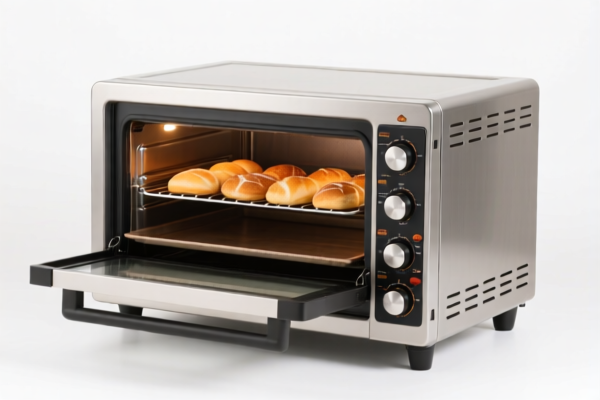
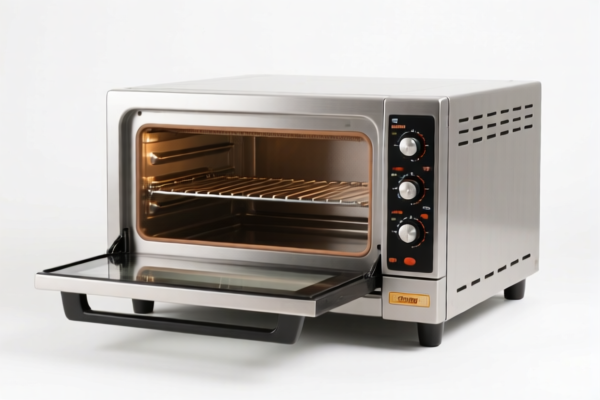
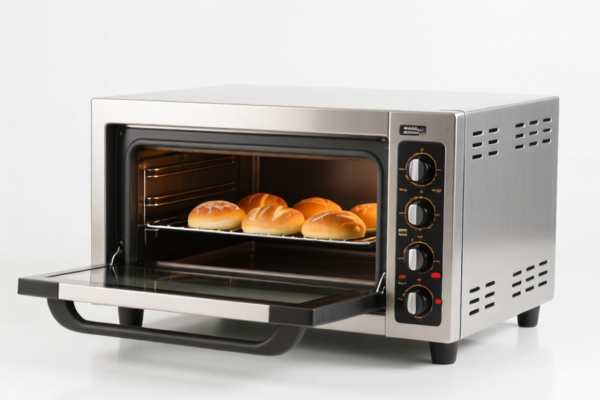
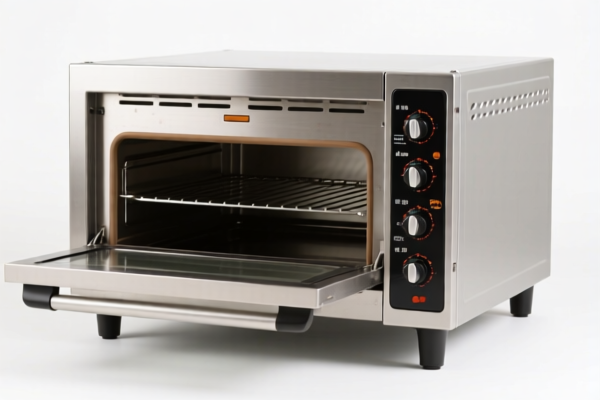
AI Analysis
🥐🍪 Industrial Bakery Machinery (Biscuit & Macaroni Production Equipment)
🌐 HS Code Reference & Customs Clearance Guide | 2026 Latest Tariff Analysis | Professional Clearance Strategy
📌 I. Product Definition & Classification: What Exactly Is a "Biscuit Machine"?
In the world of industrial food processing, a "Biscuit Machine" is not a single item but a category of specialized machinery for the industrial preparation or manufacture of food or drink. Specifically, it falls under Chapter 84, heading 8438.
These machines are designed for high-volume production and typically include functions such as mixing, dough rolling, cutting/shaping, and baking. However, for customs classification purposes, we must distinguish between:
- Bakery Machinery (Specifically Biscuits/Cookies): Equipment dedicated to producing biscuits, cookies, wafers, or similar baked goods.
- Other Food Machinery: Equipment that may produce biscuits but is not specifically categorized under "Bakery Machinery" (e.g., general mixers or conveyors if not part of a complete line), or machinery for other products like pasta/macaroni.
⚠️ Critical Distinction Point:
- If the machine is specifically designed for making biscuits, cookies, or wafers → It falls under 8438.10.10 (Bakery Machinery).
- If the machine is a general-purpose food processor or used for other products (like macaroni) but not explicitly "bakery" in the statutory sense → It may fall under 8438.10.90 (Other).
- Exclusion: Machinery for extracting/preparing animal or vegetable fats/oils is excluded (Chapter 15).
📦 II. HS Code Classification Details (2026 Latest Tariff Authority Comparison)
Based on the provided dataset, here are the two relevant HS codes for biscuit-related machinery:
| HS Code | Product Description | Applicable Scenario | Key Characteristics |
|---|---|---|---|
8438.10.00.10 |
Bakery Machinery and Machinery for the Manufacture of Macaroni, Spaghetti or Similar Products: Bakery Machinery | Dedicated biscuit/cookie production lines, oven lines, dough sheeters for bakeries, cookie cutters, wafer makers. | ✅ Specific: Designed primarily for bakery products (biscuits, cookies, wafers). |
8438.10.00.90 |
Bakery Machinery and Machinery for the Manufacture of Macaroni, Spaghetti or Similar Products: Other | General food preparation machinery not explicitly defined as "bakery machinery" or "macaroni machinery." This is the "residual" category for food machinery under this subheading. | ❌ General/Other: Used when the machine does not fit the specific definition of "Bakery Machinery" under .10, or for other food processes. |
🔍 Key Reminder:
- The description for8438.10.00.10explicitly includes "Bakery Machinery".
- The description for8438.10.00.90is "Other", implying any food machinery under heading 8438 that is not bakery machinery or macaroni machinery.
- Most dedicated Biscuit Machines will fall under 8438.10.00.10 because biscuits are a primary bakery product.
💰 III. 2026 Latest Tariff Rate Breakdown (Detailed Tax Explanation)
✅ Applicable Country: United States (US)
✅ Origin: China (CN)
✅ Effective Date: Current tariff structure applies.
🎯 1. 8438.10.00.10 —— Bakery Machinery (Dedicated Biscuit/Cookie Machines)
| Item | Detail |
|---|---|
| Base Tariff Rate | 0.0% (Ad Valorem) |
| Section 301 Additional Tariff | +7.5% |
| Total Tax Rate | 7.5% |
| Tax Calculation | CIF Value × 7.5% |
| De Minimis Eligibility | ❌ Not Applicable (Industrial machinery generally exceeds de minimis thresholds or is subject to specific exclusions). |
| Legal Basis Path | HTSUS:8438.10.00.10 → Section 301 Footnote: 8438.10.00.10 |
📌 Explanation:
- Base Rate 0%: Industrial food processing machinery often benefits from low base tariffs under the Harmonized Tariff Schedule (HTSUS) to support US manufacturing capacity.
- Section 301 Tariff 7.5%: This is a significant additional tariff imposed on Chinese-origin goods under the 301 Trade Action.
- Total Cost Impact: While the base rate is low, the 7.5% surcharge is mandatory for Chinese-origin biscuit machines. This is a critical cost factor in your landed cost calculation.
🎯 2. 8438.10.00.90 —— Other Food Machinery (General/Broader Category)
| Item | Detail |
|---|---|
| Base Tariff Rate | 0.0% (Ad Valorem) |
| Section 301 Additional Tariff | +7.5% |
| Total Tax Rate | 7.5% |
| Tax Calculation | CIF Value × 7.5% |
| De Minimis Eligibility | ❌ Not Applicable |
| Legal Basis Path | HTSUS:8438.10.00.90 → Section 301 Footnote: 8438.10.00.90 |
📌 Note:
- The tax rate is identical to the bakery-specific code: 0% base + 7.5% additional = 7.5% total.
- Whether you classify as "Bakery Machinery" (.10) or "Other" (.90), the financial impact is the same.
- Classification Importance: While the tax rate is the same, misclassification can lead to customs delays, penalties, or audits. Correct description is vital for compliance.
🛠️ IV. Customs Clearance Practical Advice (Battle-Tested Tips)
✅ 1. Documentation Checklist (Must-Have)
| Document | Required | Explanation |
|---|---|---|
| ✅ Commercial Invoice | ✔️ | Must clearly state "Biscuit Production Machine" or "Industrial Bakery Machinery." Avoid vague terms like "Food Machine." |
| ✅ Packing List | ✔️ | Detail all parts, accessories, and tools. |
| ✅ Product Specifications | ✔️ | Provide technical data: capacity, power, dimensions, and intended use (e.g., "Used for mass production of cookies"). |
| ✅ Photos | ✔️ | Clear images of the machine, including nameplate, control panel, and key components. |
| ✅ Certificate of Origin | ✔️ | Essential to prove Chinese origin and confirm Section 301 applicability. |
| ✅ Bill of Lading/Air Waybill | ✔️ | Standard shipping document. |
✅ 2. Declaration Tips (Golden Rules)
🔥 “Be Specific, Be Accurate, Avoid Ambiguity!”
| Scenario | Correct Declaration | Incorrect Declaration |
|---|---|---|
| Dedicated Biscuit Line | Industrial Biscuit Production Line, Model XYZ |
Food Processing Machine |
| Single Biscuit Cutter | Bakery Machinery: Cookie Cutter |
Metal Cutting Tool |
| General Mixer | Industrial Food Mixer, Model ABC |
Bakery Equipment (if not specifically for baking) |
📌 Why it Matters:
- Customs officers may flag vague descriptions like "Food Machine" for manual inspection.
- Using the correct subheading (8438.10.00.10 vs .90) requires accurate product description.
- Recommendation: For most biscuit-specific equipment, use 8438.10.00.10 as it is the most specific and accurate fit.
✅ 3. Special Cases & Pitfalls
| Case | Handling Advice |
|---|---|
| Used Machinery | If importing used biscuit machines, additional inspections and certifications may be required. Declare clearly as "Used." |
| Parts & Accessories | If importing separately, parts may fall under different codes (e.g., 8438.90). Ensure main machine and parts are declared correctly. |
| Dual-Use Machines | If a machine can make both biscuits and pasta, consult a customs broker. It may still fall under 8438.10, but specificity helps. |
| Origin Fraud | Do not misdeclare origin to avoid the 7.5% tariff. Penalties are severe. |
🌍 V. Global Market Comparison (2026 Latest)
| Country/Region | Recommended HS Code | Tariff (China Origin) | Notes |
|---|---|---|---|
| 🇺🇸 USA | 8438.10.00.10 |
7.5% (0% Base + 7.5% Section 301) | Section 301 applies to most Chinese industrial machinery. |
| 🇨🇳 China | 8438.10.00.10 |
5% | Import duty for machinery into China. |
| 🇪🇺 EU | 8438.10.00 |
0% | Most industrial machinery from China enjoys 0% MFN duty in EU. |
| 🇬🇧 UK | 8438.10.00 |
0% | Post-Brexit tariff structure often aligns with EU for machinery. |
| 🇨🇦 Canada | 8438.10.00 |
0% | CUSMA/USMCA preferences may apply if non-Chinese origin. |
📌 Conclusion:
- The USA is the most expensive market for Chinese-origin biscuit machinery due to the 7.5% additional tariff.
- For exports to the EU or UK, the tariff advantage is significant (0%).
- Strategy: If targeting the US market, factor the 7.5% cost into pricing. Consider supply chain diversification if margins are tight.
📌 VI. Common Errors & Pitfalls (Lessons Learned)
❌ Error 1: Declaring as "General Food Machine" without specifying "Bakery."
👉 Consequence: Risk of misclassification (8438.10.00.90 vs .10), leading to audits or delays, even though the tax rate is the same.
❌ Error 2: Omitting "Industrial" or "Commercial" in description.
👉 Consequence: Customs may misinterpret as consumer-grade equipment, leading to incorrect duty rates or regulatory checks (e.g., FDA if it touches food contact surfaces).
❌ Error 3: Ignoring Section 301 Tariff.
👉 Consequence: Unexpected 7.5% cost at customs. Budgeting error!
❌ Error 4: Incorrect Origin Declaration.
👉 Consequence: Severe penalties for duty evasion.
✅ Best Practice:
"Industrial Biscuit Making Machine, Model XYZ, Made in China, Intended for Commercial Bakery Use."
🎯 VII. Conclusion: Professional Classification, Smooth Clearance!
🎯 Key Takeaways:
🔹 HS Code: Use 8438.10.00.10 for dedicated biscuit/bakery machinery.
🔹 Tariff: Total 7.5% for Chinese origin (0% Base + 7.5% Section 301).
🔹 Description: Be specific: "Bakery Machinery" or "Biscuit Production Line."
🔹 Planning: Factor in the 7.5% surcharge for US exports.
📌 Pro Tip:
If you are importing large-scale production lines, consider applying for an exclusion (if available) or restructuring supply chains. For small parts, ensure they are classified correctly (often under 8438.90).
📣 Take Action Now:
📞 Consult a Customs Broker for pre-classification verification.
📄 Prepare Detailed Specs to support the 8438.10.00.10 classification.
🚀 Optimize Costs by understanding the true landed cost including the 7.5% tariff.
✨ Accurate Classification is the First Step to Profitable Trade!
💼 Every Percent Matters in International Logistics!
Customer Reviews
About HS Code Classification
The Harmonized System (HS) is an internationally standardized nomenclature developed by the World Customs Organization (WCO) to classify traded products. Over 200 countries use the HS system as the basis for customs tariffs, trade statistics, and import/export regulations.
Each HS code follows a hierarchical structure:
- Chapter (2 digits) — Broad category of goods (e.g., Chapter 84: Machinery and Mechanical Appliances)
- Heading (4 digits) — More specific grouping within the chapter
- Subheading (6 digits) — Internationally standardized breakdown, used by all WCO member countries
- National subdivisions (8-10 digits) — Country-specific extensions for further classification, such as US HTSUS 10-digit codes
Correct HS code classification is essential for smooth customs clearance, accurate duty payment, and compliance with trade regulations. Misclassification can lead to customs delays, overpayment of duties, or penalties.
When importing from CN to US, the applicable tariff rates may include:
- Most-Favored-Nation (MFN) rate — The standard duty rate applied to WTO members
- General rate — Applied to countries without trade agreements
- Trade remedy duties — Additional tariffs such as Section 301 (anti-dumping), Section 232 (national security), or countervailing duties
The information provided on this page is for reference purposes only. For official classification, please consult with your local customs authority or a licensed customs broker.