Bismuth oxide powder for cosmetics
CN → US| HS Code | Tariff Rate | Origin | Destination | Doc |
|---|---|---|---|---|
| 3304910050 | 35.0% | CN | US | Official Doc |
| 3304995000 | 35.0% | CN | US | Official Doc |
| 2825909000 | 38.7% | CN | US | Official Doc |
| 2825907500 | 35.0% | CN | US | Official Doc |
| 3206496050 | 38.1% | CN | US | Official Doc |
Product Images
AI Analysis
🧪 Bismuth Oxide Powder for Cosmetics | Global Trade & Customs Clearance Guide
🌐 HS Code Reference & Customs Strategy | 2026 Tariff Analysis | Professional Entry Protocol
📌 Product Profile: What is Bismuth Oxide?
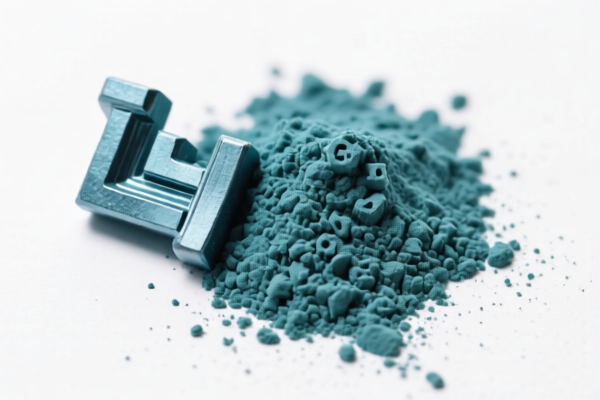
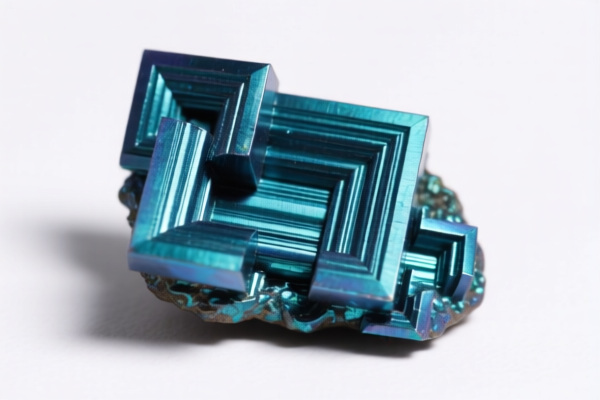
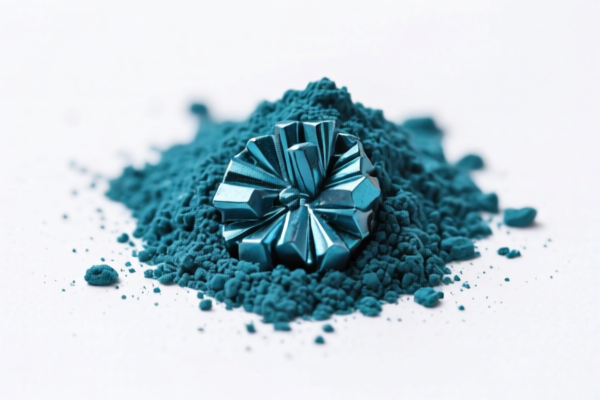
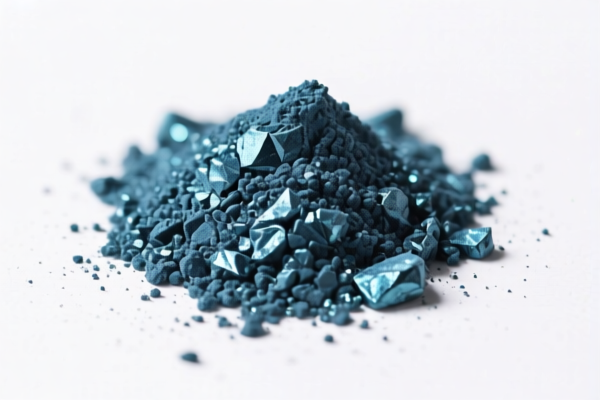
Bismuth oxide (Bi₂O₃) powder is a pearlescent, opaque white inorganic compound widely used in cosmetics for its light-refracting properties. It adds sparkle and whiteness to foundations, eyeshadows, lipsticks, and skincare formulations.
In international trade, the classification of this powder is critical. The same physical substance can be taxed at 35% or 38.7% depending entirely on whether it is classified as a finished cosmetic ingredient or a raw chemical material.
📦 I. HS Code Classification Matrix (2026 Data Reference)
Based on the latest customs data, there are 5 possible classifications for "Bismuth Oxide Powder for Cosmetics." The choice depends on the intended use and purity.
| HS Code | Classification Description | Tariff Rate | Key Classification Logic |
|---|---|---|---|
| 3304.91.00.50 | Prepared Cosmetics | 35.0% | Specifically for "cosmetics and skin care preparations." Directly implies the powder is ready for cosmetic formulation. |
| 3304.99.50.00 | Other Cosmetic Preparations | 35.0% | Broad category for "cosmetic powders." Used if the specific sub-category 3304.91 doesn't apply. |
| 2825.90.90.00 | Metal Oxides (Other) | 38.7% | Classified as a raw metal oxide. Used if sold as a generic chemical ingredient rather than a "cosmetic preparation." |
| 2825.90.75.00 | Inorganic Salts/Oxides (Primary Form) | 35.0% | Classified as "primary form" inorganic salts. Lower base tariff than 2825.90.90. |
| 3206.49.60.50 | Coloring Matter & Preparations | 38.1% | Classified as a "pigment or coloring preparation." Used if the product is marketed specifically as a coloring agent for cosmetics. |
⚠️ Critical Insight:
- 3304 Codes (35.0%) are generally preferred for finished cosmetic ingredients.
- 2825/3206 Codes (38.1% - 38.7%) apply if the product is treated as a bulk industrial chemical or raw pigment.
- Avoid misclassification: Declaring a cosmetic ingredient under "raw chemical" (2825) usually results in higher duties unless specific exemptions apply.
💰 II. Tariff Structure Deep Dive (US Import Scenario)
✅ Destination: United States (US)
✅ Origin: China (CN)
✅ Applicable Laws: Section 301 (Trade Act) + IEEPA (Executive Order 14105)
All HS Codes below are subject to the base tariff + Section 301 (25%) + 122/IEEPA (10%) surcharges.
🎯 Scenario A: Cosmetic Prep (HS Code 3304 Series)
Applies to: 3304.91.00.50, 3304.99.50.00, 2825.90.75.00
| Tax Component | Rate | Legal Basis |
|---|---|---|
| Base Duty | 0.0% | Standard MFN rate for many cosmetics/chemicals. |
| Section 301 (Add-on) | +25.0% | "China Specific" retaliatory tariff (List 4A/4C). |
| 122 / IEEPA | +10.0% | Additional surcharge on specific Chinese goods (2025 updates). |
| 🔴 TOTAL DUTY | 35.0% | 0% + 25% + 10% |
📌 Why 35%?
Even though the base duty is 0%, the 35% effective rate is mandatory due to the dual-layer punitive tariffs (25% + 10%) imposed on Chinese-origin goods in these categories.
🎯 Scenario B: Raw Chemical / Pigment (HS Code 2825.90.90 / 3206)
Applies to: 2825.90.90.00, 3206.49.60.50
| Tax Component | Rate | Legal Basis |
|---|---|---|
| Base Duty | 3.1% - 3.7% | Standard duty for metal oxides or pigments. |
| Section 301 (Add-on) | +25.0% | Applied to the total value of the product. |
| 122 / IEEPA | +10.0% | Additional surcharge. |
| 🔴 TOTAL DUTY | 38.1% - 38.7% | 3.1/3.7 + 25 + 10 |
⚠️ Warning:
- 38.7% is the highest rate (for 2825.90.90.00).
- The 3.1-3.7% base duty pushes the total higher than the 35% cosmetic codes.
- Strategy: Unless the product is strictly a "raw chemical" not intended for immediate cosmetic use, avoid this classification to save 3.7% in duty.
🛠️ III. Customs Clearance & Operational Recommendations
✅ 1. Documentation Checklist (Must-Have)
To justify the 35.0% rate (and avoid the 38.7% rate), you must prove the product is a "cosmetic preparation." - Product Specification Sheet: Must explicitly state "Intended for Cosmetic Use" or "For Makeup Formulation." - Material Safety Data Sheet (MSDS): Should show purity levels suitable for skin application (e.g., < certain ppm heavy metals). - Certificate of Analysis (COA): Proof of particle size (usually < 10 microns for cosmetics) and pearlescent quality. - Commercial Invoice: Clear description: "Bismuth Oxide Powder for Cosmetics – Grade Cosmetic, Not Industrial Raw Material." - End-Use Statement: A letter from the importer confirming the goods are for cosmetic manufacturing.
✅ 2. Classification Strategy (How to Save Money)
🚀 Golden Rule: "Cosmetic Intent = 35%, Raw Chemical = 38.7%"
| Situation | Recommended HS Code | Reason |
|---|---|---|
| Powder is pre-packaged for cosmetic brands | 3304.91.00.50 / 3304.99.50.00 |
Explicitly defined for cosmetics. Lowest total duty (35%). |
| Bulk powder sold to cosmetic factories | 2825.90.75.00 |
"Primary form" of oxide often allows 0% base duty (35% total). |
| Powder sold as a raw industrial pigment | 3206.49.60.50 |
Higher base duty (3.1%) → Avoid if possible. |
| Powder sold as generic chemical metal oxide | 2825.90.90.00 |
Highest base duty (3.7%) → Avoid. |
✅ 3. Common Pitfalls to Avoid
- ❌ The "Generic Name" Trap: Describing the item only as "Bismuth Oxide" or "Metal Oxide" without mentioning "Cosmetics" will trigger the 2825 classification (38.7% rate).
- ❌ Mixing Industrial & Cosmetic Grades: Do not mix bulk industrial grades with cosmetic grades in one container unless you declare them separately. Mixed containers may lead to audits and the higher rate applied to the whole shipment.
- ❌ Missing "122 Clause" Declaration: Ensure the IEEPA 10% surcharge is declared. Under-reporting can lead to severe penalties.
📌 IV. Summary & Action Plan
| Action Item | Detail |
|---|---|
| Best HS Code | 3304.91.00.50 or 3304.99.50.00 (Target 35% Total) |
| Worst HS Code | 2825.90.90.00 (Target 38.7% Total) |
| Key Tax Components | 0% Base + 25% (301) + 10% (122/IEEPA) |
| Critical Proof | COA + End-Use Statement proving cosmetic suitability |
| Importer Tip | Use the phrase "Cosmetic Grade" in the HS Code description and Invoice. |
💡 Final Advice:
Before shipping, verify the intended use with the customer. If the powder is for cosmetic manufacturing, insist on 3304 or 2825.90.75.00. If classified as a generic metal oxide (2825.90.90), you will pay an extra $3.70 per $100 in base duty alone, pushing your total tax to nearly 39%.
📣 Professional Clearance:
Precision in classification is your best defense against high tariffs. Ensure your documentation matches the "Cosmetic" narrative perfectly to secure the 35.0% rate.
✨ Clearance Success = Correct Code + Strong Documentation
💼 Optimize your supply chain costs today!
Customer Reviews
About HS Code Classification
The Harmonized System (HS) is an internationally standardized nomenclature developed by the World Customs Organization (WCO) to classify traded products. Over 200 countries use the HS system as the basis for customs tariffs, trade statistics, and import/export regulations.
Each HS code follows a hierarchical structure:
- Chapter (2 digits) — Broad category of goods (e.g., Chapter 84: Machinery and Mechanical Appliances)
- Heading (4 digits) — More specific grouping within the chapter
- Subheading (6 digits) — Internationally standardized breakdown, used by all WCO member countries
- National subdivisions (8-10 digits) — Country-specific extensions for further classification, such as US HTSUS 10-digit codes
Correct HS code classification is essential for smooth customs clearance, accurate duty payment, and compliance with trade regulations. Misclassification can lead to customs delays, overpayment of duties, or penalties.
When importing from CN to US, the applicable tariff rates may include:
- Most-Favored-Nation (MFN) rate — The standard duty rate applied to WTO members
- General rate — Applied to countries without trade agreements
- Trade remedy duties — Additional tariffs such as Section 301 (anti-dumping), Section 232 (national security), or countervailing duties
The information provided on this page is for reference purposes only. For official classification, please consult with your local customs authority or a licensed customs broker.