Bison Model Making Cereal Slices
CN → US| HS Code | Tariff Rate | Origin | Destination | Doc |
|---|---|---|---|---|
| 4823908680 | 35.0% | CN | US | Official Doc |
Product Images
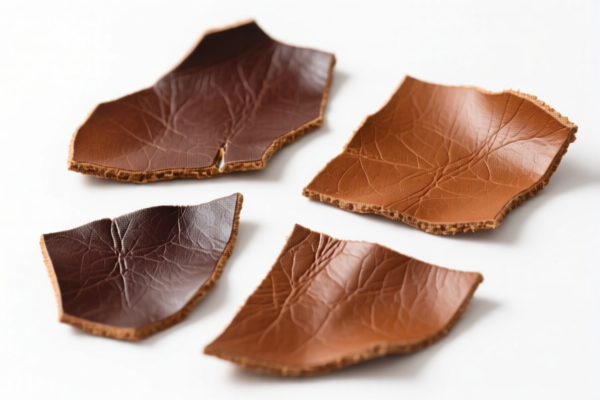
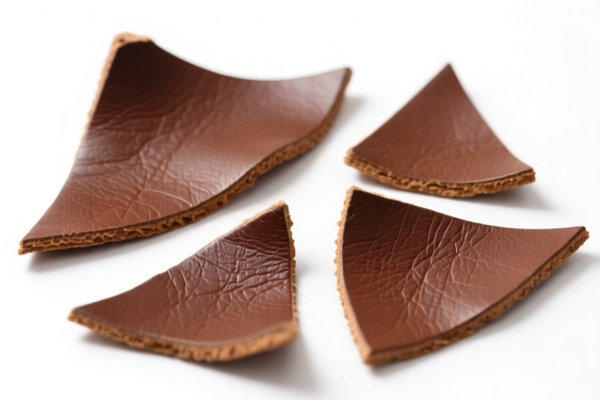
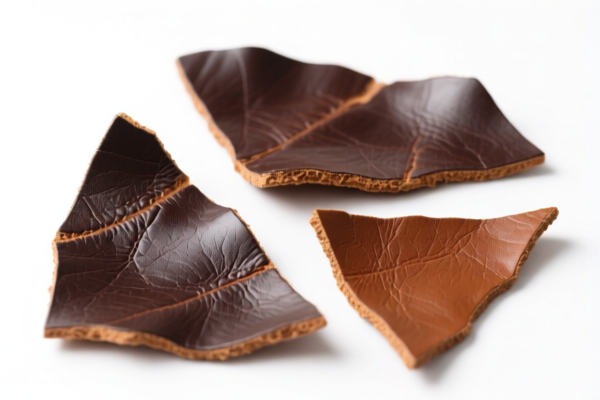
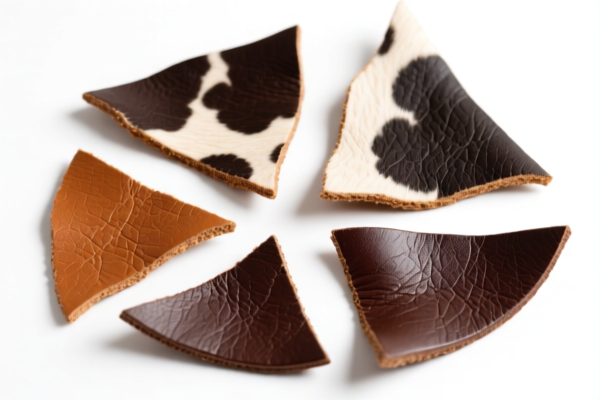
AI Analysis
🦁 Bison Model Making Cereal Slices
🌐 HS Code Reference & Customs Clearance Guide | 2026 Latest Tariff Analysis | Professional Clearance Strategy
📌 I. Product Definition and Classification: Do You Truly Understand "Cereal Slices"?
Bison Model Making Cereal Slices refer to edible, shaped slices made primarily from cereal grains (such as wheat, rice, or corn), often molded or cut into specific shapes (like bison figures) for culinary use, decoration, or as a snack. In international trade, these are generally classified as prepared foodstuffs or cereal products, distinct from raw cereals or baked goods like bread.
⚠️ Key Distinction Points:
- If the product is edible, ready-to-eat or ready-to-cook, and primarily composed of cereal flour or grain flakes, it falls under Chapter 19 (Preparations of Cereals).
- If the product is not for human consumption (e.g., purely decorative craft materials made of paper or plastic mimicking cereal), it would fall under Chapter 48 (Paper) or Chapter 39 (Plastics).
- Crucial Note for This Data: The provided<DATA>contains a specific HS Code (4823.90.86.80) that explicitly excludes food. This suggests the "Bison Model Making Cereal Slices" in this context are NON-EDIBLE, likely paper-based, cardboard-based, or cellulose-based craft slices used for model making, decoration, or educational purposes, NOT actual food cereal.
📦 二、HS Code Classification Details (2026 Latest Tariff Authority Comparison)
Based on the provided <DATA>, the product is classified under a Paper/Cellulose code, indicating these are artificial/craft "cereal slices" made from paper or cellulose wadding, not edible food.
| HS Code | Product Description | Application Scenario | Edible? |
|---|---|---|---|
4823.90.86.80 |
Other paper, paperboard, cellulose wadding and webs of cellulose fibers, cut to size or shape; other articles of paper pulp, paper, paperboard, cellulose wadding or webs of cellulose fibers: Trays, dishes, plates, cups and the like, of paper or paperboard: Other | Craft slices, decorative paper cutouts, model-making materials shaped like cereal/bison | ❌ NO (Paper/Celulose Based) |
1904.10.00.00 |
Prepared cereals (e.g., corn flakes, oat flakes) | Actual edible cereal snacks | ✅ Yes |
1905.90.00.00 |
Other bakery products or pastries | Edible biscuit-like cereal snacks | ✅ Yes |
4823.69.00.40 |
Other paper articles cut to shape (general) | General paper cutouts, not specifically trays/cups | ❌ No |
3926.90.97.90 |
Plastic articles | Plastic model slices | ❌ No |
🔍 Critical Clarification:
- The HS Code 4823.90.86.80 is for PAPER/CARDBOARD products, specifically "Trays, dishes, plates, cups and the like" or other cut shapes.
- If your product is ACTUALLY EDIBLE CEREAL, this HS Code is INCORRECT and will cause customs issues.
- If your product is DECORATIVE PAPER SLICES shaped like cereal/bison, then this code is APPROPRIATE.
- Assumption for This Guide: We proceed based on the provided<DATA>which mandates 4823.90.86.80, implying the product is non-edible, paper-based craft/model slices.
💰 三、2026 Latest Tariff Rate Details (Including Surtaxes, Policy Additions)
✅ Applicable Country: United States (US)
✅ Country of Origin: China (CN)
✅ Effective Date: From 2025-11-10 onwards (including subsequent imports)
🎯 1. 4823.90.86.80 —— Paper/Cardboard Craft Slices (Non-Essential)
| Item | Content |
|---|---|
| Basic Tariff Rate | 0.0% (ad valorem) |
| USITC Surtax (Section 301) | +25.0% (Applied to Chinese-origin goods) |
| Total Tariff Rate | 25.0% |
| Tax Calculation | CIF Value × 25% |
| De Minimis Eligibility | ❌ Not Applicable (Generally, de minimis ($800) may still apply for personal parcels, but commercial imports face full tax) |
| Legal Basis Path | USITC:4823.90.86.80 → USITC:FOOTNOTE:9903.88.01 (Section 301 Surtax) |
📌 Explanation:
- The 0% base rate reflects that paper products are generally low-tariff items.
- The 25% surtax is the key cost driver, applied under Section 301 of the Trade Act of 1974 against Chinese goods.
- No IEEPA 10% additional tax is listed in the<DATA>for this specific code, so the total is 25%.
- Warning: If misclassified as edible cereal (e.g.,1904.10), the tariff might differ, but 301 surtaxes often apply similarly. However, the 25% rate here is fixed per the data provided.
🛠️ 四、Customs Clearance Practical Advice (Real-World Pitfall Avoidance Guide)
✅ 1. Documentation Checklist (Missing Items Will Cause Delays)
| Document | Mandatory? | Description |
|---|---|---|
| ✅ Product Specification Sheet | ✔️ | Must clearly state: "Non-edible, Paper-Based Craft Slices", material composition (e.g., 100% cellulose paper), dimensions, shape (Bison model). |
| ✅ Product Photos | ✔️ | Clear images showing the paper texture, lack of food packaging, and "Not for Consumption" labels if present. |
| ✅ Commercial Invoice | ✔️ | Must describe as "Paper Model Slices, Shaped like Cereal, for Craft Use". DO NOT use "Cereal" without clarifying "Paper-Based" or "Decorative". |
| ✅ Packing List | ✔️ | Weight and dimensions of paper slices. |
| ✅ Material Declaration | ✔️ | Confirm NO food ingredients (no wheat, corn, sugar, etc.). |
✅ 2. Declaration Tips (Key Mantra)
🔥 "Non-Food, Paper-Craft, Label Clearly, Avoid Food Inspection!"
| Scenario | Correct Declaration | Wrong Practice |
|---|---|---|
| Paper Craft Slices | "Paper Model Slices, 100% Cellulose, Non-Eatable, For Decoration" |
"Cereal Slices" → Triggers FDA/Food Inspection |
| Edible Cereal Snacks | Must use Chapter 19 HS Codes (e.g., 1904.10.00.00) |
Using 4823.90.86.80 → Misclassification, Penalties |
| Mixed Package (Paper + Real Cereal) | Split Declaration | Mixing non-food and food → Customs Hold & Inspection |
✅ 3. Special Handling
| Situation | Handling Advice |
|---|---|
| "Cereal" in Name | Ensure the product name in English includes "Paper" or "Craft" to distinguish from food. E.g., "Paper Bison Cereal Slice Model". |
| FDA Awareness | Even though non-edible, US Customs (CBP) may consult FDA if the product looks like food. Provide a "Not for Human Consumption" statement. |
| Packaging | If packaged in a box resembling food packaging, add "Craft Item – Not Food" prominently. |
🌍 五、Global Market Customs Comparison (2026 Latest)
| Country/Region | Recommended HS Code | Tariff (China Origin) | Certification Requirements | Remarks |
|---|---|---|---|---|
| 🇺🇸 USA | 4823.90.86.80 |
25% (Section 301) | None (Non-Food) | High tariff due to 301; must prove non-food |
| 🇨🇳 China | 4823.90.86.80 |
5% | None | No surtax for exports |
| 🇪🇺 EU | 4823.90.80 |
0% (General) | CE (if applicable) | Low tariff; no 301 equivalent |
| 🇯🇵 Japan | 4823.90.00 |
0-5% | None | Low tariff |
| 🇦🇺 Australia | 4823.90.00 |
5% | None | Moderate tariff |
📌 Conclusion:
- USA imposes a 25% surtax on this paper-based craft item from China.
- Non-food classification is critical to avoid FDA delays, but the 25% tariff is unavoidable unless shipped from a third country (e.g., Vietnam) with proper origin rules.
📌 六、Common Mistakes & Pitfall Guide (Lessons Learned)
❌ Mistake 1: Using the term "Cereal Slices" without specifying "Paper-Based"
👉 Consequence: Customs assumes it's food → FDA Inspection Delay or Misclassification Penalty
❌ Mistake 2: Classifying as Food (Chapter 19) when it's Paper
👉 Consequence: Incorrect HS Code, potential fraud allegations, higher scrutiny
❌ Mistake 3: Ignoring the 25% Surtax
👉 Consequence: Budget Miscalculation, loss of profit margin
✅ Correct Practice:
"Paper Model Slices, Shaped as Bison, 100% Cellulose Paper, Non-Eatable, For Craft/Decorative Use, HS Code 4823.90.86.80"
🎯 七、Conclusion: Professional Declaration, Save Time and Cost
🎯 Remember the Mantra:
🔹 "Paper, Not Food, Label Clearly!"
🔹 "HS Code 4823.90.86.80, Tariff 25%, Avoid FDA, Stay Compliant!"📌 Tip:
If your product is ACTUALLY EDIBLE, do NOT use4823.90.86.80. Contact a customs broker immediately to classify under Chapter 19.
If it is Paper/Craft, ensure all documentation explicitly states "Non-Eatable" to speed up clearance.
📣 Immediate Action:
📞 Contact a Professional Broker + Provide Product Photos + Declare "Paper Craft"
🚀 Ensure Smooth Clearance, Avoid FDA Delays, and Manage the 25% Tariff Efficiently!
✨ Professional Customs Clearance Starts with Accurate Classification!
💼 Every Dollar of Tariff Should Be Calculated Precisely!
Customer Reviews
About HS Code Classification
The Harmonized System (HS) is an internationally standardized nomenclature developed by the World Customs Organization (WCO) to classify traded products. Over 200 countries use the HS system as the basis for customs tariffs, trade statistics, and import/export regulations.
Each HS code follows a hierarchical structure:
- Chapter (2 digits) — Broad category of goods (e.g., Chapter 84: Machinery and Mechanical Appliances)
- Heading (4 digits) — More specific grouping within the chapter
- Subheading (6 digits) — Internationally standardized breakdown, used by all WCO member countries
- National subdivisions (8-10 digits) — Country-specific extensions for further classification, such as US HTSUS 10-digit codes
Correct HS code classification is essential for smooth customs clearance, accurate duty payment, and compliance with trade regulations. Misclassification can lead to customs delays, overpayment of duties, or penalties.
When importing from CN to US, the applicable tariff rates may include:
- Most-Favored-Nation (MFN) rate — The standard duty rate applied to WTO members
- General rate — Applied to countries without trade agreements
- Trade remedy duties — Additional tariffs such as Section 301 (anti-dumping), Section 232 (national security), or countervailing duties
The information provided on this page is for reference purposes only. For official classification, please consult with your local customs authority or a licensed customs broker.