Bison/Horse Pattern Belt
CN → US| HS Code | Tariff Rate | Origin | Destination | Doc |
|---|---|---|---|---|
| 4203300000 | 37.7% | CN | US | Official Doc |
| 6217109550 | 32.1% | CN | US | Official Doc |
| 4203406000 | 35.0% | CN | US | Official Doc |
| 4205004000 | 36.8% | CN | US | Official Doc |
| 6217109550 | 32.1% | CN | US | Official Doc |
Product Images
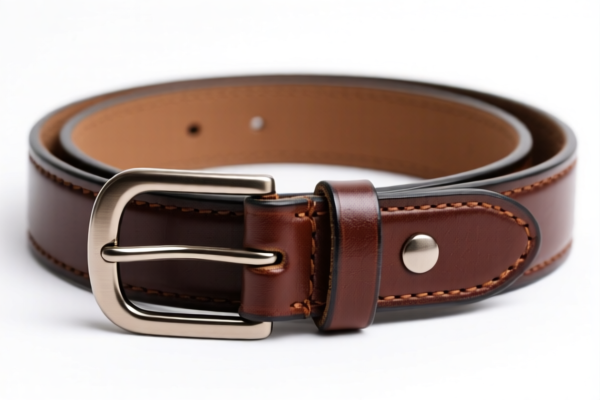
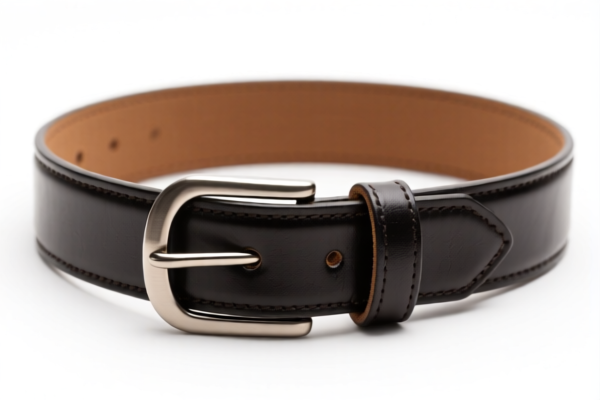


AI Analysis
🛍️ Leather Belt (Bison/Horse Pattern) – HS Code Analysis & Clearance Strategy | 2026 Customs Guide
🌐 HS Code Reference & Customs Clearance Guide | 2026 Latest Tariff Breakdown | Professional Clearance Strategy
📌 I. Product Definition: What is a "Bison/Horse Pattern Belt"?
A leather belt is an essential apparel accessory used to secure trousers or skirts. In international trade, classification depends strictly on material and intended use.
Key Distinction Points:
- Leather vs. Textile: If the belt is made of leather (bison, horse, cowhide, etc.), it generally falls under Chapter 42 (Articles of Leather).
- Specific Purpose: Belts designed specifically for apparel (waist belts) are classified under Heading 4203.
- Other Accessories: If classified under Chapter 62 (Articles of Apparel), it is considered a "Other made-up clothing accessories," but this is less common for standard leather belts unless they are part of a specific garment assembly or lack specific belt hardware definition.
⚠️ Critical Note:
- "Bison/Horse Pattern" refers to the material texture or print on the leather, not a separate material type. The primary material is still leather.
- HS Codes 4203.xx are the most accurate for leather belts intended for clothing.
- HS Code 6217.10 is a "catch-all" for other made-up clothing accessories, which can sometimes be used if the belt does not fit specific 4203 definitions, but it often carries higher base tariffs.
📦 II. HS Code Classification Details (2026 Latest Tariff Authority Cross-Reference)
Based on the provided data, here are the four possible HS Code classifications for the "Bison/Horse Pattern Belt":
| HS Code | Product Description | Applicability | Material/Use Conflict? |
|---|---|---|---|
4203.30.00.00 |
Leather Belts for Apparel | Standard leather waist belt | ✅ No conflict. Matches material (leather) and specific use (belt). |
6217.10.95.50 |
Other Made-up Clothing Accessories | Leather belt treated as a general apparel accessory | ✅ No conflict. Fits "other clothing accessories" definition, even if leather. |
4203.40.60.00 |
Other Leather Apparel Accessories | Leather belt in a broader accessory category | ✅ No conflict. Material and purpose align. |
4205.00.40.00 |
Leather Belts & Straps (General) | Specifically mentions "Bison/Horse" material and belt form | ✅ No conflict. Directly matches the specific material description. |
🔍 Key Insight:
-4203.30.00.00and4203.40.60.00are the most logical for apparel belts because they are in the specific heading for "Articles of leather or composition leather... other than headings 42.04."
-4205.00.40.00explicitly mentions "Bison/Horse" in the summary, making it a strong candidate if the material specification is emphasized.
-6217.10.95.50is a fallback for "Other" accessories, but often has a higher base tariff (14.6%) compared to 4203 categories.
💰 III. 2026 Latest Tariff Rate Breakdown (Including Surcharges & Policy Add-ons)
✅ Applicable Country: United States (US)
✅ Origin: China (CN)
✅ Effective Date: From November 10, 2025 (and subsequent imports)
🎯 1. 4203.30.00.00 – Leather Belts for Apparel
| Item | Content |
|---|---|
| Base Tariff | 2.7% (Ad Valorem) |
| Section 301 Surcharge | +25.0% (Additional Tariff) |
| Section 122 Surcharge | +10.0% (IEEPA Surcharge for China) |
| Total Tax Rate | 37.7% |
| Tax Calculation | CIF Value × 37.7% |
| De Minimis Exemption | ❌ Not Allowed (deny_de_minimis) |
| Legal Basis Path | Section 301 → IEEPA:9903.01.25 → USITC:4203.30.00.00 → FOOTNOTE:9903.88.01 |
📌 Explanation:
- This classification has the lowest base tariff (2.7%) among the options, but the total rate is still high (37.7%) due to the 25% Section 301 and 10% IEEPA surcharges.
- Recommendation: If the belt clearly fits "Leather Belts for Apparel," this is a strong candidate, but the total cost is significant.
🎯 2. 6217.10.95.50 – Other Made-up Clothing Accessories
| Item | Content |
|---|---|
| Base Tariff | 14.6% (Ad Valorem) |
| Section 301 Surcharge | +7.5% (Additional Tariff) |
| Section 122 Surcharge | +10.0% (IEEPA Surcharge for China) |
| Total Tax Rate | 32.1% |
| Tax Calculation | CIF Value × 32.1% |
| De Minimis Exemption | ❌ Not Allowed (deny_de_minimis) |
| Legal Basis Path | Section 301 → IEEPA:9903.01.24 → USITC:6217.10.95.50 → FOOTNOTE:9903.88.01 |
📌 Explanation:
- Total Rate: 32.1% – This is lower than 4203.30 (37.7%) and 4203.40 (35.0%).
- Why? Although the base tariff is higher (14.6%), the Section 301 surcharge is only 7.5%, not 25%. This makes it a cost-effective option if the product can be classified under "Other Clothing Accessories."
- Risk: Must ensure the belt is not explicitly excluded from this heading. The summary states it "fits the definition of 'other clothing accessories'."
🎯 3. 4203.40.60.00 – Other Leather Apparel Accessories
| Item | Content |
|---|---|
| Base Tariff | 0.0% (Ad Valorem) |
| Section 301 Surcharge | +25.0% (Additional Tariff) |
| Section 122 Surcharge | +10.0% (IEEPA Surcharge for China) |
| Total Tax Rate | 35.0% |
| Tax Calculation | CIF Value × 35.0% |
| De Minimis Exemption | ❌ Not Allowed (deny_de_minimis) |
| Legal Basis Path | Section 301 → IEEPA:9903.01.25 → USITC:4203.40.60.00 → FOOTNOTE:9903.88.01 |
📌 Explanation:
- Total Rate: 35.0%.
- The base tariff is 0%, which is great, but the 25% Section 301 surcharge brings the total to 35%.
- This is a mid-range option between 4203.30 (37.7%) and 6217.10 (32.1%).
🎯 4. 4205.00.40.00 – Leather Belts & Straps (Bison/Horse Material)
| Item | Content |
|---|---|
| Base Tariff | 1.8% (Ad Valorem) |
| Section 301 Surcharge | +25.0% (Additional Tariff) |
| Section 122 Surcharge | +10.0% (IEEPA Surcharge for China) |
| Total Tax Rate | 36.8% |
| Tax Calculation | CIF Value × 36.8% |
| De Minimis Exemption | ❌ Not Allowed (deny_de_minimis) |
| Legal Basis Path | Section 301 → IEEPA:9903.01.25 → USITC:4205.00.40.00 → FOOTNOTE:9903.88.01 |
📌 Explanation:
- Total Rate: 36.8%.
- This is very close to 4203.30 (37.7%) and 4203.40 (35.0%).
- Note: The summary explicitly mentions "Bison/Horse material," which may make this the most technically accurate classification if the material is a key selling point. However, the cost is not the lowest.
🛠️ IV. Customs Clearance Practical Advice (Avoiding Pitfalls)
✅ 1. Preparation Checklist (All Required)
| Document | Required | Explanation |
|---|---|---|
| ✅ Product Specification Sheet | ✔️ | Must detail material (leather type: bison/horse), dimensions, buckle type. |
| ✅ Product Photos | ✔️ | Clear images of the belt, buckle, and material texture (pattern). |
| ✅ Commercial Invoice | ✔️ | Must clearly state "Leather Belt" or "Clothing Accessory" and the HS Code. |
| ✅ Packing List | ✔️ | Detail items in each box. Avoid mixing with non-leather items to prevent confusion. |
| ✅ Origin Certificate (CO) | ✔️ | If non-China origin, may qualify for lower tariffs. |
| ✅ Third-Party Test Report | ✔️ | If required by customs, prove leather content and durability. |
✅ 2. Declaration Strategy (Key Tips)
🔥 "Clarify Material, Specify Use, Choose Low Tax, Avoid Penalty!"
| Scenario | Correct Declaration | Wrong Practice |
|---|---|---|
| Standard Leather Belt | 4203.30.00.00 or 4203.40.60.00 |
Misdeclare as textile → High penalty |
| Belt as General Accessory | 6217.10.95.50 (Lowest Total Rate: 32.1%) |
Over-complicate description → Delay |
| Emphasizing Bison/Horse Material | 4205.00.40.00 |
Ignore material specifics → Classification dispute |
| Mixed Package (Belt + Other Accessories) | Declare separately | Combine all into one HS Code → Risk of audit |
📌 Pro Tip:
-6217.10.95.50offers the lowest total tax rate (32.1%). If your belt can be reasonably classified as "Other Made-up Clothing Accessories" (not strictly a "belt" under 4203), this is the most cost-effective option.
- However, if the belt is undeniably a "belt" for apparel,4203.40.60.00(35.0%) is a safe middle ground.
-4205.00.40.00(36.8%) is technically accurate for "Bison/Horse" material but costs more.
✅ 3. Special Case Handling
| Scenario | Handling Advice |
|---|---|
| OEM Custom Belt | Provide client order + design specs to prove purpose. |
| Leather vs. Faux Leather | Ensure invoice states "Genuine Leather" if using 4203/4205 codes. If faux, use Chapter 39/40 codes (not applicable here). |
| Belt with Metal Buckle | Still classified by the main material (leather). Do not split duty. |
| High-Value Belt | Consider pre-ruling (Advance Ruling) to lock in the HS Code and avoid post-clearance audits. |
🌍 V. Global Market Comparison (2026 Latest)
| Country/Region | Recommended HS Code | Total Tax Rate (China Origin) | Certification Requirements | Notes |
|---|---|---|---|---|
| 🇺🇸 USA | 6217.10.95.50 |
32.1% (Lowest) | None specific | Highest base tariff but lowest surcharge. |
| 🇺🇸 USA | 4203.30.00.00 |
37.7% | None specific | Accurate for apparel belts. |
| 🇪🇺 EU | 4203.29.00 |
~4.5% | CE (if safety gear) | No IEEPA/Section 301. Much cheaper. |
| 🇨🇳 China | 4203.29.00 |
~5% | None | Low import duty for re-export. |
| 🇬🇧 UK | 4203.29.00 |
~4.5% | None | Post-Brexit, no US surcharges. |
📌 Conclusion:
- USA is the most expensive market due to Section 301 and IEEPA surcharges.
-6217.10.95.50is the most cost-effective US HS Code for this product.
- Consider diversifying supply chain to Vietnam, Mexico, or EU to avoid US surcharges.
📌 VI. Common Mistakes & Pitfalls (Lessons Learned)
❌ Mistake 1: Declaring a leather belt as a textile belt to avoid leather tariffs.
👉 Consequence: Customs inspection reveals leather → Penalty + Back Taxes.
❌ Mistake 2: Using 4203.30 when 6217.10 is more appropriate.
👉 Consequence: Paying 37.7% instead of 32.1% → 5.6% unnecessary cost.
❌ Mistake 3: Failing to specify material in the invoice.
👉 Consequence: Customs suspects misclassification → Delayed clearance.
❌ Mistake 4: Ignoring Section 122 (IEEPA) 10% surcharge.
👉 Consequence: Budget miscalculation → Profit margin erosion.
✅ Correct Practice:
"Leather Belt, Genuine Leather (Bison/Horse Pattern), Waist Accessory, Model XYZ, 100% Leather, Made in China"
🎯 VII. Conclusion: Professional Classification Saves Money!
🎯 Remember the Mantra:
🔹 "Leather Belt: Check Chapter 42.
🔹 Lowest Tax: Look at 6217.10.
🔹 Material Matters: Bison/Horse = 4205.00.
🔹 Total Cost: 32.1% is King in the USA!"**🔹 "HS Code Determines Tax, 5% Difference is Significant, Correct Declaration Prevents Delays!"
📌 Pro Tip:
- If your belt is not made in China (e.g., Vietnam, Italy), you may avoid the 10% IEEPA surcharge and potentially the 25% Section 301, reducing the total tax to 4.5%–14.6%.
- Request an Advance Ruling (US CBP) for large shipments to ensure classification accuracy.
📣 Action Item:
📞 Consult a Licensed Customs Broker + Provide Product Images + Apply for HS Code Pre-Ruling
🚀 Ensure Smooth Clearance, Maximize Profit, and Avoid Customs Penalties!
✨ Professional Customs Clearance Starts with Accurate Classification!
💼 Every Dollar Saved on Tariffs is Pure Profit!
Customer Reviews
About HS Code Classification
The Harmonized System (HS) is an internationally standardized nomenclature developed by the World Customs Organization (WCO) to classify traded products. Over 200 countries use the HS system as the basis for customs tariffs, trade statistics, and import/export regulations.
Each HS code follows a hierarchical structure:
- Chapter (2 digits) — Broad category of goods (e.g., Chapter 84: Machinery and Mechanical Appliances)
- Heading (4 digits) — More specific grouping within the chapter
- Subheading (6 digits) — Internationally standardized breakdown, used by all WCO member countries
- National subdivisions (8-10 digits) — Country-specific extensions for further classification, such as US HTSUS 10-digit codes
Correct HS code classification is essential for smooth customs clearance, accurate duty payment, and compliance with trade regulations. Misclassification can lead to customs delays, overpayment of duties, or penalties.
When importing from CN to US, the applicable tariff rates may include:
- Most-Favored-Nation (MFN) rate — The standard duty rate applied to WTO members
- General rate — Applied to countries without trade agreements
- Trade remedy duties — Additional tariffs such as Section 301 (anti-dumping), Section 232 (national security), or countervailing duties
The information provided on this page is for reference purposes only. For official classification, please consult with your local customs authority or a licensed customs broker.