Black Airplane Carry on Bag
CN → US| HS Code | Tariff Rate | Origin | Destination | Doc |
|---|---|---|---|---|
| 3926903300 | 16.5% | CN | US | Official Doc |
| 3926904800 | 13.4% | CN | US | Official Doc |
| 4202923131 | 52.6% | CN | US | Official Doc |
| 4202923316 | 52.6% | CN | US | Official Doc |
| 4202128910 | 52.6% | CN | US | Official Doc |
Product Images
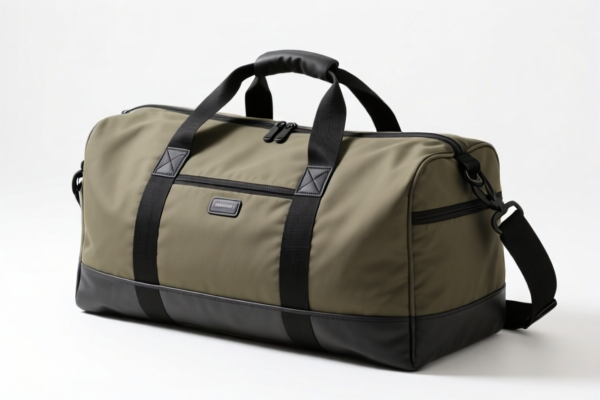
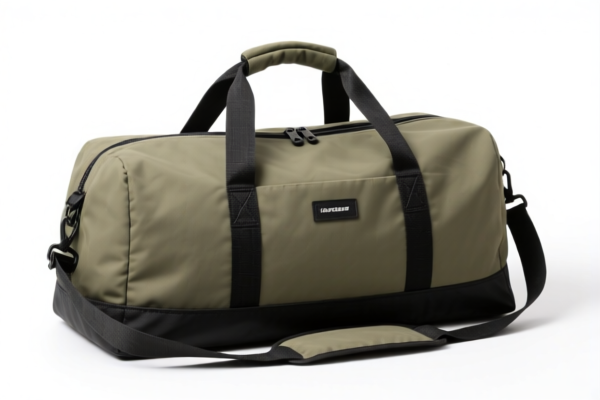
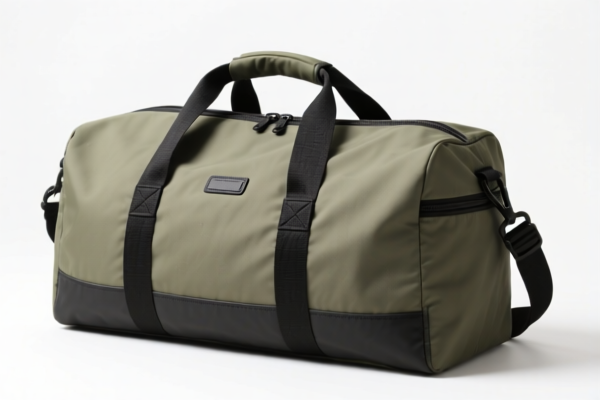

AI Analysis
🧳 Black Airplane Carry-on Bag (Luggage & Travel Goods)
🌐 HS Code Reference & Customs Clearance Guide | 2026 Latest Tariff Analysis | Professional Entry Strategy
📌 I. Product Definition & Classification: Do You Really Know "Carry-On Bags"?
A Black Airplane Carry-on Bag is a portable container designed to be carried into the cabin of an aircraft, typically made from durable materials such as textiles, plastics, or synthetic fibers. In international trade, the classification hinges on material composition and specific usage.
Two Main Categories in HS Code Structure: 1. Textile-Based Bags (Chapter 42): Made from fabric, nylon, polyester, etc. Often subject to higher tariffs due to "Section 301" trade remedies. 2. Plastic/Synthetic-Based Bags (Chapter 39): Made primarily from hard plastics, ABS, or polycarbonate. Generally enjoy lower base tariffs but still subject to additional U.S. import taxes.
⚠️ Key Classification Point:
- If the bag’s principal material is textile (e.g., nylon lining, fabric exterior) → Classified under Chapter 42.
- If the bag’s principal material is plastic (e.g., hard-shell polycarbonate, ABS) → Classified under Chapter 39.
- Note: "Carry-on" is a usage description, not a material descriptor. Customs determines classification based on material, not size or airline compliance.
📦 II. HS Code Classification Details (2026 Latest Tariff Alignment)
Based on the provided data, here are the five most relevant HS codes for a "Black Airplane Carry-on Bag," along with their tax implications.
| HS Code | Product Description & Matching Basis | Material Inference | Usage/Shape | Total Tax Rate* |
|---|---|---|---|---|
| 3926.90.33.00 | Other articles of plastic; inferred as plastic/synthetic material, shaped as a bag | Plastic or Synthetic Material | Bag (Carry-on) | 16.5% |
| 3926.90.48.00 | Finished consumer goods; other categories; bags usually made of plastic/fiber/synthetic | Plastic, Fiber, or Synthetic | Bag (Carry-on) | 13.4% |
| 4202.92.31.31 | Travel/Luggage-type bags; shape is bag; material inferred as textile | Textile Material | Travel Bag | 52.6% |
| 4202.92.33.16 | Travel bags; shape is bag; material inferred as textile (e.g., Nylon or Polyester) | Textile (Nylon/Polyester) | Travel Bag | 52.6% |
| 4202.12.89.10 | Boarding bag; shape is bag; material inferred as textile | Textile Material | Boarding Bag | 52.6% |
🔍 Critical Observation:
- Plastic-based bags (HS 3926 series) have significantly lower total tariffs (13.4%–16.5%) compared to Textile-based bags (HS 4202 series, 52.6%).
- This disparity is primarily due to the 25% Section 301 Additional Duty applied to Chinese-origin textile goods, which is not applied (or applied differently) to plastic goods in this dataset.
💰 III. 2026 Latest Tariff Rate Breakdown (Including Additional Duties & Policy Surcharges)
✅ Applicable Country: United States (US)
✅ Origin: China (CN) (Implied by "Section 122" and Section 301 references)
✅ Effective Date: Current (2025–2026 Period)
🎯 1. 3926.90.33.00 – Other Articles of Plastic (Bag)
| Item | Content |
|---|---|
| Base Duty | 6.5% |
| Section 301 Additional Duty | 0.0% |
| Section 122 Duty | +10.0% |
| Total Tax Rate | 16.5% |
| Tax Calculation | CIF Value × 16.5% |
| De Minimis Eligibility | ❌ No (De minimis usually does not apply to duties >0% if structured as commercial entry; however, Section 321 often excludes goods subject to Section 122/301 if not properly exempted. Note: Section 122 specifically targets de minimis shipments, making this a key compliance point.) |
| Legal Basis Path | USITC:3926.90.33.00 → Section 122: 10% |
📌 Explanation:
- Base 6.5%: Standard Most-Favored-Nation (MFN) rate for plastic articles.
- Section 122 (10%): Imposed on certain de minimis imports from China to protect domestic industry. This applies even to small shipments if classified here.
- No Section 301: Plastic goods in this subheading currently do not bear the 25% penalty in this specific dataset.
🎯 2. 3926.90.48.00 – Other Finished Consumer Goods (Plastic/Fiber Bag)
| Item | Content |
|---|---|
| Base Duty | 3.4% |
| Section 301 Additional Duty | 0.0% |
| Section 122 Duty | +10.0% |
| Total Tax Rate | 13.4% |
| Tax Calculation | CIF Value × 13.4% |
| De Minimis Eligibility | ❌ No (Subject to Section 122) |
| Legal Basis Path | USITC:3926.90.48.00 → Section 122: 10% |
📌 Note:
- This is the most cost-effective classification for plastic/synthetic carry-ons.
- If the bag can be demonstrated to be made of "fiber or synthetic" but falls under this broader "finished consumer goods" category, it saves 3.1% compared to3926.90.33.00.
🎯 3. 4202.92.31.31 – Travel Bags (Textile Material)
| Item | Content |
|---|---|
| Base Duty | 17.6% |
| Section 301 Additional Duty | +25.0% |
| Section 122 Duty | +10.0% |
| Total Tax Rate | 52.6% |
| Tax Calculation | CIF Value × 52.6% |
| De Minimis Eligibility | ❌ No |
| Legal Basis Path | IEEPA:9903.01.25 → Section 301: 25% → Section 122: 10% → USITC:4202.92.31.31 |
📌 Explanation:
- High Tax Burden: The 25% Section 301 duty makes textile bags from China extremely expensive to import.
- Section 122 Applies: Even for de minimis shipments, this 10% surcharge is added.
🎯 4. 4202.92.33.16 – Travel Bags (Textile: Nylon/Polyester)
| Item | Content |
|---|---|
| Base Duty | 17.6% |
| Section 301 Additional Duty | +25.0% |
| Section 122 Duty | +10.0% |
| Total Tax Rate | 52.6% |
| Tax Calculation | CIF Value × 52.6% |
| De Minimis Eligibility | ❌ No |
| Legal Basis Path | IEEPA:9903.01.25 → Section 301: 25% → Section 122: 10% → USITC:4202.92.33.16 |
📌 Note:
- Same rate as above. Common for soft-sided carry-ons made of nylon or polyester.
🎯 5. 4202.12.89.10 – Boarding Bags (Textile)
| Item | Content |
|---|---|
| Base Duty | 17.6% |
| Section 301 Additional Duty | +25.0% |
| Section 122 Duty | +10.0% |
| Total Tax Rate | 52.6% |
| Tax Calculation | CIF Value × 52.6% |
| De Minimis Eligibility | ❌ No |
| Legal Basis Path | IEEPA:9903.01.25 → Section 301: 25% → Section 122: 10% → USITC:4202.12.89.10 |
📌 Note:
- "Boarding bag" is a subset of travel bags. The tax treatment is identical to other textile luggage.
🛠️ IV. Customs Clearance Practical Advice (Avoid Pitfalls)
✅ 1. Preparation Checklist (Non-Negotiable)
| Document | Required? | Explanation |
|---|---|---|
| ✅ Product Specification Sheet | ✔️ | Must clearly state material composition (e.g., "100% Polycarbonate Shell" vs. "600D Polyester Lining"). |
| ✅ Product Photos | ✔️ | High-resolution images showing labels, material texture, and structure. |
| ✅ Commercial Invoice | ✔️ | Must accurately describe the product as "Plastic Carry-on Bag" or "Textile Travel Bag" matching the HS Code. |
| ✅ Bill of Lading/Air Waybill | ✔️ | Standard shipping documents. |
| ✅ Section 122 Compliance Info | ✔️ | If value is ≤$800, you must declare under Section 321 but acknowledge Section 122 duties apply. |
✅ 2. Declaration Strategy (Crucial Tips)
🔥 "Material Determines Tax, Not Size!"
| Scenario | Correct HS Code | Tax Rate | Consequence of Error |
|---|---|---|---|
| Hard-shell Plastic/Silicone Bag | 3926.90.33.00 or 3926.90.48.00 |
13.4% – 16.5% | Misclassifying as textile → 52.6% Tax + Penalties |
| Soft-sided Nylon/Polyester Bag | 4202.92.31.31, 4202.92.33.16, or 4202.12.89.10 |
52.6% | Misclassifying as plastic → 13.4% Tax + Back Taxes + Penalties |
| Mixed Material (e.g., Plastic Frame + Textile Body) | Depends on "Principal Character" | See above | If textile is principal → 52.6%. If plastic is principal → 16.5%. |
📌 Key Strategy:
- If your bag is hard-shell (like Rimowa or Samsonite), argue for Chapter 39 (Plastic).
- If your bag is soft-sided (like AmazonBasics or generic nylon bags), expect Chapter 42 (Textile) and budget for 52.6%.
✅ 3. Special Considerations for Section 122
- What is Section 122? It is a provision under 19 U.S.C. § 1304 (and related sections) that imposes a 10% duty on de minimis imports (shipments under $800) from China to prevent circumvention of anti-dumping duties.
- Impact: Even if you ship via e-commerce (Amazon, Shopify, etc.) under Section 321, you must pay an additional 10% regardless of the base HS code.
- Advice: Factor this 10% into your cost calculation. It applies to ALL the HS codes listed above.
🌍 V. Global Market Comparison (2026 Update)
| Market | Recommended HS Code (Plastic) | Recommended HS Code (Textile) | Key Duty Note |
|---|---|---|---|
| 🇺🇸 USA | 3926.90.48.00 (13.4%) |
4202.92.33.16 (52.6%) |
High Section 122 + 301 impact |
| 🇨🇳 China | Varies | Varies | Different tariff structure, no Section 301/122 |
| 🇪🇺 EU | 4202.92 (Luggage) |
4202.92 (Luggage) |
Generally lower base duties, no Section 122 equivalent |
| 🇨🇦 Canada | 4202.92 |
4202.92 |
CUSMA benefits may apply |
📌 Conclusion:
- The USA market is uniquely challenging for Chinese-origin luggage due to Section 122 (10%) and Section 301 (25% for textiles).
- Plastic bags are the most tax-efficient option for the US market among the choices provided.
📌 VI. Common Mistakes & Pitfalls (Lessons Learned)
❌ Mistake 1: Classifying a Nylon Bag as Plastic (3926) to avoid Section 301.
👉 Result: Customs audit → Re-classification to 4202 → Back taxes + 10% interest + Penalties.
❌ Mistake 2: Ignoring Section 122 for de minimis shipments.
👉 Result: Shipment held at customs → Delay in delivery → Customer complaints.
❌ Mistake 3: Using vague terms like "Travel Bag" without material specification.
👉 Result: Customs may assign a higher default duty rate or request additional documentation, causing delays.
✅ Correct Approach:
"Polycarbonate Hard-Shell Carry-on, Black, Model XYZ, 100% Plastic Shell, Nylon Lining" →
3926.90.48.00
🎯 VII. Conclusion: Smart Classification, Profitable Clearance!
🎯 Remember the Rule:
🔹 "Plastic Bag = 13.4–16.5% Tax"
🔹 "Textile Bag = 52.6% Tax"
🔹 "Section 122 = 10% Extra for De Minimis"
📌 Pro Tip:
If you are importing soft-sided bags, consider:
1. Sourcing from Vietnam/Mexico to avoid Section 301 (though Section 122 may still apply depending on final assembly).
2. Applying for an Advance Ruling to confirm the "principal material" if the bag is mixed-material.
📣 Immediate Action:
📞 Consult a Customs Broker: Provide material composition details.
📄 Declare Accurately: "Plastic" or "Textile" – do not guess.
🚀 Optimize Costs: Choose plastic construction if possible for the US market.
✨ Professional Clearance Starts with Accurate Classification!
💼 Your Margin Depends on Your HS Code!
Customer Reviews
About HS Code Classification
The Harmonized System (HS) is an internationally standardized nomenclature developed by the World Customs Organization (WCO) to classify traded products. Over 200 countries use the HS system as the basis for customs tariffs, trade statistics, and import/export regulations.
Each HS code follows a hierarchical structure:
- Chapter (2 digits) — Broad category of goods (e.g., Chapter 84: Machinery and Mechanical Appliances)
- Heading (4 digits) — More specific grouping within the chapter
- Subheading (6 digits) — Internationally standardized breakdown, used by all WCO member countries
- National subdivisions (8-10 digits) — Country-specific extensions for further classification, such as US HTSUS 10-digit codes
Correct HS code classification is essential for smooth customs clearance, accurate duty payment, and compliance with trade regulations. Misclassification can lead to customs delays, overpayment of duties, or penalties.
When importing from CN to US, the applicable tariff rates may include:
- Most-Favored-Nation (MFN) rate — The standard duty rate applied to WTO members
- General rate — Applied to countries without trade agreements
- Trade remedy duties — Additional tariffs such as Section 301 (anti-dumping), Section 232 (national security), or countervailing duties
The information provided on this page is for reference purposes only. For official classification, please consult with your local customs authority or a licensed customs broker.