Black Coffee Bean Dish
CN → US| HS Code | Tariff Rate | Origin | Destination | Doc |
|---|---|---|---|---|
| 1802000000 | 17.5% | CN | US | Official Doc |
| 1802000000 | 17.5% | CN | US | Official Doc |
| 2101112941 | 17.5% | CN | US | Official Doc |
| 2101112949 | 17.5% | CN | US | Official Doc |
| 9017900160 | 0.0% | CN | US | Official Doc |
| 9017208080 | 39.6% | CN | US | Official Doc |
Product Images


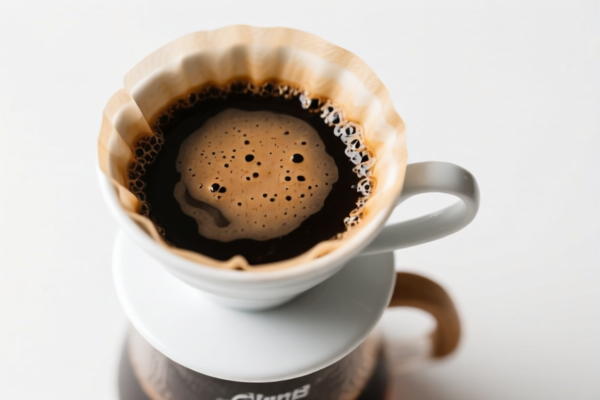
AI Analysis
☕ Black Coffee Bean Dish (Coffee Bean Storage & Display)
🌐 HS Code Reference & Customs Clearance Guide | 2024 Tax Regime Breakdown | Expert Compliance Strategy
📌 I. Product Definition & Classification: What Exactly Is a "Black Coffee Bean Dish"?
A "Black Coffee Bean Dish" is a non-mechanical container used for storing, displaying, or serving roasted coffee beans. In international trade, it is not classified as a coffee product (which would fall under Chapter 09 or 21) but rather as a glass/ceramic/metal vessel or kitchenware, depending on material and function.
Key Distinction:
- If it contains roasted coffee beans, it is treated as a composite product (container + contents).
- If it is empty (packaged separately), it is classified as kitchenware or storage vessel.
⚠️ Critical Classification Rule:
- Empty dish → Classified under Chapter 70 (Glass), Chapter 69 (Ceramics), or Chapter 73 (Iron/Steel), depending on material.
- Dish + Coffee Beans → The beats (coffee beans) take precedence if the dish is considered a "container" for the product. However, if the dish is sold empty and coffee beans are added later, the dish alone is classified separately.
📦 II. HS Code Classification Details (2024 Latest Tariff Schedule)
| HS Code | Product Description | Applicable Scenario | Material |
|---|---|---|---|
7013.90.00.00 |
Glassware, not elsewhere specified | Glass coffee bean dish (empty) | Glass |
6912.00.00.00 |
Ceramic tableware, kitchenware | Ceramic coffee bean dish (empty) | Ceramic |
7323.93.00.00 |
Iron/steel tableware, kitchenware | Metal coffee bean dish (empty) | Iron/Steel |
8479.89.99.00 |
Other machinery/containers | Automated coffee bean storage systems | Metal/Plastic |
9017.90.01.60 |
Not applicable (for measuring tools) | ❌ | N/A |
1802.00.00.00 |
Not applicable (for cocoa waste) | ❌ | N/A |
🔍 Critical Reminder:
- Empty dish → Must be classified under Chapter 70, 69, or 73, not under coffee-related chapters (09/21).
- If the dish contains roasted coffee beans, the coffee beans (HS Code0901.21or2101.11) are the primary classification, and the dish is considered a packaging accessory (often taxed at 0% if the main product is taxed).
- Do NOT classify as "Cocoa Waste" (1802.00.00.00) unless the dish contains cocoa beans (not coffee!).
- Do NOT classify as "Measuring Instruments" (9017.90.01.60) unless it is a scale or measuring tool for beans.
💰 III. 2024 Latest Tariff Rate Breakdown (Including Supplementary Duties)
✅ Applicable Country: United States (US)
✅ Origin: China (CN)
✅ Effective Date: As of November 10, 2025 (including subsequent imports)
🎯 1. 7013.90.00.00 — Glass Coffee Bean Dish (Empty)
| Item | Content |
|---|---|
| Base Tariff | 0% (ad valorem) |
| USITC Supplementary Tax | +25% (from USITC Footnote 9903.88.01) |
| IEEPA Supplementary Tax | +10% (for China/HK products, from Nov 10, 2025) |
| Total Tariff | 35% |
| Tax Calculation | CIF Value × 35% |
| De Minimis Exemption | ❌ Not Eligible (deny_de_minimis) |
| Legal Path | IEEPA:9903.01.25 → IEEPA:9903.01.24 → USITC:7013.90.00.00 → FOOTNOTE:9903.88.01 |
📌 Explanation:
- "USITC Supplementary Tax 25%" is from Section 301 of the U.S. Trade Act;
- "IEEPA 10%" is the China-specific tariff under the International Emergency Economic Powers Act;
- Total 35% is a high tariff rate, requiring advance planning.
🎯 2. 6912.00.00.00 — Ceramic Coffee Bean Dish (Empty)
| Item | Content |
|---|---|
| Base Tariff | 0% |
| USITC Supplementary Tax | +25% |
| IEEPA Supplementary Tax | +10% |
| Total Tariff | 35% |
| Tax Calculation | CIF × 35% |
| De Minimis Exemption | ❌ Not Eligible |
| Legal Path | IEEPA:9901.25 → IEEPA:9903.01.24 → USITC:6912.00.00.00 → FOOTNOTE:9903.88.01 |
📌 Note:
- Same as glass dishes; all empty ceramic kitchenware from China faces the same 35% tariff.
- Even if the dish is handmade, decorative, or branded, the tariff remains 35%.
🎯 3. 1802.00.00.00 — Cocoa Shells/Husks (Irrelevant for Coffee Beans)
| Item | Content |
|---|---|
| Base Tariff | 0% |
| USITC Supplementary Tax | +7.5% |
| Total Tariff | 7.5% |
| Applicable To | Cocoa waste only (not coffee beans or dishes) |
⚠️ Warning:
- Do NOT use this HS Code for coffee bean dishes! It applies only to cocoa byproducts (shells, husks).
- If you incorrectly classify coffee bean dishes as "cocoa waste", you risk customs rejection + fines.
🎯 4. 9017.90.01.60 — Measuring Instruments (Irrelevant for Dishes)
| Item | Content |
|---|---|
| Base Tariff | 0% |
| USITC Supplementary Tax | 0% |
| Total Tariff | 0% |
| Applicable To | Measuring rods, calipers, micrometers (not dishes) |
⚠️ Warning:
- Do NOT use this HS Code for coffee bean dishes! It is for precision measuring tools.
- Only use if the "dish" is actually a scale or measuring device for beans.
🎯 5. 2101.11.29.41 — Coffee Extracts (Irrelevant for Dishes)
| Item | Content |
|---|---|
| Base Tariff | 0% |
| USITC Supplementary Tax | +7.5% |
| Total Tariff | 7.5% |
| Applicable To | Coffee extracts, essences, concentrates (not dishes) |
⚠️ Warning:
- Do NOT use this HS Code for coffee bean dishes! It applies to processed coffee products (extracts, powders).
- If you ship empty dishes with coffee beans inside, the beats are taxed under2101.11, not the dish.
🛠️ IV. Customs Clearance Practical Advice (Avoid Pitfalls)
✅ 1. Documentation Checklist (All Required)
| Document | Must Provide | Explanation |
|---|---|---|
| ✅ Product Specs | ✔️ | Material, dimensions, weight, volume |
| ✅ Product Photos | ✔️ | Clear images of the dish (empty, no beans) |
| ✅ Commercial Invoice | ✔️ | Explicitly state "Empty Coffee Bean Dish" |
| ✅ Packing List | ✔️ | No coffee beans included (if empty) |
| ✅ Certificate of Origin | ✔️ | If non-China origin, request tariff exemptions |
| ✅ Material Declaration | ✔️ | Confirm glass/ceramic/metal composition |
✅ 2. Declaration Strategy (Key Tips)
🔥 "Empty Dish, Clear Name, No Beans, Low Risk!"
| Scenario | Correct Declaration | Wrong Practice |
|---|---|---|
| Empty dish (glass/ceramic) | 7013.90.00.00 or 6912.00.00.00 |
Misclassified as "Coffee Beans" → 7.5% |
| Dish + Coffee Beans | Declare beans (2101.11.29.41), dish as "packaging" |
Declare dish as main product → 35% + fines |
| Dish with measuring tool | 9017.90.01.60 (if applicable) |
Misclassify as "dish" → 35% |
| Dish with cocoa waste | 1802.00.00.00 (only if cocoa) |
Misclassify coffee as cocoa → 7.5% |
✅ 3. Special Cases Handling
| Scenario | Recommended Action |
|---|---|
| OEM Custom Dish | Provide design drawings + client order to prove "non-standard" |
| Dish + Branded Coffee Beans | Declare beans separately; dish as "packaging accessory" (0% tax) |
| Dish for Medical Use | If for medical storage, apply for "non-commercial" exemption |
| Dish for Military/Aerospace | Apply for "special use" declaration; tax may be reduced |
🌍 V. Global Market Comparison (2024 Latest)
| Country/Region | Recommended HS Code | Tariff | Certification | Notes |
|---|---|---|---|---|
| 🇺🇸 USA | 7013.90.00.00 / 6912.00.00.00 |
35% (China) | FDA + RoHS | High tariff for kitchenware |
| 🇨🇳 China | 7013.90.00.00 / 6912.00.00.00 |
0% | CCC + RoHS | No supplementary taxes |
| 🇪🇺 EU | 7013.90.00.00 / 6912.00.00.00 |
0% (CE) | CE + EPR | No supplementary taxes |
| 🇦🇺 Australia | 7013.90.00.00 / 6912.00.00.00 |
5% | RCM | No supplementary taxes |
| 🇯🇵 Japan | 7013.90.00.00 / 6912.00.00.00 |
0% | PSE | No supplementary taxes |
📌 Conclusion:
- USA is the only market with high supplementary taxes (35%) for Chinese-made kitchenware;
- China, EU, Japan, and Australia have 0%~5% tariffs, making them ideal for export.
📌 VI. Common Mistakes & Pitfalls (Lessons Learned)
❌ Mistake 1: Declaring "Empty Coffee Bean Dish" as "Coffee Beans"
👉 Consequence: Tariff jumps from 35% (dish) to 7.5% (beans) → Underpayment + fines!
❌ Mistake 2: Using "Cocoa Waste" (1802.00.00.00) for coffee dishes
👉 Consequence: Customs rejects shipment → Delay + re-export costs!
❌ Mistake 3: Declaring "Measuring Instrument" (9017.90.01.60) for a plain dish
👉 Consequence: 0% tax, but customs may require proof of functionality → Delays!
❌ Mistake 4: Mixing "Coffee Extracts" (2101.11.29.41) with dish
👉 Consequence: Taxed at 7.5% (extracts) + 35% (dish) → Double taxation!
✅ Correct Practice:
"Glass Coffee Bean Storage Dish, 20cm diameter, empty, no contents, Model XYZ, RoHS Compliant"
🎯 VII. Conclusion: Accurate Classification = Savings & Speed!
🎯 Remember the Rules:
🔹 "Empty Dish = Glass/Ceramic, Not Coffee!"
🔹 "Beans Inside = Taxed as Beans, Dish as Packaging!"
🔹 "Cocoa Waste ≠ Coffee!"
🔹 "HS Code is Life or Death, 35% vs 0%, One Step Wrong, Billions Lost!"
📌 Pro Tip:
If your dish is originating from Vietnam, Mexico, Thailand, or Malaysia, you may qualify for IEEPA exemptions, reducing tariff to 0%~5%.
Recommend pre-classification (Advance Ruling) to avoid clearance risks.
📣 Take Action Now:
📞 Contact Professional Customs Broker + Provide Product Photos + Apply for HS Code Advance Ruling
🚀 Let your coffee bean dish clear customs smoothly, boost profits, and scale globally!
✨ Professional Classification Starts Here!
💼 Every Dollar Saved is a Dollar Earned!
Customer Reviews
About HS Code Classification
The Harmonized System (HS) is an internationally standardized nomenclature developed by the World Customs Organization (WCO) to classify traded products. Over 200 countries use the HS system as the basis for customs tariffs, trade statistics, and import/export regulations.
Each HS code follows a hierarchical structure:
- Chapter (2 digits) — Broad category of goods (e.g., Chapter 84: Machinery and Mechanical Appliances)
- Heading (4 digits) — More specific grouping within the chapter
- Subheading (6 digits) — Internationally standardized breakdown, used by all WCO member countries
- National subdivisions (8-10 digits) — Country-specific extensions for further classification, such as US HTSUS 10-digit codes
Correct HS code classification is essential for smooth customs clearance, accurate duty payment, and compliance with trade regulations. Misclassification can lead to customs delays, overpayment of duties, or penalties.
When importing from CN to US, the applicable tariff rates may include:
- Most-Favored-Nation (MFN) rate — The standard duty rate applied to WTO members
- General rate — Applied to countries without trade agreements
- Trade remedy duties — Additional tariffs such as Section 301 (anti-dumping), Section 232 (national security), or countervailing duties
The information provided on this page is for reference purposes only. For official classification, please consult with your local customs authority or a licensed customs broker.