Black Corner Guard Strip
CN → US| HS Code | Tariff Rate | Origin | Destination | Doc |
|---|---|---|---|---|
| 3926902500 | 24.0% | CN | US | Official Doc |
| 3926909989 | 22.8% | CN | US | Official Doc |
| 4016990500 | 20.9% | CN | US | Official Doc |
| 4016991000 | 20.8% | CN | US | Official Doc |
| 7610900040 | 90.7% | CN | US | Official Doc |
Product Images
AI Analysis
🛡️ Black Corner Guard Strip (Protective Edge Protector)
🌐 HS Code Reference & Customs Clearance Guide | 2026 Latest Tariff Analysis | Professional Strategy for Plastic, Rubber & Aluminum Products
📌 I. Product Definition & Classification: What is a "Black Corner Guard Strip"?
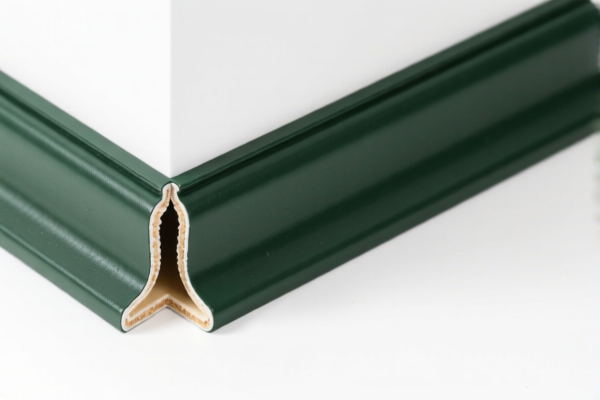
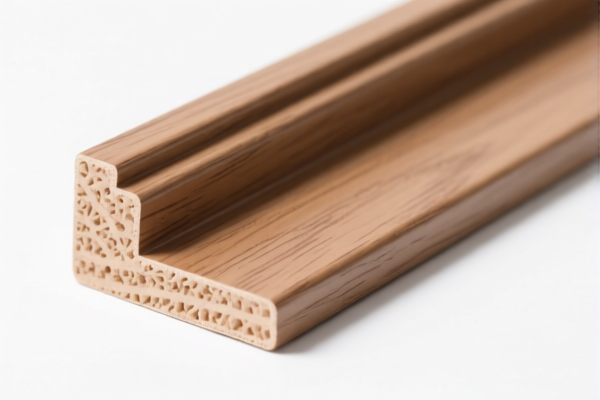
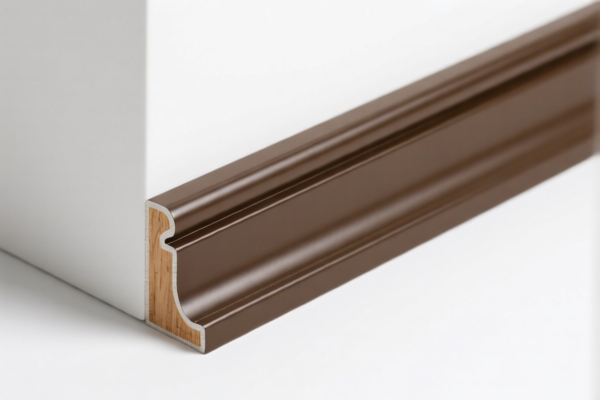
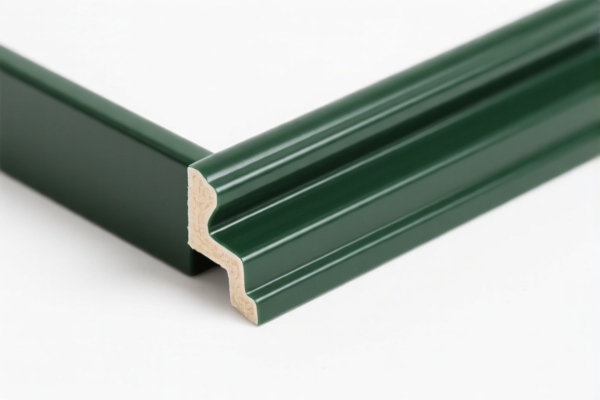
Black Corner Guard Strips are L-shaped or V-shaped profiles designed to protect the corners of walls, furniture, cargo, or building structures from impact damage, abrasion, and cosmetic wear. In international trade, they are categorized strictly by their material composition and intended end-use.
Key Distinction:
- Plastic/Rubber Materials: Generally classified under Chapter 39 (Plastics) or Chapter 40 (Rubber).
- Aluminum/Metal Materials: Classified under Chapter 76 (Aluminum).
- Critical Factor: The "122 Clause" (Section 301/IEEPA) and specific "Footnotes" significantly alter the tariff burden for these items depending on the material.
📦 II. HS Code Classification Matrix (2026 Latest Tariff Schedule)
Based on the provided data, here are the exact HS Codes, summaries, and tax breakdowns. Do not deviate from these codes to avoid misclassification penalties.
| HS Code | Product Summary | Material | Key Application/Description |
|---|---|---|---|
3926.90.25.00 |
Plastic Corner Guard, Black | Plastic | Other plastic articles; specifically identified as plastic corner guards. |
3926.90.99.89 |
Plastic Corner Guard, Black | Plastic | Other plastic articles; falls under "not elsewhere specified" (less specific than .25). |
4016.99.05.00 |
Rubber Corner Guard, Black | Sulfur-Cured Rubber | Used for protective decoration or cushioning; specific sub-category for rubber products. |
4016.99.10.00 |
Rubber Corner Guard, Black | Sulfur-Cured Rubber | Used as an accessory or protective gear; general rubber accessory classification. |
7610.90.00.40 |
Aluminum Corner Guard, Black | Aluminum | Building & decoration engineering protection parts; ALUMINUM PRODUCTS. |
🔍 Critical Note:
- Plastic vs. Plastic: Code3926.90.25.00is more specific than3926.90.99.89. Always prefer the specific code if the product fits the description exactly. - Aluminum Penalty: Code7610.90.00.40triggers the highest tariffs due to metal-specific trade restrictions.
💰 III. 2026 Tariff Rate Breakdown (China to USA)
✅ Applicable Country: United States (US)
✅ Origin: China (CN)
✅ Effective Time: Current Trade Policies (Section 301 / IEEPA)
🎯 1. Plastic Products (HS: 3926.90.25.00 & .99.89)
A. 3926.90.25.00 (Specific Plastic Article)
| Item | Detail |
|---|---|
| Base Duty | 6.5% |
| Section 301 Add-on | 7.5% |
| 122 Clause (IEEPA) | 10% |
| TOTAL TAX RATE | 24.0% |
| Calculation | CIF Value × 24% |
| De Minimis Exemption | ❌ Not Eligible (High rate disqualifies Section 321) |
B. 3926.90.99.89 (Other Plastic Article)
| Item | Detail |
|---|---|
| Base Duty | 5.3% |
| Section 301 Add-on | 7.5% |
| 122 Clause (IEEPA) | 10% |
| TOTAL TAX RATE | 22.8% |
| Calculation | CIF Value × 22.8% |
| De Minimis Exemption | ❌ Not Eligible |
📌 Explanation:
- Both plastic categories are subject to the 10% "122 Clause" tax, which applies to many consumer goods from China. - The Section 301 add-on is fixed at 7.5% for these HS codes. - Total Cost Impact: Even the "cheaper" plastic option (3926...89) incurs nearly 23% in duties alone, excluding freight and insurance.
🎯 2. Rubber Products (HS: 4016.99.05.00 & .10.00)
A. 4016.99.05.00 (Protective/Cushioning Rubber)
| Item | Detail |
|---|---|
| Base Duty | 3.4% |
| Section 301 Add-on | 7.5% |
| 122 Clause (IEEPA) | 10% |
| TOTAL TAX RATE | 20.9% |
| Calculation | CIF Value × 20.9% |
B. 4016.99.10.00 (Accessory/Protective Rubber)
| Item | Detail |
|---|---|
| Base Duty | 3.3% |
| Section 301 Add-on | 7.5% |
| 122 Clause (IEEPA) | 10% |
| TOTAL TAX RATE | 20.8% |
| Calculation | CIF Value × 20.8% |
📌 Explanation:
- Rubber corner guards have lower base duties (3.3%-3.4%) compared to plastic (5.3%-6.5%). - However, they still face the full 17.5% surcharge (7.5% Section 301 + 10% 122 Clause). - Net Savings: Using rubber instead of plastic can save approximately 1.9% - 3.2% in total duty rates.
🎯 3. Aluminum Products (HS: 7610.90.00.40) ⚠️ HIGH RISK
| Item | Detail |
|---|---|
| Base Duty | 5.7% |
| Section 301 Add-on | 25.0% |
| 122 Clause (IEEPA) | 10% |
| Steel/Aluminum Add-on | 50% (Specific to Steel/Aluminum Articles) |
| TOTAL TAX RATE | 90.7% |
| Calculation | CIF Value × 90.7% |
| De Minimis Exemption | ❌ Strictly Prohibited |
📌 Critical Warning:
- This is the most expensive classification. - The 50% Steel/Aluminum Add-on is a punitive tariff targeting specific metal products. - Total Rate of 90.7% makes aluminum corner guards commercially unviable for direct import from China to the US unless sold at a massive premium.
🛠️ IV. Customs Clearance Practical Advice
✅ 1. Material Verification is Mandatory
| Material | Recommended HS Code | Est. Duty | Strategy |
|---|---|---|---|
| Plastic (PVC/ABS/PP) | 3926.90.25.00 |
24.0% | Use specific code for clarity. Avoid .99.89 if possible. |
| Rubber (EPDM/Silicone) | 4016.99.05.00 |
20.9% | Best Value Option. Lower base duty. |
| Aluminum | 7610.90.00.40 |
90.7% | AVOID. Unless price allows for 90% tax absorption. |
✅ 2. Documentation Requirements
| Document | Requirement | Reason |
|---|---|---|
| Product Description | Must state Material explicitly (e.g., "100% PVC Corner Guard"). | Customs will reject generic terms like "Hardware Fitting." |
| Material Safety Data Sheet (MSDS) | Required for Rubber/Plastic. | To verify no restricted substances (RoHS/REACH). |
| Invoice & Packing List | Must match HS Code description. | Discrepancies cause delays. |
| Labeling | "Made in China." | Mandatory for Section 301 duty applicability. |
✅ 3. Clearance Tips & Pitfalls
🔥 Golden Rule: "Material Dictates Duty, Not Just Shape!"
-
Pitfall 1: Misclassifying Aluminum as Plastic
→ Consequence: If customs inspects and finds aluminum content, they will reclassify to7610.90.00.40and charge 90.7% retroactively + penalties.
→ Solution: Ensure plastic/rubber products do not contain metal cores or heavy metal reinforcements. -
Pitfall 2: Using "Accessories" Code for Primary Goods
→ Consequence: Using3926.90.99.89(Other) instead of3926.90.25.00(Specific) may trigger audits if the product is clearly a "corner guard."
→ Solution: Use the most specific HS code available. -
Pitfall 3: Ignoring the 122 Clause
→ Consequence: Many traders forget the 10% IEEPA tax.
→ Solution: Always factor in Base + 7.5% + 10% for China-origin goods.
🌍 V. Global Market Comparison (2026)
| Market | Recommended HS Code | Duty Rate (China Origin) | Key Requirement |
|---|---|---|---|
| 🇺🇸 USA | 3926.90.25.00 (Plastic) |
24.0% | IEEPA 10% + Section 301 7.5% |
| 🇺🇸 USA | 7610.90.00.40 (Aluminum) |
90.7% | Avoid! Extreme penalty. |
| 🇪🇺 EU | 3926.90.97 (Plastic) |
~4.5% (Standard) | No Section 301. CE Marking required. |
| 🇨🇳 China | 3926.90.90 |
6.5% | Standard Import Duty. |
| 🇦🇺 Australia | 3926.90.90 |
5.0% | GTEP (Goods and Services Tax) applies separately. |
📌 Conclusion:
- The USA market is the most hostile for Chinese-made corner guards due to layered tariffs. - Rubber (4016.99) offers the lowest duty burden among the listed options (20.8%-20.9%). - Aluminum (7610.90) is economically non-viable for mass import without significant margin erosion.
📌 VI. Common Errors & Avoidance Guide
❌ Error 1: Declaring "Hardware" or "Furniture Parts" without specifying material.
👉 Result: Customs will classify based on observation, likely hitting the higher aluminum rate if metal is detected, or denying entry for incomplete info.
❌ Error 2: Assuming "De Minimis" ($800) exemption applies.
👉 Result: All listed HS codes have total tax > 20%, which excludes them from Section 321 (De Minimis) exemption. You must file formal entry.
❌ Error 3: Confusing "Corner Guard" with "Cabinet Handle" (HS 8302).
👉 Result: Handles have different duties. Misclassification leads to audits.
✅ Correct Declaration Example:
"Black PVC Corner Guard Strip, 1 inch width, for wall protection, HS 3926.90.25.00, Made in China"
🎯 VII. Final Recommendation
🎯 Strategic Choice:
🔹 If using Plastic: Choose
3926.90.25.00(24.0% tax).
🔹 If using Rubber: Choose4016.99.05.00(20.9% tax) → Best Savings.
🔹 If using Aluminum: Do Not Import from China to USA unless you accept 90.7% duty.📞 Action Step:
1. Verify material composition (Plastic vs. Rubber).
2. Apply for an HS Code Pre-Ruling with CBP if unsure.
3. Calculate landed cost including 20.9%-24.0% duty for non-metal products.
✨ Professional Customs Clearance, Starting with Precise Classification!
💼 Your Bottom Line Depends on the Correct HS Code!
Customer Reviews
About HS Code Classification
The Harmonized System (HS) is an internationally standardized nomenclature developed by the World Customs Organization (WCO) to classify traded products. Over 200 countries use the HS system as the basis for customs tariffs, trade statistics, and import/export regulations.
Each HS code follows a hierarchical structure:
- Chapter (2 digits) — Broad category of goods (e.g., Chapter 84: Machinery and Mechanical Appliances)
- Heading (4 digits) — More specific grouping within the chapter
- Subheading (6 digits) — Internationally standardized breakdown, used by all WCO member countries
- National subdivisions (8-10 digits) — Country-specific extensions for further classification, such as US HTSUS 10-digit codes
Correct HS code classification is essential for smooth customs clearance, accurate duty payment, and compliance with trade regulations. Misclassification can lead to customs delays, overpayment of duties, or penalties.
When importing from CN to US, the applicable tariff rates may include:
- Most-Favored-Nation (MFN) rate — The standard duty rate applied to WTO members
- General rate — Applied to countries without trade agreements
- Trade remedy duties — Additional tariffs such as Section 301 (anti-dumping), Section 232 (national security), or countervailing duties
The information provided on this page is for reference purposes only. For official classification, please consult with your local customs authority or a licensed customs broker.