Black Dragon Pattern Loose Beads
CN → US| HS Code | Tariff Rate | Origin | Destination | Doc |
|---|---|---|---|---|
| 7116205000 | 17.5% | CN | US | Official Doc |
| 7116204000 | 28.0% | CN | US | Official Doc |
| 7117909000 | 28.5% | CN | US | Official Doc |
Product Images
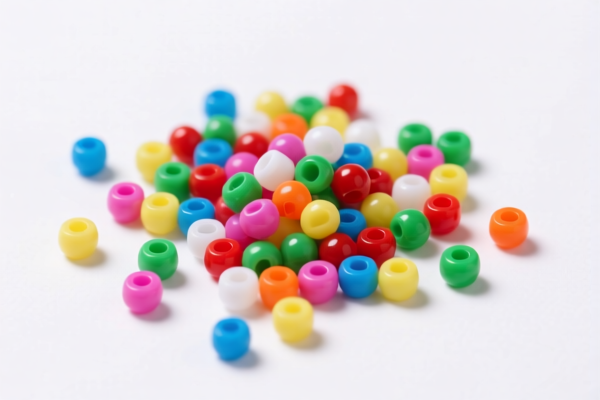
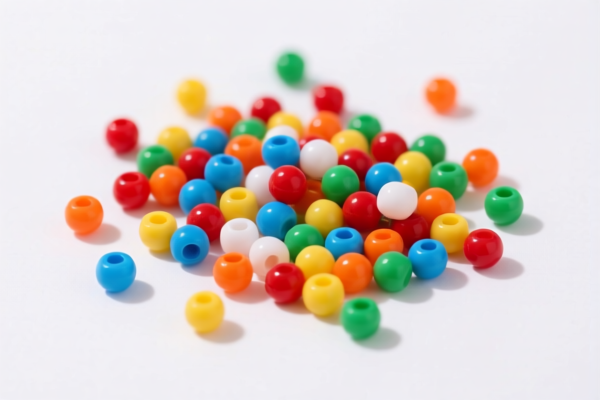
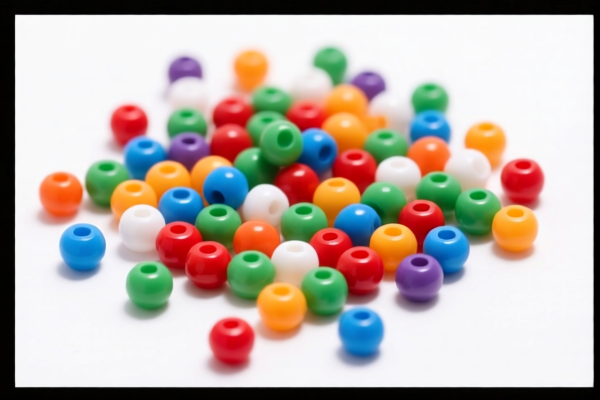
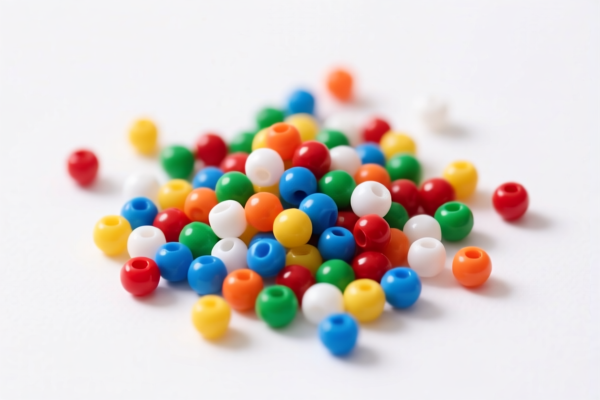
AI Analysis
🐉 Black Dragon Pattern Loose Beads (散装黑龙纹珠)
🌐 HS Code Classification & Customs Clearance Guide | 2026 Latest Tariff Analysis | Professional Strategy for US-China Trade
📌 Part 1: Product Definition & Classification Logic: Decoding the "Dragon"
Black Dragon Pattern Loose Beads are decorative components used in jewelry making or crafts. In international trade, their classification hinges on two critical factors: Material Authenticity (Gemstone vs. Imitation) and Form (Loose beads vs. Finished jewelry parts).
Key Distinction:
Natural/Artificial Gemstones: If the beads are made from natural stone, semi-precious stone, or glass/crystal classified as "stones," they fall under Chapter 71 (Pearls, Stones, Precious Metals).
Imitations: If the beads are made from plastic, resin, or base metals with a coating, they fall under Chapter 71 (Imitation Jewelry) or other chapters depending on material.
⚠️ Critical Classification Point:
- If the material is considered a "Gem or Semi-Gem" (even if dyed or carved), it aligns with HS 7116.
- If the material is explicitly an "Imitation" (e.g., plastic/resin base), it aligns with HS 7117.
- The "Loose Bead" format generally excludes finished jewelry claims, pushing them toward components/subclasses.
📦 Part 2: HS Code Classification Details (2026 Latest Customs Tariff Reference)
Based on the provided data, three primary HS Codes apply depending on the specific material composition and legal interpretation of "Black Dragon Pattern" beads.
| HS Code | Product Description (Based on Data) | Total Tax Rate | Tax Breakdown |
|---|---|---|---|
7116.20.50.00 |
Gem/Semi-Gem Beads | 17.5% | Base: 0.0% Additional (Sec 301): 7.5% Section 122 Tariff: 10% |
7116.20.40.00 |
Other Semi-Gem Articles (Loose) | 28.0% | Base: 10.5% Additional (Sec 301): 7.5% Section 122 Tariff: 10% |
7117.90.90.00 |
Imitation Jewelry Components | 28.5% | Base: 11.0% Additional (Sec 301): 7.5% Section 122 Tariff: 10% |
🔍 Analysis of Differences:
-7116.20.50.00offers the lowest tax burden (17.5%) because the Base Duty is 0%. This classification requires proving the material is a "Gem/Semi-Gem" (e.g., natural stone, high-quality glass/crystal treated as stone).
-7116.20.40.00has a higher base duty (10.5%), likely for "other" gem articles not specifically listed as beads or with different finishing.
-7117.90.90.00is the safest fallback for imitation materials (plastic, resin, base metal) where the "Dragon" pattern is decorative rather than intrinsic to a gemstone. The Base Duty is highest (11.0%).
💰 Part 3: 2026 Latest Tariff Rate Details (Detailed Breakdown)
✅ Applicable Country: United States (US)
✅ Origin: China (CN)
✅ Effective Date: Post-2025 Policies (Including Section 122)
🎯 1. 7116.20.50.00 — Gem/Semi-Gem Beads (Optimal Rate)
| Item | Detail |
|---|---|
| Base Duty | 0.0% |
| Section 301 Additional Duty | +7.5% (Standard USITC Footnote) |
| Section 122 Tariff | +10% (Specific US Import Measure) |
| Total Effective Rate | 17.5% |
| Calculation | CIF Value × 17.5% |
| De Minimis Eligibility | ❌ No (High duty rate likely excludes small package exemption under current US rules for China) |
📌 Interpretation:
- The 0% Base Duty makes this the most cost-effective option IF the beads qualify as "Gem/Semi-Gem."
- Section 122 (10%) is a critical additional cost for Chinese imports in this category.
- Total 17.5% is significantly lower than the imitation classification.
🎯 2. 7116.20.40.00 — Other Semi-Gem Articles
| Item | Detail |
|---|---|
| Base Duty | 10.5% |
| Section 301 Additional Duty | +7.5% |
| Section 122 Tariff | +10% |
| Total Effective Rate | 28.0% |
| Calculation | CIF Value × 28.0% |
📌 Interpretation:
- This rate applies if the beads are semi-gem but fall into a "other" category not covered by 7116.20.50.
- Higher base duty makes it less competitive than 7116.20.50.
🎯 3. 7117.90.90.00 — Imitation Jewelry Components
| Item | Detail |
|---|---|
| Base Duty | 11.0% |
| Section 301 Additional Duty | +7.5% |
| Section 122 Tariff | +10% |
| Total Effective Rate | 28.5% |
| Calculation | CIF Value × 28.5% |
📌 Interpretation:
- This is the highest rate. It applies if the beads are made from non-gem materials (e.g., plastic, resin, base metal).
- Even if the "Dragon" pattern is carved, if the material is not a "gem," this code applies.
🛠️ Part 4: Customs Clearance Practical Advice (Avoiding Pitfalls)
✅ 1. Material Verification is Key
| Material Type | Recommended HS Code | Reason |
|---|---|---|
| Natural Stone / Crystal / Glass (Treated as Gem) | 7116.20.50.00 |
Lowest duty (17.5%). Must provide material test reports. |
| Semi-Precious Stone (Other forms) | 7116.20.40.00 |
Higher duty (28%). Use only if 7116.20.50 is rejected. |
| Plastic / Resin / Base Metal | 7117.90.90.00 |
Highest duty (28.5%). Mandatory if not gemstone. |
⚠️ Warning:
- Do NOT misdeclare plastic beads as "Gemstones" to save taxes. Customs labs can easily identify the material.
- Penalty Risk: Fraudulent declaration can lead to seizure, fines, and loss of import privileges.
✅ 2. Documentation Checklist
| Document | Requirement | Purpose |
|---|---|---|
| Product Specification Sheet | Must state material composition (e.g., "Natural Amethyst," "Resin") | Determines HS Code |
| Material Test Report | Third-party lab report confirming gem/semi-gem status | Supports 7116 classification |
| Commercial Invoice | Must describe item as "Black Dragon Pattern Loose Beads" | Clear description |
| Photos of Product | Show texture, transparency, and pattern | Visual evidence for customs |
| Origin Certificate | Proof of Chinese origin | Applies US-China tariff rates |
✅ 3. Declaration Tips
🔥 "Material First, Pattern Second"
- Always declare the primary material first.
- Example: "Loose Beads, Natural Black Onyx, Carved Dragon Pattern" → Supports7116.20.50.00.
- Example: "Loose Beads, Resin, Printed Dragon Pattern" → Requires7117.90.90.00.
✅ 4. Special Considerations for "Section 122"
- Section 122 Tariff (10%) applies to all Chinese-origin goods in this category.
- There is no exemption for small shipments.
- Plan your pricing model to include this 10% cost in addition to the base duty.
🌍 Part 5: Global Market Comparison (2026)
| Market | Recommended HS Code | Est. Total Duty | Key Requirement |
|---|---|---|---|
| 🇺🇸 USA | 7116.20.50.00 |
17.5% | Material Test Report |
| 🇺🇸 USA | 7117.90.90.00 |
28.5% | Material Test Report |
| 🇪🇺 EU | 7116.20 / 7117.90 |
~0-2.5% | CE Mark (if jewelry) |
| 🇨🇳 China | 7116.20 / 7117.90 |
5-10% | CCC (if applicable) |
📌 Note:
- The US is the most challenging market due to Section 301 (7.5%) and Section 122 (10%) additions.
- EU/China have lower tariffs but may require safety certifications (CE, RoHS) for jewelry components.
📌 Part 6: Common Mistakes & Pitfalls
❌ Mistake 1: Declaring plastic beads as "Gemstones"
👉 Consequence: Customs audit, fines, and retroactive duty payment (up to 28.5% difference).
✅ Solution: Always use Material Test Reports.
❌ Mistake 2: Ignoring "Section 122"
👉 Consequence: Underestimating landed cost by 10%.
✅ Solution: Include 10% in your cost calculator.
❌ Mistake 3: Vague Description "Beads"
👉 Consequence: Customs may assign a default higher rate or hold shipment for classification.
✅ Solution: Use "Loose Beads, [Material], Dragon Pattern".
🎯 Part 7: Conclusion & Action Plan
🎯 Key Takeaway:
✅ Best Case: If beads are Gem/Semi-Gem, use
7116.20.50.00for 17.5% total duty.
⚠️ Safe Case: If beads are Imitation, use7117.90.90.00for 28.5% total duty.
📌 Action Items:
1. Test Material: Get a third-party lab report to confirm if beads are gemstone or imitation.
2. Choose HS Code: Select 7116.20.50.00 if gemstone; 7117.90.90.00 if imitation.
3. Prepare Docs: Invoice, Packing List, Material Test Report, Origin Certificate.
4. Calculate Cost: Include 17.5% or 28.5% duty + shipping + insurance.
🚀 Pro Tip:
If you have a mix of materials, separate shipments by HS Code to optimize tax efficiency. Do not mix gemstone and plastic beads in one declaration unless you can prove the majority value.
✨ Professional Customs Clearance Starts with Accurate Classification!
💼 Every Percent Counts: 17.5% vs. 28.5% is a 11% Difference!
Customer Reviews
About HS Code Classification
The Harmonized System (HS) is an internationally standardized nomenclature developed by the World Customs Organization (WCO) to classify traded products. Over 200 countries use the HS system as the basis for customs tariffs, trade statistics, and import/export regulations.
Each HS code follows a hierarchical structure:
- Chapter (2 digits) — Broad category of goods (e.g., Chapter 84: Machinery and Mechanical Appliances)
- Heading (4 digits) — More specific grouping within the chapter
- Subheading (6 digits) — Internationally standardized breakdown, used by all WCO member countries
- National subdivisions (8-10 digits) — Country-specific extensions for further classification, such as US HTSUS 10-digit codes
Correct HS code classification is essential for smooth customs clearance, accurate duty payment, and compliance with trade regulations. Misclassification can lead to customs delays, overpayment of duties, or penalties.
When importing from CN to US, the applicable tariff rates may include:
- Most-Favored-Nation (MFN) rate — The standard duty rate applied to WTO members
- General rate — Applied to countries without trade agreements
- Trade remedy duties — Additional tariffs such as Section 301 (anti-dumping), Section 232 (national security), or countervailing duties
The information provided on this page is for reference purposes only. For official classification, please consult with your local customs authority or a licensed customs broker.