Black European Golf Travel Bag
CN → USProduct Images
AI Analysis
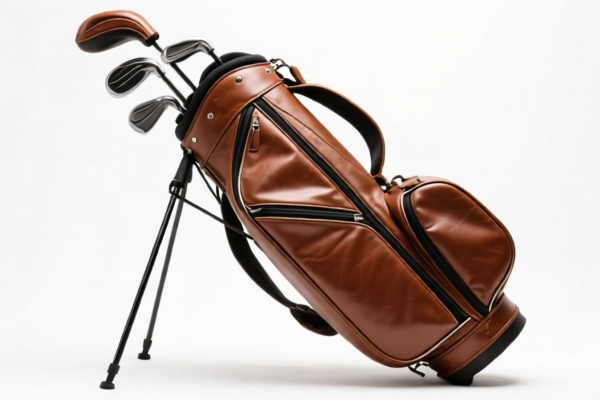
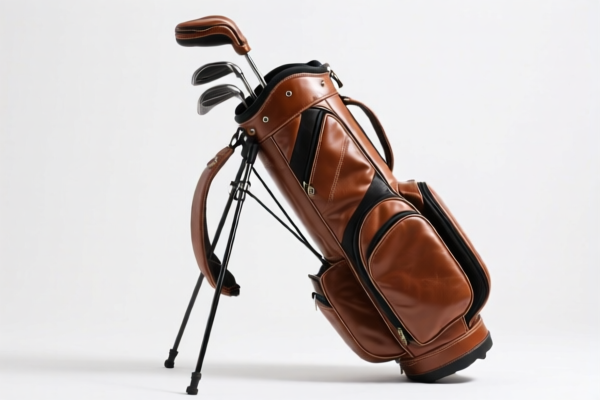
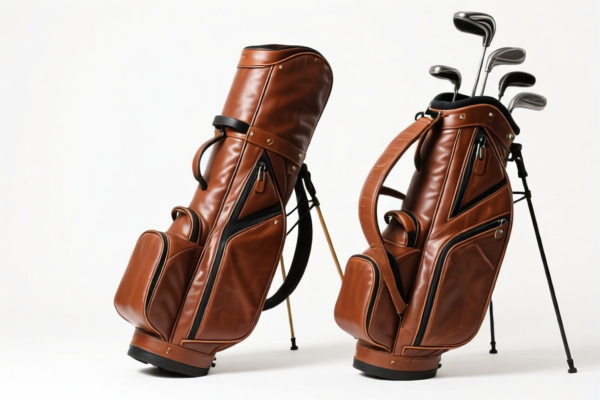
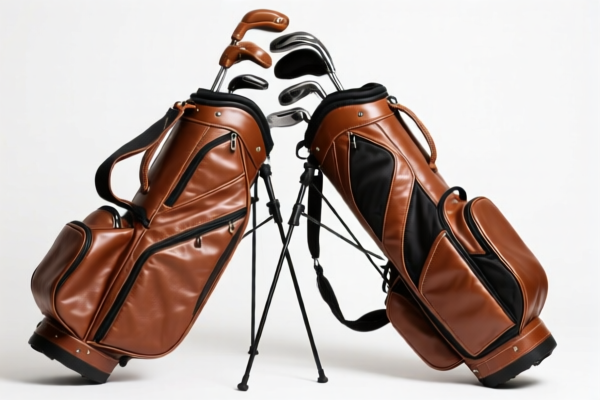
⛳️ Black European Golf Travel Bag (Golf Trunk/Travel Case)
🌐 HS Code Reference & Clearance Guide | 2026 Latest Tariff Analysis | Professional Customs Strategy
📌 I. Product Definition & Classification: Is It a "Bag" or a "Case"?
A Golf Travel Bag (often called a Golf Trunk, Hard Case, or Travel Cover) is a protective container designed specifically to transport golf clubs during air travel or shipping. In international trade, it is critical to distinguish between:
- Soft-Sided Travel Bags: Made of fabric, nylon, or leather with padding. These are classified as "Other Bags" (Textiles/Leather).
- Hard-Sided Trunks/Cases: Made of plastic, aluminum, or composite materials. These are classified as "Trunks, Suitcases, and Box Purses" (Plastics/Metals).
⚠️ Key Distinction Point:
- If the primary structure is fabric/textile with zippers/straps → Category 42 (Leather Goods/Travel Goods) or Category 63 (Other Made-Up Articles).
- If the primary structure is hard plastic/metal → Category 42 (Plastic Trunks) or Category 76 (Aluminum Cases).
- Material determines the HS Code chapter. "Black" and "European Style" are aesthetic descriptors and do not affect the tariff classification, but the material does.
📦 II. HS Code Classification Details (2026 Latest Tariff Alignment)
Below are the most likely HS Codes for a "Black European Golf Travel Bag," categorized by material.
| HS Code | Product Description | Applicable Scenario | Material |
|---|---|---|---|
| 4202.92.10.00 | Trunks, suitcases, and box pursaches, with outer surface of plastic sheeting or of textile materials | Soft-sided golf travel bags (Nylon/Polyester) | Textile/Plastic Surface |
| 4202.99.00.00 | Trunks, suitcases, and box pursaches, with outer surface of other materials (e.g., Leather, Rubber, Hard Composite) | High-end hard-shell or leather-trimmed cases | Other |
| 4202.12.90.00 | Trunks, suitcases, and box pursaches, with outer surface of plastic sheeting or of textile materials | If the bag is primarily for personal use and meets specific "personal items" criteria | Textile/Plastic |
| 7616.99.90.00 | Other articles of aluminum | Aluminum hard-shell golf cases | Aluminum |
| 3926.90.90.90 | Other articles of plastic | Plastic hard-shell golf cases | Plastic |
🔍 Priority Note:
- Most standard soft golf travel bags (fabric, padded) fall under 4202.92.10.00 or 4202.99.00.00.
- Hard cases (plastic) may fall under 3926.90.90.90 or 4202.99.00.00 depending on whether they are considered "trunks" (4202) or "other plastic articles" (3926). Customs often classifies golf hard cases under 4202 if they have handles/straps typical of luggage.
- "European Style" usually implies a specific aesthetic (e.g., vintage leather, structured design), which may push a soft bag toward 4202.19.00.00 if it resembles a briefcase or handbag, but 4202.92.10.00 is safer for generic golf bags.
💰 III. 2026 Latest Tariff Rate Details (Including Surcharges & Policy Add-ons)
✅ Applicable Country: United States (US)
✅ Country of Origin: China (CN)
✅ Effective Date: 2025/2026 (Current Trade Environment)
🎯 1. 4202.92.10.00 —— Soft-Sided Golf Travel Bag (Textile/Plastic Surface)
| Item | Content |
|---|---|
| Base Duty Rate | 0% (ad valorem) for most travel goods under HTSUS 4202.92.10 |
| USITC Surcharge | +25% (Section 301 Tariffs on Chinese Textiles/Travel Goods) |
| IEEPA Surcharge | +10% (On China/Hong Kong products, effective from Nov 10, 2025) |
| Total Duty Rate | 35% |
| Calculation Basis | CIF Value × 35% |
| De Minimis Eligibility | ❌ No (denied for Section 301 items) |
| Legal Reference Path | IEEPA:9903.01.25 → Section301:9903.88.01 → USITC:4202.92.10.00 |
📌 Explanation:
- Base 0%: Travel bags of textile materials generally have low base duties.
- 35% Total: Due to Section 301 (25%) and IEEPA (10%) tariffs on Chinese imports, the effective cost is high.
- Critical: Do not confuse with "clothing" (which may have different rates). This is a "travel good."
🎯 2. 4202.99.00.00 —— Hard-Shell or Leather-Trimmed Golf Case
| Item | Content |
|---|---|
| Base Duty Rate | 0% - 12% (varies by material) |
| USITC Surcharge | +25% (if material triggers Section 301, e.g., plastic/composite) |
| IEEPA Surcharge | +10% |
| Total Duty Rate | 35% (if under Section 301 scope) or 12-22% (if exempt) |
| Calculation Basis | CIF Value × Applicable Rate |
| De Minimis Eligibility | ❌ No |
📌 Note:
- If the case is Aluminum (7616.99.90.00), base duty is 0%, but Section 301 + IEEPA may still apply depending on specific tariff lists.
- If the case is Plastic (3926.90.90.90), base duty is 5.6%, plus 35% surcharges = ~40.6% total.
🛠️ IV. Clearance Practical Advice (Field Avoidance Guide)
✅ 1. Required Documentation Checklist
| Document | Must Provide | Notes |
|---|---|---|
| ✅ Product Description | ✔️ | Must specify: "Golf Travel Bag," Material (e.g., 600D Polyester), Hard/Soft, Dimensions |
| ✅ Material Composition | ✔️ | % of textile, plastic, leather, aluminum |
| ✅ Product Photos | ✔️ | Front, back, interior, labels, zippers/handles |
| ✅ Commercial Invoice | ✔️ | Value must be CIF |
| ✅ Packing List | ✔️ | Include dimensions and weight for freight calculation |
| ✅ Certificate of Origin | ✔️ | If non-China, may reduce tariffs |
✅ 2. Declaration Tips (Key Mnemonics)
🔥 "Material First, Function Second, Name Precise, Tariff Minimized!"
| Scenario | Correct Declaration | Common Mistake |
|---|---|---|
| Soft Golf Bag | 4202.92.10.00 "Golf Travel Bag, Textile Surface" | Misdeclared as "Clothing" → Higher Tax |
| Hard Plastic Case | 3926.90.90.90 or 4202.99.00.00 | Misdeclared as "Sports Equipment" → No, it's a container |
| Aluminum Case | 7616.99.90.00 | Misdeclared as "Plastic" → Risk of Audit |
| Bag with Wheels | 4202.92.10.00 | If wheels are integral, it may be classified as luggage |
✅ 3. Special Situations
| Situation | Handling Advice |
|---|---|
| OEM Custom Design | Provide design specs to prove material composition. "European Style" is not a tariff term. |
| Sample for Evaluation | If value < $800, de minimis may apply only if not subject to Section 301. Check list! |
| Set with Clubs | If sold with golf clubs, the bag may be classified with the clubs (9506.32) only if they are in the same shipment and clearly accessories. Risk: Higher complexity. |
| Used Golf Bags | Duty-free if clearly used and declared as such, but must provide proof. |
🌍 V. Global Market Clearance Comparison (2026 Latest)
| Country/Region | Recommended HS Code | Duty Rate | Certification | Notes |
|---|---|---|---|---|
| 🇺🇸 USA | 4202.92.10.00 |
35% (China) | None | High surcharge. |
| 🇨🇳 China | 4202.92.10.00 |
8% | None | Base import duty. |
| 🇪🇺 EU | 4202.92.10 |
4.7% | CE (if electronics, not here) | Standard textile duty. |
| 🇬🇧 UK | 4202.92.10 |
4.7% | UKCA | Post-Brexit rules. |
| 🇦🇺 Australia | 4202.92.10 |
5% | None | GST 10% applies. |
📌 Conclusion:
- USA is the most expensive market due to 301/IEEPA tariffs.
- EU/UK/China have standard duties (4-8%) but no surprise surcharges.
- Strategy: For US market, consider tariff engineering (e.g., using non-chinese materials) or third-party consolidation in Vietnam/Mexico (if applicable).
📌 VI. Common Errors & Pitfalls (Blood Lessons)
❌ Mistake 1: Declaring as "Golf Clubs" (HS 9506.32)
👉 Consequence: Wrong classification. Bags are containers, not sports equipment. Penalty + Back Duties.
❌ Mistake 2: Ignoring Material Composition
👉 Consequence: If it's 60% Nylon, 40% Plastic, misclassifying as pure Textile can lead to audits. Be precise.
❌ Mistake 3: Using "Travel Bag" without specifying "Golf"
👉 Consequence: May be classified under general luggage (4202.12/4202.22) with different rates. Specify "Golf" to align with trade data.
❌ Mistake 4: Assuming "European" means EU Origin
👉 Consequence: Origin is based on where it was made, not style. Provide Proof of Origin.
✅ Correct Approach:
"Golf Travel Bag, Soft-Sided, 600D Polyester Outer, Cotton Lining, with Wheels and Handle, Model XYZ, Color Black"
🎯 VII. Conclusion: Precision Saves Money!
🎯 Remember Mnemonics:
🔹 "Soft is 4202.92, Hard is 4202.99 or 3926"
🔹 "China to USA? Prepare for 35% Tax!"
🔹 "Material is King, Name is Queen, Declaration is Life!"
📌 Pro Tip:
If your golf bags are imported into the US from China, consider:
1. Applying for an Exclusion (if available for your specific HTS).
2. Using a Foreign Trade Zone (FTZ) to defer duties.
3. Switching Suppliers to Vietnam/Mexico to bypass Section 301.
📣 Immediate Action:
📞 Consult a Customs Broker + Provide Material Specs + Verify Section 301 Applicability
🚀 Avoid Surprise Tariffs, Ensure Smooth Clearance, Maximize Profit!
✨ Professional Classification, Starts with the Right HS Code!
💼 Every Percent Saved is Pure Profit!
Customer Reviews
About HS Code Classification
The Harmonized System (HS) is an internationally standardized nomenclature developed by the World Customs Organization (WCO) to classify traded products. Over 200 countries use the HS system as the basis for customs tariffs, trade statistics, and import/export regulations.
Each HS code follows a hierarchical structure:
- Chapter (2 digits) — Broad category of goods (e.g., Chapter 84: Machinery and Mechanical Appliances)
- Heading (4 digits) — More specific grouping within the chapter
- Subheading (6 digits) — Internationally standardized breakdown, used by all WCO member countries
- National subdivisions (8-10 digits) — Country-specific extensions for further classification, such as US HTSUS 10-digit codes
Correct HS code classification is essential for smooth customs clearance, accurate duty payment, and compliance with trade regulations. Misclassification can lead to customs delays, overpayment of duties, or penalties.
When importing from CN to US, the applicable tariff rates may include:
- Most-Favored-Nation (MFN) rate — The standard duty rate applied to WTO members
- General rate — Applied to countries without trade agreements
- Trade remedy duties — Additional tariffs such as Section 301 (anti-dumping), Section 232 (national security), or countervailing duties
The information provided on this page is for reference purposes only. For official classification, please consult with your local customs authority or a licensed customs broker.