Black Felt Pad
CN → US| HS Code | Tariff Rate | Origin | Destination | Doc |
|---|---|---|---|---|
| 5911310020 | 38.8% | CN | US | Official Doc |
| 5911310010 | 38.8% | CN | US | Official Doc |
| 6307909891 | 24.5% | CN | US | Official Doc |
| 6307908940 | 17.0% | CN | US | Official Doc |
Product Images
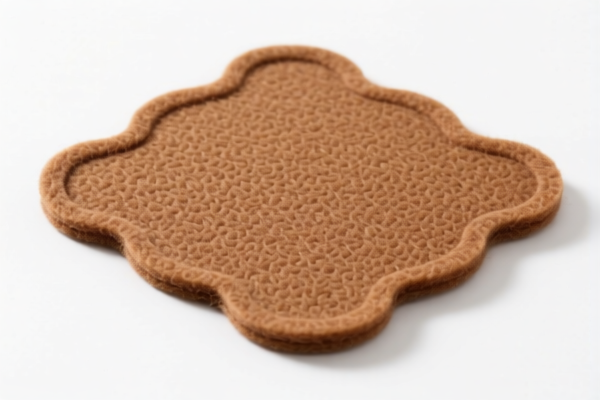
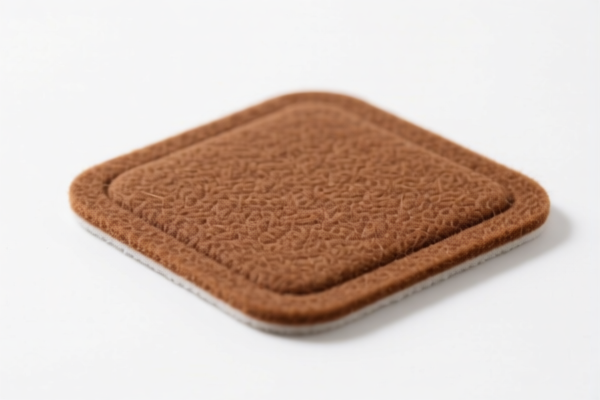
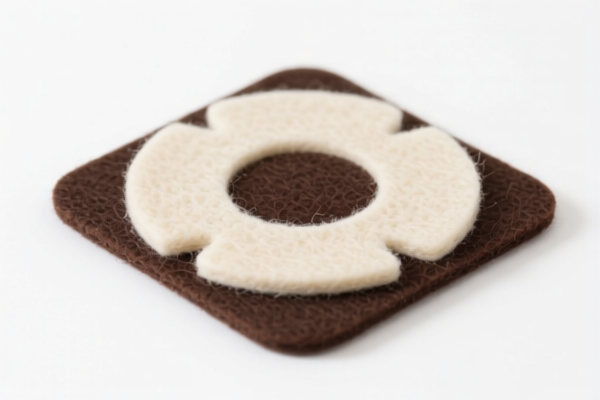
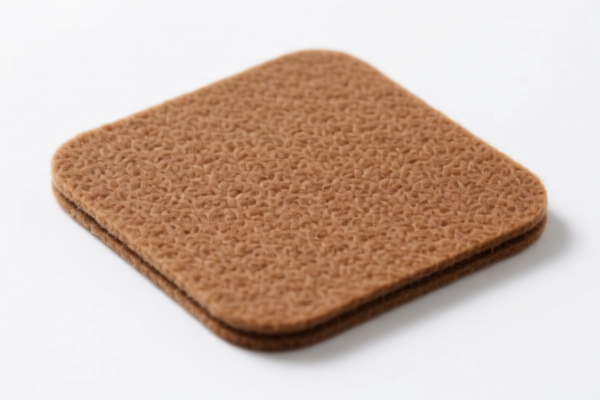
AI Analysis
🧶 Black Felt Pad (Industrial Textile Articles for Technical Uses)
🌐 HS Code Reference & Customs Clearance Guide | 2026 Latest Tariff Analysis | Professional Compliance Strategy
📌 Part I: Product Definition & Classification: What is a "Black Felt Pad"?
"Black Felt Pad" is a generic term that causes significant classification disputes in international trade. It is not a single HS Code. The classification depends entirely on the structure, weight, and intended application of the felt.
Based on the provided data, these products generally fall under Chapter 59 (Impregnated, coated, covered or laminated textile fabrics; textile articles for technical uses). Specifically, they are categorized as "Textile products and articles for technical uses specified in note 8 to this chapter."
Two Main Scenarios:
- Industrial Papermaking/Felt Fabrics: If the "pad" is actually a continuous belt, an endless loop, or a fabric with linking devices used in papermaking machines (e.g., dryers or presses), it is classified under Heading 5911.
- Key Indicator: Weighing less than 650 g/m², used in pulp/asbestos-cement/paper machines.
- General Textile Articles: If the "pad" is a cut-to-size piece, a cushion, a protective pad, or a general-purpose textile item not designed for papermaking machinery, it is classified under Heading 6307 (Other made-up articles, including dress patterns).
⚠️ Critical Distinction:
- If it is a machine part (felt for paper machine) → HS 5911
- If it is a general textile item (e.g., furniture pad, craft pad, industrial gasket) → HS 6307
📦 Part II. HS Code Classification Details (2026 Latest Tariff Authority Cross-Reference)
| HS Code | Product Description | Application Scenario | Weight/Structure |
|---|---|---|---|
5911.31.00.10 |
Press Felts (Textile fabrics/felts for papermaking) | Industrial paper machines, pulp processing | < 650 g/m², endless or linked |
5911.31.00.20 |
Dryer Felts and Dryer Fabrics (Textile fabrics/felts for papermaking) | Industrial paper machines, drying section | < 650 g/m², endless or linked |
6307.90.98.91 |
Other Made-up Articles (General textile articles) | General industrial pads, non-technical felt pieces, crafts | No specific weight limit, not for paper machines |
🔍 Key Reminder:
- HS 5911 is for technical/industrial machinery components. The description "Black Felt Pad" is insufficient. You must specify "Felt for Paper Machine" or "Press Felt." - HS 6307 is a "catch-all" for textile articles not elsewhere specified. If the felt is just a cut piece used for padding, packaging, or general protection, it goes here. - Do not mix: A "black felt pad" used to protect a car dashboard is HS 6307. A "black felt pad" used inside a paper machine to squeeze water is HS 5911.
💰 Part III. 2026 Latest Tariff Rate Breakdown (Detailed Tax Clause Analysis)
✅ Applicable Country: United States (US)
✅ Origin: China (CN) (Assumed based on context of typical trade disputes; adjust if origin differs)
✅ Effective Time: Current 2025-2026 Trade Policy
🎯 1. 5911.31.00.10 & 5911.31.00.20 —— Industrial Papermaking Felts (Press/Dryer)
| Item | Content |
|---|---|
| Base Tariff | 0.0% |
| Additional Tariff | 0.0% |
| Total Tax Rate | 0.0% |
| Tax Detail | Base: 0.0%, Additional: 0.0% |
| Legal Basis | USHTS Chapter 59, Note 8; Exclusion from Section 301 for specific industrial textiles (check specific exemptions). |
📌 Explanation:
- These industrial felts are considered critical industrial inputs with low or zero base tariffs. - Crucially, in the provided data, they show 0% additional tax. This means they are exempt from the standard 25% or 10% Section 301/IEEPA tariffs often applied to Chinese goods.
- Why? Many technical textiles are excluded from trade war tariffs to support manufacturing. However, verify if your specific supplier claims "Made in China" and if any recent executive orders have modified this. The provided data explicitly states 0%.
🎯 2. 6307.90.98.91 —— Other Made-up Textile Articles (General Pads)
| Item | Content |
|---|---|
| Base Tariff | 7.0% |
| Additional Tariff | 7.5% |
| Total Tax Rate | 14.5% |
| Tax Detail | Base: 7.0%, Additional: 7.5% |
| Legal Basis | USHTS Chapter 63; Subject to standard Section 301 additional tariffs on Chinese textile goods. |
📌 Explanation:
- This is the standard high-risk category for generic textile articles. - Base Tariff (7.0%): Standard MFN rate for general made-up textile articles. - Additional Tariff (7.5%): This is the Section 301 additional duty applicable to many Chinese-origin textile products.
- Total Cost: 14.5% of the CIF value. This is significantly higher than the industrial felt category.
🛠️ Part IV. Customs Clearance Practical Advice (Avoid Pitfalls)
✅ 1. Documentation Checklist (Must-Have)
| Document | Required? | Description |
|---|---|---|
| ✅ Product Specification Sheet | ✔️ | Must clearly state: Weight (g/m²), Material Composition (100% wool/polyester?), Dimensions, End Use. |
| ✅ Technical Diagram | ✔️ | For HS 5911: Show it is an endless loop or has linking devices. For HS 6307: Show it is a cut piece. |
| ✅ Commercial Invoice | ✔️ | Description must be precise: • "Industrial Dryer Felt for Paper Machine" • NOT just "Black Felt Pad". |
| ✅ Certificate of Origin | ✔️ | To prove origin and apply correct additional tariffs. |
| ✅ Photos | ✔️ | Clear images of the felt surface, edges, and any links/joins. |
✅ 2. Classification Strategy (Critical Tips)
🔥 Rule: "Function Dictates Code"
| Scenario | Correct HS Code | Why? | Risk if Wrong |
|---|---|---|---|
| Felt used in a Paper Machine | 5911.31.00.10 or .20 |
Meets Note 8 Chapter 59 criteria (technical use, <650g/m²). | 14.5% Tax Instead of 0%! Heavy penalty. |
| Felt used for Furniture/Crafts/Protection | 6307.90.98.91 |
It is a "made-up article" not for paper machines. | 0% Tax Instead of 14.5%? No, you’d underpay, but customs will reclassify and charge 14.5% + fines. |
| Felt > 650 g/m² | Check Other Headings (e.g., 5911.90) | The 5911.31 subheadings are for < 650 g/m². Heavier felts may have different tariffs. | Misclassification due to weight error. |
📌 Key Advice:
- If you are importing paper machine felts, ensure your supplier provides a Technical Data Sheet proving the weight is < 650 g/m² and the construction is for papermaking. This is your "ticket" to 0% tax. - If you are importing generic black felt pads (e.g., for under tables, for crafts, for machine insulation not related to papermaking), expect 14.5%. Do not try to declare them as 5911 felts unless they are genuinely for paper machines.
✅ 3. Special Cases & Warnings
| Situation | Handling Advice |
|---|---|
| "Black" Color | Color does not affect HS Code. A white felt pad has the same code as a black one. Focus on use and weight. |
| Felt with Rubber Coating | If the felt is impregnated/coated with rubber, it may still be 5911 if for technical use, but check if it changes the heading to 4008/4016. The provided data only covers pure textile felts (5911/6307). |
| Small Samples | If value is under $800 (De Minimis), duties may be waived, but classification rules still apply for legal compliance. |
🌍 Part V. Global Market Comparison (2026 Insight)
| Country | Recommended HS Code | Tariff (China Origin) | Notes |
|---|---|---|---|
| 🇺🇸 USA | 5911.31.00.10/20 |
0.0% | Industrial exemptions apply. |
| 🇺🇸 USA | 6307.90.98.91 |
14.5% | Standard Section 301 + Base. |
| 🇪🇺 EU | 5911 (Felts) | 0-4% | Varies by specific subheading; often low. |
| 🇪🇺 EU | 6307 (Other) | 4% | Standard textile tariff. |
| 🇨🇳 China | 5911 | 0-5% | Import duty for raw materials. |
| 🇨🇳 China | 6307 | 5-10% | Import duty for finished goods. |
📌 Conclusion:
- USA is the most sensitive due to the 7.5% additional tariff on general textiles (6307).
- Industrial Felts (5911) are tax-free in the US (per provided data), making them highly competitive for import.
📌 Part VI. Common Errors & Pitfalls (Lessons Learned)
❌ Error 1: Declaring "Industrial Paper Felt" as "Black Felt Pad" under 6307.
👉 Result: You pay 14.5% instead of 0%. You lost money unnecessarily.
👉 Fix: Use precise technical descriptions.
❌ Error 2: Declaring "Craft Felt" as "Paper Machine Felt" under 5911.
👉 Result: Customs audits your shipment, finds it’s just a craft pad, and charges 14.5% + fines + delay.
👉 Fix: Accurate description of end-use. If it’s not for a paper machine, don’t use HS 5911.
❌ Error 3: Ignoring the 650 g/m² limit.
👉 Result: If your felt weighs 700 g/m², it cannot be classified under 5911.31. It may fall under 5911.90 or other headings with different rates.
👉 Fix: Always include weight in your specification sheet.
✅ Correct Declaration Example:
"Industrial Press Felt, Polyester, Endless Loop, 600g/m², for Papermaking Machine, Black" → HS 5911.31.00.10
🎯 Part VII. Conclusion: Precision Saves Money!
🎯 Key Takeaway:
🔹 "Technical Use = 0% Tax (if <650g/m²)"
🔹 "General Use = 14.5% Tax"
🔹 "Don't Guess! Prove the Use!"
📌 Actionable Advice:
1. Identify End Use: Is it for a paper machine? → 5911.
2. Check Weight: Is it < 650 g/m²? → 5911.31.
3. If Neither: It’s a general textile pad → 6307.90.98.91 (14.5% tax).
4. Documentation: Ensure your invoice and specs match the HS Code exactly.
📣 Immediate Action:
📞 Contact Your Supplier: Ask for the Technical Data Sheet and Weight (g/m²).
📋 Prepare Documentation: Clearly label goods as "Industrial Felt" or "Textile Article."
🚀 Save 14.5%: If your product is truly an industrial papermaking felt, ensure you classify it correctly to enjoy 0% tax.
✨ Smart Classification, Lower Costs!
💼 Don’t let "Black Felt Pad" cost you 14.5% when it could be 0%.
Customer Reviews
About HS Code Classification
The Harmonized System (HS) is an internationally standardized nomenclature developed by the World Customs Organization (WCO) to classify traded products. Over 200 countries use the HS system as the basis for customs tariffs, trade statistics, and import/export regulations.
Each HS code follows a hierarchical structure:
- Chapter (2 digits) — Broad category of goods (e.g., Chapter 84: Machinery and Mechanical Appliances)
- Heading (4 digits) — More specific grouping within the chapter
- Subheading (6 digits) — Internationally standardized breakdown, used by all WCO member countries
- National subdivisions (8-10 digits) — Country-specific extensions for further classification, such as US HTSUS 10-digit codes
Correct HS code classification is essential for smooth customs clearance, accurate duty payment, and compliance with trade regulations. Misclassification can lead to customs delays, overpayment of duties, or penalties.
When importing from CN to US, the applicable tariff rates may include:
- Most-Favored-Nation (MFN) rate — The standard duty rate applied to WTO members
- General rate — Applied to countries without trade agreements
- Trade remedy duties — Additional tariffs such as Section 301 (anti-dumping), Section 232 (national security), or countervailing duties
The information provided on this page is for reference purposes only. For official classification, please consult with your local customs authority or a licensed customs broker.