Black Felt Storage Bucket
CN → US| HS Code | Tariff Rate | Origin | Destination | Doc |
|---|---|---|---|---|
| 4202929700 | 52.6% | CN | US | Official Doc |
| 6307909875 | 17.0% | CN | US | Official Doc |
| 4202999000 | 55.0% | CN | US | Official Doc |
| 6307909891 | 24.5% | CN | US | Official Doc |
| 5603949090 | 35.0% | CN | US | Official Doc |
Product Images

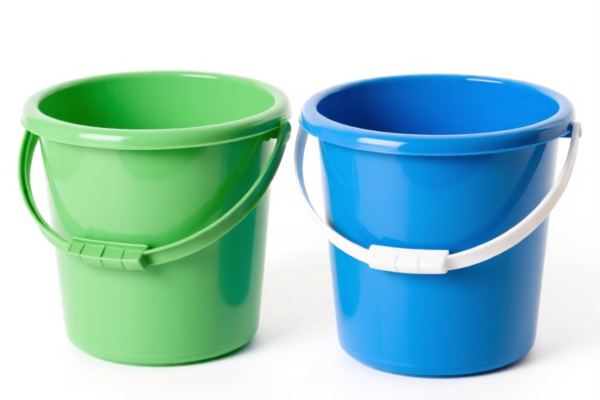
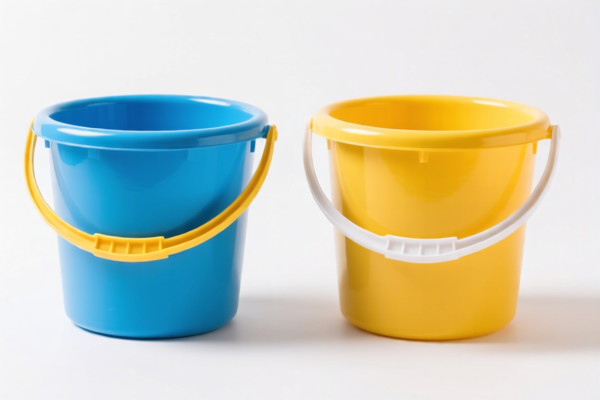
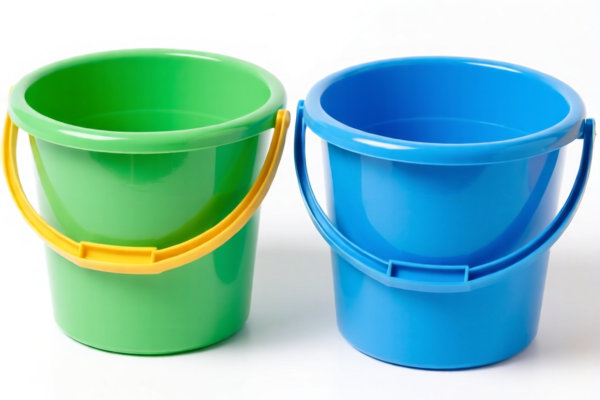
AI Analysis
🎒 Black Felt Storage Bucket (Felt Organizer Bin)
🌐 HS Code Reference & Customs Clearance Guide | 2026 Latest Tariff Analysis | Professional Level Customs Strategy
📌 1. Product Definition and Classification: Do You Really Understand "Felt Storage Bucket"?
A Black Felt Storage Bucket is a soft-sided container used for organizing household items, toys, office supplies, or bathroom essentials. In international trade, its classification depends heavily on two factors:
1. Form/Shape: It is a finished container/bag-like structure.
2. Material: It is made of felt (a non-woven textile material, typically wool or synthetic fibers).
⚠️ Key Distinction:
- If classified as a textile article (generic non-specific textile product) → Chapter 63 (Lower duties, fewer penalties).
- If classified as a bag/container (specific use case) → Chapter 42 (Higher duties, subject to aggressive US sanctions).
📦 2. HS Code Classification Details (2026 Latest Tariff Authority Cross-Reference)
| HS Code | Product Description | Applicable Scenario | Total Tax Rate (US Import from CN) | Tax Breakdown |
|---|---|---|---|---|
6307.90.98.75 |
Other made-up articles of textile materials (Generic "Other" Textile Article) | General felt storage, soft bins, non-specific utility bags | 17.0% | Base: 7.0%, Section 301: 0%, 122 Section: 10% |
6307.90.98.91 |
Other made-up articles of textile materials (Non-specific textile item) | Generic felt organizers, soft containers without specific bag features | 24.5% | Base: 7.0%, Section 301: 7.5%, 122 Section: 10% |
5603.94.90.90 |
Non-woven fabrics, weighted ≥ 70g/m² (Treated as Non-woven Fabric) | Classified by material substance rather than form | 35.0% | Base: 0.0%, Section 301: 25.0%, 122 Section: 10% |
4202.99.90.00 |
Articles of apparel accessories and travel goods / Other bags (Specific Bag Container) | Felt bags/buckets with handles, specific storage function | 55.0% | Base: 20.0%, Section 301: 25.0%, 122 Section: 10% |
4202.92.97.00 |
Bags with outer surface of textile materials (Specific Textile Bag) | Felt bags/buckets clearly defined as textile containers | 52.6% | Base: 17.6%, Section 301: 25.0%, 122 Section: 10% |
🔍 Key Insight:
- The biggest difference lies between Chapter 63 (General Textile Articles) and Chapter 42 (Specific Bags/Containers).
- Chapter 63 codes (6307.xxxx) attract significantly lower tariffs and fewer Section 301 penalties.
- Chapter 42 codes (4202.xxxx) are subject to high "Section 301" tariffs (25%) and "122 Section" tariffs (10%), pushing total rates above 50%.
💰 3. 2026 Latest Tariff Rate Details (Including Surtaxes, Policy Add-ons)
✅ Applicable Country: United States (US)
✅ Country of Origin: China (CN)
✅ Effective Time: From November 10, 2025 (and subsequent imports)
🎯 1. 6307.90.98.75 —— Other Made-up Textile Articles (Best Case Scenario)
| Item | Content |
|---|---|
| Base Tariff | 7.0% (Ad Valorem) |
| USITC Surtax (Section 301) | 0% |
| Section 122 Surtax | +10% |
| Total Rate | 17.0% |
| Tax Calculation | CIF Value × 17% |
| De Minimis Eligibility | ❌ No (Denied) |
| Legal Basis Path | HTSUS:6307.90.98.75 → 122 Section:10% |
📌 Explanation:
- This code treats the felt bucket as a generic "made-up textile article" rather than a specific "bag."
- Crucially, it avoids the 25% Section 301 tariff, resulting in the lowest possible tax rate (17%).
- This is the optimal classification if the product can be argued as a general textile item.
🎯 2. 6307.90.98.91 —— Other Made-up Textile Articles (Alternative General Item)
| Item | Content |
|---|---|
| Base Tariff | 7.0% |
| USITC Surtax (Section 301) | +7.5% |
| Section 122 Surtax | +10% |
| Total Rate | 24.5% |
| Tax Calculation | CIF Value × 24.5% |
| De Minimis Eligibility | ❌ No (Denied) |
| Legal Basis Path | HTSUS:6307.90.98.91 → USITC:7.5% → 122 Section:10% |
📌 Note:
- Slightly higher than98.75due to a partial Section 301 surtax (7.5%).
- Still significantly cheaper than Chapter 42 classifications.
- Use if98.75is not supported by specific product descriptors.
🎯 3. 5603.94.90.90 —— Non-woven Fabrics (Material-Based Classification)
| Item | Content |
|---|---|
| Base Tariff | 0.0% |
| USITC Surtax (Section 301) | +25% |
| Section 122 Surtax | +10% |
| Total Rate | 35.0% |
| Tax Calculation | CIF Value × 35% |
| De Minimis Eligibility | ❌ No (Denied) |
| Legal Basis Path | HTSUS:5603.94.90.90 → USITC:25% → 122 Section:10% |
📌 Warning:
- While the base tariff is 0%, the 25% Section 301 surtax kicks in because it is often treated as a textile good under trade restrictions.
- Risky classification if customs officials view it as a "finished container" rather than "fabric."
🎯 4. 4202.99.90.00 & 4202.92.97.00 —— Specific Bags/Containers (High Risk Scenario)
| Item | Content |
|---|---|
| Base Tariff | 20.0% (99.90) / 17.6% (92.97) |
| USITC Surtax (Section 301) | +25% |
| Section 122 Surtax | +10% |
| Total Rate | 55.0% / 52.6% |
| Tax Calculation | CIF Value × 55% / 52.6% |
| De Minimis Eligibility | ❌ No (Denied) |
| Legal Basis Path | HTSUS:4202.xxxx → USITC:25% → 122 Section:10% |
📌 Critical Alert:
- If customs determines the felt bucket is a "bag" or "container" under Chapter 42, the 25% Section 301 surtax is mandatory.
- Combined with the 10% Section 122 tax, total duties exceed 50%.
- Do not use these codes unless explicitly required by product design (e.g., structured handles, specific branding as "bags").
🛠️ 4. Customs Clearance Practical Advice (Real-World Pitfall Avoidance Guide)
✅ 1. Preparation Checklist (None Are Optional)
| Material | Must Provide | Explanation |
|---|---|---|
| ✅ Product Specification Sheet | ✔️ | Detail dimensions, capacity, handle type (if any), and felt weight (gsm). |
| ✅ Product Photos | ✔️ | Clear images showing the item as a "bin" or "organizer," not a "handbag." Highlight the soft, unstructured nature. |
| ✅ Material Composition Certificate | ✔️ | Confirm it is 100% Felt (non-woven textile) to support Chapter 63 or 5603. |
| ✅ Commercial Invoice | ✔️ | Describe as "Felt Storage Bin," "Felt Organizer," or "Soft-Sided Container." AVOID words like "Bag," "Handbag," or "Tote." |
| ✅ Packing List | ✔️ | Ensure item count matches invoice; no separate "handles" or "hardware" listed as separate items. |
✅ 2. Declaration Tips (Key Mantra)
🔥 "Soft Bin, Not Bag; Textile Article, Not Bag; Avoid 42, Save Tax!"
| Scenario | Correct Declaration | Wrong Practice |
|---|---|---|
| Unstructured Felt Bin | 6307.90.98.75 ("Felt Storage Bin") |
Mislabel as "Felt Bag" → 55% |
| Felt Bin with Soft Handles | 6307.90.98.75 |
Split into "Bin" + "Handle" → Higher complexity |
| Structured Felt Bag (with rigid base) | 4202.99.90.00 |
Try to hide as textile → Audit risk |
| Non-woven Fabric Sheet (Cut to shape) | 5603.94.90.90 |
If unsewn → Different classification |
⚠️ Key Point:
- Do NOT use the word "Bag" in the description if possible. Use "Bin," "Container," "Organizer," or "Holder."
- Emphasize "Non-woven" and "Soft-sided" to steer customs toward Chapter 63.
✅ 3. Special Situation Handling
| Situation | Handling Advice |
|---|---|
| OEM Custom Bins | Provide customer POs and design drawings to prove they are "storage units" not "fashion bags." |
| Felt with Plastic Bottom | Still likely 6307.90.98.75 if felt is the primary surface/material. Declare clearly. |
| Used for Retail Display | Argue as "Display Fixture" (non-textile use) if applicable, but usually still textile. |
| Sample Imports | Even samples face 17-55% duties if classified as goods. Ensure proper documentation. |
🌍 5. Global Market Comparison (2026 Latest)
| Country/Region | Recommended HS Code | Tariff (China Origin) | Certification | Notes |
|---|---|---|---|---|
| 🇺🇸 USA | 6307.90.98.75 |
17.0% | None | Best rate; avoid Chapter 42 |
| 🇨🇳 China | 6307.90.98.75 |
~7% | None | Low base duty |
| 🇪🇺 EU | 6307.90.98 |
4-12% | CE (if for electronics storage) | Varies by member state |
| 🇦🇺 Australia | 6307.90.98 |
5% | None | Low base duty |
| 🇯🇵 Japan | 6307.90.90 |
0-10% | PSE (if applicable) | Low base duty |
📌 Conclusion:
- The USA is the only major market with aggressive Section 301 and Section 122 tariffs.
- Proper classification under Chapter 63 (6307.xxxx) saves 30-40% in duties compared to Chapter 42.
- Accurate description is critical to avoid audit and penalty.
📌 6. Common Errors & Pitfall Avoidance (Lessons Learned)
❌ Error 1: Describing the product as "Felt Bag" or "Felt Tote"
👉 Consequence: Customs classifies under 4202 → 55% Tax → Massive Cost Increase!
❌ Error 2: Ignoring the "Non-woven" aspect
👉 Consequence: Misclassification risk → Delayed clearance or retroactive duties.
❌ Error 3: Failing to declare Section 122 and 301 surtaxes
👉 Consequence: Underpayment of duties → Fines + Penalties.
❌ Error 4: Using "Bag" for a simple open-top bin
👉 Consequence: Customs may still classify as Chapter 63 if no handles/structure, but risk of dispute.
✅ Correct Practice:
"Black Felt Storage Bin, Soft-Sided, Non-Woven Textile Material, For Household Organization, Model XYZ"
🎯 7. Conclusion: Professional Declaration, Save Time, Reduce Costs!
🎯 Remember the Mantra:
🔹 "Soft Bin, Not Bag; Textile Article, Not Bag; Avoid 42, Save Tax!"
🔹 "HS Code Determines Life or Death; 17% vs 55% is a $38,000 Difference on $100k!"
📌 Pro Tip:
- If your felt bucket originates from Vietnam, Mexico, Thailand, or Malaysia, you may apply for IEEPA Exemptions, reducing rates to 0-5%.
- Recommendation: Request a Binding Ruling (Advance Ruling) from US Customs (CBP) to lock in the 17% classification before bulk shipment.
📣 Immediate Action:
📞 Contact a professional customs broker + Provide product photos + Apply for HS Code Advance Ruling
🚀 Let your Felt Storage Bins pass customs smoothly, boost exports, and double profits!
✨ Professional Customs Clearance Starts with Precise Classification!
💼 Every Cent of Your Cost Deserves Precision!
Customer Reviews
About HS Code Classification
The Harmonized System (HS) is an internationally standardized nomenclature developed by the World Customs Organization (WCO) to classify traded products. Over 200 countries use the HS system as the basis for customs tariffs, trade statistics, and import/export regulations.
Each HS code follows a hierarchical structure:
- Chapter (2 digits) — Broad category of goods (e.g., Chapter 84: Machinery and Mechanical Appliances)
- Heading (4 digits) — More specific grouping within the chapter
- Subheading (6 digits) — Internationally standardized breakdown, used by all WCO member countries
- National subdivisions (8-10 digits) — Country-specific extensions for further classification, such as US HTSUS 10-digit codes
Correct HS code classification is essential for smooth customs clearance, accurate duty payment, and compliance with trade regulations. Misclassification can lead to customs delays, overpayment of duties, or penalties.
When importing from CN to US, the applicable tariff rates may include:
- Most-Favored-Nation (MFN) rate — The standard duty rate applied to WTO members
- General rate — Applied to countries without trade agreements
- Trade remedy duties — Additional tariffs such as Section 301 (anti-dumping), Section 232 (national security), or countervailing duties
The information provided on this page is for reference purposes only. For official classification, please consult with your local customs authority or a licensed customs broker.