Black Floor Mat
CN → US| HS Code | Tariff Rate | Origin | Destination | Doc |
|---|---|---|---|---|
| 5703292090 | 41.7% | CN | US | Official Doc |
| 5703392090 | 41.0% | CN | US | Official Doc |
| 4016910000 | 37.7% | CN | US | Official Doc |
| 4016990500 | 20.9% | CN | US | Official Doc |
Product Images
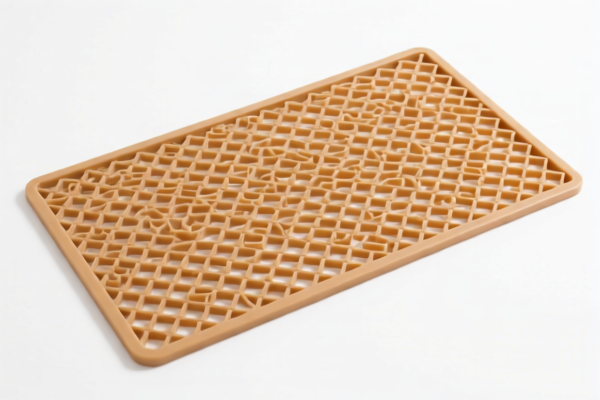
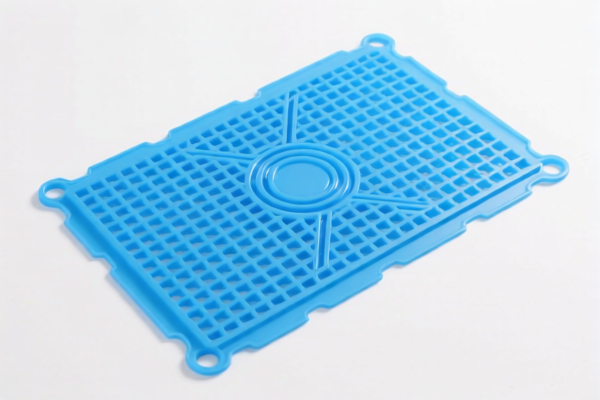
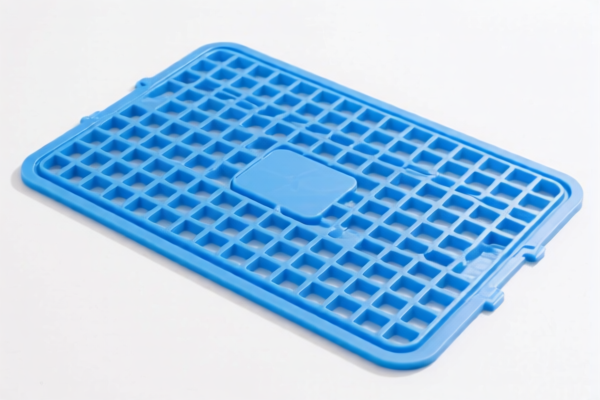
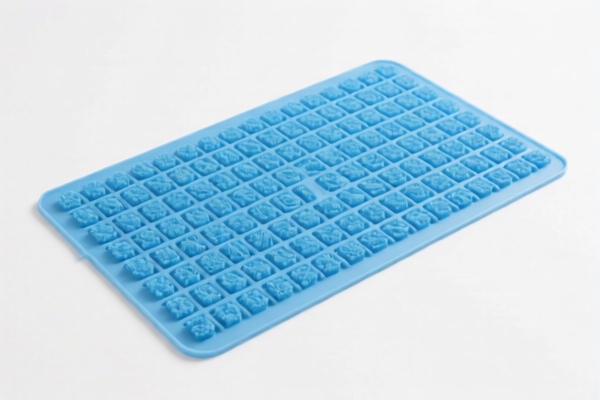
AI Analysis
🚙 Black Floor Mat (Automotive/General Use)
🌐 HS Code Reference & Customs Clearance Guide | 2026 Latest Tariff Analysis | Professional Clearance Strategy
📌 I. Product Definition & Classification: What Exactly Is a "Black Floor Mat"?
A "Black Floor Mat" is a versatile article used to protect surfaces from dirt, moisture, and wear. In international trade, its classification hinges entirely on material composition and specific usage. It is generally categorized into three main types:
- Textile Carpets/Rugs: Made from synthetic fibers (nylon, polyester, wool) or natural fibers.
- Plastic/Resilient Floor Coverings: Made from PVC, polyurethane, or other plastics.
- Rubber Products: Made from vulcanized rubber or plastic rubber (e.g., car mats, utility mats).
⚠️ Key Distinction Point:
- If it is fabric/textile-based → Falls under Chapter 57 (Carpets)
- If it is plastic-based (rigid or flexible) → Falls under Chapter 39/40 (Plastics/Rubber)
- Customs Warning: Misclassifying a rubber car mat as a textile carpet can lead to significant tariff differences and penalties.
📦 II. HS Code Classification Details (Based on Provided Data)
The following HS Codes are derived from the provided dataset, categorized by material inference:
| HS Code | Product Description | Inferred Material | Application Scenario |
|---|---|---|---|
5703.29.20.90 |
Carpets & Other Textile Floor Coverings, Tufted, Other | Polymer/Textile (e.g., Nylon, Polypropylene) | Home rugs, office carpet tiles, textile-based mats |
5703.39.20.90 |
Carpets & Other Textile Floor Coverings, Other, Plastics/Artificial Textile | Plastic/Artificial Textile | PVC-backed rugs, synthetic fiber mats |
4016.91.00.00 |
Other articles of vulcanized rubber other than hard rubber | Vulcanized Rubber | Heavy-duty utility mats, industrial rubber mats |
4016.99.05.00 |
Other articles of vulcanized rubber, household items, other | Rubber/Household Item | Car floor mats, bathroom mats, non-industrial rubber mats |
🔍 Important Note:
- Chapter 57 (5703.29 / 5703.39) applies if the mat is primarily textile or plastic-fiber based (like a rug).
- Chapter 40 (4016) applies if the mat is rubber-based (like a standard car all-weather mat).
- The provided data assumes "Black Floor Mat" could be any of these depending on the specific product material.
💰 III. 2026 Latest Tariff Rate Breakdown (Including Surtaxes & Policy Add-ons)
✅ Applicable Country: United States (US)
✅ Country of Origin: China (CN) (Implied by "122 Clause" and high surtaxes in data)
✅ Effective Date: Rates include current Section 301 and IEEPA surcharges.
🎯 1. 5703.29.20.90 & 5703.39.20.90 — Textile/Plastic Carpets & Mats
| Item | Content |
|---|---|
| Base Tariff | 6.7% (5703.29) / 6.0% (5703.39) |
| Section 301 Surtax | +25.0% (USITC Footnote 9903.88.01) |
| Section 122 / IEEPA Surtax | +10.0% (Against China Origin) |
| Total Effective Rate | 41.7% (5703.29) / 41.0% (5703.39) |
| Tax Calculation | CIF Value × Total Rate |
| De Minimis Exemption | ❌ Not Eligible (High surtaxes typically deny de minimis benefits) |
| Legal Path | Base Tariff + USITC:9903.88.01 + IEEPA:9903.01.25 |
📌 Explanation:
- These mats are classified as "Other" carpets/floor coverings.
- The high total tax (~41%) is driven by the combination of base duty + 25% Section 301 + 10% IEEPA.
- Cost Alert: This is a high-cost classification for textile-based mats from China.
🎯 2. 4016.91.00.00 — Vulcanized Rubber Articles
| Item | Content |
|---|---|
| Base Tariff | 2.7% |
| Section 301 Surtax | +25.0% |
| Section 122 / IEEPA Surtax | +10.0% |
| Total Effective Rate | 37.7% |
| Tax Calculation | CIF Value × 37.7% |
| De Minimis Exemption | ❌ Not Eligible |
| Legal Path | Base Tariff + USITC:9903.88.01 + IEEPA:9903.01.25 |
📌 Explanation:
- Applies to rigid or semi-rigid vulcanized rubber items.
- Slightly lower base tariff than textiles, but still subject to full surtaxes.
🎯 3. 4016.99.05.00 — Other Rubber Household Items (Most Favorable)
| Item | Content |
|---|---|
| Base Tariff | 3.4% |
| Section 301 Surtax | +7.5% (Note: Data shows 7.5% surtax, possibly due to specific exclusion or newer phase-out) |
| Section 122 / IEEPA Surtax | +10.0% |
| Total Effective Rate | 20.9% |
| Tax Calculation | CIF Value × 20.9% |
| De Minimis Exemption | ❌ Not Eligible (Check latest rules, but high risk) |
| Legal Path | Base Tariff + USITC:Footnote (if any) + IEEPA:9903.01.25 |
📌 Explanation:
- This is the most cost-effective classification if the mat is a household rubber item (e.g., standard car mat, bathroom mat).
- The 7.5% surtax (vs. 25%) is significantly lower, likely due to specific product exclusions or a different legal footnote for "household items."
- Strategic Advantage: If your black floor mat is rubber and used in households/cars, this is the optimal HS Code.
🛠️ IV. Customs Clearance Practical Advice (Avoid Pitfalls)
✅ 1. Documentation Checklist (Must-Have)
| Document | Required? | Notes |
|---|---|---|
| Product Spec Sheet | ✔️ | Must specify material (e.g., "100% Vulcanized Rubber" vs. "Polypropylene Fiber") |
| Product Photos | ✔️ | Show texture, thickness, and backing (rubber vs. fabric) |
| Commercial Invoice | ✔️ | Clearly state "Floor Mat, [Material], for [Car/Home]" |
| Packing List | ✔️ | Include net/gross weight |
| Origin Certificate | ✔️ | For China origin, confirm no transshipment issues |
✅ 2. Declaration Strategy (Key Tips)
🔥 “Material Defines the Code, Not the Color!”
| Scenario | Recommended HS Code | Risk if Misclassified |
|---|---|---|
| Rubber Car Mat (e.g., WeatherTech style) | 4016.99.05.00 |
If declared as 5703, tax jumps from 20.9% → 41% |
| Fabric Home Rug (e.g., Entryway mat) | 5703.29.20.90 |
If declared as 4016, customs may seize for false material |
| Plastic/PVC Mat (e.g., Gym mat) | 5703.39.20.90 or 3918 |
Check if it’s "resilient" (rubber) or "plastic sheeting" |
| Mixed Material (Rubber backing + Fabric top) | 5703.29.20.90 |
Base material determines classification; fabric often dominates |
✅ 3. Special Case Handling
| Situation | Recommendation |
|---|---|
| "All-Weather" Car Mats | Ensure they are rubber-based (4016.99.05.00) to benefit from 20.9% rate. If they are fabric, tax doubles. |
| Importing from Vietnam/Mexico | Apply for preferential tariff treatment (e.g., USMCA for Mexico). Tariffs could drop to 0-5% regardless of HS Code. |
| Sample vs. Bulk | Samples may still be subject to duties if value exceeds de minimis ($800 for US). |
🌍 V. Global Market Comparison (2026)
| Country | Preferred HS Code | Estimated Total Tax (China Origin) | Notes |
|---|---|---|---|
| 🇺🇸 USA | 4016.99.05.00 |
20.9% | Lowest tax for rubber mats. Avoid 5703 (41%+). |
| 🇺🇸 USA | 5703.29.20.90 |
41.7% | High tax for textile mats. |
| 🇪🇺 EU | 5905.00 or 4016 |
Varies (0-6.5%) | No 301/122 surtaxes. Much cheaper than US. |
| 🇨🇳 China | 5703 or 4016 |
5-10% | Low import duty. Focus on domestic distribution. |
📌 Conclusion:
- USA is the most expensive market due to surtaxes.
- Material choice is critical: Rubber (4016.99.05.00) saves ~20% in taxes compared to textile (5703).
📌 VI. Common Mistakes & Pitfalls (Lessons Learned)
❌ Mistake 1: Declaring a rubber car mat as a "Textile Carpet"
👉 Consequence: Pay 41% tax instead of 20.9%. Overpayment of ~20% on value.
❌ Mistake 2: Using vague descriptions like "Floor Covering"
👉 Consequence: Customs delays, potential reclassification, and penalty fees.
❌ Mistake 3: Ignoring the Backing Material
👉 Consequence: If the top is fabric but backing is rubber, customs may still classify based on essential character. For car mats, rubber backing often defines it as rubber.
✅ Best Practice:
“Black Rubber Floor Mat for Automotive Use, 100% Vulcanized Rubber, Non-Slip Backing”
→ Use HS Code4016.99.05.00for optimal 20.9% tariff.
🎯 VII. Conclusion: Professional Classification, Cost Savings!
🎯 Remember:
🔹 “Rubber Mats Save 20% vs. Fabric Mats in the US.”
🔹 “Always declare exact material: Rubber, Plastic, or Textile.”
🔹 “Section 301 + IEEPA = High Tax. Choose the right HS Code wisely.”
📌 Pro Tip:
If your black floor mat is made of rubber, insist on HS Code 4016.99.05.00 to benefit from the 20.9% total tax rate. If it’s textile, prepare for ~41%.
Consider sourcing from Vietnam/Mexico if possible to bypass surtaxes entirely.
📣 Immediate Action:
📞 Consult a Customs Broker: Verify material composition.
📄 Get an Advance Ruling: For high-volume shipments, secure an official HS Code determination.
🚀 Optimize Your Supply Chain: Switch to rubber materials if possible for US exports.
✨ Professional Clearance Starts with Accurate Classification!
💼 Save money, avoid delays, and ship with confidence!
Customer Reviews
About HS Code Classification
The Harmonized System (HS) is an internationally standardized nomenclature developed by the World Customs Organization (WCO) to classify traded products. Over 200 countries use the HS system as the basis for customs tariffs, trade statistics, and import/export regulations.
Each HS code follows a hierarchical structure:
- Chapter (2 digits) — Broad category of goods (e.g., Chapter 84: Machinery and Mechanical Appliances)
- Heading (4 digits) — More specific grouping within the chapter
- Subheading (6 digits) — Internationally standardized breakdown, used by all WCO member countries
- National subdivisions (8-10 digits) — Country-specific extensions for further classification, such as US HTSUS 10-digit codes
Correct HS code classification is essential for smooth customs clearance, accurate duty payment, and compliance with trade regulations. Misclassification can lead to customs delays, overpayment of duties, or penalties.
When importing from CN to US, the applicable tariff rates may include:
- Most-Favored-Nation (MFN) rate — The standard duty rate applied to WTO members
- General rate — Applied to countries without trade agreements
- Trade remedy duties — Additional tariffs such as Section 301 (anti-dumping), Section 232 (national security), or countervailing duties
The information provided on this page is for reference purposes only. For official classification, please consult with your local customs authority or a licensed customs broker.