Black Floor Mats
CN → US| HS Code | Tariff Rate | Origin | Destination | Doc |
|---|---|---|---|---|
| 5703292090 | 41.7% | CN | US | Official Doc |
| 5703392090 | 41.0% | CN | US | Official Doc |
| 4016910000 | 37.7% | CN | US | Official Doc |
| 4016990500 | 20.9% | CN | US | Official Doc |
Product Images
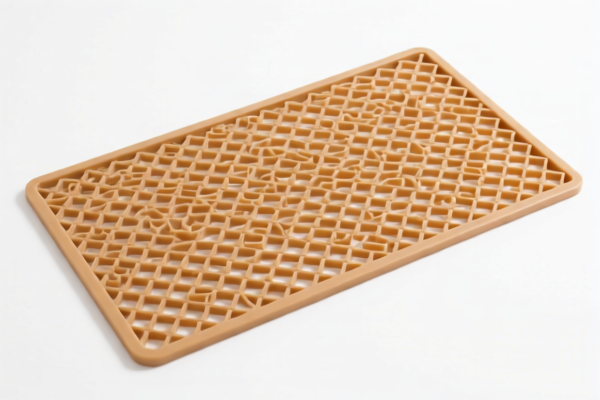
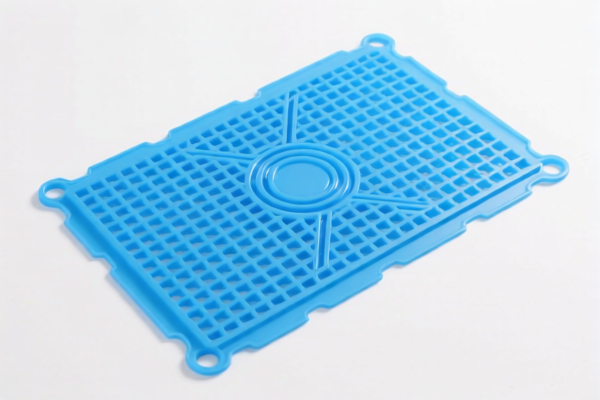
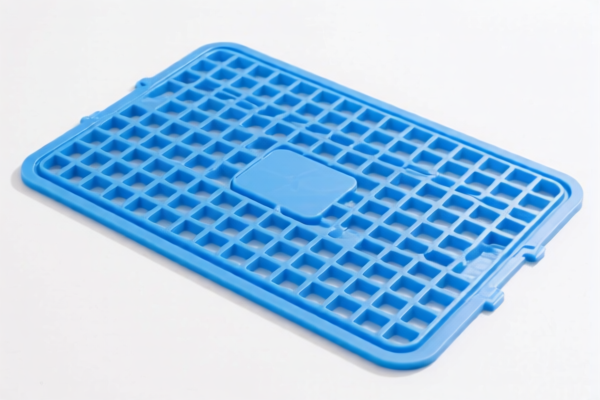
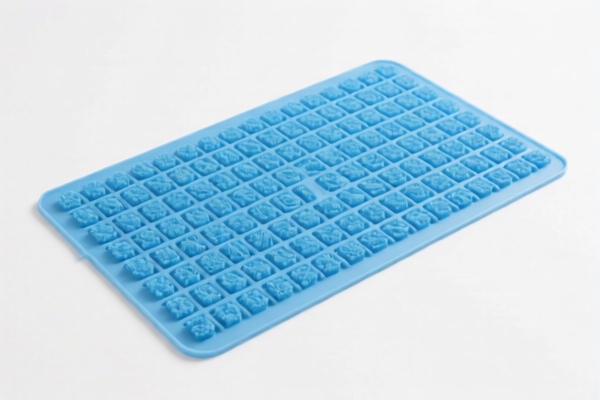
AI Analysis
🚙 Black Floor Mats (Automotive/Interior Accessories)
🌐 HS Code Reference & Customs Clearance Guide | 2026 Latest Tariff Analysis | Strategic Compliance Strategy
📌 I. Product Definition & Classification: What Exactly Are "Black Floor Mats"?
Black floor mats are essential automotive accessories designed to protect vehicle interiors from dirt, water, and wear. In international trade, their classification depends heavily on material composition and specific use case (e.g., car vs. home). The data provided identifies four potential HS Codes, ranging from textile-based carpets to rubber/plastic mats.
⚠️ Key Classification Distinction:
- If made of textiles (nylon, polyester) → Look at Chapter 57 (Carpeting).
- If made of rubber or plastic → Look at Chapter 40 (Rubber) or specific plastic articles.
- Critical Factor: The "Material Inference" provided in the data determines the tax burden, which varies significantly from 20.9% to 41.7%.
📦 II. HS Code Classification Details (Based on Provided Data)
The following table breaks down the four specific HS Codes identified in the data, their logical basis, and tax implications.
| HS Code | Product Description | Material Inference | Applicable Scenario |
|---|---|---|---|
| 5703.29.20.90 | Other Carpets, Textile Floor Coverings | Polymers (PVC, Rubber, Nylon) | Textile-based mats; "Other" category in Chapter 57. |
| 5703.39.20.90 | Other Carpets, Plastic/Artificial Textile Base | Plastic or Artificial Textile | Mats with plastic backing or synthetic fiber content. |
| 4016.91.00.00 | Other Articles of Vulcanized Rubber | Vulcanized Rubber | Heavy-duty rubber mats; classified under "Carpets/Mats" of rubber. |
| 4016.99.05.00 | Other Household Articles of Rubber | Vulcanized Rubber | Household/Car accessories made of rubber; "Other not elsewhere specified." |
🔍 Key Insight:
- Textile Path (5703.xx): Higher base tariffs (6.7% or 6.0%) due to specific chapter rules.
- Rubber Path (4016.xx): Lower base tariffs (2.7% or 3.4%), but the final total tax varies significantly due to different "Section 301" (Add-on) rates.
💰 III. 2026 Latest Tariff Rate Breakdown (Including Add-on Taxes & Policy Surcharges)
✅ Applicable Country: United States (US)
✅ Origin: China (CN)
✅ Effective Time: Post-2025 Policies (Including Section 301 & IEEPA)
🎯 1. 5703.29.20.90 —— Textile-Based Floor Mats
| Item | Detail |
|---|---|
| Base Tariff | 6.7% |
| Section 301 Add-on | +25.0% |
| 122 Clause Tariff | +10.0% |
| Total Tax Rate | 41.7% |
| Tax Calculation | CIF Value × 41.7% |
| Legal Basis | Standard Chapter 57 rules + Section 301 Footnotes + 122 Clause Surcharges. |
📌 Explanation:
- This code attracts the highest total tax (41.7%) among the options.
- The high base tariff (6.7%) combined with the full 25% Section 301 tariff and 10% 122 Clause makes this the most expensive classification for tax purposes.
🎯 2. 5703.39.20.90 —— Plastic/Synthetic Fiber Floor Mats
| Item | Detail |
|---|---|
| Base Tariff | 6.0% |
| Section 301 Add-on | +25.0% |
| 122 Clause Tariff | +10.0% |
| Total Tax Rate | 41.0% |
| Tax Calculation | CIF Value × 41.0% |
| Legal Basis | Standard Chapter 57 rules + Section 301 Footnotes + 122 Clause Surcharges. |
📌 Explanation:
- Slightly cheaper than the previous code (41.0% vs 41.7%).
- Applicable if the mat is primarily made of plastic materials or artificial textiles rather than traditional woven fibers.
🎯 3. 4016.91.00.00 —— Vulcanized Rubber Mats
| Item | Detail |
|---|---|
| Base Tariff | 2.7% |
| Section 301 Add-on | +25.0% |
| 122 Clause Tariff | +10.0% |
| Total Tax Rate | 37.7% |
| Tax Calculation | CIF Value × 37.7% |
| Legal Basis | Standard Chapter 40 rules + Section 301 Footnotes + 122 Clause Surcharges. |
📌 Explanation:
- Significant Savings: Lower base tariff (2.7%) reduces the total burden to 37.7%.
- Suitable for heavy-duty, all-weather car mats made of solid vulcanized rubber.
🎯 4. 4016.99.05.00 —— Other Household Rubber Articles
| Item | Detail |
|---|---|
| Base Tariff | 3.4% |
| Section 301 Add-on | +7.5% (Reduced!) |
| 122 Clause Tariff | +10.0% |
| Total Tax Rate | 20.9% |
| Tax Calculation | CIF Value × 20.9% |
| Legal Basis | Specific "Household Articles" classification with lower Section 301 rate. |
📌 Critical Advantage:
- Lowest Tax Rate: 20.9% is nearly half of the textile options.
- Why?: The Section 301 add-on is only +7.5% instead of +25%.
- Condition: Must qualify as "Household/Car Accessories" under this specific subheading. This is the most cost-effective classification if the product meets the material and use-case criteria.
🛠️ IV. Customs Clearance Practical Advice (Avoiding Pitfalls)
✅ 1. Documentation Checklist (Non-Negotiable)
| Document | Required? | Purpose |
|---|---|---|
| ✅ Product Composition Statement | ✔️ | Must explicitly state material (e.g., "100% Vulcanized Rubber" vs. "Polyester Nylon"). Crucial for deciding between 5703 vs. 4016. |
| ✅ Technical Data Sheet | ✔️ | Shows density, hardness, and structure to prove it is a "mat" and not a "sole" or "gasket." |
| ✅ Product Photos (Top & Bottom) | ✔️ | Must show texture, backing, and lack of electronic components. |
| ✅ Commercial Invoice | ✔️ | Clearly describe as "Automotive Floor Mats" or "Household Floor Mats." Avoid vague terms like "Car Parts" which may trigger higher scrutiny. |
| ✅ Certificate of Origin (CO) | ✔️ | Mandatory for claiming origin preference or proving Chinese origin for tariff calculation. |
✅ 2. Strategic Classification Tips
🔥 "Material Defines Tax: Rubber Wins, Textile Burns!"
| Scenario | Recommended HS Code | Why? |
|---|---|---|
| Heavy-Duty All-Weather Mats | 4016.99.05.00 |
Lowest Tax (20.9%). If made of rubber, prioritize this code. Ensure it is classified as "Household/Car Accessory." |
| Carpet-Style Carpet Mats | 5703.29.20.90 |
High Tax (41.7%). Only use if the product is definitively textile-based. Avoid if rubber alternatives exist. |
| Mixed Material Mats | Analyze Dominant Material | If backing is rubber and top is fabric, customs may still classify based on primary function. Consult a broker for "Essential Character" test. |
⚠️ Warning:
- Do NOT misclassify rubber mats as textiles to avoid higher tariffs. Customs brokers may request lab tests.
- Do NOT assume all rubber mats get 25% add-on.4016.99.05.00has a reduced 7.5% add-on—this is a key optimization point.
✅ 3. Special Cases & Exceptions
| Situation | Handling Strategy |
|---|---|
| OEM Custom Mats | Provide customer design specs. Ensure description matches the physical material exactly. |
| Non-Skid Backing | If the mat has a rubber non-slip backing, it may still be classified as textile if the top is the "essential character." Seek ruling if ambiguous. |
| Home vs. Car Use | 4016.99.05.00 mentions "Household." If used in cars, ensure it fits the "Other not elsewhere specified" category. Car-specific descriptions can help justify this classification. |
🌍 V. Global Market Comparison (2026 Latest)
| Market | Recommended HS Code | Estimated Total Tax (China Origin) | Notes |
|---|---|---|---|
| 🇺🇸 USA | 4016.99.05.00 |
20.9% | Best Option. Low base + reduced 301 rate. |
| 🇺🇸 USA | 5703.29.20.90 |
41.7% | Avoid. High tax burden. |
| 🇨🇳 China | 4016.99.05.00 |
Varies | Domestic export may have different rates; check latest Chinese tariff book. |
| 🇪🇺 EU | Varies by Material | 0-6.5% | EU does not have Section 301/122. Rubber/textile duties are lower. No punitive surcharges. |
| 🇬🇧 UK | Varies | 0-6.5% | Post-Brexit, follows similar low-tariff structure for rubber goods. |
📌 Conclusion:
- For US Imports: The $4016.99.05.00$ code is the strategic winner due to the 20.9% total rate vs. 41.7%.
- Ensure the product is marketed and documented as a "Household/Car Accessory" to qualify for this lower tier.
📌 VI. Common Mistakes & Pitfalls (Lessons Learned)
❌ Mistake 1: Mislabeling Rubber Mats as "Textiles"
👉 Consequence: If customs performs a material test, they will reclassify to 4016.xx, but you may face penalties for misdeclaration.
👉 Fix: Accurate material declaration is mandatory.
❌ Mistake 2: Ignoring the "122 Clause"
👉 Consequence: The 10% surcharge applies to all codes in the data. If you miss this, your cost calculation will be off by 10%.
👉 Fix: Always add 10% to your total landed cost calculation for US imports from China.
❌ Mistake 3: Assuming All Rubber Mats Have 25% Add-on
👉 Consequence: Paying 37.7% or 41% when 4016.99.05.00 is available at 20.9%.
👉 Fix: Work with customs brokers to argue for the "Household/Other" classification under 4016.99.05.00.
🎯 VII. Conclusion: Smart Classification = Lower Costs
🎯 Key Takeaway:
🔹 "Rubber Mats > Textile Mats" for Tax Efficiency.
🔹 "Code4016.99.05.00Saves ~20% in Total Tax."
🔹 "Always Include 10% 122 Clause in Calculations."
📌 Pro Tip:
If your mats are not made of rubber or traditional textiles (e.g., advanced polymer composites), consult a trade attorney. The data provided suggests a binary choice between Textile (Ch 57) and Rubber (Ch 40). Misclassification can lead to severe penalties.
📣 Immediate Action:
📞 Verify Material Composition
📄 Request Product Spec Sheets
🧮 Calculate Landed Cost using 20.9% vs. 41.7%
🚀 Optimize Your HS Code for Maximum Profit Margin!
✨ Professional Customs Clearance Starts with Accurate Classification!
💼 Every Percent of Tax Saved is Pure Profit!
Customer Reviews
About HS Code Classification
The Harmonized System (HS) is an internationally standardized nomenclature developed by the World Customs Organization (WCO) to classify traded products. Over 200 countries use the HS system as the basis for customs tariffs, trade statistics, and import/export regulations.
Each HS code follows a hierarchical structure:
- Chapter (2 digits) — Broad category of goods (e.g., Chapter 84: Machinery and Mechanical Appliances)
- Heading (4 digits) — More specific grouping within the chapter
- Subheading (6 digits) — Internationally standardized breakdown, used by all WCO member countries
- National subdivisions (8-10 digits) — Country-specific extensions for further classification, such as US HTSUS 10-digit codes
Correct HS code classification is essential for smooth customs clearance, accurate duty payment, and compliance with trade regulations. Misclassification can lead to customs delays, overpayment of duties, or penalties.
When importing from CN to US, the applicable tariff rates may include:
- Most-Favored-Nation (MFN) rate — The standard duty rate applied to WTO members
- General rate — Applied to countries without trade agreements
- Trade remedy duties — Additional tariffs such as Section 301 (anti-dumping), Section 232 (national security), or countervailing duties
The information provided on this page is for reference purposes only. For official classification, please consult with your local customs authority or a licensed customs broker.