Black Foot Mat
CN → US| HS Code | Tariff Rate | Origin | Destination | Doc |
|---|---|---|---|---|
| 5703292090 | 41.7% | CN | US | Official Doc |
| 5703392090 | 41.0% | CN | US | Official Doc |
| 4016910000 | 37.7% | CN | US | Official Doc |
| 4016990500 | 20.9% | CN | US | Official Doc |
Product Images
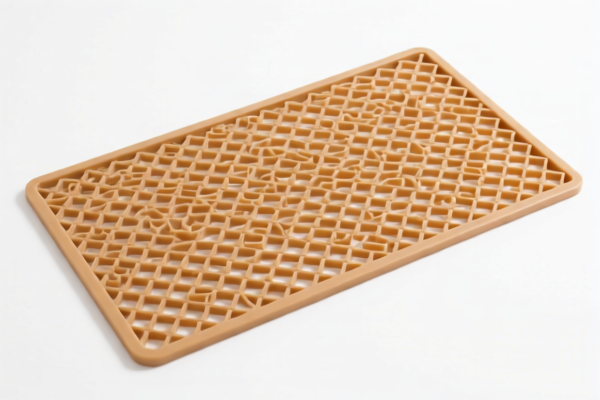
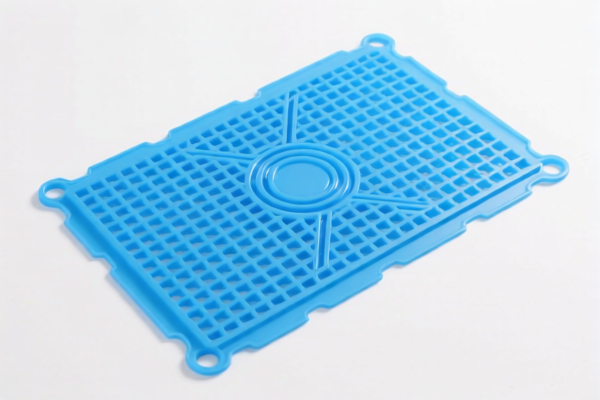
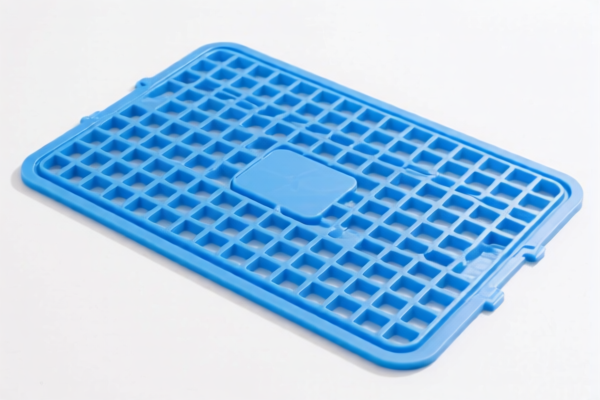
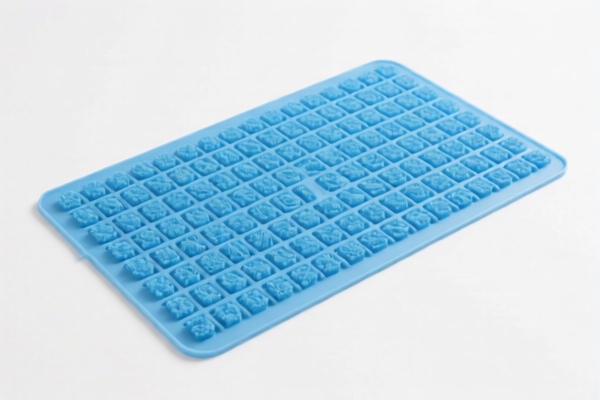
AI Analysis
🚗 Black Foot Mat (Floor Mats / Car Mats)
🌐 HS Code Reference & Clearance Guide | 2026 Latest Tariff Analysis | Professional Customs Strategy
📌 I. Product Definition & Classification: Do You Truly Understand "Black Foot Mats"?
Black Foot Mats are essential automotive or household accessories designed to protect interior floors from dirt, water, and wear. In international trade, their classification depends heavily on material composition and specific end-use.
Car Floor Mats (Automotive Use): Typically made of rubber, plastic, or textile, shaped to fit specific vehicle contours. Household Floor Mats: Generic mats for entryways or kitchens, often made of rubber, plastic, or synthetic fibers.
⚠️ Key Classification Distinction:
- If made of rubber or hard plastic and used as general floor coverings → Look at Chapter 40 (Rubber/Plastic).
- If made of textile fibers (carpet-like) → Look at Chapter 57 (Carpeting).
- Crucial Note: "Black" is a color attribute and does not change the HS Code, but the material determines the tax bracket significantly!
📦 II. HS Code Classification Matrix (Based on Provided Data)
| HS Code | Product Description | Material Inference | Total Tax Rate | Key Tax Components |
|---|---|---|---|---|
5703.29.20.90 |
Other textile floor coverings (Carpet-type) | Polymers/Textiles | 41.7% | Base: 6.7%, 301 Tariff: 25%, Sec 301: 10% |
5703.39.20.90 |
Other carpeting/plastic textile mix | Plastic or Artificial Textile | 41.0% | Base: 6.0%, 301 Tariff: 25%, Sec 301: 10% |
4016.91.00.00 |
Other articles of vulcanized rubber | Vulcanized Rubber or Plastic | 37.7% | Base: 2.7%, 301 Tariff: 25%, Sec 301: 10% |
4016.99.05.00 |
Other rubber articles (Household/Auto) | Rubber (Unclassified) | 20.9% | Base: 3.4%, 301 Tariff: 7.5%, Sec 301: 10% |
🔍 Important Insight:
- Textile/Plastic Mix Mats (5703...): Highest tax bracket (41.0-41.7%). Avoid if possible unless material is strictly defined. - Vulcanized Rubber (4016.91...): Medium-high tax (37.7%). Common for heavy-duty all-weather car mats. - Other Rubber (4016.99.05...): Lowest tax bracket (20.9%). Best for standard household or simple auto rubber mats.
💰 III. Detailed Tariff Structure Analysis (US Imports from China)
✅ Applicable Market: United States (US)
✅ Origin: China (CN)
✅ Effective Date: Ongoing (including 122 Section & 301 Tariffs)
🎯 1. 5703.29.20.90 & 5703.39.20.90 — Textile/Plastic Floor Coverings
| Item | Details |
|---|---|
| Base Duty | 6.0% – 6.7% |
| Section 301 Tariff | +25.0% (Trade Act of 1974, Section 301) |
| Section 122 Tariff | +10.0% (Specific legislative provision) |
| Total Effective Rate | 41.0% – 41.7% |
| Calculation | CIF Value × 41.7% |
| De Minimis Exemption | ❌ Not Eligible (High tariff rates usually exclude small packages from Section 321 de minimis benefits in practice for these codes) |
📌 Why so high?
- These codes fall under Chapter 57 (Carpeting), which traditionally faces higher protectionist duties. - The 25% Section 301 is applied to most Chinese-made textiles and plastics. - The 10% Section 122 adds further cost.
🎯 2. 4016.91.00.00 — Vulcanized Rubber Articles
| Item | Details |
|---|---|
| Base Duty | 2.7% |
| Section 301 Tariff | +25.0% |
| Section 122 Tariff | +10.0% |
| Total Effective Rate | 37.7% |
| Calculation | CIF Value × 37.7% |
| De Minimis Exemption | ❌ Not Eligible |
📌 Why 37.7%?
- Base duty is low (2.7%), but the 25% Section 301 still applies heavily to rubber products from China. - This code is ideal if your mat is 100% vulcanized rubber (e.g., heavy-duty automotive all-weather mats).
🎯 3. 4016.99.05.00 — Other Rubber Articles (Household/Auto)
| Item | Details |
|---|---|
| Base Duty | 3.4% |
| Section 301 Tariff | +7.5% |
| Section 122 Tariff | +10.0% |
| Total Effective Rate | 20.9% |
| Calculation | CIF Value × 20.9% |
| De Minimis Exemption | ❌ Not Eligible |
📌 Why only 20.9%?
- This is the COST-EFFICIENT OPTION. - The Section 301 rate here is only 7.5% (not 25%), significantly lowering the total tax. - Suitable for household entry mats or simple rubber car mats that don't fit the "vulcanized" technical definition or are classified as "other."
🛠️ IV. Customs Clearance Strategy (Practical Tips)
✅ 1. Material Documentation is Key
| Document | Requirement | Purpose |
|---|---|---|
| Material Declaration | Must specify % of Rubber, Plastic, or Textile | Determines HS Code (40xx vs 57xx) |
| Product Photos | Show texture, shape, and any branding | Helps customs verify "mat" vs "carpet" |
| Invoice Description | Use "Black Rubber Floor Mat" or "Textile Car Mat" | Avoid vague terms like "Accessory" |
| Certificate of Origin | Standard COO for China-origin goods | Required for 301/122 tariff assessment |
✅ 2. HS Code Selection Strategy
| Scenario | Recommended HS Code | Why? |
|---|---|---|
| Heavy-Duty Car Mats (All-Weather) | 4016.91.00.00 |
If truly vulcanized rubber, 37.7% is better than 41%+ |
| Household Entry Mats | 4016.99.05.00 |
Lowest Tax (20.9%) if rubber-based |
| Carpet-Like Car Mats | 5703.29.20.90 |
Only if made of textile fibers; expect 41.7% |
| Plastic/Textile Mix Mats | 5703.39.20.90 |
If material is ambiguous mix; 41.0% |
🔥 Pro Tip:
- If your mat is rubber-based, strive for4016.99.05.00to save ~17-20% in duties compared to textile codes. - Ensure the product description on the invoice matches the HS Code material claim (e.g., do not call a rubber mat a "textile mat").
✅ 3. Common Mistakes & Pitfalls
❌ Mistake 1: Calling a rubber mat a "carpet"
👉 Result: Misclassified under Chapter 57 → 41%+ tax instead of 20.9% or 37.7%.
❌ Mistake 2: Ignoring "Vulcanized" status
👉 Result: Using 4016.99.05.00 for vulcanized rubber may lead to audit and back-taxes.
❌ Mistake 3: Vague Invoice Description
👉 Result: "Floor Mat" without material leads to customs detention and reclassification.
✅ Correct Declaration Example:
"Black Rubber Automotive Floor Mat, Non-Vulcanized, Model XYZ" →
4016.99.05.00(20.9%)
"Black Textile Car Floor Mat, Polyester Blend" →5703.29.20.90(41.7%)
🌍 V. Market Comparison (US vs. Others)
| Market | Recommended HS Code | Est. Total Tax (China Origin) | Notes |
|---|---|---|---|
| 🇺🇸 USA | 4016.99.05.00 |
20.9% | Includes 301 + 122 tariffs |
| 🇺🇸 USA | 5703.29.20.90 |
41.7% | Textile codes are heavily taxed |
| 🇪🇺 EU | 4016.99.00 |
~5-10% | No Section 301/122, but standard duty applies |
| 🇨🇳 China | 4016.99.00 |
~5-10% | Import duty only, no punitive tariffs |
📌 Conclusion for US Importers:
- Cost Optimization is Critical. A 20% vs 40% tax difference can make or break profit margins. - Rubber mats (4016...) are significantly cheaper to import than textile mats (5703...).
📌 VI. Final Checklist for Smooth Clearance
- Confirm Material: Is it rubber, plastic, or textile?
- Select Lowest Applicable HS: Prioritize
4016.99.05.00(20.9%) if rubber-based. - Precise Invoice: List material, color (black), and use case (auto/household).
- Prepare Docs: CO, Invoice, Packing List, Material Spec Sheet.
- Pre-Ruling: Consider an Advance Ruling from CBP if product is unique.
🎯 Final Advice:
"Material defines the code, code defines the cost. Don't let textile tariffs eat your profit!"
Choose4016.99.05.00for rubber mats to save up to 20% in duties compared to textile alternatives.
✨ Professional Clearance Starts with Accurate Classification!
💼 Your Bottom Line Matters – Optimize Your HS Code Today!
Customer Reviews
About HS Code Classification
The Harmonized System (HS) is an internationally standardized nomenclature developed by the World Customs Organization (WCO) to classify traded products. Over 200 countries use the HS system as the basis for customs tariffs, trade statistics, and import/export regulations.
Each HS code follows a hierarchical structure:
- Chapter (2 digits) — Broad category of goods (e.g., Chapter 84: Machinery and Mechanical Appliances)
- Heading (4 digits) — More specific grouping within the chapter
- Subheading (6 digits) — Internationally standardized breakdown, used by all WCO member countries
- National subdivisions (8-10 digits) — Country-specific extensions for further classification, such as US HTSUS 10-digit codes
Correct HS code classification is essential for smooth customs clearance, accurate duty payment, and compliance with trade regulations. Misclassification can lead to customs delays, overpayment of duties, or penalties.
When importing from CN to US, the applicable tariff rates may include:
- Most-Favored-Nation (MFN) rate — The standard duty rate applied to WTO members
- General rate — Applied to countries without trade agreements
- Trade remedy duties — Additional tariffs such as Section 301 (anti-dumping), Section 232 (national security), or countervailing duties
The information provided on this page is for reference purposes only. For official classification, please consult with your local customs authority or a licensed customs broker.