Black Granite Countertop
CN → US| HS Code | Tariff Rate | Origin | Destination | Doc |
|---|---|---|---|---|
| 6802930025 | 38.7% | CN | US | Official Doc |
| 6802930060 | 38.7% | CN | US | Official Doc |
Product Images
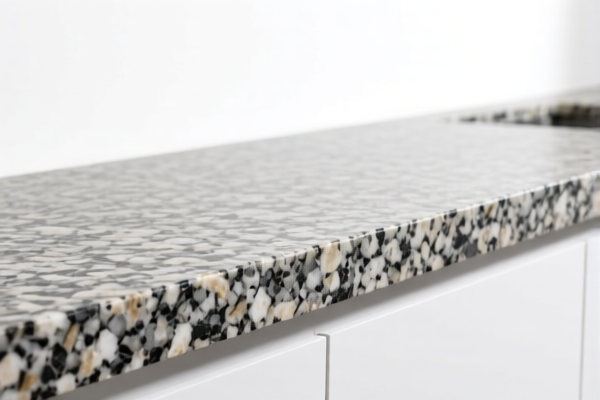
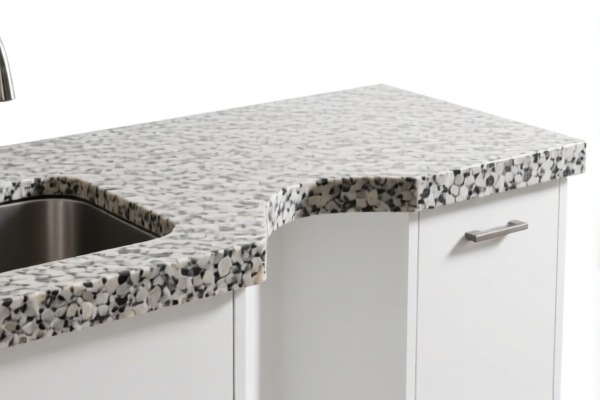
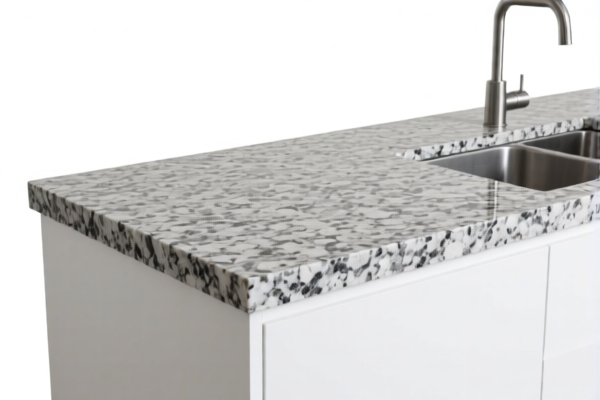
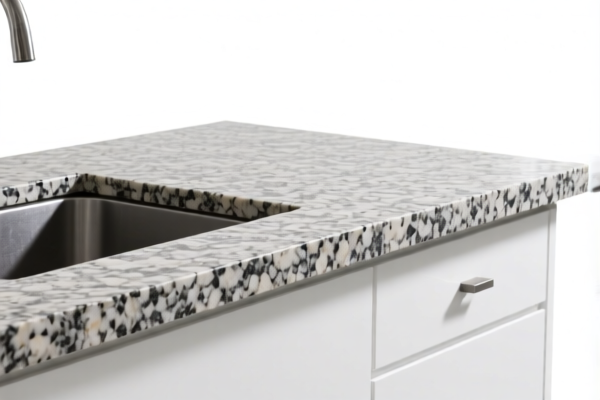
AI Analysis
🏛️ Black Granite Countertops: The Ultimate Guide to HS Classification, Duties & Customs Clearance
🌐 HS Code Reference & Customs Clearance Strategy | 2026 Latest Tariff Analysis | Professional Trade Compliance
📌 I. Product Definition & Classification: What Exactly is "Black Granite"?
Black granite countertops are a staple in global interior design, ranging from polished kitchen islands to monumental tombstones. However, in the eyes of Customs, "Granite" is not just a color; it is a structural and dimensional classification.
International trade law (Harmonized System) strictly separates granite based on thickness and surface finish. A thin slice used as a countertop faces vastly different duties than a thick slab used for building cladding or monuments.
⚠️ Critical Distinction:
- Thin Granite (< 1.5 cm or > 7.5 cm): Often treated differently due to handling and end-use implications.
- Medium Thickness (1.5 cm – 7.5 cm): The most common range for countertops and vanity tops.
- Surface Work: If the stone is merely cut/sawn, it differs from stone that has been polished, honed, or otherwise "surface-worked."
📦 II. HS Code Classification Details (2026 Official Tariff Data)
Based on the provided dataset, black granite articles fall under Chapter 68: Mineral Products. Specifically, Heading 6802: Worked monumental or building stone (except slate) and articles thereof.
Here are the two precise classifications from the data:
| HS Code | Product Description & Scope | Key Differentiator |
|---|---|---|
| 6802.93.00.25 | Worked Granite Articles: Granite for monumental/building purposes, cut to size, with surface work > simply cut/sawn. Thickness: >1.5 cm but ≤7.5 cm. | Thin/Medium Slab: Covers most standard kitchen countertops. |
| 6802.93.00.60 | Worked Granite Articles: Granite for monumental/building purposes, cut to size, with surface work > simply cut/sawn. Thickness: >7.5 cm. | Thick Slab: Typically used for heavy-duty cladding, steps, or large monolithic structures. |
🔍 Key Insight:
- Both codes require the stone to be "surface-worked more than simply cut or sawn." This means if you are importing polished, honed, or brushed black granite, it falls here.
- If the granite is rough, unpolished, or merely sawn, it may fall under different subheadings (e.g., 6802.91 or 6802.92), but for processed black granite countertops, these are the relevant codes.
💰 III. 2026 Tariff Rate Breakdown (Detailed Tax Analysis)
✅ Jurisdiction: United States (US)
✅ Origin: China (CN) (Note: Tariff rates depend on origin. The data implies Chinese origin due to the specific "Additional Tariff" structure common in US-China trade data.)
✅ Effective Date: Current as per provided dataset.
🎯 1. 6802.93.00.25 — Medium Thickness Black Granite (>1.5 cm to ≤7.5 cm)
This is the most common classification for residential countertops.
| Item | Details |
|---|---|
| Base Duty Rate | 0.0% (Free) |
| Section 301 / Additional Tariff | 0.0% |
| Total Effective Tax Rate | 0.0% |
| Tax Detail | Base Tariff: 0.0% + Additional Tariff: 0.0% |
| Strategic Advantage | ✅ Zero Duty! This makes black granite in this thickness range highly competitive against other stone materials. |
📌 Explanation:
- Historically, certain granite products have benefited from duty-free entry under US trade policy.
- As of the provided data, no additional penalties (such as Section 301 tariffs) apply to this specific thickness and classification of granite.
- Cost Impact: Minimal. You pay only for shipping, insurance, and standard port fees.
🎯 2. 6802.93.00.60 — Thick Black Granite (>7.5 cm)
This classification applies to thicker slabs, often used in commercial facades, heavy countertops, or monumental works.
| Item | Details |
|---|---|
| Base Duty Rate | 3.7% (ad valorem) |
| Section 301 / Additional Tariff | 25.0% |
| Total Effective Tax Rate | 28.7% |
| Tax Detail | Base Tariff: 3.7% + Additional Tariff: 25.0% |
| Strategic Disadvantage | ❌ High Duty! This represents a significant cost increase. |
📌 Explanation:
- The 3.7% base rate reflects the standard MFN (Most Favored Nation) tariff for worked stone.
- The 25.0% additional tariff is a punitive trade measure (likely under Section 301).
- Cost Impact: For a $10,000 shipment, you pay $2,870 in taxes. This erodes profit margins significantly.
🛠️ IV. Customs Clearance Operational Advice
✅ 1. Essential Documentation Checklist
| Document | Required? | Notes |
|---|---|---|
| Commercial Invoice | ✅ Yes | Must clearly state: "Black Granite, Polished/Honed," dimensions, and exact thickness. |
| Packing List | ✅ Yes | Detail packaging to show protection against breakage. |
| Product Description | ✅ Yes | Avoid vague terms like "Stone." Use: "Worked Granite Slab, Black, Surface-Worked, Thickness [X] cm." |
| Thickness Verification | ✅ Yes | Customs may verify thickness. Ensure invoices match the physical goods. |
| Certificate of Origin | ✅ Yes | If claiming duty-free under USMCA (Mexico/Canada) or other FTAs, this is critical. |
✅ 2. Classification Strategy: How to Save Money
🔥 “Measure Twice, Declare Once: The 1.5cm & 7.5cm Line!”
| Scenario | Recommended HS Code | Duty Rate | Savings Tip |
|---|---|---|---|
| Standard Countertop (1.8cm, 2cm, 3cm) | 6802.93.00.25 |
0.0% | ✅ Zero Duty. Most common. Ensure thickness is ≤7.5 cm. |
| Thick Countertop (8cm, 10cm, 12cm) | 6802.93.00.60 |
28.7% | ⚠️ High Duty. Consider splitting shipments or sourcing from non-China origins to avoid 25% tariff. |
| Very Thin Slate (<1.5 cm) | Other Subheadings | Varies | ❌ Not covered in this data. Check for different duties. |
| Raw/Rough Granite | Other Subheadings | Varies | ❌ Ensure surface is "worked" (polished/honed) to fit 6802.93. |
✅ 3. Critical Warnings & Pitfalls
❌ Mistake 1: Misdeclaring Thickness
👉 Risk: If you declare a 6cm slab as 8cm (or vice versa) to optimize duty, Customs will inspect and fine you.
👉 Solution: Measure every slab. If close to 7.5cm, err on the side of accuracy. A 7.4cm slab pays 0%; an 7.6cm slab pays 28.7%. The margin is tiny, but the tax difference is huge.
❌ Mistake 2: Ignoring "Surface Worked" Requirement
👉 Risk: If the stone is only sawn (rough), it may not qualify for 6802.93.
👉 Solution: Confirm polishing, honing, or edge profiling has occurred.
❌ Mistake 3: Assuming All "Granite" is the Same
👉 Risk: Gabbro, basalt, or artificial quartz are not granite.
👉 Solution: Provide a geologist’s certificate or lab report if questioned. "Black Granite" is a commercial term; Customs may require scientific confirmation.
🌍 V. Global Market Comparison (2026)
| Market | Recommended HS Code | Duty Rate (China Origin) | Notes |
|---|---|---|---|
| 🇺🇸 USA | 6802.93.00.25 |
0.0% | Best for medium-thickness. |
| 🇺🇸 USA | 6802.93.00.60 |
28.7% | High tariff on thick stone. |
| 🇪🇺 EU | 6802.93.xx | Varies (Usually 2.7-4.7%) | No additional punitive tariffs like US. |
| 🇨🇳 China | 6802.93.xx | 0-10% (Import Duty) | China exports more granite than it imports. |
| 🇬🇧 UK | 6802.93.xx | 0-4.7% | Post-Brexit, aligns with WTO rates. |
📌 Conclusion:
- The US market is uniquely punitive for thick granite (>7.5cm) from China.
- For medium-thickness countertops, the US offers a duty-free advantage (0.0%), making it a highly competitive market if sourced correctly.
📌 VI. Final Recommendations for Importers
- Stick to 1.5cm–7.5cm Thickness: If possible, design countertops within this range to leverage the 0.0% duty.
- Verify Origin: If importing from China, the thickness distinction is critical due to the 25% additional tariff on thick slabs.
- Precise Documentation: Use clear terms: "Black Granite, Polished, Worked, [Thickness] cm."
- Pre-Import Ruling: For large shipments, consider filing an ACE (Automated Commercial Environment) Pre-Import Ruling to confirm HS Code and duty rate with CBP (Customs and Border Protection).
🎯 VII. Conclusion: Precision Pays Off
🎯 Remember:
🔹 “Thickness is King: Under 7.5cm = Free, Over 7.5cm = 28.7%.”
🔹 “Polished, Sawn, or Rough? Must be ‘Worked’ to fit 6802.93.”
🔹 “Black Granite, Thin Slab = Zero Duty Dream.”
📌 Pro Tip:
If you are importing thick granite (>7.5cm) from China, consider:
1. Shifting Sourcing to Vietnam, Brazil, or India (which may have lower/additional tariff exemptions).
2. Splitting Shipments to ensure thickness is recorded accurately and optimally.
3. Using a Customs Broker to verify the "surface-worked" criteria.
📣 Action Item:
📞 Contact your freight forwarder with exact thickness measurements.
📄 Request a Certificate of Origin to check for FTA benefits.
🚀 Optimize your design to stay within the 0% duty threshold!
✨ Smart Classification, Lower Costs!
💼 Your Profit Margin Depends on the Millimeter!
Customer Reviews
About HS Code Classification
The Harmonized System (HS) is an internationally standardized nomenclature developed by the World Customs Organization (WCO) to classify traded products. Over 200 countries use the HS system as the basis for customs tariffs, trade statistics, and import/export regulations.
Each HS code follows a hierarchical structure:
- Chapter (2 digits) — Broad category of goods (e.g., Chapter 84: Machinery and Mechanical Appliances)
- Heading (4 digits) — More specific grouping within the chapter
- Subheading (6 digits) — Internationally standardized breakdown, used by all WCO member countries
- National subdivisions (8-10 digits) — Country-specific extensions for further classification, such as US HTSUS 10-digit codes
Correct HS code classification is essential for smooth customs clearance, accurate duty payment, and compliance with trade regulations. Misclassification can lead to customs delays, overpayment of duties, or penalties.
When importing from CN to US, the applicable tariff rates may include:
- Most-Favored-Nation (MFN) rate — The standard duty rate applied to WTO members
- General rate — Applied to countries without trade agreements
- Trade remedy duties — Additional tariffs such as Section 301 (anti-dumping), Section 232 (national security), or countervailing duties
The information provided on this page is for reference purposes only. For official classification, please consult with your local customs authority or a licensed customs broker.