Black Hand Tightening Screw
CN → US| HS Code | Tariff Rate | Origin | Destination | Doc |
|---|---|---|---|---|
| 7318158085 | 93.5% | CN | US | Official Doc |
| 7318158069 | 93.5% | CN | US | Official Doc |
Product Images
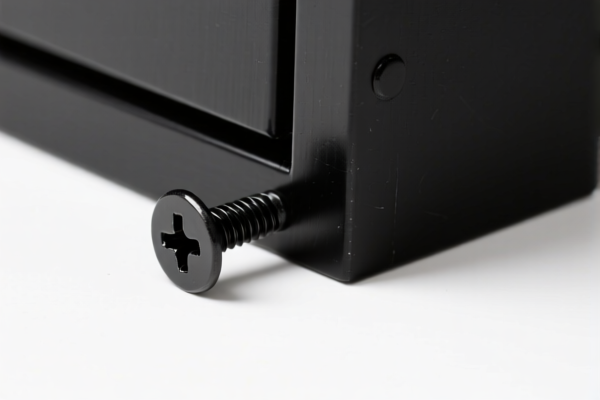
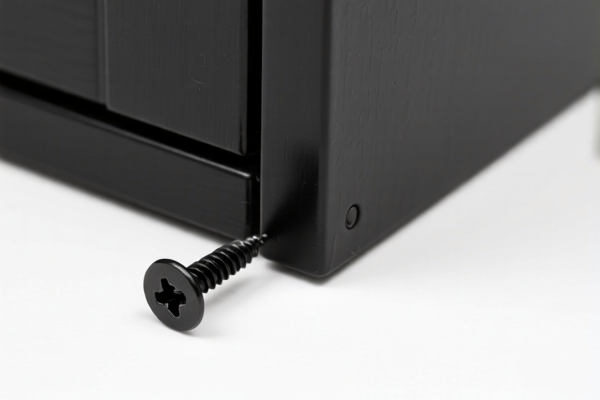
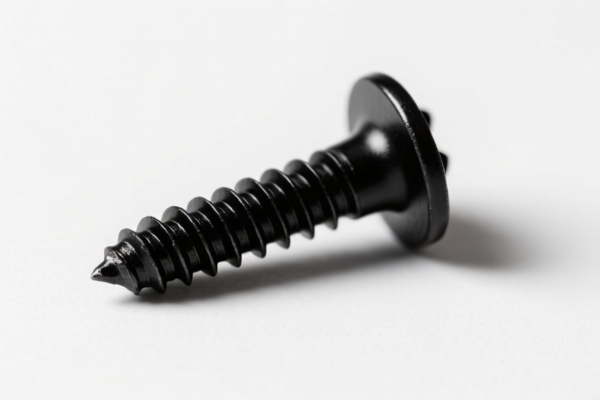
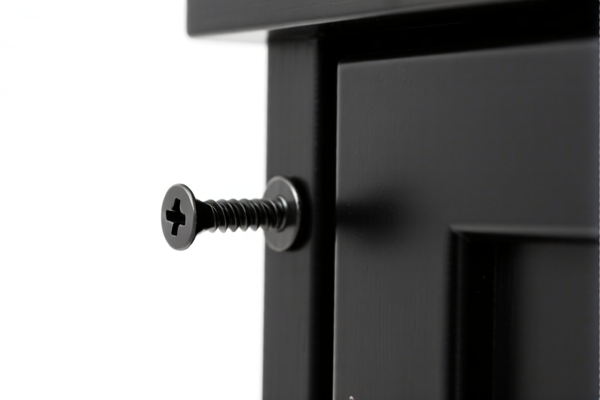
AI Analysis
🖤 Black Hand Tightening Screw (Steel Fasteners)
🌐 HS Code Reference & Customs Clearance Guide | 2026 Latest Tariff Analysis | Professional通关 Strategy
📌 1. Product Definition & Classification: Do You Really Understand "Hand Tightening Screws"?
Black hand tightening screws are steel threaded fasteners designed for manual installation and removal, typically featuring knurled heads, thumbs, or wing-like structures for grip without tools. In international trade, they are classified under Chapter 73 (Articles of Iron or Steel).
Key Classification Criteria: * Material: Must be Iron or Steel (if stainless steel, it falls under 7318.15 or similar; if non-ferrous, different chapter). * Type: Threaded articles (screws, bolts, etc.). * Specific Feature: "Hand tightening" usually implies a specific head shape (e.g., knurled cylinder, thumbscrew) but does not change the primary HS code structure unless it's a specific "coach screw" or "screw hook" with unique features. Most standard hand screws fall under "Other screws and bolts".
⚠️ Critical Distinction:
- If the screw has a hexagonal head and diameter ≥ 6mm → 7318.15.80.69
- If the screw is non-hexagonal (e.g., knurled, wing, flat head) and diameter ≥ 6mm → 7318.15.80.85
📦 2. HS Code Classification Details (2026 Latest Tariff Authority Comparison)
Based on the provided <DATA>, here are the two applicable HS Codes for steel hand tightening screws:
| HS Code | Product Description | Key Features | Applicable Scenario |
|--------|--------------------------|-----------------------------|
| 7318.15.80.85 | Other screws and bolts, having shanks or threads with a diameter of 6 mm or more: Other: Other | Non-hexagonal heads (e.g., knurled, wing, thumbs, pan head with knurling) | Standard black zinc-plated hand screws, knurled thumbscrews, decorative screws where tool is not required |
| 7318.15.80.69 | Other screws and bolts, having shanks or threads with a diameter of 6 mm or more: With hexagonal heads: Other: Other | Hexagonal heads (even if large for hand use, or if used with a wrench but classified here due to head shape) | Large hex-head cap screws with knurling for hand tightening, or standard hex bolts misidentified as "hand screws" |
🔍 Key Reminder:
- "Hand Tightening" is a functional description, not a primary HS classifier. The head shape and thread diameter determine the code.
- If the screw has a hexagonal head, use 7318.15.80.69.
- If it has any other head (knurled, wing, slotted, Phillips, etc.) and diameter ≥ 6mm, use 7318.15.80.85.
- Diameter Matters: Both codes require thread/shank diameter ≥ 6 mm. Smaller screws fall under different subheadings (not in this data).
💰 3. 2026 Latest Tariff Rate Breakdown (Including Surcharges & Policy Add-ons)
✅ Applicable Country: United States (US)
✅ Origin: China (CN) (Note: Tax details provided in DATA imply US-China trade context with "Steel, Aluminum, Copper Surcharge")
✅ Effective Time: Current policy (Data indicates 50% total tax)
🎯 1. 7318.15.80.85 – Other Screws/Bolts (Non-Hexagonal, ≥6mm)
| Item | Content |
|---|---|
| Base Tariff | 0.0% (General rate for many steel fasteners) |
| Section 301 / Special Surcharge | 50.0% (Steel, Aluminum, Copper Products Surcharge) |
| Total Tax Rate | 50.0% |
| Tax Calculation | CIF Value × 50% |
| De Minimis Exemption | ❌ Not Applicable (High-value industrial goods, no $800 exemption for this category) |
| Legal Basis Path | USITC:7318.15.80.85 → Steel Surcharge: 50% |
📌 Explanation:
- The 50% surcharge is a specific penalty on steel, aluminum, and copper products imported from China.
- This is a flat rate surcharge added on top of the base tariff.
- Total Cost Impact: High. A $10,000 shipment incurs $5,000 in taxes.
🎯 2. 7318.15.80.69 – Hexagonal Head Screws (≥6mm)
| Item | Content |
|---|---|
| Base Tariff | 0.0% |
| Section 301 / Special Surcharge | 50.0% (Steel, Aluminum, Copper Products Surcharge) |
| Total Tax Rate | 50.0% |
| Tax Calculation | CIF Value × 50% |
| De Minimis Exemption | ❌ Not Applicable |
| Legal Basis Path | USITC:7318.15.80.69 → Steel Surcharge: 50% |
📌 Note:
- Despite being "hexagonal," the base tariff is still 0%.
- The 50% steel surcharge applies equally to this code.
- No tax advantage for hexagonal vs. non-hexagonal in this specific data set.
🛠️ 4. Customs Clearance Practical Advice (Real-World Pitfall Guide)
✅ 1. Required Documentation Checklist (Mandatory)
| Document | Required | Description |
|---|---|---|
| ✅ Product Specification Sheet | ✔️ | Must include: Diameter, Length, Thread Pitch, Material (e.g., "Steel, Grade 5, Zinc Plated Black"), Head Type (Hex/Knurled) |
| ✅ Photographs | ✔️ | Clear images showing head shape (hex vs. knurled), thread, and finish. Label with "Hand Tightening Screw" |
| ✅ Commercial Invoice | ✔️ | Must specify "Steel Screws" and HS Code. Avoid vague terms like "Hardware" |
| ✅ Packing List | ✔️ | Detail quantity, weight, and value per HS code |
| ✅ Material Declaration | ✔️ | Confirm material is Iron or Steel (not plastic, brass, or stainless unless specified) |
✅ 2. Declaration Tips (Key Mnemonics)
🔥 “Head Shape Defines Code, Diameter ≥6mm, Steel = 50% Tax!”
| Scenario | Correct HS Code | Incorrect Action |
|---|---|---|
| Knurled thumb screw, diameter 8mm | 7318.15.80.85 |
Misdeclare as plastic or small screw |
| Hex-head cap screw with knurling, diameter 10mm | 7318.15.80.69 |
Misdeclare as 7318.15.80.85 (higher risk of scrutiny if head is clearly hex) |
| M5 (5mm) black screw | Not in this data | Do NOT use these codes; use sub-6mm codes (not provided) |
| Brass hand screw | Wrong Chapter | Do NOT use 7318.x; use Chapter 74 (Copper) |
✅ 3. Special Handling Cases
| Scenario | Advice |
|---|---|
| Mixed Shipments | Separate HS codes in customs declaration. Do not lump "hex" and "non-hex" screws under one code. |
| Black Finish | Mention "Zinc Plated Black" or "Phosphate Coated" in description. Do not say "Painted" as it may trigger different classification. |
| Stainless Steel | If stainless, ensure HS code reflects stainless (e.g., 7318.15.80 may still apply, but material declaration is critical). |
| Origin Labeling | Must clearly state "Made in China" for accurate surcharge application. |
🌍 5. Global Market Comparison (2026 Latest)
| Country/Region | Recommended HS Code | Tariff Rate | Notes |
|---|---|---|---|
| 🇺🇸 USA | 7318.15.80.85 / .69 |
50.0% | Steel surcharge applies. No de minimis. |
| 🇨🇳 China | 7318.15.80 | ~0-5% | No surcharge. Low entry cost. |
| 🇪🇺 EU | 7318.15.80 | ~0-2% | No steel surcharge. CETA/GSP may apply. |
| 🇬🇧 UK | 7318.15.80 | ~0-2% | Post-Brexit tariffs low. |
| 🇨🇦 Canada | 7318.15.80 | ~0% | CUSMA preferential if qualifying. |
📌 Conclusion:
- USA is the most challenging market due to the 50% steel surcharge.
- Consider tariff engineering: Can the product be classified under a different chapter (e.g., if plastic parts dominate)? Unlikely for steel screws.
- Alternative: Source from non-China origins (Vietnam, Mexico) to avoid surcharge, if feasible.
📌 6. Common Mistakes & Pitfalls (Lessons Learned)
❌ Mistake 1: Declaring all screws under one HS code regardless of head shape.
👉 Consequence: Customs may reject the declaration, demand correction, or impose penalties.
❌ Mistake 2: Ignoring the diameter requirement.
👉 Consequence: If diameter < 6mm, the code is wrong. Use sub-6mm codes (not in this data).
❌ Mistake 3: Not specifying material.
👉 Consequence: If material is not steel, the 50% surcharge does NOT apply, but you may face fraud allegations for misclassification.
❌ Mistake 4: Using "Black Screw" as the product name.
👉 Consequence: Too vague. Use "Steel Hand Tightening Screw, Black Finish, Knurled Head".
✅ Correct Approach:
"Hand Tightening Screw, Steel, Zinc Plated Black, Knurled Cylinder Head, M8 x 20mm, HS 7318.15.80.85"
🎯 7. Conclusion: Precision Classification Saves Money!
🎯 Key Takeaway:
🔹 "Hex vs. Non-Hex determines code, but both carry 50% tax."
🔹 "Always confirm diameter ≥ 6mm for these codes."
🔹 "Material must be steel; otherwise, different rules apply."
📌 Pro Tip:
If your hand tightening screws are stainless steel or non-ferrous, do NOT use these HS codes. Re-classify under appropriate chapters (e.g., 74 for copper, 76 for aluminum).
For steel screws, the 50% surcharge is unavoidable under current US policy. Consider supply chain diversification if margins are thin.
📣 Immediate Action:
📞 Verify head shape and diameter with your supplier.
📄 Prepare precise product descriptions.
🚀 Accurate HS Code = Faster Clearance = Predictable Costs!
✨ Professional clearance starts with precise classification!
💼 Every percentage point of tax matters!
Customer Reviews
About HS Code Classification
The Harmonized System (HS) is an internationally standardized nomenclature developed by the World Customs Organization (WCO) to classify traded products. Over 200 countries use the HS system as the basis for customs tariffs, trade statistics, and import/export regulations.
Each HS code follows a hierarchical structure:
- Chapter (2 digits) — Broad category of goods (e.g., Chapter 84: Machinery and Mechanical Appliances)
- Heading (4 digits) — More specific grouping within the chapter
- Subheading (6 digits) — Internationally standardized breakdown, used by all WCO member countries
- National subdivisions (8-10 digits) — Country-specific extensions for further classification, such as US HTSUS 10-digit codes
Correct HS code classification is essential for smooth customs clearance, accurate duty payment, and compliance with trade regulations. Misclassification can lead to customs delays, overpayment of duties, or penalties.
When importing from CN to US, the applicable tariff rates may include:
- Most-Favored-Nation (MFN) rate — The standard duty rate applied to WTO members
- General rate — Applied to countries without trade agreements
- Trade remedy duties — Additional tariffs such as Section 301 (anti-dumping), Section 232 (national security), or countervailing duties
The information provided on this page is for reference purposes only. For official classification, please consult with your local customs authority or a licensed customs broker.