Black Night Light
CN → US| HS Code | Tariff Rate | Origin | Destination | Doc |
|---|---|---|---|---|
| 9405296010 | 41.0% | CN | US | Official Doc |
| 9405298010 | 38.9% | CN | US | Official Doc |
| 8513102000 | 22.5% | CN | US | Official Doc |
| 9405198010 | 38.9% | CN | US | Official Doc |
| 8513104000 | 13.5% | CN | US | Official Doc |
| 9503000090 | 10.0% | CN | US | Official Doc |
Product Images
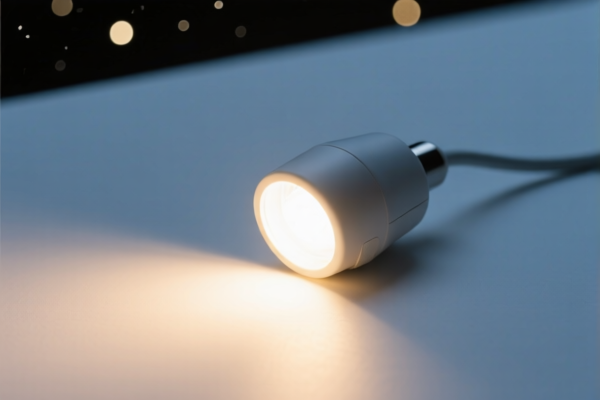
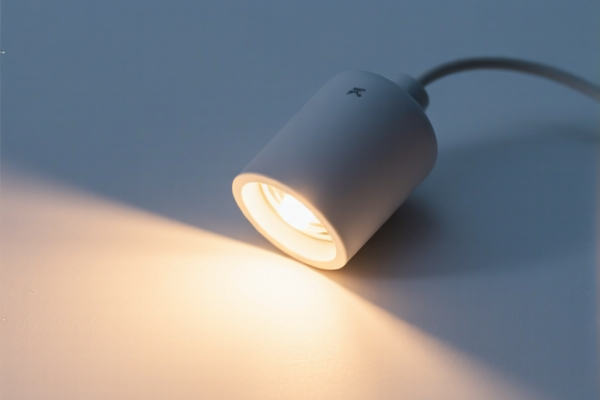
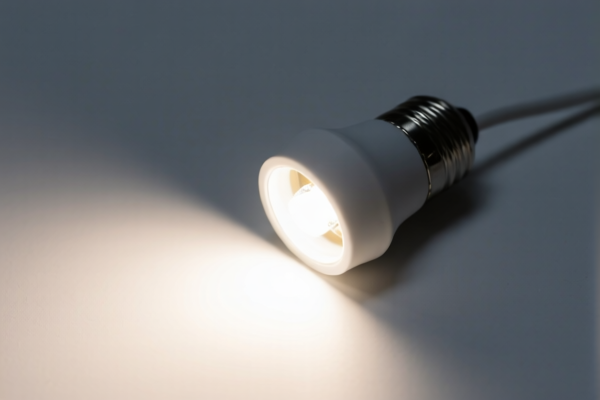
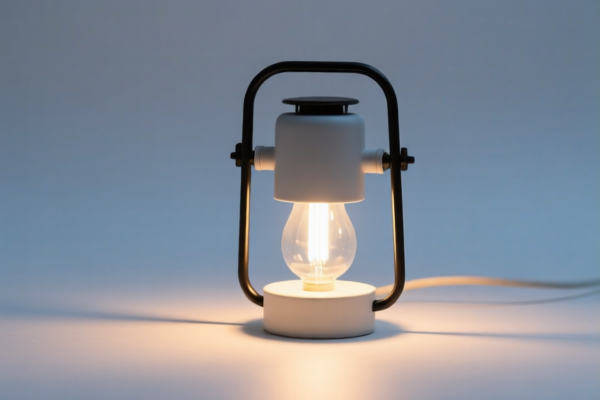
AI Analysis
🌙 Black Night Light (Black Night Light)
🌐 HS Code Reference & Clearance Guide | 2026 Latest Tariff Analysis | Professional Strategy for US Customs
📌 I. Product Definition & Classification: What is a "Night Light"?
A Black Night Light is a small, low-intensity lighting device designed for use in dark environments, typically for infants, the elderly, or decorative ambiance. In international trade, its classification hinges on form factor (portable vs. stationary) and application (toy/decoration vs. general illumination).
Key distinctions: * Portable/Handheld: Battery-operated, handheld, or small devices intended to be carried or moved easily → Often fall under Chapter 85 (Electrical machinery) as portable electric lights. * Stationary/Home Use: Plugged into an outlet, fixed on a wall/bedside table, larger units → Often fall under Chapter 94 (Furniture/Lighting articles) as parts of interior lighting. * Toy/Novelty: If primarily designed as a toy, decoration, or collectible with incidental lighting → May fall under Chapter 95 (Toys).
⚠️ Critical Classification Point:
- If it’s a small, battery-powered lamp you can hold → 8513 (Portable Electric Light).
- If it’s a plug-in bedside lamp → 9405 (Lamps & Lighting Fittings).
- If it’s a decorative item or toy → 9503 (Toys).
📦 II. HS Code Classification Details (2026 Latest Tariff Matrix)
| HS Code | Product Description | Classification Logic | Tax Rate |
|---|---|---|---|
8513.10.40.00 |
Portable electric lighting device with dry battery or accumulator | Lowest Duty Option. Fits if the night light is small, battery-powered, and portable. Matches "portable electric lamp" usage. | 13.5% |
8513.10.20.00 |
Other portable electric lighting devices | Fits if the device is portable but doesn’t meet the specific criteria of the above code. Still considered a "portable electric light." | 22.5% |
9503.00.00.90 |
Other toys; reduced-size ("scale") models and similar recreational models; puzzles of all kinds | Fits if the night light is primarily a toy, decoration, or novelty item (e.g., a light-up plush, a decorative figurine). | 10.0% |
9405.29.80.10 |
Other electric lamps and lighting fittings | Fits if the night light is a standard plug-in bedside lamp or table lamp. General household lighting category. | 38.9% |
9405.19.80.10 |
Other electric lamps and lighting fittings (Chandeliers & Pendant Lights) | Fits if the night light is a pendant/chandelier style or fixed interior lighting fixture. | 38.9% |
9405.29.60.10 |
Other electric lamps and lighting fittings | Another sub-category for general electric lamps not specified elsewhere. High duty due to US-China trade measures. | 41.0% |
🔍 Key Insight:
- Tariff Arbitrage Opportunity: Classifying as a Toy (9503) or Portable Light (8513) can drastically reduce duties compared to Home Lighting (9405).
- Why 9405 is expensive: Includes 6% base + 25% Section 301 + 10% IEEPA = 38.9%-41%.
- Why 8513/9503 are cheaper: Lower base rates or exempt from Section 301 (if classified correctly as non-lighting appliances or toys).
💰 III. 2026 Latest Tariff Breakdown (US Market)
✅ Applicable Country: United States (US)
✅ Origin: China (CN)
✅ Effective Date: November 10, 2025 (inclusive)
🎯 1. 8513.10.40.00 – Portable Electric Light (Lowest Duty Strategy)
| Item | Detail |
|---|---|
| Base Tariff | 3.5% |
| Section 301 Tariff | 0% (Not subject to 25% tariff under current interpretation for portable lights) |
| IEEPA Tariff | +10% (Against China/HK) |
| Total Duty | 13.5% |
| De Minimis Eligibility | ❌ No (Deny de minimis for China-origin goods under 301) |
| Legal Basis | USITC:8513.10.40.00 → IEEPA:9903.01.24 |
📌 Explanation:
- This is the most cost-effective classification for a simple, battery-operated night light.
- Why 0% Section 301? Portable electric lights (8513) are often excluded from the 25% tariff that applies to many other electrical appliances, though this requires careful justification of "portability."
- IEEPA 10% still applies to all China-origin goods in this category.
🎯 2. 8513.10.20.00 – Other Portable Electric Lights
| Item | Detail |
|---|---|
| Base Tariff | 12.5% |
| Section 301 Tariff | 0% |
| IEEPA Tariff | +10% |
| Total Duty | 22.5% |
| De Minimis Eligibility | ❌ No |
| Legal Basis | USITC:8513.10.20.00 → IEEPA:9903.01.24 |
📌 Note: Slightly higher base duty than
8513.10.40.00. Choose this only if the product doesn’t fit the specific definition of the lower code.
🎯 3. 9503.00.00.90 – Toys/Novelty Items (Best if Applicable)
| Item | Detail |
|---|---|
| Base Tariff | 0% |
| Section 301 Tariff | 0% (Toys are generally exempt from Section 301) |
| IEEPA Tariff | +10% |
| Total Duty | 10.0% |
| De Minimis Eligibility | ❌ No |
| Legal Basis | USITC:9503.00.00.90 → IEEPA:9903.01.24 |
📌 Explanation:
- Lowest Total Duty (10%).
- Crucial Condition: The product must be primarily a toy or decorative novelty. If it’s a serious lighting fixture, this classification will be rejected by customs.
- Ideal For: Light-up plush toys, LED night light keychains, decorative night lights for children’s rooms.
🎯 4. 9405.29.80.10 / 9405.19.80.10 / 9405.29.60.10 – Home Lighting (High Duty)
| Item | Detail |
|---|---|
| Base Tariff | 3.9% - 6.0% |
| Section 301 Tariff | +25% |
| IEEPA Tariff | +10% |
| Total Duty | 38.9% - 41.0% |
| De Minimis Eligibility | ❌ No |
| Legal Basis | USITC:9405... → USITC:Footnote 9903.88.01 → IEEPA:9903.01.24 |
📌 Warning:
- These codes include all three layers of tariffs: Base + Section 301 (25%) + IEEPA (10%).
- Only use if the product is a standard, non-portable household lamp (e.g., a plug-in LED night light with a fixed base).
- Do NOT misclassify a portable light as a home lamp to avoid penalties.
🛠️ IV. Clearance Practical Advice (Avoid Pitfalls)
✅ 1. Preparation Checklist (Must-Haves)
| Document | Required? | Purpose |
|---|---|---|
| ✅ Product Photos | ✔️ | Show size, power source (battery vs. plug), and form factor. |
| ✅ Specifications Sheet | ✔️ | Clearly state: "Battery-operated," "Portable," "Handheld," or "Plug-in." |
| ✅ Marketing Materials | ✔️ | If claiming toy status, include packaging/marketing that describes it as a "toy" or "novelty." |
| ✅ Circuit Diagram | ✔️ | To prove portability (e.g., internal battery compartment). |
| ✅ Commercial Invoice | ✔️ | Accurate description: "LED Night Light, Battery Powered, Portable" vs. "Bedside Lamp." |
| ✅ FCC Certificate | ✔️ | Required for all electronic lighting devices in the US. |
✅ 2. Classification Strategy (Key Rules)
| Scenario | Recommended HS Code | Duty | Why? |
|---|---|---|---|
| Small, battery-powered, handheld night light | 8513.10.40.00 |
13.5% | Portable electric light, lowest duty in electronics. |
| Night light shaped like a toy/animal, marketed to kids | 9503.00.00.90 |
10.0% | Toy/Novelty, exempt from Section 301. |
| Standard plug-in bedside night light | 9405.29.80.10 |
38.9% | Home lighting, subject to all tariffs. |
| Rechargeable night light (not handheld) | 8513.10.20.00 |
22.5% | Portable but not fitting the lowest sub-code. |
🔥 Golden Rule:
"If it’s small and battery-powered, call it portable (8513). If it’s a toy, call it a toy (9503). If it’s a big plug-in lamp, accept the high duty (9405)."
✅ 3. Special Cases & Risk Management
| Situation | Advice |
|---|---|
| Product is both a toy and a light | Classify as Toy (9503) if the primary function is play/decoration. Provide marketing showing it’s for children. |
| Product is portable but plugs in | Risk! Customs may classify as 9405. Justify portability with examples (e.g., "travel night light"). |
| Misclassification Penalty | Incorrectly declaring a 9405 product as 8513 can lead to seizure, fines, and back-tariffs. Always ensure physical product matches description. |
| IEEPA 10% Tariff | Applies to all HS Codes listed above for China-origin goods. No exemption. |
🌍 V. Global Market Comparison (2026)
| Country | Recommended HS Code | Duty (China Origin) | Notes |
|---|---|---|---|
| 🇺🇸 USA | 8513.10.40.00 or 9503.00.00.90 |
10%-13.5% | Optimize classification to avoid 38.9%+ |
| 🇨🇳 China | 9405.29.80.10 |
5% | Low base duty, no Section 301 |
| 🇪🇺 EU | 9405.42.90 |
0% | No additional tariffs, standard VAT applies |
| 🇬🇧 UK | 9405.42.90 |
0% | Post-Brexit, standard VAT applies |
| 🇯🇵 Japan | 9405.42.90 |
0% | No additional tariffs |
📌 Conclusion:
- USA is the most complex market due to Section 301 and IEEPA tariffs.
- Strategic classification is critical in the US to save 25-30% in duties.
- Export to EU/UK/Japan: Standard HS codes apply, no special US-style tariffs.
📌 VI. Common Mistakes & Pitfalls (Learn from Others' Errors)
❌ Mistake 1: Calling a plug-in night light a "Portable Light" to get 13.5% duty.
👉 Result: Customs rejects it, reclassifies to 9405, charges back-tariffs + penalties.
❌ Mistake 2: Calling a serious bedside lamp a "Toy."
👉 Result: Customs demands proof of toy nature (e.g., children’s marketing). If absent, reclassify to 9405 (38.9%).
❌ Mistake 3: Ignoring the IEEPA 10% tariff.
👉 Result: All HS Codes above include this 10% surcharge for China-origin goods. Do not forget to calculate it.
❌ Mistake 4: Using "De Minimis" (Section 321) for shipments <$800.
👉 Result: Not eligible for China-origin goods under current rules. Must pay duties even for small packages.
✅ Correct Approach:
"LED Night Light, Battery Powered, Portable, 10 Lumens, Model XYZ, FCC Certified"
HS Code:8513.10.40.00
Duty: 13.5%
🎯 VII. Conclusion: Smart Classification Saves Money!
🎯 Remember the口诀:
🔹 "Battery Portable = 13.5% | Toy = 10% | Plug-in Lamp = 38.9%"
🔹 "Misclassify = Penalty | Correct Class = Profit"
📌 Pro Tip:
If your night light is originally from Vietnam, Mexico, or Thailand, you may exempt the IEEPA 10% and potentially Section 301 tariffs. Always verify country of origin!
📣 Immediate Action:
📞 Consult a customs broker + Provide product photos + Apply for Binding Ruling if unsure.
🚀 Optimize your HS Code, reduce duty costs, and maximize profit margins!
✨ Professional Clearance Starts with Accurate Classification!
💼 Every percent of duty saved is pure profit!
Customer Reviews
About HS Code Classification
The Harmonized System (HS) is an internationally standardized nomenclature developed by the World Customs Organization (WCO) to classify traded products. Over 200 countries use the HS system as the basis for customs tariffs, trade statistics, and import/export regulations.
Each HS code follows a hierarchical structure:
- Chapter (2 digits) — Broad category of goods (e.g., Chapter 84: Machinery and Mechanical Appliances)
- Heading (4 digits) — More specific grouping within the chapter
- Subheading (6 digits) — Internationally standardized breakdown, used by all WCO member countries
- National subdivisions (8-10 digits) — Country-specific extensions for further classification, such as US HTSUS 10-digit codes
Correct HS code classification is essential for smooth customs clearance, accurate duty payment, and compliance with trade regulations. Misclassification can lead to customs delays, overpayment of duties, or penalties.
When importing from CN to US, the applicable tariff rates may include:
- Most-Favored-Nation (MFN) rate — The standard duty rate applied to WTO members
- General rate — Applied to countries without trade agreements
- Trade remedy duties — Additional tariffs such as Section 301 (anti-dumping), Section 232 (national security), or countervailing duties
The information provided on this page is for reference purposes only. For official classification, please consult with your local customs authority or a licensed customs broker.