Black Tea Powder
CN → US| HS Code | Tariff Rate | Origin | Destination | Doc |
|---|---|---|---|---|
| 2101202090 | 17.5% | CN | US | Official Doc |
| 2101202010 | 17.5% | CN | US | Official Doc |
| 1302192100 | 17.5% | CN | US | Official Doc |
| 1302199140 | 17.5% | CN | US | Official Doc |
Product Images
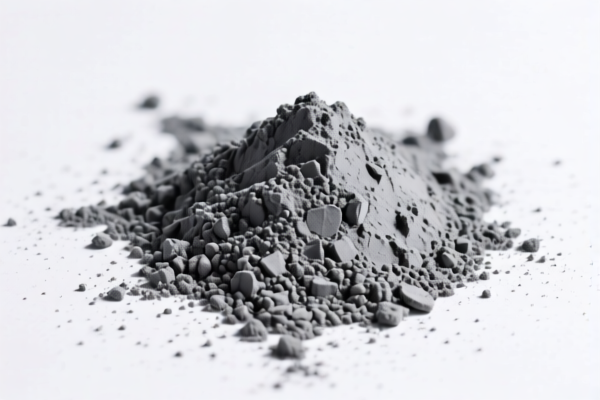
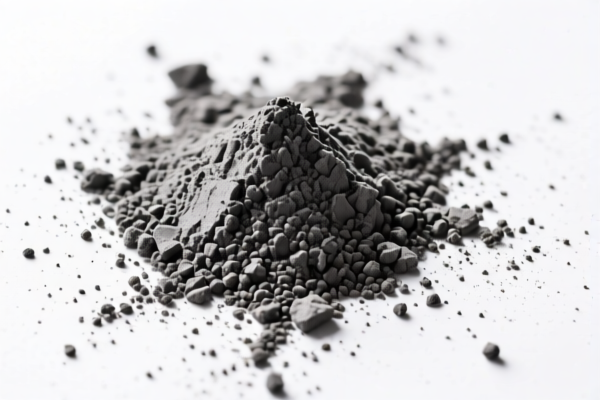
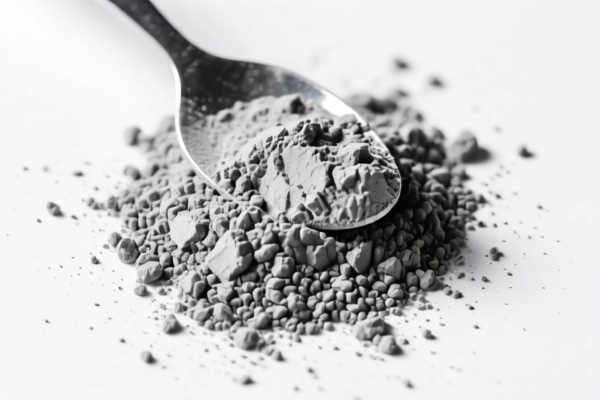
AI Analysis
🍵 Black Tea Powder (Extracts and Preparations of Tea)
🌐 HS Code Reference & Clearance Guide | 2026 Latest Tariff Analysis | Professional Customs Strategy
📌 I. Product Definition & Classification: Do You Really Understand "Black Tea Powder"?
Black Tea Powder is a processed agricultural product, typically obtained through the extraction, concentration, and drying of black tea leaves. In international trade, its classification depends heavily on its physical state (powder vs. extract) and processing depth (soluble vs. non-soluble).
Key Distinctions: * Instant/Soluble Tea Powder: Highly soluble, direct dissolution in water. Typically falls under 2101.20.20.10 (Instant Tea). * Tea Extracts/Concentrates/Powders (Non-Instant): May include tea extracts, essences, or concentrates that do not fit the strict "instant" definition. These fall under 2101.20.20.90 or plant extract categories like 1302.19.21.00 and 1302.19.91.40.
⚠️ Critical Classification Point:
- If it is highly soluble instant tea powder → Classify under 2101.20.20.10.
- If it is tea extract/concentrate/powder not specifically "instant" → Classify under 2101.20.20.90, 1302.19.21.00, or 1302.19.91.40.
- Material Consistency: All these codes recognize "Black Tea" as the primary material, but the form (extract vs. instant) dictates the specific subheading.
📦 II. HS Code Classification Details (2026 Latest Tariff Authority Comparison)
| HS Code | Product Description | Applicability | Solubility/State |
|---|---|---|---|
2101.20.20.10 |
Instant Tea (Tea Extracts/Preparations) | Highly soluble tea powder, direct-to-drink format | ✅ Instant |
2101.20.20.90 |
Other Tea Extracts, Essence, or Concentrate | Non-instant tea powder, extracts, or concentrates | ❌ Non-Instant |
1302.19.21.00 |
Plant Extracts (Primary State) | Tea extracts in primary powder/liquid state, general plant extract category | ✅ Plant Extract |
1302.19.91.40 |
Other Plant Juices and Extracts | General plant extracts, no conflict with other specific tea codes | ✅ Plant Extract |
🔍 Key Reminder:
-2101.20.20.10is for "Instant Tea" – the most common classification for soluble black tea powder.
-2101.20.20.90is for "Other" tea extracts/powders – if it doesn’t qualify as instant.
-1302.19.21.00&1302.19.91.40are broader plant extract categories – applicable if the product is processed as a general botanical extract rather than a beverage preparation.
- No Material Conflict: All codes accept "Black Tea" as the base material, but the processing method determines the final HS code.
💰 III. 2026 Latest Tariff Rate Breakdown (Including Additional Duties & Policy Add-ons)
✅ Applicable Country: United States (US)
✅ Country of Origin: China (CN)
✅ Effective Date: From November 10, 2025 onwards (including subsequent imports)
🎯 1. 2101.20.20.10 – Instant Tea
| Item | Content |
|---|---|
| Base Duty Rate | 0.0% (ad valorem) |
| Section 301 Additional Duty | +7.5% |
| Section 122 Additional Duty | +10.0% |
| Total Effective Tax Rate | 17.5% |
| Tax Calculation | CIF Value × 17.5% |
| De Minimis Eligibility | ❌ Not Eligible (Deny de minimis) |
| Legal Basis Path | Base: 0% → Sec 301: 7.5% → Sec 122: 10% → Total: 17.5% |
📌 Explanation:
- Base Rate 0%: Standard MFN rate for instant tea.
- Section 301 (7.5%): U.S. trade remedy duty on Chinese goods.
- Section 122 (10%): Specific additional duty applicable to certain Chinese imports.
- Total 17.5%: Must be factored into cost calculations for Chinese-origin black tea powder.
🎯 2. 2101.20.20.90 – Other Tea Extracts/Concentrates
| Item | Content |
|---|---|
| Base Duty Rate | 0.0% (ad valorem) |
| Section 301 Additional Duty | +7.5% |
| Section 122 Additional Duty | +10.0% |
| Total Effective Tax Rate | 17.5% |
| Tax Calculation | CIF Value × 17.5% |
| De Minimis Eligibility | ❌ Not Eligible (Deny de minimis) |
| Legal Basis Path | Base: 0% → Sec 301: 7.5% → Sec 122: 10% → Total: 17.5% |
📌 Note:
- Same tax structure as instant tea.
- Applies to non-instant tea powders, extracts, or concentrates.
🎯 3. 1302.19.21.00 – Plant Extracts (Primary State)
| Item | Content |
|---|---|
| Base Duty Rate | 0.0% (ad valorem) |
| Section 301 Additional Duty | +7.5% |
| Section 122 Additional Duty | +10.0% |
| Total Effective Tax Rate | 17.5% |
| Tax Calculation | CIF Value × 17.5% |
| De Minimis Eligibility | ❌ Not Eligible (Deny de minimis) |
| Legal Basis Path | Base: 0% → Sec 301: 7.5% → Sec 122: 10% → Total: 17.5% |
📌 Explanation:
- Classified under broader plant extracts.
- Same 17.5% total duty for Chinese-origin goods.
🎯 4. 1302.19.91.40 – Other Plant Juices and Extracts
| Item | Content |
|---|---|
| Base Duty Rate | 0.0% (ad valorem) |
| Section 301 Additional Duty | +7.5% |
| Section 122 Additional Duty | +10.0% |
| Total Effective Tax Rate | 17.5% |
| Tax Calculation | CIF Value × 17.5% |
| De Minimis Eligibility | ❌ Not Eligible (Deny de minimis) |
| Legal Basis Path | Base: 0% → Sec 301: 7.5% → Sec 122: 10% → Total: 17.5% |
📌 Note:
- Applies to general plant extracts without specific tea beverage classification.
- Identical tariff structure to other tea-related codes.
🛠️ IV. Customs Clearance Practical Advice (Battle-Tested Pitfall Guide)
✅ 1. Required Documentation Checklist (Mandatory)
| Document | Required | Description |
|---|---|---|
| ✅ Product Specification Sheet | ✔️ | Details: Particle size, solubility, caffeine content, moisture, packaging |
| ✅ Formula/Composition | ✔️ | Proves material is 100% tea extract/powder, no additives |
| ✅ Product Photos (with Label) | ✔️ | Clear view of ingredients, brand, usage instructions |
| ✅ Third-Party Lab Test Report | ✔️ | FDA-compliant tests: Heavy metals, pesticides, microbiology |
| ✅ Commercial Invoice | ✔️ | Must specify "Black Tea Powder" or "Tea Extract" accurately |
| ✅ Certificate of Origin (CO) | ✔️ | Essential for claiming origin-based treatments (if applicable) |
| ✅ Packing List | ✔️ | Detailed breakdown of net/gross weight, units, and contents |
✅ 2. Declaration Tips (Key Mantras)
🔥 "Specify Form, Declare Correctly, Avoid 17.5% Surprise!"
| Scenario | Correct Declaration | Incorrect Action |
|---|---|---|
| Instant Soluble Powder | Use 2101.20.20.10 |
Misdeclare as extract → Potential penalty if challenged |
| Non-Instant Tea Powder | Use 2101.20.20.90 |
Misdeclare as instant → Discrepancy in customs |
| General Plant Extract | Use 1302.19.21.00 or 1302.19.91.40 |
Over-classify as tea beverage → Customs audit risk |
| Mixed with Additives | Disclose fully; may change classification | Hide additives → Fraud risk, severe penalties |
📌 Key Tip:
- If your product is instant, clearly state "Instant Black Tea Powder" on the invoice.
- If it is not instant, use "Black Tea Extract/Powder" and consider2101.20.20.90or plant extract codes.
- Never split shipments to avoid de minimis rules – all entries are subject to 17.5% duty.
✅ 3. Special Handling Scenarios
| Scenario | Handling Advice |
|---|---|
| OEM/Private Label | Provide customer PO and label design; avoid generic descriptions |
| Certified Organic | Submit USDA Organic or equivalent certification for potential market preference (does not change duty) |
| High Caffeine Extract | Declare accurately; may require additional FDA compliance notes |
| Bulk vs. Retail | Bulk shipments may face stricter inspection; ensure packaging integrity |
🌍 V. Global Market Comparison (2026 Latest)
| Country/Region | Recommended HS Code | Duty Rate (China Origin) | Certification Required | Notes |
|---|---|---|---|---|
| 🇺🇸 USA | 2101.20.20.10 / 2101.20.20.90 / 1302... |
17.5% (0% Base + 7.5% Sec 301 + 10% Sec 122) | FDA + Labeling Compliance | Highest duty among major markets; de minimis denied |
| 🇨🇳 China | 2101.20.20 |
~5-10% | No major additional duties | Lower cost for domestic sale |
| 🇪🇺 EU | 2101.20 |
0-5% (varies) | CE/Food Safety Standards | No Section 301/122 equivalents |
| 🇦🇺 Australia | 2101.20 |
~5% | FSANZ Compliance | Moderate duty |
| 🇯🇵 Japan | 2101.20 |
0% | JAS/Pharma Standards | Often duty-free |
📌 Conclusion:
- The USA imposes the highest effective duty (17.5%) on Chinese-origin black tea powder due to Section 301 and Section 122 add-ons.
- Alternative markets like the EU, Japan, or Australia offer significantly lower duties, making them attractive for re-routing or sourcing alternatives.
- De minimis exemption is denied in the US, meaning even small shipments are taxed.
📌 VI. Common Mistakes & Pitfall Guide (Lessons Learned)
❌ Mistake 1: Declaring "Tea Leaves" instead of "Tea Powder"
👉 Consequence: Incorrect classification → Duty mismatch, fines, or shipment delay.
❌ Mistake 2: Ignoring Section 122 Duty
👉 Consequence: Underpayment by 10% → Back taxes + penalties upon audit.
❌ Mistake 3: Assuming de minimis applies
👉 Consequence: Small shipments seized or taxed retroactively → 17.5% applies to all volumes.
❌ Mistake 4: Vague Description ("Tea Product")
👉 Consequence: Customs uncertainty → Hold for inspection, delayed clearance, storage fees.
✅ Correct Approach:
"Instant Black Tea Powder, 100% Extract, No Additives, Soluble, Net Weight: ___ kg, FCC/FDA Compliant, HS: 2101.20.20.10"
🎯 VII. Conclusion: Professional Declaration Saves Money!
🎯 Remember the Mantras:
🔹 "Instant = 2101.20.20.10 | Non-Instant = 2101.20.20.90 | Extracts = 1302..."
🔹 "17.5% Total Duty: 0% Base + 7.5% Sec 301 + 10% Sec 122"
🔹 "No De Minimis – Every Shipment Taxed!"
📌 Pro Tip:
- If you have access to non-Chinese origin black tea powder (e.g., Vietnam, India, Sri Lanka), you can avoid Section 301 and 122 duties, reducing the rate to 0-5%.
- Consider Advance Ruling (Pre-Decision) from U.S. Customs to confirm classification before shipment.
📣 Immediate Action:
📞 Contact a licensed customs broker + Provide product specs + Request HS Code Pre-Ruling
🚀 Ensure Smooth Clearance, Minimized Costs, and Maximum Profit!
✨ Professional Customs Clearance Starts with Accurate Classification!
💼 Your Every Dollar Should Be Precisely Calculated!
Customer Reviews
About HS Code Classification
The Harmonized System (HS) is an internationally standardized nomenclature developed by the World Customs Organization (WCO) to classify traded products. Over 200 countries use the HS system as the basis for customs tariffs, trade statistics, and import/export regulations.
Each HS code follows a hierarchical structure:
- Chapter (2 digits) — Broad category of goods (e.g., Chapter 84: Machinery and Mechanical Appliances)
- Heading (4 digits) — More specific grouping within the chapter
- Subheading (6 digits) — Internationally standardized breakdown, used by all WCO member countries
- National subdivisions (8-10 digits) — Country-specific extensions for further classification, such as US HTSUS 10-digit codes
Correct HS code classification is essential for smooth customs clearance, accurate duty payment, and compliance with trade regulations. Misclassification can lead to customs delays, overpayment of duties, or penalties.
When importing from CN to US, the applicable tariff rates may include:
- Most-Favored-Nation (MFN) rate — The standard duty rate applied to WTO members
- General rate — Applied to countries without trade agreements
- Trade remedy duties — Additional tariffs such as Section 301 (anti-dumping), Section 232 (national security), or countervailing duties
The information provided on this page is for reference purposes only. For official classification, please consult with your local customs authority or a licensed customs broker.