Blank Paper Labels
CN → US| HS Code | Tariff Rate | Origin | Destination | Doc |
|---|---|---|---|---|
| 4821902000 | 35.0% | CN | US | Official Doc |
| 4821904000 | 35.0% | CN | US | Official Doc |
| 4823908680 | 35.0% | CN | US | Official Doc |
| 4823908000 | 35.0% | CN | US | Official Doc |
| 3919102055 | 40.8% | CN | US | Official Doc |
Product Images
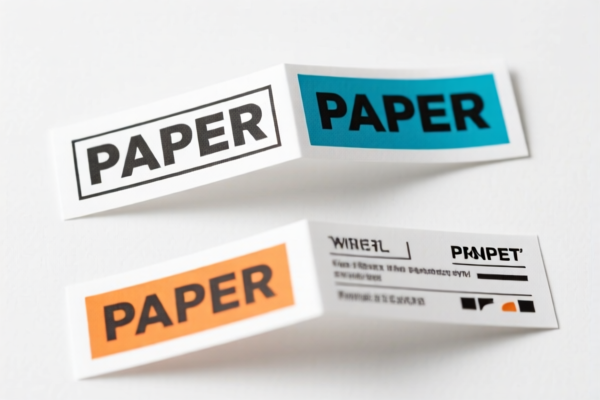
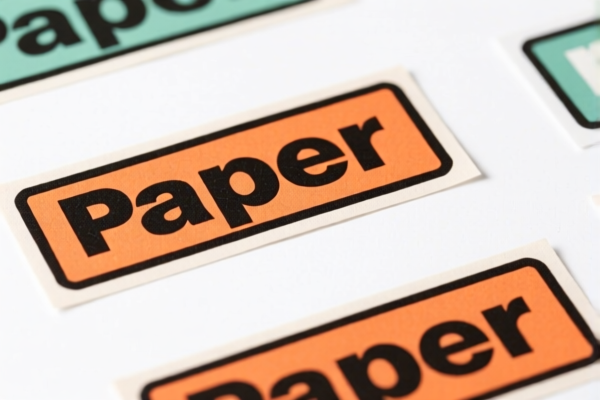
AI Analysis
🏷️ Blank Paper Labels (无印刷纸质标签)
🌐 HS Code Classification & Clearance Guide | 2026 Tariff Analysis | Strategic Compliance for US Imports
📌 Part 1: Product Definition & Core Characteristics
Blank Paper Labels refer to unprinted, self-adhesive or pressure-sensitive labels manufactured primarily from paper or paper-based materials. They are commonly used for: * Post-printing applications: Users apply their own graphics, barcodes, or text via inkjet, laser, or thermal printers. * Industrial labeling: Shipping, warehousing, and inventory management where generic labeling is required before final data entry. * Craft and Retail: Customization for small businesses, artisan goods, or retail price tagging.
⚠️ Critical Distinction:
- If the label is paper-based, it generally falls under Chapter 48 (Paper and Paperboard).
- If the label is plastic-based (e.g., vinyl, polypropylene), it falls under Chapter 39 (Plastics).
- The provided data suggests a strong inclination towards paper-based items, but one option (3919.10.20.55) exists for plastic alternatives.
📦 Part 2: HS Code Classification Breakdown (2026 Tariff Schedule)
Based on the provided data, here are the five most likely HS Code classifications for "Blank Paper Labels," ranked by logical fit and tax implications.
| HS Code | Product Description | Material/Type | Key Classification Logic |
|---|---|---|---|
| 4821.90.20.00 | Paper Labels, Other | Paper | Best fit for "Paper Labels." Recognized as a dedicated label product with no printing. |
| 4821.90.40.00 | Paper Labels, Other | Paper | Similar to 4821.90.20.00; categorized under "Other" paper labels. No material conflict. |
| 4823.90.86.80 | Other Paper Articles, Cut/Shape | Paper | Classified as "Other paper articles" cut to size/shape. Fits if treated as a generic paper cut-out rather than a dedicated "label" sub-category. |
| 4823.90.80.00 | Paper Gaskets/Packers | Paper/Fiber | Classified as "Other paper packing material/gaskets." Less ideal unless the label is specifically used as a spacer/gasket, but listed due to material match. |
| 3919.10.20.55 | Self-Adhesive Plastics | Plastic | Outlier Option. Fits if the "label" is actually a plastic-based self-adhesive tape/label. Included due to the "sticky/adhesive" nature, but material differs from the "Paper" inference. |
🔍 Classification Priority:
- Primary Choice: 4821.90.20.00 or 4821.90.40.00 (Dedicated Paper Labels).
- Secondary Choice: 4823.90.86.80 (If labeled as "Paper Articles" rather than "Labels").
- Tertiary Choice: 3919.10.20.55 (Only if the product is confirmed to be Plastic/Vinyl, not paper).
- Avoid: 4823.90.80.00 unless the product is functionally a gasket/packing material, as this may raise customs scrutiny for misclassification.
💰 Part 3: 2026 US Tariff Rate Analysis (China Origin)
✅ Applicable Country: United States (US)
✅ Origin: China (CN)
✅ Effective Date: November 10, 2025 (Post-2025 tariff regime)
🎯 1. Paper-Based Labels (HS: 4821.90.xxxxxx & 4823.90.xxxxxx)
| Item | Detail |
|---|---|
| HS Codes | 4821.90.20.00, 4821.90.40.00, 4823.90.86.80, 4823.90.80.00 |
| Base Duty Rate | 0.0% |
| Section 301 Duty (25%) | +25.0% (USITC Footnote 9903.88.01) |
| IEEPA Duty (10%) | +10.0% (China-specific additional tariff) |
| Total Effective Rate | 35.0% |
| Calculation | CIF Value × 35% |
| De Minimis Exemption | ❌ NO (Denied for China-origin goods under Section 301/IEEPA) |
| Legal Basis Path | IEEPA:9903.01.25 → IEEPA:9903.01.24 → USITC:4821.xxxx.xxxx → FOOTNOTE:9903.88.01 |
📌 Explanation:
- Base Rate 0%: Paper products generally enjoy low base duties in the US.
- Section 301 (25%): Applies to most Chinese goods, including paper labels.
- IEEPA (10%): An additional tariff imposed on Chinese imports to address trade imbalances and national security concerns.
- Total 35%: This is a significant cost factor. Importers must budget for this 35% duty on top of shipping and insurance.
🎯 2. Plastic-Based Self-Adhesive Labels (HS: 3919.10.20.55)
| Item | Detail |
|---|---|
| HS Code | 3919.10.20.55 |
| Base Duty Rate | 5.8% |
| Section 301 Duty (25%) | +25.0% |
| IEEPA Duty (10%) | +10.0% |
| Total Effective Rate | 40.8% |
| Calculation | CIF Value × 40.8% |
| De Minimis Exemption | ❌ NO |
| Legal Basis Path | IEEPA:9903.01.25 → IEEPA:9903.01.24 → USITC:3919.10.20.55 → FOOTNOTE:9903.88.01 |
📌 Explanation:
- Base Rate 5.8%: Plastic self-adhesive tapes/labels have a higher base duty than paper.
- Total 40.8%: This is even higher than the paper classification.
- Strategic Insight: If your product is plastic, the tax burden is ~5.8% higher than if it were paper. Confirm material composition carefully.
🛠️ Part 4: Clearance Practical Advice (Avoiding Pitfalls)
✅ 1. Documentation Checklist (Must-Haves)
| Document | Required? | Purpose |
|---|---|---|
| ✅ Commercial Invoice | ✔️ | Must clearly state "Blank Paper Labels" and material (Paper vs. Plastic). |
| ✅ Packing List | ✔️ | Detail quantity, weight, and dimensions. |
| ✅ Material Specification Sheet | ✔️ | Critical! Must specify "100% Paper," "Wood Pulp," or "Synthetic Plastic." |
| ✅ Product Photos | ✔️ | Show the blank nature (no pre-printed graphics) and adhesive backing if visible. |
| ✅ HS Code Pre-Ruling | ✔️ | Recommended to confirm 4821 vs. 4823 vs. 3919 before shipment. |
✅ 2. Classification Strategy (Key Tips)
🔥 "Paper vs. Plastic: The 5.8% Difference!"
| Scenario | Recommended HS Code | Duty Rate | Risk |
|---|---|---|---|
| Standard Paper Labels (Unprinted, adhesive-backed) | 4821.90.20.00 or 4821.90.40.00 |
35.0% | Low (Best fit for "Labels") |
| Generic Paper Cuts (Not explicitly "labels," e.g., stickers, tags) | 4823.90.86.80 |
35.0% | Medium (May face scrutiny on "Label" vs. "Article") |
| Plastic/Vinyl Labels (Waterproof, synthetic) | 3919.10.20.55 |
40.8% | High (Higher tax, must prove plastic content) |
| Paper Gaskets/Spacers | 4823.90.80.00 |
35.0% | Very High (High risk of misclassification penalty if used as labels) |
📌 Critical Advice:
- Do NOT classify paper labels as4823.90.80.00(Gaskets) unless they are truly used as spacers. Customs may reject this if they are clearly labels.
- Do NOT assume all "sticky" items are plastic. Paper labels are still classified under Chapter 48 if the substrate is paper.
- Declare Material Explicitly: Use terms like "Unprinted Wood Pulp Paper Labels" to support the 4821 classification.
✅ 3. Special Considerations
| Situation | Recommendation |
|---|---|
| OEM/Custom Labels | If the labels are printed by the buyer after import, declare as "Blank." Do not include artwork in the import declaration. |
| Roll vs. Sheet | Clarify if labels are on rolls (continuous) or sheets. This may affect the "cut to size" argument for 4823. |
| Adhesive Type | Specify if adhesive is water-activated, pressure-sensitive, or glue-based. Pressure-sensitive is most common for 4821. |
| De Minimis | ❌ Not Applicable. Even small shipments from China are subject to these duties. |
🌍 Part 5: Global Market Comparison (2026)
| Market | Recommended HS Code | Total Duty (China Origin) | Notes |
|---|---|---|---|
| 🇺🇸 USA | 4821.90.20.00 |
35.0% | High due to 301 + IEEPA. |
| 🇨🇳 China | 4821.90.20.00 |
0% - 5% | Low import duty. No Section 301/IEEPA. |
| 🇪🇺 EU | 4821.90.20.00 |
6.5% | No additional punitive tariffs. |
| 🇬🇧 UK | 4821.90.20.00 |
6.5% | Post-Brexit standard tariff. |
| 🇨🇦 Canada | 4821.90.20.00 |
0% | CUSMA preferential (if originating in NA, but China origin gets MFN ~6.5%). |
📌 Insight:
- USA is the most expensive market for Chinese blank labels due to political tariffs.
- EU and UK offer more predictable, lower duties (6.5%).
- China is the production hub with minimal import barriers.
📌 Part 6: Common Errors & Pitfalls (Learn from Mistakes)
❌ Error 1: Classifying paper labels as plastic (3919.10.20.55) when they are paper.
👉 Consequence: Overpayment of 5.8% additional duty + potential audit for misdeclaration.
❌ Error 2: Using "Gasket" classification (4823.90.80.00) for labels.
👉 Consequence: High risk of seizure or penalty for false classification. Labels are not gaskets.
❌ Error 3: Ignoring the "Blank" status.
👉 Consequence: If pre-printed, the item may fall under 4911 (Printed matter), which has different duties. Always emphasize "BLANK" in documentation.
❌ Error 4: Assuming De Minimis ($800) exemption applies.
👉 Consequence: Full duty application for all China-origin goods. The $800 exemption does not cover Section 301/IEEPA tariffs.
✅ Correct Declaration Example:
"BLANK PRESSURE-SENSITIVE LABELS, 100% WOOD PULP PAPER, UNPRINTED, ON ROLLS, FOR INDUSTRIAL USE"
HS:4821.90.20.00
Origin: China
🎯 Part 7: Conclusion & Action Plan
🎯 Key Takeaways:
🔹 Best HS Code:
4821.90.20.00or4821.90.40.00(35% Total Duty).
🔹 Worst Case: Plastic labels (3919.10.20.55) at 40.8% Total Duty.
🔹 No Exemptions: De Minimis does not apply.
🔹 Documentation is Key: Proving "Paper" material is essential to avoid misclassification.
📌 Pro Tip:
If your product volume is high, consider supply chain diversification. Sourcing labels from Vietnam, Malaysia, or Thailand may allow you to avoid US punitive tariffs (check current country-specific exclusions).
📣 Immediate Action Items:
1. Confirm Material: Get a material test report from your supplier (Paper vs. Plastic).
2. Apply for Advance Ruling: Submit to CBP for a binding decision on 4821.90.20.00 vs. 4823.90.86.80.
3. Budget for 35%: Include the 35% duty in your landed cost calculation.
4. Clear Documentation: Ensure invoices and packing lists explicitly state "Blank Paper Labels."
✨ Smart Clearance, Clear Profit!
💼 Don’t let a 5% misclassification cost you thousands. Get it right the first time!
Customer Reviews
About HS Code Classification
The Harmonized System (HS) is an internationally standardized nomenclature developed by the World Customs Organization (WCO) to classify traded products. Over 200 countries use the HS system as the basis for customs tariffs, trade statistics, and import/export regulations.
Each HS code follows a hierarchical structure:
- Chapter (2 digits) — Broad category of goods (e.g., Chapter 84: Machinery and Mechanical Appliances)
- Heading (4 digits) — More specific grouping within the chapter
- Subheading (6 digits) — Internationally standardized breakdown, used by all WCO member countries
- National subdivisions (8-10 digits) — Country-specific extensions for further classification, such as US HTSUS 10-digit codes
Correct HS code classification is essential for smooth customs clearance, accurate duty payment, and compliance with trade regulations. Misclassification can lead to customs delays, overpayment of duties, or penalties.
When importing from CN to US, the applicable tariff rates may include:
- Most-Favored-Nation (MFN) rate — The standard duty rate applied to WTO members
- General rate — Applied to countries without trade agreements
- Trade remedy duties — Additional tariffs such as Section 301 (anti-dumping), Section 232 (national security), or countervailing duties
The information provided on this page is for reference purposes only. For official classification, please consult with your local customs authority or a licensed customs broker.