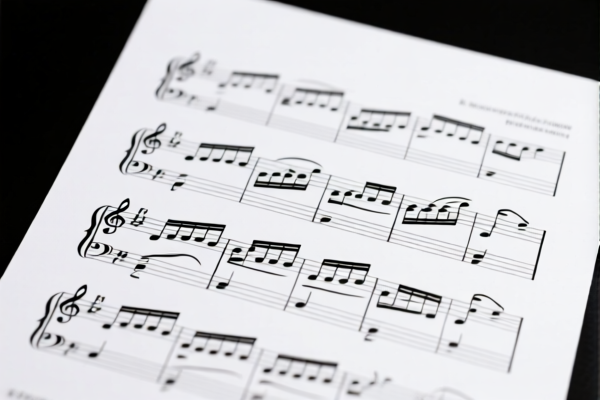
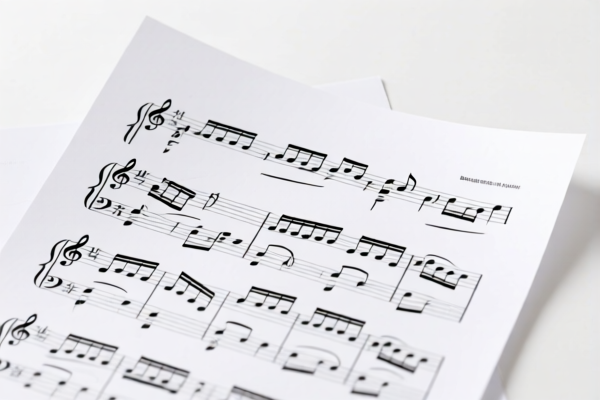
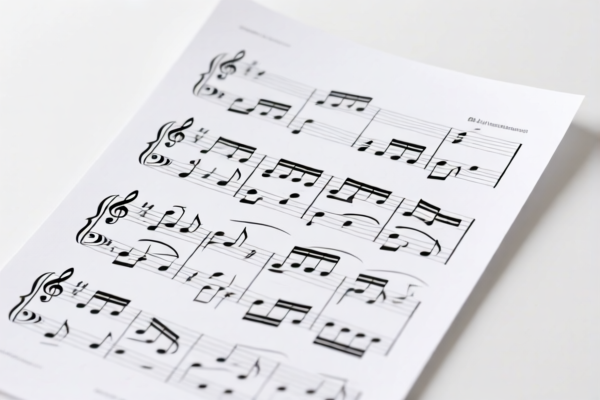
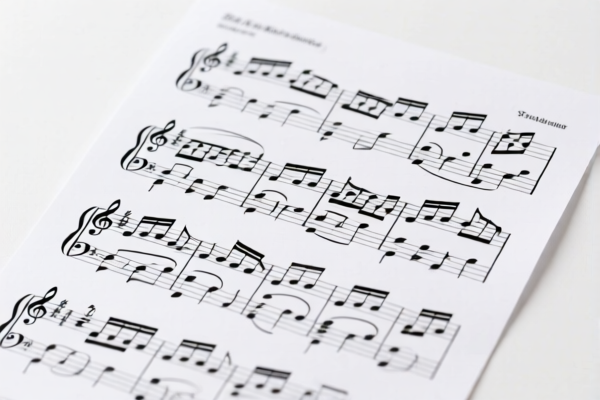
Blank Sheet Music Paper
CN → US| HS Code | Tariff Rate | Origin | Destination | Doc |
|---|---|---|---|---|
| 4820104000 | 35.0% | CN | US | Official Doc |
| 4820900000 | 35.0% | CN | US | Official Doc |
| 4901100040 | 17.5% | CN | US | Official Doc |
| 4901990091 | 17.5% | CN | US | Official Doc |
Product Images
AI Analysis
🎼 Blank Sheet Music Paper: The Canvas of Creativity
🌐 HS Code Reference & Customs Clearance Guide | 2026 Latest Tariff Analysis | Professional Clearance Strategy
📌 I. Product Definition and Classification: What Exactly is "Blank Sheet Music Paper"?
Blank sheet music paper is a specialized stationary item used for writing or printing musical notes. It is distinct from printed books or general notebook paper due to its pre-printed staff lines (staves) and specific paper quality requirements for ink absorption and durability.
In international trade, it is categorized under Chapter 48 (Paper and Paperboard) specifically as Stationery Articles.
⚠️ Key Distinction:
- If the paper contains pre-printed musical staves but no other text/images → It falls under Stationery (Chapter 48).
- If it is a bound book of blank music sheets → It is still generally Chapter 48 (Notebooks/Account Books), NOT Chapter 49 (Printed Books).
- If it is a single printed brochure with music theory instructions → It might fall under Chapter 49 (Printed Matter), but pure "blank paper" is Chapter 48.
📦 II. HS Code Classification Details (2026 Latest Tariff Authority对照)
Based on the provided data, here are the applicable HS Codes for Blank Sheet Music Paper. The classification depends on whether the paper is bound (like a notebook) or in single sheets/bulk rolls.
| HS Code | Product Description | Applicability | Status |
|---|---|---|---|
4820.10.40.00 |
Registers, account books, notebooks... diaries and similar articles: Other | Bound Music Notebooks (e.g., spiral-bound, stitched, or glued blank music journals) | ✅ Most Common for Retail |
4820.90.00.00 |
Other (under Chapter 48, Section for Stationery) | Loose leaf paper, single sheets, or non-bound stationery items not covered by 4820.10 | ✅ For Bulk/Loose Sheets |
4901.10.00.40 |
Printed books... In single sheets, whether or not folded: Other | Single printed pages that are not music paper but similar printed matter (Rarely used for blank music paper) | ⚠️ Unlikely |
4901.99.00.91 |
Printed books... Other: Containing not more than 4 pages each | Extremely thin printed items (e.g., single-page flyers or tiny booklets) | ❌ Not Applicable |
🔍 Key Clarification:
- Blank Sheet Music Paper is primarily classified under 4820 because it is a "stationery article" (notebook/register).
- It is NOT considered a "printed book" (Chapter 49) because it lacks substantive printed content (text, images, stories). The musical staves are functional forms, not informational content.
- 4820.10.40.00 is the most accurate code for bound blank music notebooks.
- 4820.90.00.00 is used for loose blank music sheets or other non-specific stationery.
💰 III. 2026 Latest Tariff Rate Details (Including Surtaxes & Policy Additions)
✅ Applicable Country: United States (US)
✅ Origin: China (CN)
✅ Effective Date: November 10, 2025 onwards (including subsequent imports)
🎯 1. 4820.10.40.00 —— Blank Music Notebooks (Bound)
| Item | Content |
|---|---|
| Base Tariff Rate | 0.0% (Ad Valorem) |
| USITC Additional Tariff | +25.0% (Under USITC Footnote for China-origin goods) |
| Total Tariff Rate | 25.0% |
| Tax Calculation | CIF Value × 25% |
| De Minimis Exemption | ❌ Not Eligible (Deny de minimis for goods subject to 301 tariffs) |
| Legal Basis Path | Section 301: 4820.10.40.00 → Footnote: 9903.88.01 |
📌 Explanation:
- Although the base duty is 0%, the 25% additional tariff applies due to Section 301 trade actions against China.
- This is a significant cost factor for Chinese-origin blank music paper imports.
- No preferential treatment is available for standard blank music paper.
🎯 2. 4820.90.00.00 —— Other Stationery (Loose Sheet Music Paper)
| Item | Content |
|---|---|
| Base Tariff Rate | 0.0% (Ad Valorem) |
| USITC Additional Tariff | +25.0% (Under USITC Footnote for China-origin goods) |
| Total Tariff Rate | 25.0% |
| Tax Calculation | CIF Value × 25% |
| De Minimis Exemption | ❌ Not Eligible |
| Legal Basis Path | Section 301: 4820.90.00.00 → Footnote: 9903.88.01 |
📌 Note:
- Same tariff structure as bound notebooks.
- Even if sold as loose sheets, the 25% surcharge applies.
🎯 3. 4901.10.00.40 & 4901.99.00.91 —— Printed Matter (If Misclassified)
| Item | Content |
|---|---|
| Base Tariff Rate | 0.0% |
| USITC Additional Tariff | +7.5% |
| Total Tariff Rate | 7.5% |
| Tax Calculation | CIF Value × 7.5% |
| De Minimis Exemption | ❌ Not Eligible (for most commercial shipments) |
⚠️ Warning:
- Do not use Chapter 49 codes for blank music paper.
- If you declare blank music paper as "Printed Books" (4901), Customs may reclassify it and apply 25% tariff, plus potential penalties for misdeclaration.
- The 7.5% rate in Chapter 49 is lower, but applying it incorrectly is a compliance risk.
🛠️ IV. Customs Clearance Practical Advice (Actionable Checklist)
✅ 1. Required Documentation (Non-Negotiable)
| Document | Must Provide? | Description |
|---|---|---|
| ✅ Product Description | ✔️ | Clear statement: "Blank Sheet Music Paper, Pre-printed Staff Lines, No Text, Unbound/Bound" |
| ✅ Composition/Weight | ✔️ | Paper weight (gsm), size, number of pages/sheets per unit |
| ✅ HS Code Justification | ✔️ | Explain why it is Chapter 48 (Stationery) vs. Chapter 49 (Printed Matter) |
| ✅ Commercial Invoice | ✔️ | Must match packing list and physical goods exactly |
| ✅ Packing List | ✔️ | Detailing gross/net weight, dimensions, number of packages |
| ✅ Country of Origin Certificate | ✔️ | To confirm China origin (subject to 25% tariff) |
✅ 2. Declaration Tips (Key Mantras)
🔥 "No Text, No Story, Just Staves! → Chapter 48!"
| Scenario | Correct Declaration | Incorrect Declaration |
|---|---|---|
| Bound blank music book | 4820.10.40.00 - "Blank Music Notebook" |
"Music Book" or "Printed Music" (4901) |
| Loose blank sheets | 4820.90.00.00 - "Blank Music Paper" |
"Paper for Printing" (4802) |
| Printed music theory guide | 4901.99.00.91 (if <4 pages) or 4901.10.00.40 |
"Blank Paper" |
📌 Critical Point:
- Emphasize "Blank" and "Pre-printed Staves Only" in the description.
- Avoid words like "Book," "Novel," or "Guide" unless there is actual text content.
- Use "Stationery" or "Notebook" in the description to align with HS Code 4820.
✅ 3. Special Case Handling
| Situation | Handling Suggestion |
|---|---|
| OEM Custom Branded | Provide brand authorization and design specs. Ensure no copyrighted musical compositions are printed. |
| Mixed Orders (Blank + Printed) | Split Declaration! Blank paper → 4820 (25%); Printed booklets → 4901 (7.5%). Mixing them may lead to full 25% taxation on the entire shipment. |
| Small Samples | If value is below de minimis threshold ($800 for US), but origin is China, 25% tariff still applies if declared correctly. |
| Non-China Origin | If paper is manufactured in Vietnam/Thailand, provide Certificate of Origin to avoid 25% USITC surcharge (tariff may be 0-5%). |
🌍 V. Global Market Customs Comparison (2026 Latest)
| Country/Region | Recommended HS Code | Tariff (China Origin) | Certification | Notes |
|---|---|---|---|---|
| 🇺🇸 USA | 4820.10.40.00 |
25% | None | High tariff due to Section 301 |
| 🇨🇳 China | 4820.10.40.00 |
0% | None | Zero duty for domestic consumption |
| 🇪🇺 EU | 4820.10.40.00 |
0% | CE (if packaging) | No anti-dumping duties on stationery |
| 🇬🇧 UK | 4820.10.40.00 |
0% | UKCA (if applicable) | Post-Brexit rules still favor 0% |
| 🇦🇺 Australia | 4820.10.40.00 |
5% | None | Standard MFN rate |
| 🇯🇵 Japan | 4820.10.40.00 |
0% | None | Free trade agreement benefits |
📌 Conclusion:
- USA is the most expensive market for Chinese blank music paper due to the 25% additional tariff.
- EU, UK, Japan, and China have 0% duty, making them more competitive for pricing.
- Consider third-country manufacturing (e.g., Vietnam) if shipping to the US to mitigate tariff costs.
📌 VI. Common Errors & Pitfalls (Lessons Learned)
❌ Error 1: Declaring blank music paper as "Paper" (4802)
👉 Consequence: Misclassification → Customs may reclassify to 4820 and apply 25% tariff + penalties.
❌ Error 2: Using "Music Book" (4901) for blank pages
👉 Consequence: Lower tax (7.5%) tempting, but if audited, back taxes + fines for misdeclaration.
❌ Error 3: Ignoring "Pre-printed Staves"
👉 Consequence: If staves are considered "printed matter," customs may argue for Chapter 49. Clarify it is functional, not informational.
❌ Error 4: Mixing blank and printed items in one HS Code
👉 Consequence: Entire shipment taxed at the highest rate (25%). Always split declarations.
✅ Correct Practice:
"Blank Sheet Music Paper, Pre-printed Staff Lines, No Text, Spiral Bound, 24 Sheets, Model M-2024"
🎯 VII. Conclusion: Professional Declaration, Cost Efficiency!
🎯 Remember the Mantra:
🔹 "Blank & Staves Only → Chapter 48 (25% US Tax)"
🔹 "Printed Text & Theory → Chapter 49 (7.5% US Tax)"
🔹 "Never Mix, Always Split, Save Money on Customs!"
📌 Pro Tip:
- If you are shipping to the US, pre-apply for an Advance Ruling if your product is unique.
- For bulk shipments, consider non-China origin sourcing to avoid the 25% surcharge.
- Always provide clear photos of the product showing the staves and lack of text to support your Chapter 48 classification.
📣 Immediate Action:
📞 Contact a licensed customs broker + Provide product samples + Request HS Code Pre-Ruling
🚀 Ensure smooth clearance, avoid delays, and maximize profit margins!
✨ Professional Clearance Starts with Accurate Classification!
💼 Every cent of duty matters in the music stationery trade!
Customer Reviews
About HS Code Classification
The Harmonized System (HS) is an internationally standardized nomenclature developed by the World Customs Organization (WCO) to classify traded products. Over 200 countries use the HS system as the basis for customs tariffs, trade statistics, and import/export regulations.
Each HS code follows a hierarchical structure:
- Chapter (2 digits) — Broad category of goods (e.g., Chapter 84: Machinery and Mechanical Appliances)
- Heading (4 digits) — More specific grouping within the chapter
- Subheading (6 digits) — Internationally standardized breakdown, used by all WCO member countries
- National subdivisions (8-10 digits) — Country-specific extensions for further classification, such as US HTSUS 10-digit codes
Correct HS code classification is essential for smooth customs clearance, accurate duty payment, and compliance with trade regulations. Misclassification can lead to customs delays, overpayment of duties, or penalties.
When importing from CN to US, the applicable tariff rates may include:
- Most-Favored-Nation (MFN) rate — The standard duty rate applied to WTO members
- General rate — Applied to countries without trade agreements
- Trade remedy duties — Additional tariffs such as Section 301 (anti-dumping), Section 232 (national security), or countervailing duties
The information provided on this page is for reference purposes only. For official classification, please consult with your local customs authority or a licensed customs broker.